RTD vs Thermocouple: Key Differences and How to Choose
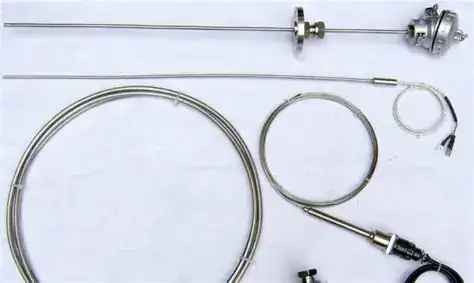
Every temperature measurement project hits the same fork in the road: RTD or thermocouple? Both get the job done — but they work on completely different principles, and picking the wrong one means inaccurate readings, premature failures, or money wasted on overkill.
Comparing an RTD against a thermistor instead of a thermocouple? See RTD vs thermistor for that decision.
The short version: an RTD tracks resistance changes in a platinum element — accurate to ±0.1°C but limited to about 660°C. A thermocouple generates a voltage from two dissimilar metals at a junction — less accurate (±1.5°C typical) but capable of reaching 2,300°C. Below 500°C, RTDs are the better pick for most process applications; above 500°C, thermocouples are the only practical option.
Below, we compare the six parameters that actually drive the decision — accuracy, range, response speed, wiring, drift, and cost — and walk through the 500°C rule that working engineers use to cut through the noise.
How RTDs and Thermocouples Measure Temperature
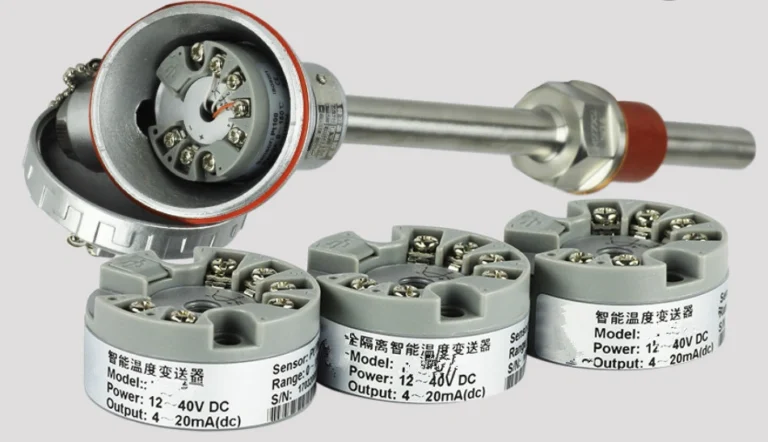
An RTD (Resistance Temperature Detector) uses a metal element — almost always platinum — whose electrical resistance rises predictably with temperature. A standard Pt100 reads exactly 100 ohms at 0°C. Heat it up, the resistance goes up, and the transmitter converts that change into a temperature value.
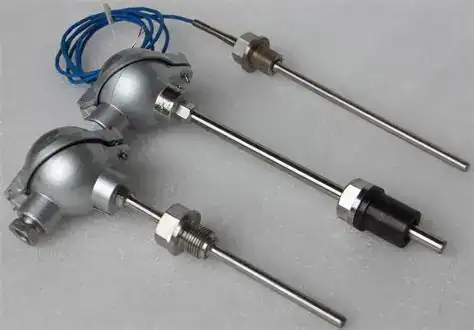
A thermocouple does something different. Join two wires of dissimilar metals at a tip, expose that junction to heat, and you get a small voltage — microvolts to millivolts — thanks to the Seebeck effect. The transmitter reads that voltage and backs out the temperature.
So the raw outputs are different animals: ohms vs. millivolts. An RTD needs an excitation current fed from the instrument side. A thermocouple generates its own signal — no external power needed. The tradeoff is that RTD signals are large and relatively noise-proof, while thermocouple signals are tiny and more vulnerable to electrical pickup. Thermocouples also need cold junction compensation (CJC) at the instrument end, which adds a layer of complexity RTDs skip entirely.
Why CJC matters:
A thermocouple actually measures the temperature difference between its hot junction (in the process) and its cold junction (at the instrument terminals). Say the process is at 200°C and the terminal block sits at 25°C — the raw signal only accounts for 175°C of that. The transmitter has to measure its own terminal temperature and add the difference back in. If that internal measurement is off by even 0.5°C, your final reading inherits that error on top of everything else. RTDs sidestep this problem entirely — no reference junction, no compensation math, one fewer error source.
RTD vs Thermocouple: A Side-by-Side Comparison
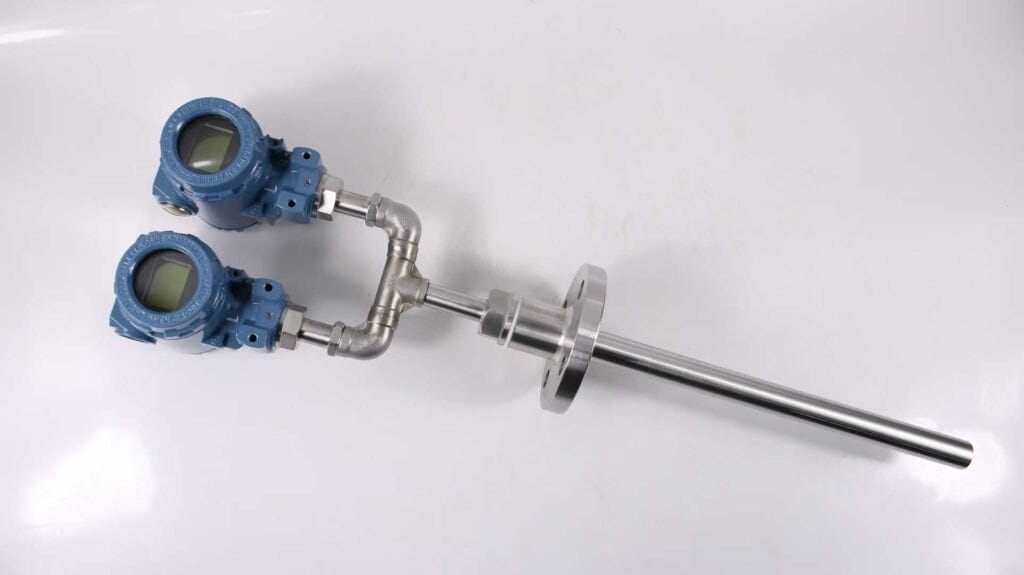
Here are the six parameters side by side, using Pt100 and Type K as the benchmarks since they are the most widely installed in each category.
| Parameter | RTD (Pt100) | Thermocouple (Type K) |
|---|---|---|
| Accuracy | ±0.15°C + 0.002×|t| (Class A, per IEC 60751) | ±1.5°C or 0.4% of reading, whichever is greater (per IEC 60584) |
| Temperature Range | −200°C to +660°C | −270°C to +1,260°C (Type K); up to +2,300°C with Type B/R/S |
| Response Time | 1–5 seconds (standard probe) | 0.2–1 second (grounded junction) |
| Long-Term Stability | Excellent — platinum is chemically inert; typical drift <0.05°C/year | Moderate — K-type chromel undergoes preferential oxidation of Cr and Si above 800°C — a drift mode that Type N thermocouples specifically avoid, causing EMF drift over time |
| Sensor Cost | Higher (platinum element) — roughly 2× a comparable thermocouple assembly | Lower — base metal alloys are inexpensive |
| Wiring Complexity | 2-wire, 3-wire, or 4-wire configurations (more wires = better accuracy) | 2-wire with matched extension or compensating cable required |
How Much More Accurate, Exactly?
Everyone says “RTDs are more accurate.” But how much more? IEC 60751 spells out four tolerance classes for platinum RTDs:
| Class | Tolerance at 0°C | Tolerance at 100°C | Best Use |
|---|---|---|---|
| AA | ±0.10°C | ±0.30°C | Laboratory reference |
| A | ±0.15°C | ±0.35°C | Process control (standard) |
| B | ±0.30°C | ±0.80°C | General industrial |
| C | ±0.60°C | ±1.60°C | Non-critical monitoring |
You will also see 1/3 DIN (±0.10°C at 0°C) and 1/10 DIN (±0.03°C at 0°C) from some manufacturers. A word of caution: 1/10 DIN only beats Class A inside a narrow window of −40°C to +40°C, so it is not the universal upgrade it sounds like.
Now put a K-type thermocouple next to those numbers. Per IEC 60584, standard tolerance is ±1.5°C across the board. Even the “special tolerance” grade only gets down to ±0.4% of reading — which at 500°C still works out to ±2.0°C. That is roughly 6× the error of a Class A Pt100 at the same temperature.
Why K-Type Thermocouples Drift — and What to Use Instead
Drift is the sleeper issue that rarely shows up in spec sheets. K-type thermocouples suffer from preferential oxidation above 800°C: the chromium and silicon in the Chromel (positive) leg oxidize at unequal rates, gradually changing the alloy’s composition at the junction. The EMF output shifts, and over months of continuous service the reading can wander by several degrees — without any alarm or obvious failure.
N-type (Nicrosil-Nisil) thermocouples exist precisely because of this problem. Their alloy resists preferential oxidation up to 1,300°C, so they hold calibration through repeated thermal cycling far better than K-type. If you need a thermocouple above 800°C and cannot tolerate multi-degree drift between calibration intervals, N-type is the practical upgrade. The cost premium over K-type is modest.
Wiring, Signal Conditioning, and Cold Junction Compensation
Wiring is where the installed cost and accuracy picture gets more complicated than the sensor datasheet suggests. Most “RTD vs thermocouple” comparisons gloss over this, but it matters — especially on long cable runs.
RTD Wiring: 2-Wire, 3-Wire, and 4-Wire
The wires between an RTD and the instrument have their own resistance, and the instrument has no way to tell that resistance apart from the sensor’s. The result: your reading skews high. How much depends on wire length and gauge.
| Configuration | Lead Resistance Error | Typical Use | Relative Cost |
|---|---|---|---|
| 2-wire | Full lead resistance adds to reading (~0.4°C per meter of standard copper wire) | Short runs (<3 m), non-critical | Lowest |
| 3-wire | Cancels most lead resistance (assumes two leads are identical) | Standard industrial installation | Medium |
| 4-wire | Completely eliminates lead resistance | Laboratory, precision process control | Highest |
For most industrial applications, 3-wire is the sweet spot — it removes the majority of lead wire error at a modest wiring cost increase over 2-wire. (Full 2-wire, 3-wire, and 4-wire RTD wiring guide.)
Thermocouple Wiring: Extension and Compensating Cables
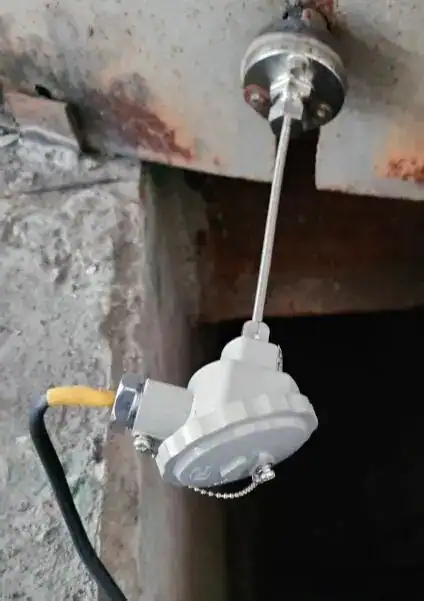
Thermocouples only need two wires, but those wires — or their extensions — must match the thermocouple type. Plug a K-type extension cable onto a J-type sensor and you create an unintended third junction that throws off the reading.
There are two grades of cable: extension-grade (same alloy as the sensor, accurate over a wide range) and compensating-grade (cheaper substitute, only accurate from about 0–200°C along the cable path). For tight-tolerance work, always go with extension-grade matched to your thermocouple type.
System-Level Cost Implication
A thermocouple probe costs roughly half what a comparable RTD assembly costs. But once you add matched extension cable, a transmitter with decent CJC accuracy, and the fact that you may need to recalibrate or replace the TC more often due to drift — the gap shrinks fast. For loops below 500°C where you actually care about accuracy, a 3-wire RTD often works out cheaper over a 5-year life than a thermocouple that looked like a bargain on the purchase order.
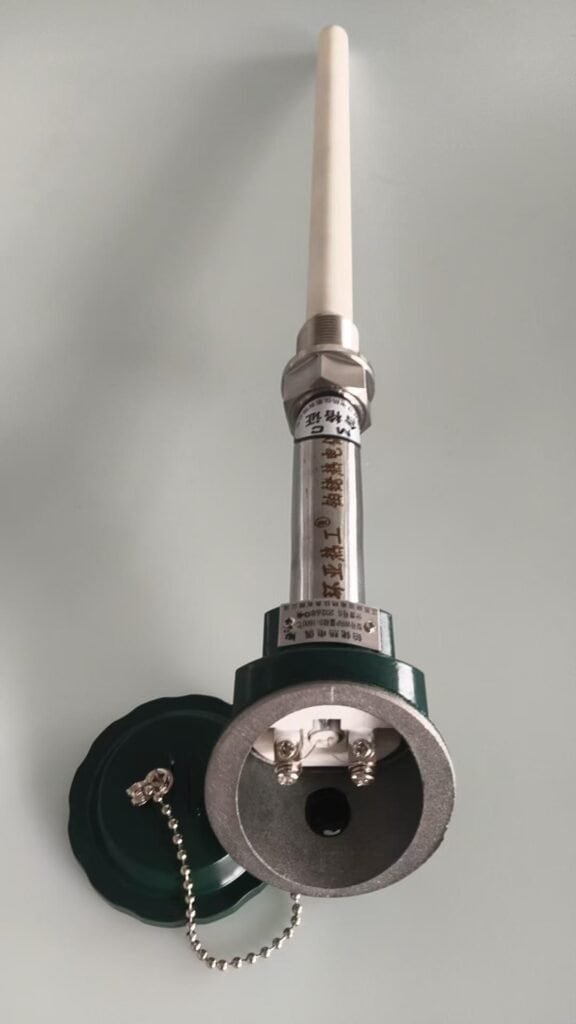
The 500°C Rule: When to Choose RTD vs Thermocouple
Ask a veteran instrument engineer how to choose, and you will hear some version of this:
Below 500°C → start with an RTD. Above 500°C → thermocouple.
The logic is simple. Below 500°C, RTDs win on accuracy, stability, and — once you account for wiring and recalibration — total cost. Above 500°C, platinum is pushing its limits while thermocouples are barely warmed up.
Here is a more granular breakdown:
| Temperature Zone | Recommended Sensor | Reasoning |
|---|---|---|
| Below 300°C | RTD (Pt100) | Clear RTD advantage on all metrics; TC offers no benefit |
| 300°C – 500°C | RTD preferred; TC acceptable if fast response or vibration resistance needed | RTD still more accurate; TC wins on speed and ruggedness |
| 500°C – 850°C | Thermocouple (K or N type) | RTDs at upper limit; K/N-type in comfortable range |
| Above 850°C | Thermocouple only (N, R, S, or B type) | No RTD option; use noble-metal TC for extreme temperatures |
Application Quick Reference
Food and pharmaceutical processing (sterilization at 121–135°C): RTD — accuracy and stability are critical for regulatory compliance. Where compliance sets the RTD tolerance, our guide to Pt100 Class A vs Class B shows how to specify the class.
HVAC and building automation (−20°C to +50°C): RTD — operating well within optimal range.
Chemical reactors (200–600°C, variable): Depends on exact temperature — RTD below 500°C, thermocouple types above. See our full temperature sensor selection guide for a step-by-step process walkthrough.
Furnaces and kilns (800–1,400°C): Thermocouple only — K-type or N-type for <1,260°C, R/S/B-type above.
Exhaust gas monitoring (400–900°C, fast transients): Thermocouple — you need sub-second response here.
Point Reading vs. Averaged Reading
There is a subtlety most spec sheets do not mention: a thermocouple reads temperature at one point — the tip where the two metals meet. An RTD averages the temperature along its entire sensing element, which can span 20–50 mm.
In a catalyst bed with steep gradients, that distinction matters — a thermocouple gives you the hot spot; an RTD gives you a smoothed-out number. In a well-mixed tank, the averaging is actually useful. Keep this in mind when the process has sharp spatial temperature differences.
What About Thermistors?
If your process stays between −50°C and +150°C, you have a third option on the table: the NTC thermistor.
| Parameter | RTD | Thermocouple | Thermistor (NTC) |
|---|---|---|---|
| Temperature Range | −200 to +660°C | −270 to +2,300°C | −50 to +150°C |
| Accuracy | ±0.1 to ±0.6°C | ±1.0 to ±2.5°C | ±0.1 to ±0.5°C |
| Response Time | 1–5 s | 0.2–1 s | 0.1–1 s |
| Linearity | Good | Moderate | Poor (highly nonlinear) |
| Cost | Medium–High | Low | Low |
Thermistors are extremely sensitive — a small temperature shift produces a large resistance swing — which makes them popular in HVAC controls, medical devices, and consumer electronics. The catch: the response is highly nonlinear, so you need lookup tables or Steinhart-Hart math for conversion, and the usable range tops out around 150°C.
Bottom line: below 150°C with no need for a linear output, a thermistor can be simpler and cheaper than either an RTD or thermocouple. Above that, you are back to the RTD-vs-thermocouple decision covered above.
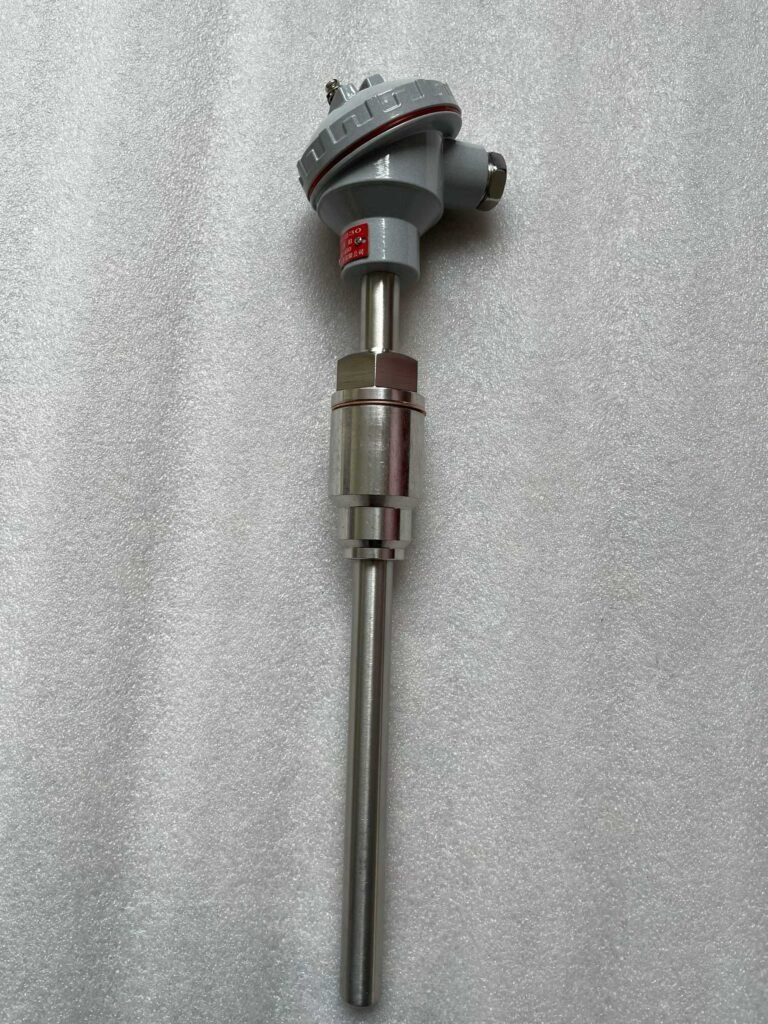
Field Troubleshooting: Common RTD and Thermocouple Failures
Sensors fail. When they do, fast diagnosis beats blind replacement. Here are the shortcuts field techs rely on.
Thermocouple Troubleshooting — the “Short-Circuit Method”
When a thermocouple reading looks off, use this isolation sequence to find the bad segment without pulling the sensor:
1. Short the compensating cable at the instrument terminal and observe the display. If the reading now shows ambient temperature, the cable and instrument are good — the problem is at the sensor end.
2. Short the thermocouple leads at the connection head. If the reading normalizes, the thermocouple element itself has failed (open circuit, junction degradation, or moisture ingress).
3. If both shorts read correctly, check for loose connections at junction boxes between the sensor and instrument.
Common thermocouple failures include open circuits from vibration fatigue, EMF drift from prolonged high-temperature exposure, and mismatched extension cables that introduce offset errors.
RTD Troubleshooting
Reading shows maximum or off-scale high: Open circuit — check for broken leads or loose terminal connections.
Reading shows zero or near-zero: Short circuit — often caused by moisture inside the protection tube. Unstable, fluctuating readings with no process change are a telltale sign of moisture ingress.
Gradual drift over months: Normal aging. Re-calibrate or replace according to your maintenance schedule.
One universal tip: keep a calibrated reference thermometer in your toolbox. A quick ambient-temperature comparison between the installed sensor and the reference tells you in 30 seconds whether the problem is the sensor, the cable, or the instrument.
If a thermocouple is the right fit for your service, see HMK’s industrial thermocouples.
Frequently Asked Questions
About the Author — Ye Dong (叶东), Temperature Product Engineer
With over 40 years of industrial instrumentation experience, Ye Dong holds the rank of Professor-Level Senior Engineer (教授级高级工程师). Before leading HMK-TECH’s temperature product line, he served as Deputy Chief Engineer at both the Beijing Design Institute of China Petrochemical Group (Sinopec) and Sinopec Engineering Construction Co., Ltd., where he designed instrumentation and automation systems for major refinery and chemical plant projects. His expertise spans thermocouples, RTDs, and transmitter technologies. Fushun Petroleum Institute, Department of Automation, 1982. View Ye Dong’s full profile → Send your application brief for a sensor recommendation.
Not Sure Which Sensor Fits Your Process?
Send us your operating conditions — temperature range, accuracy target, response-time requirement, and installation environment. Our engineers will recommend the right sensor and transmitter pairing, typically within 12 business hours.
Trusted by process engineers in oil & gas, pharmaceutical, and food processing plants.
Related reading: For the broader temperature-gauge primer covering definition, sensing types, and selection criteria, see Temperature Gauge: Definition, 5 Types, and Selection Guide.
See also: thermowell wake frequency calculation procedure — the bench-to-publication six-step workflow.
Once you have settled on an RTD rather than a thermocouple, the next call is the element value. Our guide on Pt100 vs Pt1000 shows how lead-wire error and instrument compatibility decide which one to specify.