Pt100 Class A vs Class B: Tolerance, Temperature Range, and How to Specify
Pt100 temperature range at a glance (IEC 60751:2022)
A Pt100 element is defined over −200 to +850 °C (−328 to +1562 °F) — the span over which the standard fixes the resistance curve. No tolerance class is validated to +850 °C: the practical class-guaranteed ceiling is +600 °C (wire-wound Class B/C). Use the per-class validity range, not the full envelope, to confirm a class covers your process temperature.
| Range | Wire-wound | Thin-film |
|---|---|---|
| Defined element range | −200 to +850 °C | |
| Class AA validity | −50 to +250 °C | 0 to +150 °C |
| Class A validity | −100 to +450 °C | −30 to +300 °C |
| Class B validity | −196 to +600 °C | −50 to +500 °C |
| Class C validity | −196 to +600 °C | −50 to +600 °C |
The accuracy of a Pt100 resistance thermometer is graded by tolerance class under IEC 60751:2022. Class A holds ±0.15 °C (±0.27 °F) at 0 °C; Class B holds ±0.30 °C (±0.54 °F) at the same point. Both tolerances widen with temperature, and each class is valid only across a defined range. This guide states the four classes, the per-point figures from 0 to 400 °C, the temperature ranges over which each class holds, and the factors beyond the element that decide realized accuracy. Across all four classes, IEC 60751:2022 defines the Pt100 element itself over -200 to +850 °C (-328 to +1562 °F). That span is the range of the resistance-temperature reference function, not a range over which any tolerance class is guaranteed; guaranteed accuracy holds only within the narrower per-class validity bands given below.
If you are also weighing a thermistor against the RTD, see RTD vs thermistor.
Contents
The IEC 60751:2022 tolerance classes
IEC 60751:2022 defines four platinum RTD tolerance classes: AA, A, B, and C. Each is a band that scales with the absolute value of temperature, written |t|, in degrees Celsius. The formulas are fixed by the standard and do not change between manufacturers.
| Class | Tolerance formula (°C) | ±°C at 0 °C | at 100 °C | at 200 °C | at 400 °C |
|---|---|---|---|---|---|
| AA (1/3 DIN) | ±(0.10 + 0.0017|t|) | 0.10 | 0.27 | 0.44 | 0.78 |
| A | ±(0.15 + 0.002|t|) | 0.15 | 0.35 | 0.55 | 0.95 |
| B | ±(0.30 + 0.005|t|) | 0.30 | 0.80 | 1.30 | 2.30 |
| C | ±(0.60 + 0.01|t|) | 0.60 | 1.60 | 2.60 | 4.60 |
Class AA was formerly designated 1/3 DIN. A tighter 1/10 DIN grade, about ±0.03 °C at 0 °C, is offered by some makers but lies outside IEC 60751:2022 and carries a narrow valid range. One change matters for specification: since the 2008 edition, the tolerance applies to the complete thermometer, not the bare resistance element alone. GB/T 30121-2013 mirrors the standard for the Chinese market, and JJG 229-2010 governs verification. The platinum resistance scale underlying the classes follows the ITS-90 international temperature scale. The classes apply to the element grade across the RTD temperature sensor range; the realized figure at the panel is treated separately below.
Class A vs Class B, in numbers
At the reference point, Class A is twice as tight as Class B: ±0.15 °C against ±0.30 °C. The ratio holds near room temperature, then the absolute gap grows as temperature rises, because the slope term in Class B (0.005|t|) is more than double that in Class A (0.002|t|).
| Temperature | Class A ±°C | Class B ±°C | Gap (°C) |
|---|---|---|---|
| 0 °C (32 °F) | 0.15 | 0.30 | 0.15 |
| 100 °C (212 °F) | 0.35 | 0.80 | 0.45 |
| 200 °C (392 °F) | 0.55 | 1.30 | 0.75 |
| 400 °C (752 °F) | 0.95 | 2.30 | 1.35 |
At 100 °C (212 °F) the two classes differ by 0.45 °C; at 200 °C (392 °F) by 0.75 °C; at 400 °C (752 °F) by 1.35 °C. In resistance terms the figures are small: a Pt100 changes about 0.385 Ω per °C near 0 °C, so the Class A band of ±0.15 °C corresponds to about ±0.058 Ω. Resistance value is a separate axis from accuracy class. A Pt100 and a Pt1000 of the same class share the same tolerance; the difference there is signal level, covered in Pt100 vs Pt1000, not accuracy grade.
Temperature-range validity per class
A tolerance class is valid only over a defined temperature range, and that range depends on the sensing element. Wire-wound elements hold each class over a wider span than thin-film (membrane) elements. A class marking does not apply outside its valid range. Two ranges are in play, and confusing them is the usual error. The defined range of a Pt100 under IEC 60751:2022 is -200 to +850 °C, the span over which the standard fixes the resistance-to-temperature curve. The validity range of a tolerance class is narrower and depends on the element: no class is validated to +850 °C, and the practical class-guaranteed ceiling is +600 °C, on a wire-wound Class B or C element. Use the per-class validity range below, not the -200 to +850 °C envelope, to confirm a class marking covers your process temperature.
| Class | Wire-wound valid range | Thin-film (membrane) valid range |
|---|---|---|
| AA | -50 to +250 °C (-58 to +482 °F) | 0 to +150 °C (+32 to +302 °F) |
| A | -100 to +450 °C (-148 to +842 °F) | -30 to +300 °C (-22 to +572 °F) |
| B | -196 to +600 °C (-321 to +1112 °F) | -50 to +500 °C (-58 to +932 °F) |
| C | -196 to +600 °C (-321 to +1112 °F) | -50 to +600 °C (-58 to +1112 °F) |
A wire-wound Class A element is valid to +450 °C (+842 °F); a thin-film Class A element is valid only to +300 °C (+572 °F). Above the valid range the reading reverts to the next-looser class, regardless of the printed marking. On sterilizer-validation points we commissioned, thin-film probes marked Class A were accepted only to +300 °C (+572 °F), and Class B tolerance was applied above it. Class B reaches +600 °C (+1112 °F) on a wire-wound element and +500 °C (+932 °F) on a thin-film element. These ranges match the figures HMK publishes for its own Pt100 RTDs to IEC 60751:2022: the HMK sheathed and assembled thermal-resistance probes are specified -196 to +600 °C, the wire-wound Class B and C ceiling, which sits inside the -200 to +850 °C defined envelope.
What actually sets realized accuracy
The element class is one term in an error budget. The accuracy seen at the controller also depends on the wiring configuration, lead resistance, self-heating, and the transmitter. A Class A element wired carelessly can read worse than a Class B element wired correctly.
| Error source | Typical contribution | Mitigation |
|---|---|---|
| Element class (Class A at 100 °C) | ±0.35 °C | match the class to the range |
| 2-wire lead resistance | about 2.6 °C per ohm of lead | use 3- or 4-wire |
| Self-heating (1 mA, still air) | 0.02 to 0.2 °C | limit excitation current |
| Transmitter (HM100) | ±0.1 % of span | calibrate the loop |
Lead resistance dominates the 2-wire case. Each ohm of one-way lead resistance adds about 2.6 °C (4.7 °F) of offset to a 2-wire Pt100, so even 0.2 Ω erases the Class A advantage. A 3-wire connection cancels most of the lead resistance; a 4-wire connection cancels it. Self-heating adds a smaller term: a 1 mA measuring current dissipates power in the element, and in still air the rise reaches 0.02 to 0.2 °C depending on construction. The transmitter contributes its own figure; the HM100 temperature transmitter is rated ±0.1 % of span. The wiring method is detailed in 2-, 3-, and 4-wire RTD wiring. JJG 229-2010 sets the verification points for the assembled thermometer.
When to specify each class
Match the class to the required uncertainty and the operating range, not to the lowest available tolerance. The decision table below maps duty to class.
| Application | Recommended class | Note |
|---|---|---|
| HVAC, building services, general monitoring | Class B | ±0.80 °C at 100 °C is adequate; short 2-wire runs |
| Pharmaceutical, food, fine-chemical control | Class A | 3- or 4-wire; verify the valid range |
| Laboratory, reference | AA (1/3 DIN) or 1/10 DIN | narrow span near 0 °C |
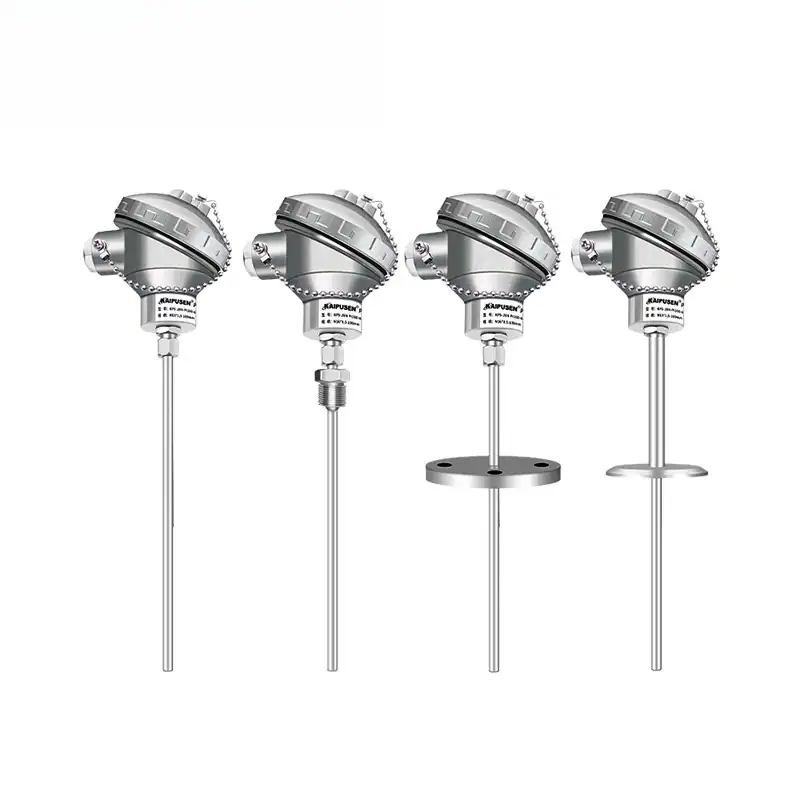
Sheathed Thermal Resistance
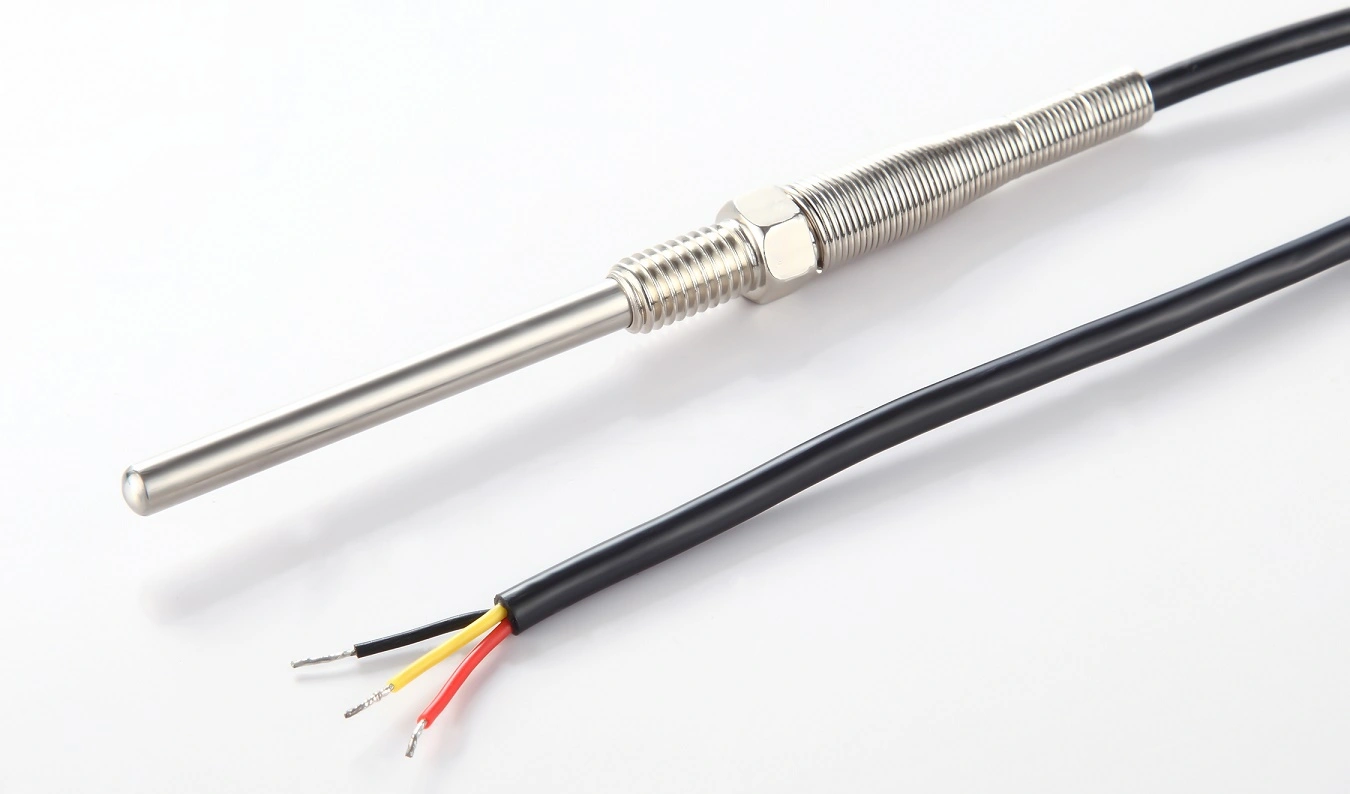
Class A and Class B Pt100 probe to IEC 60751:2022, for direct immersion in pipes and vessels.
View Specs →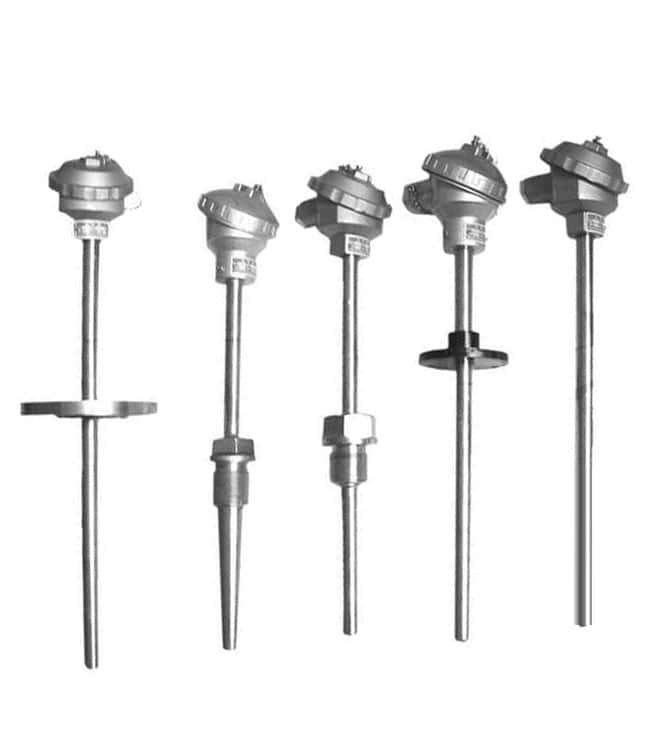
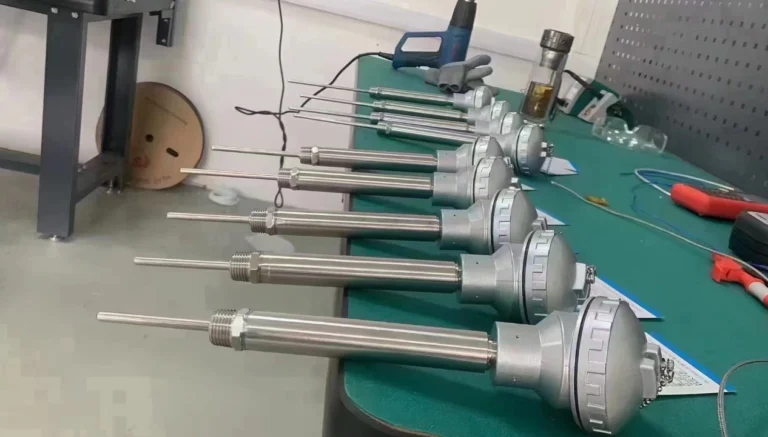
Assembled Thermal Resistance
Class AA to C Pt100, spring-loaded and IP65, with a threaded or flanged process mount.
View Specs →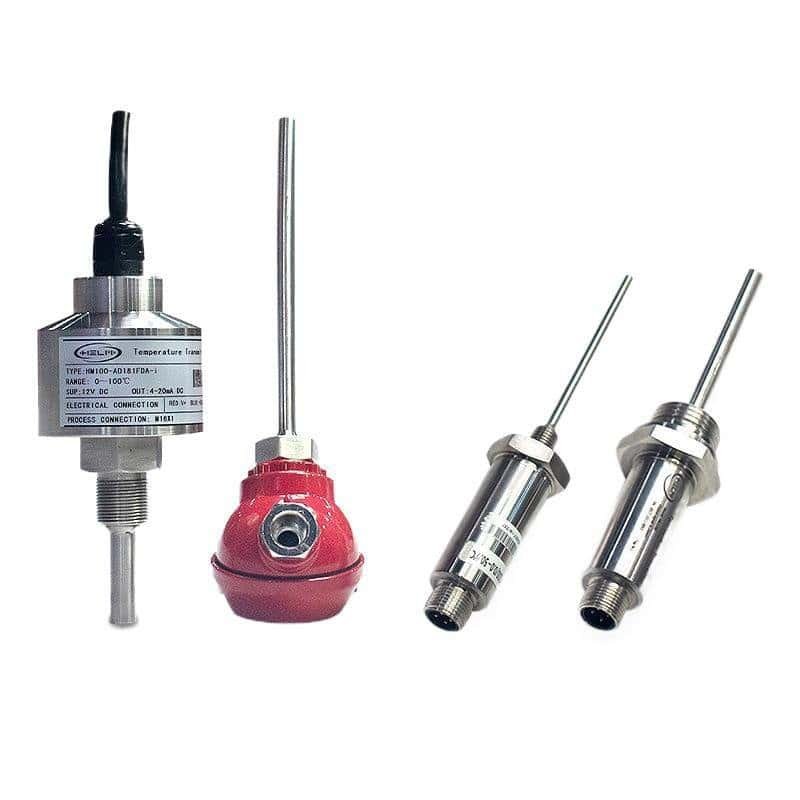
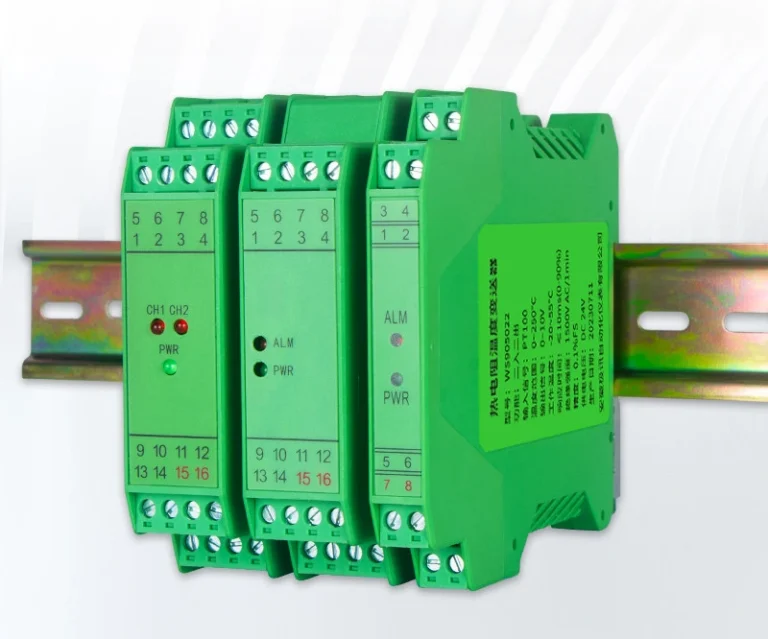
HM100 Temperature Transmitter
Converts a Class A or B RTD to a 4-20 mA, 2-wire signal at ±0.1 % of span, with explosion-proof options.
View Specs →Class B suits HVAC, building services, and general process monitoring, where ±0.80 °C at 100 °C is adequate and 2-wire runs are short. Class A suits pharmaceutical, food, and fine-chemical control, where uncertainty must stay near ±0.5 °C; it requires a 3- or 4-wire connection and a verified valid range. Class AA, or a manufacturer 1/10 DIN grade, is reserved for laboratory and reference work over a narrow span. HMK supplies the range across these duties: the sheathed thermal resistance probe offers Class A and Class B Pt100 elements to IEC 60751:2022; the assembled thermal resistance offers AA to C with a spring-loaded, IP65 process mount to GB/T 30121-2013 and JB/T 8623-1997; and the HM100 converts either to a 4-20 mA, 2-wire signal at ±0.1 % of span.
Specification summary
Match the class to the duty:
- Class B: HVAC and general process monitoring.
- Class A: uncertainty near ±0.5 °C up to about 150 °C, with a 3- or 4-wire connection and a verified valid range.
- AA (1/3 DIN) or 1/10 DIN: laboratory and reference work.
- Thin-film Class A: confirm the Class A range, +300 °C (+572 °F), covers the process temperature, because the tolerance is Class B above it.
The element class is only a starting figure; the wiring and the transmitter decide the rest, and periodic calibration traceable to NIST keeps the loop within the class over time. HMK supplies Class A through C Pt100 sensors and matching transmitters across the RTD temperature sensor range.
Need to fix the right RTD class for a temperature point? Send us the operating range and the required uncertainty.
Request a Quote Browse RTD SensorsFrequently Asked Questions
Which is more accurate, Pt100 Class A or Class B?
Class A. At 0 °C it holds ±0.15 °C (±0.27 °F) against ±0.30 °C (±0.54 °F) for Class B, twice as tight, and the absolute gap widens with temperature: 0.45 °C at 100 °C and 1.35 °C at 400 °C.
What is the Class A tolerance at 100 °C?
±0.35 °C (±0.63 °F), from the IEC 60751:2022 formula ±(0.15 + 0.002|t|). Class B at the same point is ±0.80 °C (±1.44 °F).
What is the temperature range of a Pt100?
IEC 60751:2022 defines the Pt100 over -200 to +850 °C (-328 to +1562 °F), the range of its resistance-temperature reference function. Tolerance classes, however, are guaranteed only over narrower bands that depend on the element: a wire-wound Class B element holds to -196 to +600 °C, a wire-wound Class A element to -100 to +450 °C, and thin-film elements less. Match the class validity range, not the -200 to +850 °C envelope, to your process temperature.
Can a Class A Pt100 be used across its full temperature range?
No. The class is valid only over a defined range that depends on the element. A thin-film Class A element is valid to +300 °C (+572 °F) and a wire-wound Class A element to +450 °C (+842 °F); above the range the tolerance reverts to Class B.
What are 1/3 DIN and 1/10 DIN?
1/3 DIN is the older name for Class AA, about ±0.10 °C at 0 °C. 1/10 DIN, about ±0.03 °C at 0 °C, is a tighter manufacturer grade outside IEC 60751:2022, valid only over a narrow span near 0 °C.
Is Class A worth the extra cost over Class B?
Only when the rest of the loop supports it. A Class A element on a 2-wire run, with each ohm of lead adding about 2.6 °C, gives away its advantage. Class A earns its cost with a 3- or 4-wire connection, a controlled measuring current, and an operating range inside the Class A band.