Filter Differential Pressure Monitoring: Setpoints & Sizing
A clogging filter shows up as rising differential pressure long before the downstream flow falls off. Measuring that pressure is the easy part. The hard part is choosing the change-out number, then picking a transmitter whose range resolves a nearly clean filter yet still covers a plugged one.
A filter trip can be handled by a switch rather than a transmitter; our guide compares an electronic versus mechanical pressure switch and how to set its deadband.
Most vendor pages stop at “differential pressure goes up when the filter gets dirty.” If you have to put a real change-out setpoint into the alarm logic this week, that is where the work actually starts. This guide stays on process filters and strainers in liquid and gas service. For building air-handling filters, our HVAC differential pressure transmitter guide covers the duct-side workflow.
Why Measure Differential Pressure Across A Filter?
Across any filter, upstream pressure is higher than downstream, and the gap grows as the element loads. A clean element sits near zero. A blinded one can read ten to twenty times higher. Measuring the difference directly, rather than watching one downstream gauge, lets you see the filter on its own.
You might be tempted to skip the differential transmitter and subtract two ordinary pressure transmitters instead. In the field that rarely ends well. On a line at 1.6 MPa static, the signal you care about might be only 150 kPa, about a tenth of the line pressure.
Each separate transmitter carries its own error referenced to that large line pressure, so subtracting the two readings makes the errors stack instead of cancel. A single differential transmitter rejects the common line pressure mechanically and reports only the drop across the element. For the sensing detail, see how a differential pressure transmitter works.
Watch one more signal while you are at it. A sudden drop in differential pressure usually means a ruptured element or an open bypass, so a low-low alarm is worth setting next to the high one.
Clean, Dirty, And Change-Out Pressure: What Each Number Means
Element makers publish a clean pressure drop and a recommended maximum, often labelled “dirty” or “terminal.” The clean figure is your baseline. The terminal figure is the candidate for your change-out alarm.
A basket strainer might leave the shop near 12 kPa clean and carry an 80 to 100 kPa terminal rating. A liquid bag filter might run 15 kPa clean and 150 to 250 kPa terminal. Those numbers are the manufacturer’s, not ours, so pull them from the datasheet for your element.
The mistake I see most often is setting the alarm at the terminal number and walking away. Terminal pressure protects the element from collapse; it is not the economic change-out point. Hold a filter at maximum differential for weeks and you pay pump energy every hour, because a blinded element makes the pump work harder to hold flow.
On clean-service duties we usually set the alarm near 70 to 80 % of the terminal rating. That schedules the change before the element chokes and before the energy bill climbs. The judgment behind that setpoint helps the plant more than another decimal of transmitter accuracy.
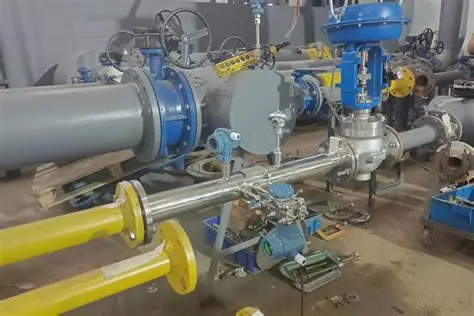
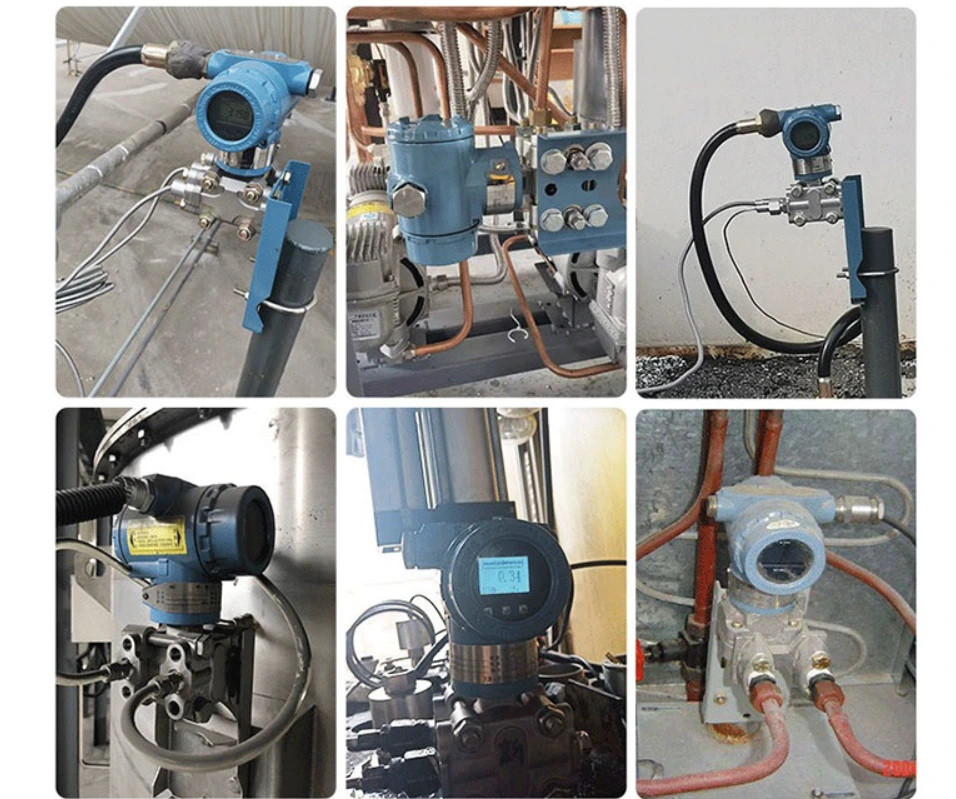
A chilled-water main makes the point. A Y-strainer there catches the welding slag and rust scale left over from construction, and a clean basket sits near 2 kPa. When that debris arrives, the differential can spike to about 20 kPa almost overnight, so operators commonly set the clean-out alarm near 15 kPa and clear the strainer before flow to the chillers suffers.
We have commissioned the same arrangement on process strainers in water, chemical and oil service, and the pattern repeats. The baseline tells you the element is healthy; the climb toward the alarm tells you when to act, well before a fixed calendar change-out would.
Don’t Copy The Datasheet “Dirty” Number
Here is the trap fixed setpoints fall into. Pressure drop across a filter is not a property of the dirt alone. It also tracks flow, and it tracks it steeply. For turbulent flow through an element, differential pressure rises with roughly the square of flow rate, so doubling throughput nearly quadruples the clean-element drop. ISO 3968:2017 exists to characterise filter differential pressure against flow, which tells you the standards world treats this as a first-order effect.
So one fixed “dirty” number misleads you on a variable-flow system. Picture a basket strainer rated 50 kPa terminal at a design flow of 100 m³/h. Turn the plant down to 60 % flow and a fully blinded element may show only 50 × 0.6², about 18 kPa, so your fixed alarm never trips while the filter is choked. Run 20 % over design and a nearly clean element shows 50 × 1.2², about 72 kPa, a nuisance change-out call on a good filter.
The fix is to judge loading at a reference flow. Normalise with ΔP_corrected = ΔP_measured × (Q_design / Q_actual)², or alarm on the ratio of differential pressure to flow squared. If your flow is roughly constant, you can ignore all of this; if it swings, build the correction into the logic. This is the same relationship behind differential pressure flow measurement, used here in reverse.
Pressure Switch Or Transmitter: Which Does A Filter Need?
A differential pressure switch is one fixed contact. It flips at a single preset value and tells you nothing before or after. A differential pressure transmitter sends a continuous 4-20 mA signal, so you watch the whole loading curve climb. The trend is what turns filter monitoring into predictive maintenance.
| Situation | Better choice | Why |
|---|---|---|
| Constant flow, non-critical utility | Switch | One trip point is enough; mechanical types ride through a power failure |
| Flow varies day to day | Transmitter | A fixed contact cannot apply the flow-squared correction and mis-trips |
| Unplanned change-out is expensive | Transmitter | The trend lets you schedule the outage and pre-order elements |
| Rupture or bypass detection needed | Transmitter | A sudden differential drop flags a torn element; a switch only says “too late” |
| SIL-rated safety function | Transmitter (per IEC 61508:2010) | A continuous signal supports diagnostics a bare contact cannot |
Our wider take lives in pressure switch versus pressure transmitter. For filters specifically, choose the transmitter whenever flow varies or an unplanned change-out is costly.
How To Size The Transmitter’s Range And Static Rating
Filter duty is awkward to range: the same instrument must resolve a small clean baseline and survive a large dirty trip. Take the liquid bag filter at 15 kPa clean and a 150 kPa change-out. Choose a 0 to 200 kPa span and the change-out sits at a comfortable 75 % of range.
A ±0.25 % full-scale transmitter then holds about ±0.5 kPa, fine resolution against a 15 kPa baseline. The rangeability you ask of the element is 150 ÷ 15, about 10 to 1, which an industrial differential transmitter handles easily. For the general method, see pressure transmitter turndown ratio.
Static pressure is the second half of sizing, and the half people forget. The transmitter has to withstand line pressure on both ports and reject it from the reading. Our HM31 differential pressure transmitter rates static pressure to 20 MPa with a static-pressure effect near ±0.05 % full scale per 100 kPa, and the capacitance HM3051 smart transmitter rates static pressure to 32 MPa.
Run the HM31 numbers on a 1.6 MPa line: 0.05 % times sixteen is about ±0.8 % full-scale of zero shift. That is why you zero the transmitter at line pressure through the manifold, not at atmosphere. Spec the static rating to the pipe, and re-zero under live static pressure.
Liquid Strainers Vs Gas Filters: Tapping And Pulsation
Liquid and gas filters punish different mistakes. On liquid strainers the enemy is transients. A backflush valve slamming shut, or a pump tripping, sends a water-hammer spike through both impulse legs, and repeated spikes drift the zero and can damage the cell over time.
A few habits keep that under control. Take the tappings from the side of the line, not the bottom where grit settles, and slope the legs so they self-drain. On aggressive duties, add a snubber or a length of small-bore tubing to damp the spikes, and pick a transmitter with real overload margin; 150 % of full scale is a sensible floor for strainer duty, where a slammed valve can momentarily swamp the cell.
Mount a three-valve manifold at the transmitter so you can equalise both sides and set the clean-filter zero in place, under full line pressure. Route the impulse piping to ASME B31.3 like any process tubing. One more point for cold service: chilled-water lines at 5 to 12 °C sweat heavily, so an IP65 or better housing keeps condensation out of the electronics.
Gas filtration shifts the priority to resolution. A coalescing or particulate gas filter often runs a clean drop of only a few kilopascals, so the transmitter needs a low span and a fast, stable zero, not a high static rating. Keep the tappings on top so condensate drains back to the line. Mind the medium, too: a micro transmitter built for clean dry gas does not belong on a dust-laden stream, where the cell will foul. Match the wetted parts to the gas and a low-range cell holds its baseline for years.
Keep A Baghouse Inside Its Differential-Pressure Band
A baghouse is the one filter where you manage differential pressure to a band, not to a single trip. Run it too high and the bags blind, the fan strains, and capture suffers. Run it too low and you are usually looking at a broken bag or a cleaning system dumping cake too hard. Many pulse-jet collectors operate somewhere near 250 to 1500 pascals, but treat that as the collector maker’s number for your cloth and dust.
The differential signal does two jobs here. It triggers the pulse-jet cleaning cycle on rising pressure, so cleaning happens on demand instead of on a blind timer, which saves compressed air and extends bag life. It also guards the process, because a step drop in differential pressure is the classic fingerprint of a failed bag venting dust to the stack. Where combustible dust is in play, NFPA 652 and NFPA 654 expect you to monitor and act on that condition. The transmitter is then doing safety duty, not just maintenance duty.
Which HMK Transmitter Fits Which Filter?
The filter decides the instrument. The table below maps the common filter types to the HMK differential transmitters, using their live ranges.
| Filter / service | Typical clean ΔP | HMK transmitter | Range and key spec |
|---|---|---|---|
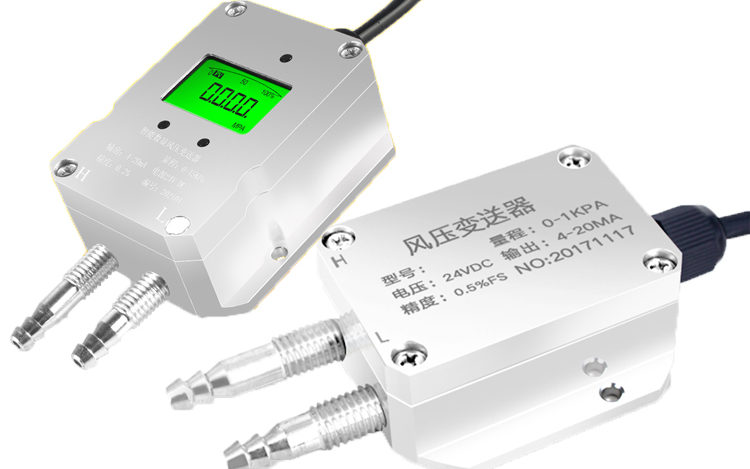
| Clean dry gas / coalescing / ventilation | 0.5–10 kPa | HM30 micro DP | 500 Pa–700 kPa, clean dry gas, ≤2 ms, Ex ia option |
| Liquid basket / bag strainer, general process | 10–50 kPa | HM31 DP | 0–10 kPa to 2 MPa, liquids or gases, 20 MPa static |
| High static, wide rangeability, HART trending | any | HM3051 smart DP | 0.125 kPa–40 MPa, 32 MPa static, HART re-ranging |
| Remote or scattered filter banks | any | HM200D wireless DP | LoRa trend to cloud, no cable run |
You can compare the whole family on our differential pressure transmitters page.
The short version for the BOM: take the maker’s terminal differential pressure at design flow, set the alarm near 70 to 80 % of it, normalise for flow if the duty varies, and pick a transmitter whose range covers the change-out while resolving the clean baseline. For a typical liquid strainer that is an HM31. For low-differential clean gas it is an HM30. When you want the trend and the option to re-range, it is the HM3051.
Frequently Asked Questions
At what differential pressure should I change a filter?
Start from the element maker’s terminal (dirty) differential pressure on the datasheet. Set the change-out alarm below it, commonly around 70 to 80 %, so you service the filter before it chokes and before the pump-energy penalty climbs. The clean baseline and terminal figure are specific to your element, so read them off that datasheet rather than copying a generic number.
Why does my filter differential pressure read high when flow is high?
Because pressure drop across a filter rises with roughly the square of flow, not with dirt alone. A clean element at 20 % over design flow can read about 1.4 times its design drop. On variable-flow systems, normalise to a reference flow with ΔP_corrected = ΔP_measured × (Q_design / Q_actual)², or alarm on the ratio of differential pressure to flow squared.
Should I use a differential pressure switch or a transmitter on a filter?
Use a switch for a constant-flow, non-critical filter where a single trip point is enough. Use a transmitter when flow varies or an unplanned change-out is costly. The continuous trend lets you schedule maintenance, catch a ruptured element from a sudden pressure drop, and apply a flow correction a fixed switch cannot.
What range and static rating should the transmitter have?
Pick a span whose upper end covers the change-out differential, with the trip near 70 to 80 % of range, while still resolving the clean baseline. A 10-to-1 ratio between dirty and clean is routine. Separately, match the static pressure rating to the line, not the differential, and zero the transmitter under live line pressure through a three-valve manifold.
Can one differential pressure transmitter handle both liquid and gas filters?
A general process transmitter rated for liquids or gases, like the HM31, covers most liquid strainers and many gas filters. Very low-differential clean-gas filtration is better served by a dedicated micro range such as the HM30. Dust-laden or corrosive media need wetted parts and fills matched to the service.
Tell us the clean and change-out differential, the line (static) pressure, and the medium. We will size the range and recommend the HM30, HM31 or HM3051.
Request a Quote Browse DP Transmitters