Pressure Transmitter Turndown Ratio: What It Costs Your Accuracy
On this page
Your datasheet shows two numbers side by side: “0.025% of span” and “Turndown 100:1.” Both look like promises, but they do not hold at the same time. Push a transmitter toward the high end of its turndown, and the accuracy you thought you bought quietly degrades until the low end of the span is worth a fraction of the headline figure. This guide is short and practical. It shows how turndown is defined, how it eats accuracy, and how to pick a range so it does not.
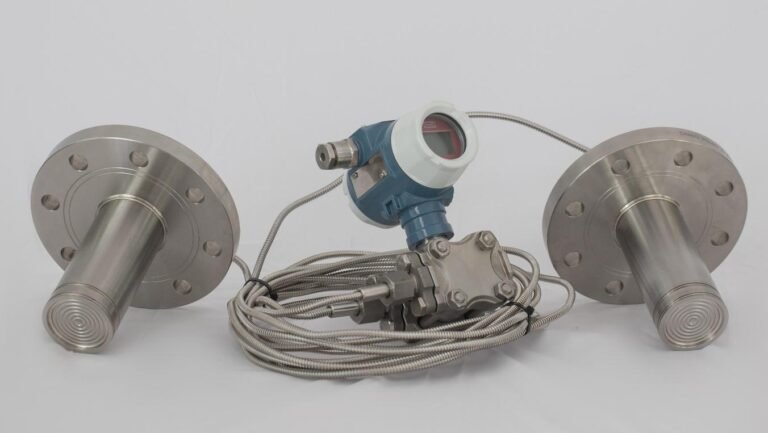
On hot service the DP cell usually sits behind a remote seal or condensate legs, which changes how zero and turndown behave; see DP on hot service.
What Turndown Ratio Actually Is (and How It Differs From Rangeability)
Turndown ratio is one number. It is the upper range limit (URL) divided by the smallest span you calibrate the transmitter to. A transmitter with a 10 MPa URL set to a 1 MPa span runs at a 10:1 turndown. Set it to a 0.5 MPa span, and you are at 20:1.
People often use turndown and rangeability interchangeably, but they describe different things. Rangeability describes the band of pressures a device can measure at all. Turndown describes how far you can shrink the calibrated span below the URL. You care about turndown because it is the knob that moves your accuracy.
An example pins it down. Take a 10 MPa transmitter rated at 100:1 turndown. It will accept a span as small as 0.1 MPa. Whether it reads well there is a separate question, and the answer is usually no. A big turndown number is not a quality badge: it tells you the transmitter will accept a tiny span, not that the reading is still good there. When the duty is genuinely low-differential, a purpose-built low-range micro differential pressure transmitter avoids the turndown penalty altogether.
Why a High Turndown Quietly Eats Your Accuracy
Here is the part the spec sheet buries. Reference accuracy is quoted at a low turndown, often the full span. Re-range below that, and a turndown term gets added to the error, and that error grows with the ratio. Take a real datasheet you can check. The Rosemount 3051S Ultra differential transmitter is rated at 0.025% of span down to a 10:1 turndown. Below that span the datasheet switches to a formula: 0.005 plus 0.0035 times the URL-to-span ratio, in percent of span.
| Turndown (URL / span) | 3051S Ultra reference accuracy |
|---|---|
| 10:1 or less | 0.025% of span |
| 12.5:1 | 0.049% of span |
| 20:1 | 0.075% of span |
| 40:1 | 0.145% of span |
| 100:1 | 0.355% of span |
Read the bottom row. At 100:1 the error is about fourteen times the headline 0.025%. The number on the brochure was real, but only near the top of the span. So a transmitter advertised at a 100:1 turndown is honest, and still a poor choice if you actually run it there. HMK’s HM3051 Smart DP follows the same logic: its datasheet lists 0.1% FS (full scale) reference accuracy with a continuously adjustable span and zero, re-ranged over HART. As with any transmitter, the best accuracy lives near the top of the rated turndown, not at the far end. That degraded figure is only the reference term; combine it with the temperature and static-pressure effects in our transmitter total error calculator to get the installed accuracy.
The physics is simple. A sensor has a fixed noise floor and a fixed zero stability. Both come from the silicon and the electronics, not from the span you select. Shrink the span, and those fixed errors do not shrink with it. So they make up a bigger share of the smaller span. That is the whole mechanism behind the table above.
Reading the Datasheet Footnote: % of Span vs % of URL
Two transmitters can both claim “0.075% accuracy” and behave nothing alike. The difference hides in three words: of span, or of URL. GB/T 1226-2017 ties accuracy class to span, and most datasheets follow that convention, but not all. Take a 10 MPa URL transmitter quoted at 0.075%, and watch what happens when you re-range it to a 1 MPa span.
| Setting | Spec % of span | Spec % of URL |
|---|---|---|
| 0 to 10 MPa (1:1) | plus/minus 7.5 kPa | plus/minus 7.5 kPa |
| 0 to 1 MPa (10:1) | plus/minus 0.75 kPa | plus/minus 7.5 kPa |
Under “% of span,” the error shrinks with the span, which looks like a free lunch. Under “% of URL,” the error is pinned to the 10 MPa URL. Re-range 10:1 and that 7.5 kPa is now 0.75% of your 1 MPa span: same hardware, ten times worse in percent of reading. When the footnote says “of URL” or adds a turndown term, you are in the second column.
Sizing the URL So Your Operating Point Sits at Low Turndown
The fix is not a better transmitter, just a better range choice. Pick the URL so your normal operating span sits at a modest turndown. For an analog unit, aim for 5:1 or tighter. For a smart unit, stay well inside the rated turndown.
On Sinopec refinery work I have seen this play out more than once. A separator running near 1.0 MPa(g) gets a 0 to 10 MPa transmitter chosen for headroom. That is a 10:1 turndown, and the low-end reading drifts out of tolerance. Drop the URL to 0 to 1.6 MPa, about 1.6:1, and the reading holds.
Put numbers on it. With a URL-referenced 0.075% spec, the 10 MPa unit carries a fixed 7.5 kPa, which at a 1.0 MPa reading is 0.75% of reading. The 0 to 1.6 MPa unit carries 1.2 kPa instead, about 0.12% of reading at the same point. Same duty, six times tighter, just for choosing the range with a little care. Headroom you never use is turndown you pay for in accuracy, so size the URL to the duty, add a sensible margin for surges, and stop there.
Which HMK Transmitters Re-Range, and to What Turndown
Re-ranging is not a universal feature. Whether you can do it, and how far, depends on the transmitter class. The HM3051 datasheet covers a 0.125 kPa to 40 MPa family, so the range you order matters as much as the model. Here is how the HMK lineup sorts out.
| Transmitter | Re-range method | Practical note |
|---|---|---|
| HM3051 Smart DP | HART, digital | 0.1% FS; continuously adjustable span and zero |
| HM29 Digital Intelligent | HART, digital | Re-range over the bus; verify accuracy at the new span |
| HM22 High Accuracy | Limited trim | High-accuracy class; choose the range at order |
| HM20 / HM25 analog | Zero/span trim only | Factory-ranged; small adjustment, not free re-ranging |
The lesson sits in the bottom row. An analog transmitter is not a smart one with a wider knob. You cannot buy a general-purpose analog unit and expect to dial a large turndown later. If re-ranging is part of the plan, buy a HART model such as the HM29 from the start; for accuracy-led duties, the precision class earns its place. A single re-rangeable smart model can also cover several duties from one stock part, which trims spare-transmitter inventory: you trade a higher unit price for fewer line items on the shelf, and on a large site that often pays for itself the first time a stocked spare fits the failed point.
Re-Ranging in the Field: HART/Digital vs Analog Zero-Span
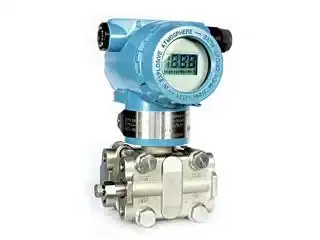
Field re-ranging splits two ways. A HART or digital transmitter takes a new range from a handheld or asset manager. An analog transmitter offers only a zero and span trim, around the factory range. The first is a real range change; the second is a nudge.
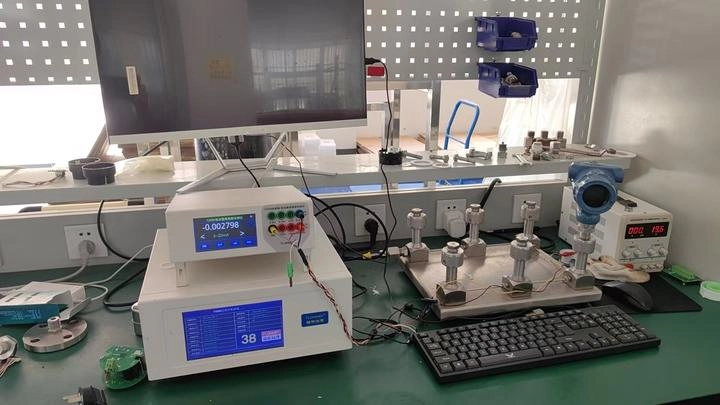
Either way, accuracy follows the new turndown, not the old datasheet line. After any re-range, recompute the error at the new span and confirm it still meets the loop needs. JJG 882-2019, the verification regulation for pressure transmitters, expects the device checked at the range it now runs. Re-range on the bench or in the field, then verify on that span and log it. Note the new range, the date, and the as-found and as-left readings on the calibration record. A re-range you never verify is a number you cannot defend at audit.
Frequently Asked Questions
Divide the upper range limit by the smallest calibrated span. A 10 MPa URL set to a 1 MPa span is a 10:1 turndown. Set it to 0.5 MPa and you are at 20:1.
Yes, when the spec is referenced to URL or carries a turndown term. The error stays tied to the URL, so as a percent of your smaller span it grows. Read the footnote to see which convention applies.
Rangeability is the band of pressures the device can measure at all. Turndown is how far you can shrink the calibrated span below the URL. Turndown is the one that drives accuracy.
No. A 100:1 rating means the transmitter accepts a very small span, not that it reads well there. Published figures often show the error several times worse at 100:1 than near full span.
An analog unit gives only a zero and span trim near its factory range. For a real range change with a useful turndown, use a HART or digital transmitter such as the HM29 or HM3051.
Keep the normal operating span at 5:1 or tighter on an analog unit. On a smart unit, stay in the lower half of the rated turndown for the duty that matters. Hold the wide turndown in reserve for surge headroom.
Bottom line: pick the URL from your duty, not from a wish for headroom. Keep the normal span at 5:1 or tighter for analog, and well inside the rated turndown for smart units. If you must cover a wide band on one device, choose a HART model like the HM3051 and read the turndown-dependent accuracy clause before you commit. After any field re-range, verify at the new span per JJG 882-2019 and record it. That is how the 0.025% on the datasheet stays the 0.025% in your loop.
Standards and references: Beamex accuracy small print · Rosemount 3051S reference accuracy vs turndown · ISA Standards · NIST Office of Weights and Measures
Need help picking the right range and turndown?
Tell us your operating pressure and duty, and we will size the URL and recommend an HM3051, HM29, or HM22 that holds accuracy where you actually run.
Request a Quote Browse Pressure TransmittersRelated tool: Put these numbers to work in the turndown & accuracy calculator: enter the URL and your span to see the installed accuracy before you order.