Wireless Pressure Transmitter: How to Choose & Deploy One
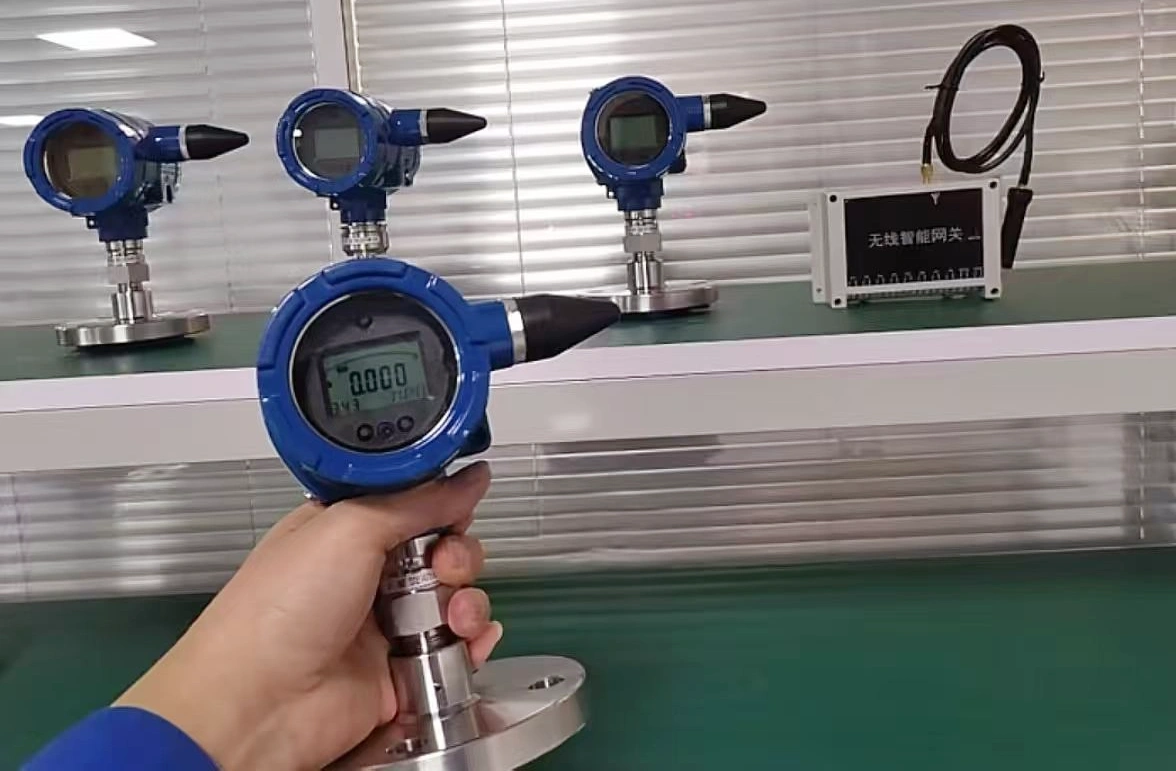
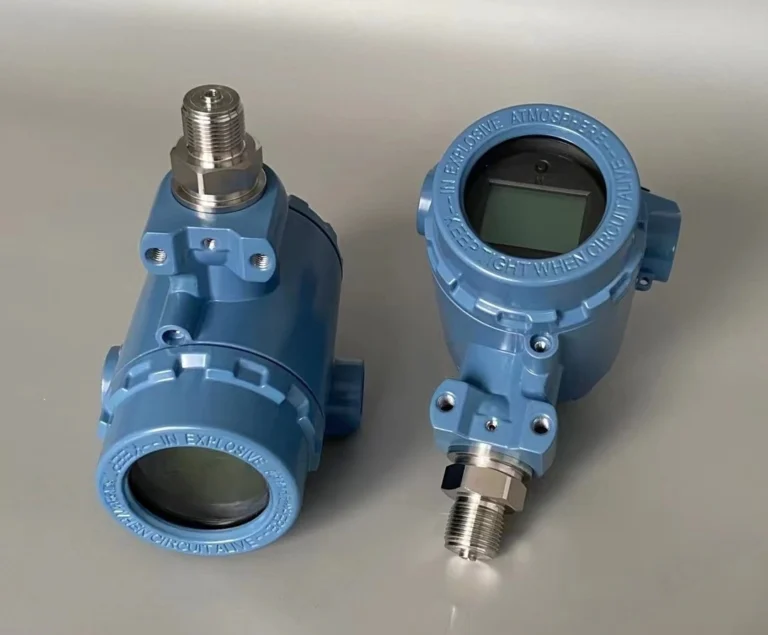
A wireless pressure transmitter earns its keep in one place: the cost of not running cable. On a remote pump station I spec HM200 LoRa units because trenching conduit across the site costs more than the instruments themselves. That is the real pitch, not the missing wire. But the moment you go wireless you pick up three new problems the cable never had: which radio protocol to use, how long the battery lasts, and how the reading reaches your SCADA. Decide whether the point even belongs on wireless first, then work those three.
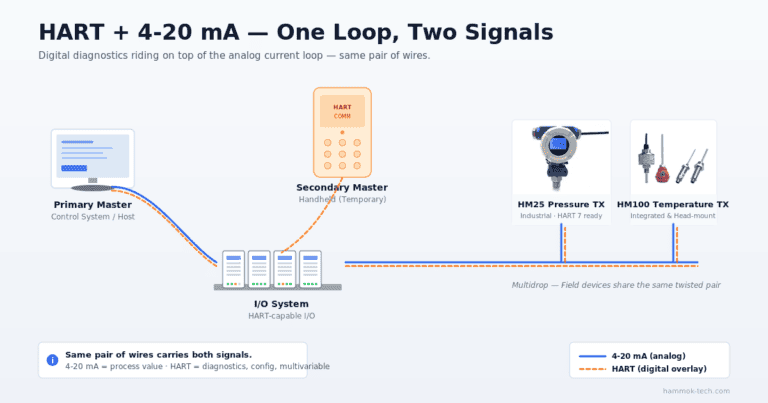
Related: For the wired output options on a pressure transmitter – 4-20 mA versus 0-10 V, 1-5 V, and RS485 are compared in pressure transmitter output signals.
When Wireless Beats Running Cable (and When It Doesn’t)
Wireless wins where the wire is expensive, impossible, or temporary. Five cases cover most of it:
- A remote asset with no nearby junction box, like a wellhead or lift station.
- Rotating or moving equipment where a cable would twist off.
- A temporary test or commissioning measurement.
- A brownfield retrofit where opening up conduit runs is half the project cost.
- A point that would force a cable trench through a classified or paved area.
The wire still wins for fast control loops and safety functions. A 4-20 mA or HART line updates continuously and never sleeps, so a PID loop holding a tight setpoint, or a SIL-rated trip, stays hard-wired. Wireless transmitters report on an interval, not continuously, which is fine for monitoring and trending but wrong for high-speed control. If you are weighing the signal layer itself, our HART vs 4-20 mA guide covers the wired side.
The Protocol Decision: WirelessHART vs LoRa vs Bluetooth vs Cellular
This is the choice the product datasheets gloss over, and it drives everything else. There are four practical radios.
WirelessHART (IEC 62591:2016) is the industrial incumbent, with ISA100 Wireless as its main rival. Both build a self-healing 2.4 GHz mesh on IEEE 802.15.4 radio, so every device extends the network, and WirelessHART speaks native HART. It suits dense plant retrofits where you add dozens of points inside a unit. The cost is the gateway and the mesh: short hop range, higher per-point price.
LoRa (LoRaWAN) trades data rate for distance and power. A single gateway covers kilometers of open site on a coin of energy, which is why our HM200 uses it for scattered outdoor assets like water networks and tank farms. You give up the mesh and high update rates, but for a reading every minute across a wide site, nothing else is as cheap to cover.
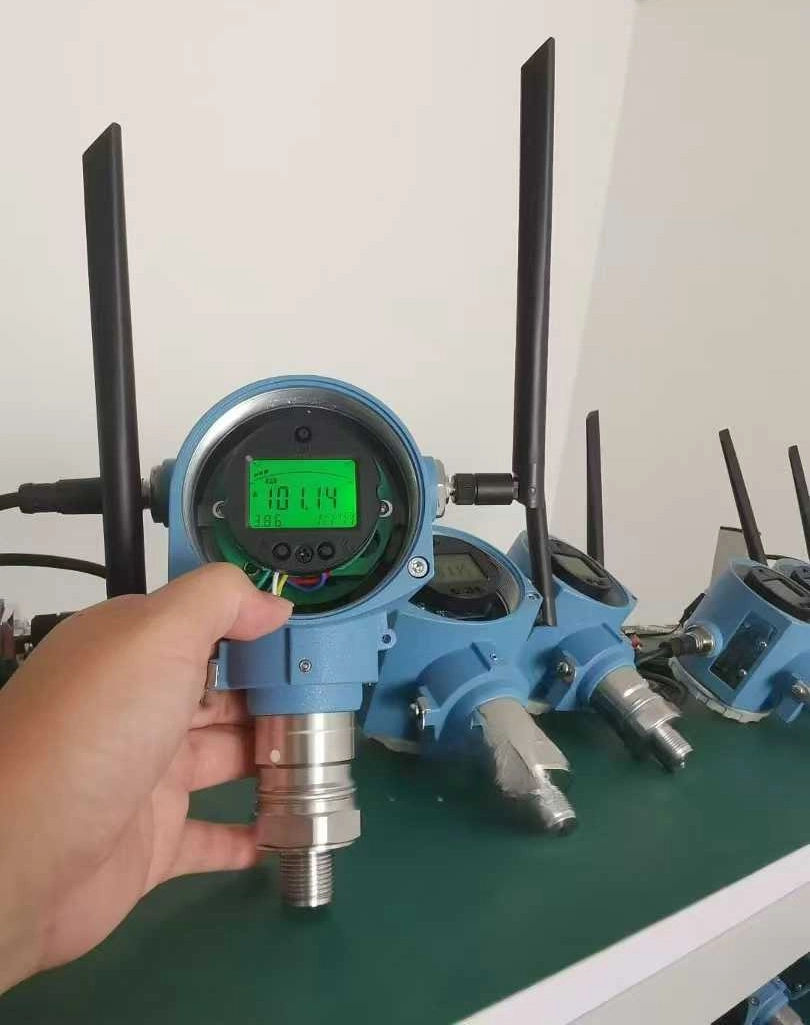
Bluetooth Low Energy is short-range by design. It is the right radio when a technician walks up with a phone to read or configure a transmitter, which is how the HM200F is used, not for permanent telemetry. Cellular and NB-IoT (3GPP) skip the gateway entirely: the transmitter talks straight to a carrier network. That fits a lone asset miles from any other instrument, at the price of a SIM and recurring data. Where there is no power either, a solar unit like the HM200J keeps it running.
| Protocol | Range | Power | Infrastructure | Best for |
|---|---|---|---|---|
| WirelessHART / ISA100 (IEC 62591:2016) | Short hops, mesh | Moderate | Gateway + mesh | Dense in-plant retrofit |
| LoRa | Kilometers | Very low | One gateway | Scattered outdoor assets |
| Bluetooth LE | Meters | Very low | Phone/tablet | Walk-up read & config |
| Cellular / NB-IoT | Carrier coverage | Higher | SIM + data plan | Isolated single asset |
Power and Battery Life: Update Rate vs Years in the Field
Battery life is not a fixed number on a datasheet; it is a setting you choose. The radio sleeps between reports, so the report interval is the biggest lever you own. Push readings every few seconds and you trade years for weeks. Report every few minutes, which is all most monitoring needs, and a unit like the HM200 holds its rated 3+ years on one battery.
Set the interval to the decision, not the maximum. If an operator visits a remote tank weekly, a reading every fifteen minutes already gives 600+ samples between visits. There is no reason to wake the radio faster and burn the battery for data nobody reads. Where the duty genuinely needs frequent reports, move to a powered or solar-harvesting unit such as the HM200J rather than fighting the battery curve.
Range, Gateways, and Getting Data into SCADA
A wireless transmitter is only useful once its number lands in your control system, and that path is the part teams underestimate. The transmitter talks to a gateway; the gateway talks to your SCADA. For LoRa, an HM200 reports to an HL10A LoRa gateway, which then exposes the data over Modbus TCP or MQTT to a PLC, historian, or cloud dashboard. Larger sites add a monitoring unit from the HL200 to HL700 range to aggregate many gateways.
Two things decide whether this works on your site. First, line of sight: LoRa range collapses if the gateway sits behind a concrete wall or a tank, so mount it high and central. Second, the integration protocol: confirm your SCADA speaks Modbus or MQTT before you buy, because a stranded gateway with no driver into the historian is a common and avoidable failure. Browse the full wireless sensor systems range to match transmitters to a gateway that fits your network.
Accuracy, Environment, and Certifications
Wireless does not mean second-rate measurement. The HM200 runs a diffused-silicon or single-crystal-silicon sensing element at ±0.25% FS, the same class as a wired transmitter, across ranges to 60 MPa. The radio changes how the number travels, not how it is measured.
What does change is what you must check on the wireless side. Confirm the enclosure rating for an outdoor pole or a wet well, the operating temperature band for the electronics and the battery, and the hazardous-area certification if the point sits in a classified zone. A battery-powered radio still needs the right Ex marking to live in Zone 1, so put that on the data sheet rather than discovering it at install.
A Wireless Pressure Transmitter Selection Checklist
- Does the point belong on wireless? Remote, rotating, temporary, retrofit, or trench-through-hazardous, yes; fast control or SIL trip, keep it wired.
- Pick the radio. WirelessHART for dense in-plant mesh, LoRa for scattered outdoor assets, Bluetooth for walk-up reads, cellular or solar for an isolated point.
- Set the report interval to the decision and read the resulting battery life, or move to a solar unit if the duty is frequent.
- Confirm the data path end to end: gateway, Modbus or MQTT, into your SCADA.
- Match accuracy, enclosure, temperature, and Ex to the point before you order.
| If your point is… | Lean toward |
|---|---|
| Scattered outdoor asset (water, tank farm) | LoRa — HM200 / HM200J solar |
| Dense in-plant retrofit, many points | WirelessHART mesh |
| Differential pressure, wireless | HM200D |
| Walk-up read with a phone | Bluetooth — HM200F |
| Pressure and temperature at one point | HM200H |
Frequently Asked Questions
What is a wireless pressure transmitter?
It is a pressure transmitter that sends its reading over a radio link instead of a 4-20 mA or HART cable. A battery or solar supply powers it, and a gateway relays the signal to your control system, so you can monitor pressure where running wire is impractical or too expensive.
WirelessHART or LoRa: which should I choose?
Use WirelessHART when you are adding many points inside a plant and want a self-healing mesh that speaks native HART. Use LoRa, as the HM200 does, when assets are spread across kilometers of open site and you want multi-year battery life from a single gateway.
How long does a wireless pressure transmitter battery last?
It depends on the report interval. At a sensible monitoring interval of minutes, a unit like the HM200 lasts 3+ years on one battery. Reporting every few seconds cuts that sharply, so for high-rate duty choose a solar or externally powered version.
How does the signal get into my PLC or SCADA?
The transmitter reports to a gateway, such as the HL10A for LoRa, which exposes the data over Modbus TCP or MQTT. Confirm your SCADA or historian speaks one of those protocols before you buy.
Is a wireless transmitter as accurate as a wired one?
Yes. The HM200 measures at ±0.25% FS with a silicon sensing element, the same class as a wired transmitter. Wireless changes how the reading travels, not how it is taken.
Planning a wireless pressure monitoring point?
Tell us the location, range, update rate, and how far it is from power and your SCADA. Our engineers return a protocol, model, and gateway plan that fits the site.
Request a Quote Browse Wireless Sensor Systems