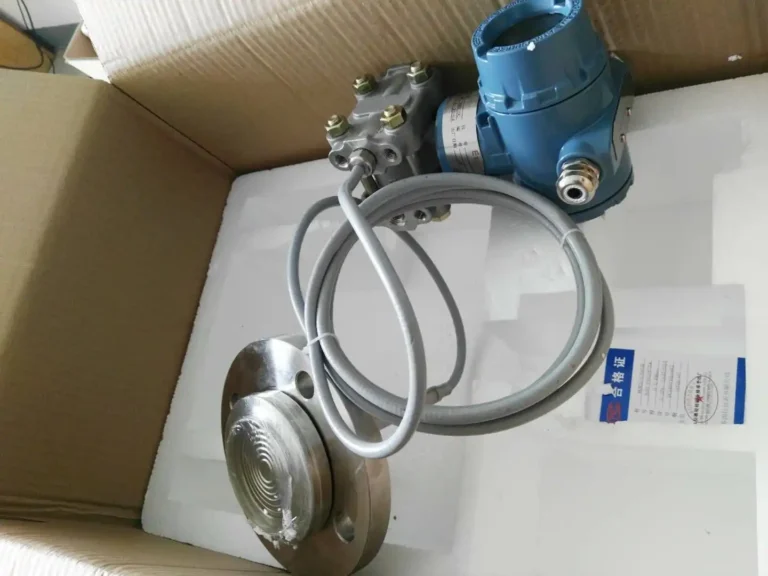
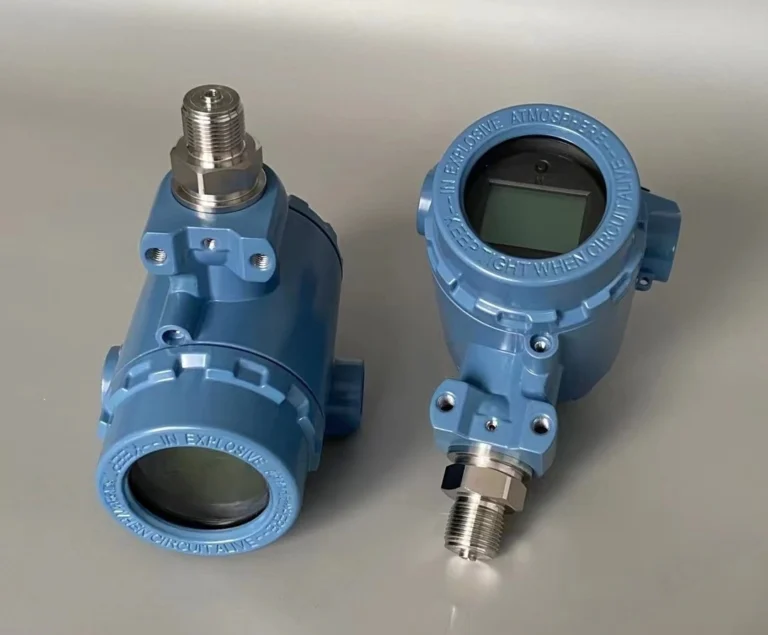
High-Temperature Differential Pressure Transmitter Guide
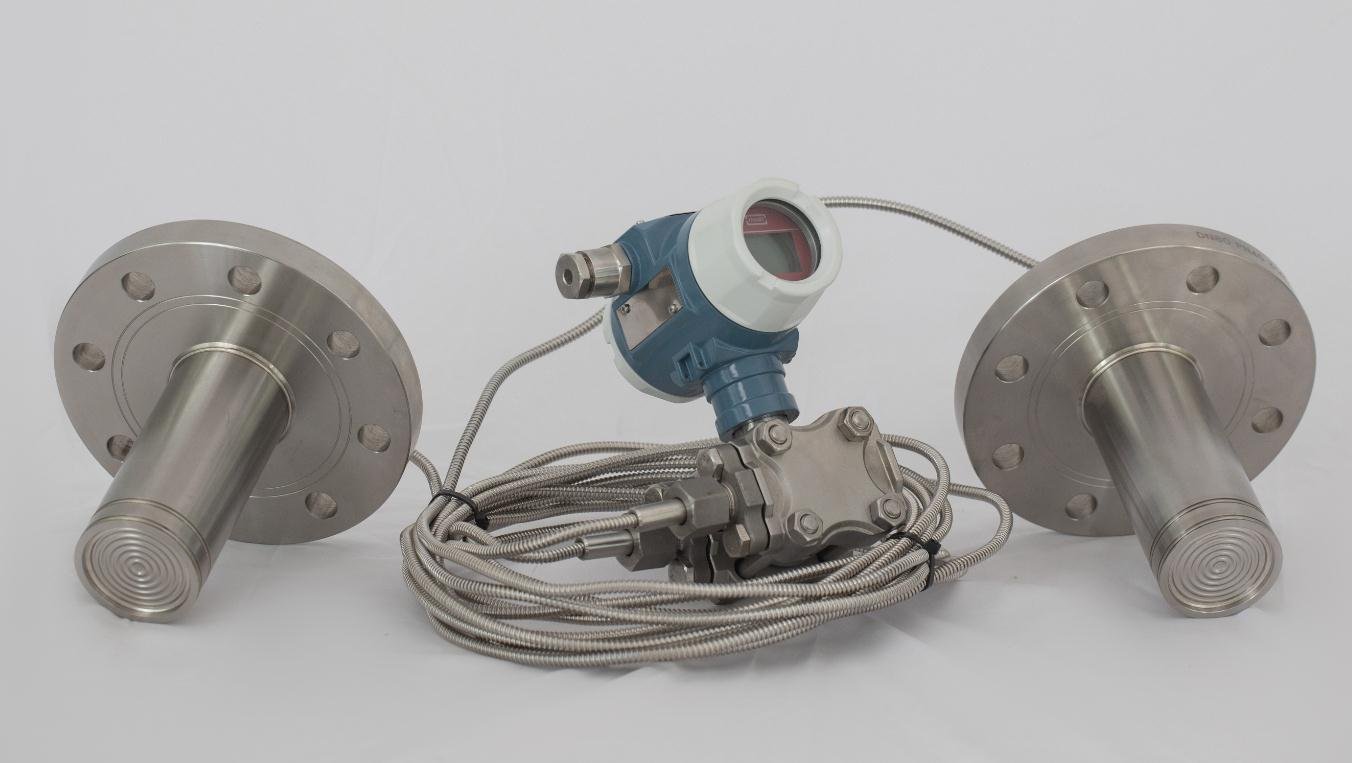
A standard differential pressure transmitter sits at the same temperature as its electronics, and that ceiling is low. On the capacitive HM3051 cell the amplifier is rated only to +93 °C. The silicone-filled measuring element reaches +104 °C. Suppose your process is superheated steam at 250 °C, hot circulating oil at 280 °C, or a column bottom above 300 °C. You cannot bolt the cell straight onto the tap and expect it to live.
Related: on hot service a fill leg may fail — see impulse lines for pressure & DP transmitters for when to switch to a seal.
When the hot medium is also viscous or crystallizing, a flush process diaphragm keeps it out of the cell; see flush mount pressure transducer.
On a DP instrument the heat reaches the sensor through two connections, not one, so the measurement problem and the survival problem are one design. This guide covers the temperature limits that decide that design, the three routes open to you, and how to stop a hot service from corrupting your zero.
High-temperature service often calls for a remote diaphragm seal with a high-temperature fill; see the diaphragm seal selection guide for the capillary trade-offs.
Why heat breaks a DP transmitter
A DP cell measures the difference between a high side and a low side. It has two process connections, two isolating diaphragms, and a fill fluid behind each one. Heat travels into the cell along whichever path is shortest. The part that fails first is rarely the diaphragm. It is the electronics or the fill fluid.
On the HM3051 the limits stack up in a clear order. The amplifier works from −29 to +93 °C. The standard silicone-filled element runs from −40 to +104 °C. A flanged version with standard silicone oil reaches −40 to +150 °C. Above that the standard fill breaks down and the zero drifts. So the first question is not “what is my pressure.” It is “what temperature will reach the cell body after the impulse piping has shed some heat.” If that number is under about 90 °C, you can often direct-mount with a short stand-off. If it is higher, you put distance, fill fluid, or condensate between the process and the cell.
Three ways to measure DP on hot process
There are only three honest ways to measure differential pressure on a hot process, and most projects mix two of them.
The first is direct mount with cooling: a stand-off or finned impulse section that lets the gas or liquid lose heat before it reaches the cell. It is the cheapest route and it works when the body temperature lands inside the cell rating. It depends on the impulse legs staying full and symmetrical. The second is the remote diaphragm seal with capillary. A sealed diaphragm sits at the hot flange, and a fill fluid carries the pressure down a capillary to a cell mounted somewhere cooler. On a DP instrument you need a matched pair of seals, one per side, because any difference between the two legs reads directly as differential pressure. The third is impulse-line cooling with condensate, used mostly on steam. You let the vapour condense in vertical legs and measure through cool water columns.
| Route | Best for | Typical limit |
|---|---|---|
| Direct mount + cooling stand-off | Cool-able gas/liquid, low cost | cell body in rating (≤ ~104 °C) |
| Flanged cell + high-temp silicone | Hot oil, steam below the fill ceiling | +15 to +315 °C |
| Matched remote-seal capillary pair | Very hot, far-apart, or aggressive taps | cell kept cool; process > 315 °C |
I tell project teams to fix this route before they pick a model number. The route sets the fill fluid, the capillary length, and half the installation cost. The cooling-stand-off route shares its physics with single-sided high-temperature gauge measurement. We cover that hardware in our high-temperature pressure transducer guide; here the focus stays on the two-sided DP problem.
Temperature limits of a DP transmitter
The deciding figure is the temperature at the cell, not at the process. Use the rated bands below as the cut points.
| Temperature reaching the cell | Workable approach (HM3051 / HM1151 family) |
|---|---|
| up to +93 °C | Direct mount; amplifier still in range |
| up to +104 °C | Direct mount, standard silicone-filled element |
| up to +150 °C | Flanged cell, standard silicone fill |
| +15 to +315 °C | Flanged cell, high-temperature silicone fill |
| above +315 °C | Remote seal with capillary and an external cooling section, cell kept well below its limit |
These bands are HMK’s own published limits for the capacitive DP element, and they show why fill-fluid choice carries the design: the same flanged cell stretches from 150 °C to 315 °C purely by changing the oil. For comparison, the compact HM31 micro-DP transmitter, which is aimed at airflow and low-range flow, is rated only −10 to +80 °C at the body, so it belongs on cool service or behind a cooling section, never on a hot tap.
Fill fluid and matched capillaries
Fill fluid is the part engineers underestimate. Standard silicone oil covers most service to about +150 °C in a flanged cell. High-temperature silicone extends a flanged HM3051 to +315 °C. Pick the fill for the hottest point the diaphragm will see, not the average, because the oil ages fastest at its peak.
The trap on a DP instrument is the capillary pair. The two legs should be the same length, the same oil, and the same routing. Matched legs are the default for a reason. Vendors will supply an unequal-length pair for an awkward layout, but only within a stated limit, often a few metres of difference, and the pair ships with a calibrated correction. Treat that as the exception, not the starting point.
The fill fluid carries its own thermal expansion and its own hydrostatic head. A standing fill column biases the zero before any process pressure arrives. You correct that bias once at commissioning with a zero migration, positive or negative, so the cell reads zero at true zero differential. The harder problem is drift after commissioning. Suppose one capillary runs up a sunlit pipe rack and the other hugs a cold wall. The two columns reach different temperatures, their densities diverge, and the cell reads a differential that is not there. I have seen this on remote-seal level installations where the two capillaries were routed apart: the reading wanders between day and night, and the fix is not the transmitter but the routing. Re-run both legs together, insulate them as a pair, and the drift goes away. If your media is aggressive as well as hot, match the wetted diaphragm to it. The HM3051 element comes in 316L stainless, Hastelloy C, Monel, or tantalum.
Measuring steam DP with condensate pots
Steam is the most common hot DP service and it has its own discipline. For orifice flow or column DP on steam you usually let the vapour condense in two vertical legs and measure through water columns, which keeps the hot vapour off the cell entirely. The rule that matters is that both condensate legs must hold the same height of water, because the transmitter cannot tell a real process differential from a hydrostatic one.
Here is the arithmetic, because it is worth doing once. If two condensate legs differ in height by Δh, the false differential is Δh × ρ × g. Take a 50 mm mismatch in water near 100 °C, where the density is about 958 kg/m³. The error is 0.050 × 958 × 9.81 ≈ 470 Pa, or 0.47 kPa. On a 5 kPa flow span that is a 9.4 % error, larger than the whole accuracy budget of the instrument. So condensate pots go in as matched pairs at equal elevation, and we mount the cell below both taps so the legs stay full. The single-sided gauge version of this hardware, the trap selection, sits in our pigtail siphon vs condensate pot guide. The DP case adds the second leg and the balancing rule. Orifice sizing follows ISO 5167:2022 and ASME PTC 19.5-2004. The saturation density you need comes from the NIST steam tables.
Choosing a method by service
The right route depends on the medium as much as the temperature.
For saturated or superheated steam flow, use condensate legs and a silicone-filled cell below the taps. The vapour never reaches the diaphragm. For hot circulating oil, condensate is not an option. Use a flanged cell with high-temperature silicone fill if the oil stays under 315 °C, or remote seals with a cooling section above it. For distillation column differential, remote diaphragm seals are usual because the taps are far apart and hot. Keep the two capillaries identical and insulated together. For furnace or boiler draft, the pressures are tiny but the gas is hot and dirty. A cooling stand-off with a low-range cell, purged if the gas is sooty, is the practical choice. In every case, decide how you keep heat off the cell — by distance, by fill fluid, or by condensate — before you choose the range.
HMK DP transmitters for hot service
For most hot DP service the capacitive HM3051 is the working choice. It accepts liquid, gas, or steam, spans 0.125 kPa to 40 MPa with turndown, and outputs 4–20 mA or 4–20 mA with HART. It carries flameproof and intrinsically safe ratings. With high-temperature silicone in a flanged body it reaches +315 °C. The HM1151 uses the same capacitive sensing element without the smart electronics, for analog loops. The compact HM31 suits cool airflow and low-range DP up to +80 °C at the body. Choose the diaphragm material — 316L, Hastelloy C, Monel, or tantalum — for the hot medium, not just the temperature. Confirm the static-pressure rating (4, 10, 25, or 32 MPa) against your line.
HM3051 Smart DP Transmitter
Capacitive cell, HART, flanged high-temp silicone to +315 °C; the hot-service workhorse.
View Specs →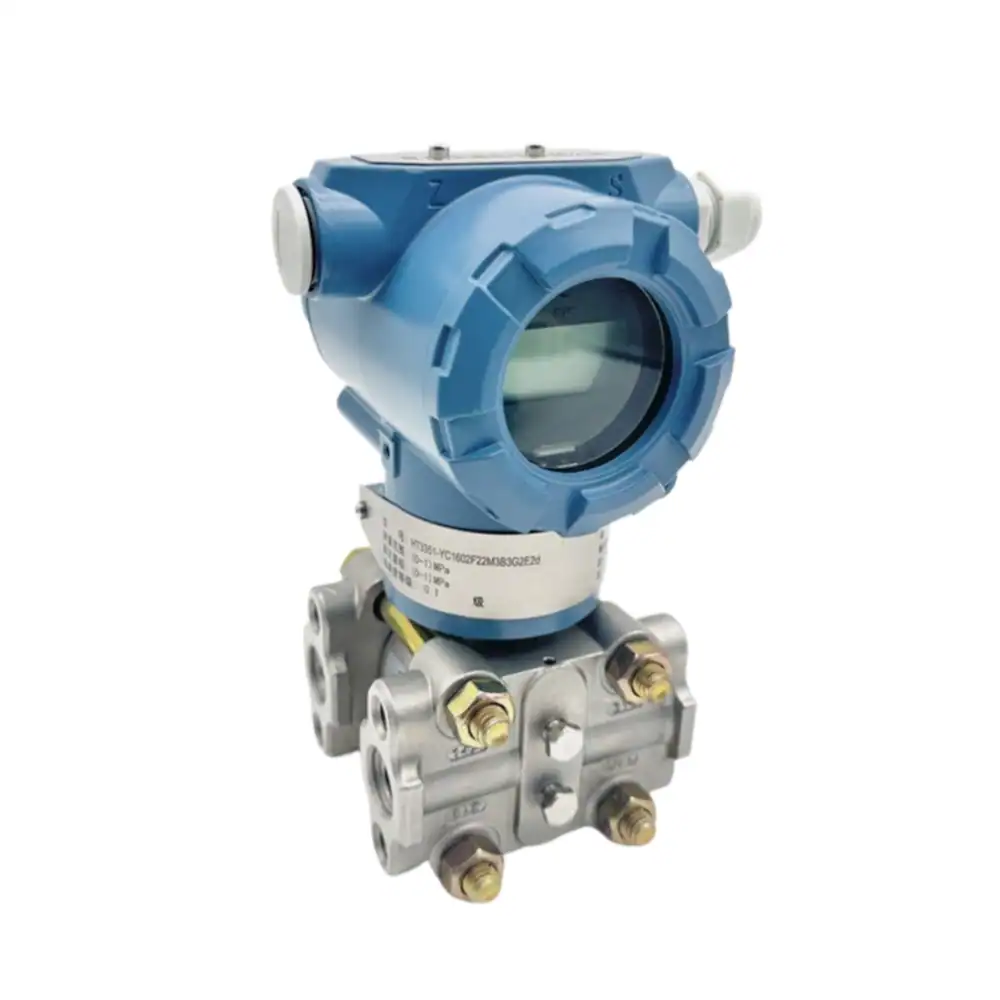
HM1151 Capacitive DP Transmitter
Same sensing element as the HM3051, analog 4–20 mA loops.
View Specs →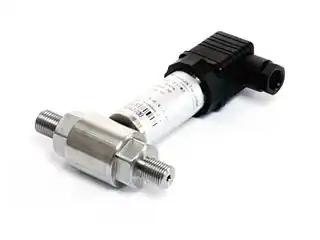
If you want help matching a cell, fill, and seal to a service, our team can spec it with you. See the differential pressure transmitter range, or send the service data through contact us.
The rule I give every project is short. Under about 90 °C at the body, direct-mount an HM3051 or HM1151 with a short stand-off. Between roughly 90 and 315 °C, use a flanged cell and pick standard or high-temperature silicone for the peak the diaphragm will see. Above 315 °C, or whenever the two taps sit at different temperatures, move to a matched pair of remote seals and balance the legs.
Spec a hot-service DP transmitter with our engineers
Send your media, temperature, and span. We will return a cell, fill fluid, and seal selection.
Request a QuoteFrequently Asked Questions
What is the maximum process temperature for a differential pressure transmitter?
At the cell body the limit is low — the HM3051 amplifier is rated to +93 °C and a standard silicone element to +104 °C. Higher process temperatures are handled by keeping the heat off the cell with a flanged high-temperature fill (to +315 °C), a cooling stand-off, or remote seals, so the cell itself stays in range.
Should I use remote seals or condensate pots for high-temperature DP?
Use condensate pots for steam, where the vapour condenses into balanced water legs for free. Use remote diaphragm seals for hot oil, viscous, or crystallizing media that cannot be allowed to condense or freeze in an impulse line. On steam, condensate pots are usually cheaper and more stable when the legs are equal height.
Does capillary length affect accuracy on a DP transmitter?
Yes. Longer capillaries add response time and make the fill fluid’s temperature sensitivity more visible. The bigger risk is mismatch: two legs of different length, fill, or routing produce a temperature-dependent false differential, so always install the pair identically and insulate them together.
Which fill fluid do I need for hot oil service?
Standard silicone covers a flanged cell to about +150 °C; high-temperature silicone extends the HM3051 to +315 °C. Select the fill for the hottest point the diaphragm sees, because the oil degrades fastest at its peak temperature.
Can I use a compact micro-DP transmitter on a hot line?
No. The HM31 is rated −10 to +80 °C at the body and is intended for airflow and low-range DP. On hot service it belongs behind a cooling section or should be replaced by a flanged HM3051 with the right fill.