Pigtail Siphon vs Condensate Pot: Steam Pressure Trap Selection Guide
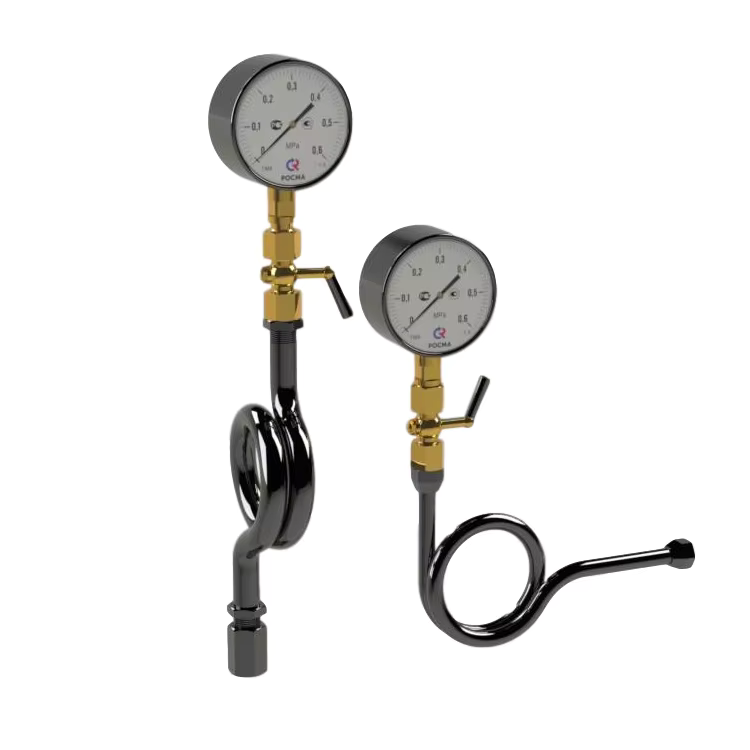
For a pressure transmitter or gauge on a steam line, the electronics will not survive direct steam contact. You need a cooling stage between process and instrument: a pigtail siphon for most small-bore steam pressure measurements, or a condensate pot for differential pressure, dirty service, or pressure above 4 MPa(g). This guide walks the decision, the sizing math, the material call, and the HMK transmitter pairing.
The same heat that needs a siphon on a gauge line drives transducer selection on hot taps; see our high-temperature pressure transducer guide.
On a differential measurement the same steam needs two balanced condensate legs rather than one tap; that case is covered in measuring steam DP with condensate pots.
What These Parts Do, and Why Skipping Them Kills Transmitters
Saturated steam sits at +184 °C at 1.0 MPa(g) and +254 °C at 4.0 MPa(g). General-purpose transmitters are rated to +85 to +120 °C process media; even high-temp classes top out around +150 °C. The pigtail siphon or condensate pot fills the gap with a column of cooler condensate between live steam and the diaphragm. Pressure transmits through the water column accurately, temperature decouples by the time it reaches the sensor. Skip this stage and you get diaphragm-seal aging, zero drift within weeks, and start-up water hammer that can over-range the diaphragm.
The Three Options on a Steam Line
- No deliberate trap, just a long impulse line. Works only on clean saturated steam below about 0.5 MPa(g) with 3 m+ of horizontal tubing. Above that, a slow-motion failure.
- Pigtail siphon. Coil or U-bend of half-inch or three-quarter-inch pipe, prefilled with water. Cheap and standard for small-bore steam pressure measurement. Per GB/T 1226-2017 and ASME B40.100-2013, this is the default for general steam gauges.
- Condensate pot (also called seal pot or knock-out pot). A small welded vessel holding 100 to 1000 ml of condensate. Mandatory for DP transmitters on steam-flow elements, and good practice on any service with dirty condensate or long impulse lines.
When a Pigtail Siphon Is Enough
Pick a pigtail when all of these are true:
- Single-variable pressure (gauge or absolute), not differential.
- Steam pressure under 4 MPa(g).
- Clean saturated steam, not fouling service.
- Line DN50 or smaller; tap branch is half-inch or three-quarter-inch.
- Instrument within 2 m of the tap.
On petrochemical light-utility headers (0.8 to 1.6 MPa(g) saturated), pigtails routinely last ten-plus years if the geometry is right and the loop was filled at commissioning. We have replaced pigtails only because the coil corroded through from the outside, never because the trap function failed. Match the pigtail material to the transmitter wetted parts, or step one grade more conservative.
When You Need a Full Condensate Pot
Step up to a condensate pot when any of these is true:
- DP transmitter on orifice or wedge steam-flow elements. Two pigtails almost never give matched condensate column heights; pots do.
- Steam above 4 MPa(g), or temperature above off-the-shelf pigtail ratings.
- Dirty or scaling condensate: oil- or coal-fired boiler steam, geothermal, process steam with carryover.
- Long impulse lines (over ~3 m, especially vertical drops).
- Freezing-climate installations where the impulse line needs heat tracing. A pot traces as a single unit, while a coiled pigtail traces unevenly.
On three EPC steam-flow projects in the last eighteen months, two original P&IDs had pigtails on the DP legs; both caught zero drift on commissioning and re-spec’d to small carbon-steel pots. Pots are the safer specification when DP or dirty service is involved. GB/T 23410-2009 gives sizing and pressure-rating guidance for steel knock-out pots in instrument tap service.
Sizing — Volume, Drop, and Cooling Length
Pot volume. Five to ten times the impulse-line dead volume between pot and transmitter. A typical 6 mm ID, 2 m impulse line is ~57 ml dead volume; a 250 to 500 ml pot gives the margin you want. We default to 500 ml on petrochemical service.
Pigtail cooling length. Below 2 MPa(g) saturated, a half-inch coil with two full turns cools adequately at ambient up to +40 °C. Add a turn per MPa above 2 MPa, or step up to a pot.
Vertical drop. Minimum 300 mm from the steam main tap down to the bottom of the pigtail or pot. The drop is what holds the cool water column against steam pushing back up. Transmitter mounted level with the tap means the pigtail dries during shutdown and fails on the first hot startup.
Material Selection by Service
| Steam service | Pigtail | Condensate pot | Transmitter wetted parts |
|---|---|---|---|
| Clean saturated, ≤ 1.6 MPa(g) | Carbon steel (Sch 80 min) | Carbon steel A106 Gr B | Match |
| Clean saturated, 1.6–4.0 MPa(g) | Carbon steel or 316L | Carbon steel A106 Gr B | 316L |
| Superheated ≤ 350 °C | 316L | 316L A312 | 316L |
| Boiler service w/ carryover | 316L or Monel | 316L or duplex | 316L + diaphragm seal if scaling |
| Sour service / H2S | Hastelloy C-276 or Monel | Hastelloy C-276 | Same alloy + remote diaphragm seal |
Never let the pigtail or pot become the corrosion-weak link. Match or exceed the transmitter wetted-part grade.
Installation Practice and the Failures That Hide
Three install mistakes account for nearly every condensate-pot or pigtail failure we have diagnosed on commissioning:
- Pigtail orientation. The U-bend must hang below the tap so condensate pools under gravity. A horizontal install drains within an hour and steam hits the transmitter at full temperature. The single most common failure.
- Pot mounting height. The pot must sit lower than the tap so condensate flows in. Mounted higher (on the instrument bracket) it never fills, and the impulse line stays full of steam.
- No prefill. Both pigtails and pots must be filled with clean water before pressurising. Otherwise the first slug of hot steam hits the diaphragm at full temperature for several minutes. We carry a water bottle on commissioning rounds for this step.
Add a quarter-turn ball valve drain at the bottom of every pot or pigtail U for periodic blowdown: quarterly on clean steam, monthly on dirty service.
Pairing HMK Transmitters with the Right Trap

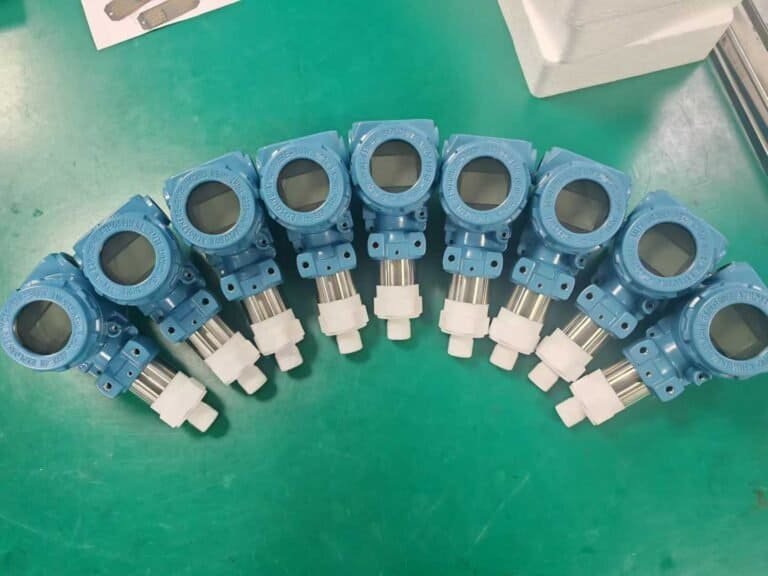
HM26 High-Temperature Pressure Transmitter
Half-inch carbon-steel pigtail. Saturated steam below 1.6 MPa(g). Common spec on light utility headers.
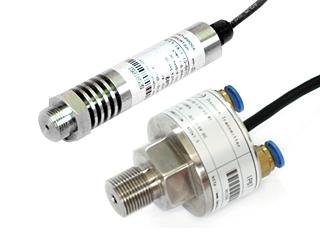
HM80 High-Temperature Pressure Transmitter
316L pigtail or small condensate pot. Superheated steam or pressures above 1.6 MPa(g).

HM3051 Smart Differential Pressure Transmitter
Paired 316L condensate pots on each tap. Orifice or wedge meter steam flow measurement.
Frequently Asked Questions
Can a long impulse line replace a pigtail or pot?
Only on saturated steam below 0.5 MPa(g) with 3 m or more of horizontal run. Above that, spec the trap. It is the cheap part of the loop.
Condensate pot vs seal pot: same thing?
On steam service, “seal pot” and “knock-out pot” are alternate names for the same component. On liquid service with a remote diaphragm seal, “seal pot” is the more precise name.
How often should the pigtail or pot be blown down?
Quarterly on clean utility steam. Monthly on dirty boiler service. Open the drain briefly until clean water flows. Brown or scaled discharge means inspect at the next shutdown.
Do I still need a pot if my transmitter has a diaphragm seal?
Usually yes. The seal isolates the wetted side but does not cool the impulse fluid. On steam, the capillary still needs an impulse cooling stage before the seal, or the seal-fill oil overheats.
Can a pigtail siphon handle DP measurement?
We strongly recommend against it. Two pigtails almost never produce matched condensate columns; the result is a zero drift invisible at commissioning. Use paired pots and equalise fill at commissioning.
Need a steam pressure loop that actually lasts
Send us the line conditions, saturated or superheated, MPa(g), DN size, sour service yes or no, and we will return a one-page recommendation with the right HMK transmitter, the right trap, and the right material call.