NACE MR0175 Material Selection for Sour Service: A Pressure-Instrument Guide
When a process line is designated sour, the requirement to meet NACE MR0175 / ISO 15156 lands on every wetted part — and the pressure transmitter is one of the parts that gets missed.
Sour-service material selection is one stage of the wider oil & gas pressure instrumentation selection guide.
The gauge body is easy to specify, but the measuring diaphragm, the process connection and any seal weld all touch the same hydrogen-sulphide-bearing fluid as the pipe, and they are held to the same sulphide-stress-cracking rules. This guide reads those rules for a pressure instrument: how to tell whether your tap is sour, which wetted part is the hard one, and which materials keep you inside the standard.
Sour service is one corrosion regime among several; for general acid, caustic and solvent media the corrosive chemicals selection guide covers the wetted-material decision.
When a pressure tap counts as sour service
Sour service is defined by the hydrogen sulphide (H₂S) present at the wetted surface, not by how corrosive the fluid feels. NACE MR0175 / ISO 15156 treats a system as sour when both of these are true:
- liquid water is present at the surface; and
- the H₂S partial pressure exceeds 0.05 psia (about 0.0003 MPa, or 0.34 kPa). For gas systems, a total pressure at or above 65 psia (448 kPaa) is the point where the standard is normally invoked.
The number that matters is the partial pressure, and you can work it out for your own tap. The H₂S partial pressure equals the total absolute pressure multiplied by the H₂S mole fraction.
Take a line running at 40 barg — about 41 bar absolute, or 595 psia. At 3 mol% H₂S, the partial pressure is 595 × 0.03 ≈ 17.9 psia, more than three hundred times the 0.05 psia threshold. That tap is firmly sour, and the transmitter wetted parts have to comply.
If your own numbers sit close to the threshold, treat the line as sour and confirm with your metallurgist. The margin at 0.05 psia is small, and water is almost always present somewhere in the cycle.
What NACE MR0175 controls: sulphide stress cracking and hardness
The failure mode the standard is written to prevent is sulphide stress cracking (SSC): a form of hydrogen embrittlement in which atomic hydrogen from the H₂S reaction enters the metal and cracks it under tensile stress. Related mechanisms, hydrogen-induced cracking (HIC) and stress-oriented HIC, matter for plate and pipe but are less relevant to a small instrument part.
What ties SSC to material selection is hardness: harder microstructures crack more readily, so the standard sets ceilings. For carbon and low-alloy steels the limit is 22 HRC (250 HV10), and each corrosion-resistant alloy carries its own limit and environmental envelope.
The standard is organised in three parts, and it helps to know which one your material sits in:
- Part 1: general principles and the selection process.
- Part 2: carbon and low-alloy steels.
- Part 3: corrosion-resistant alloys, where most instrument wetted materials (from 316L to the nickel alloys) are qualified.
A material is only compliant inside the specific conditions its part of the standard defines, so “NACE material” is never a property of the alloy alone. It is the alloy in a stated condition, within a stated environment.
NACE compliance mapped to a transmitter’s wetted parts
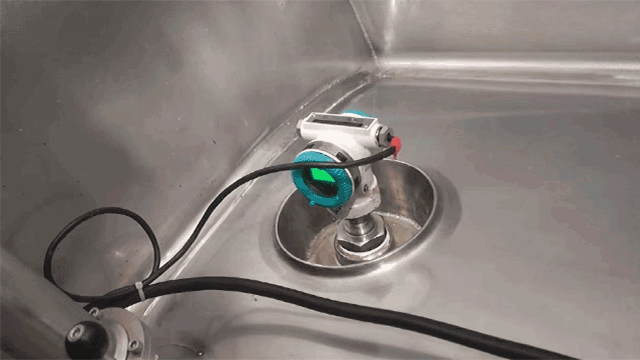
On a pressure transmitter the wetted set is small, but every item counts. Each must be a material and condition that Part 2 or Part 3 permits for your environment, and each should carry its own hardness evidence rather than a blanket statement for the whole instrument. The wetted parts to account for:
- Measuring diaphragm: sees the full process; the hardest part to qualify.
- Process connection: threaded boss or flanged face, wetted on its process side.
- Isolating barrier and seal weld: wetted wherever present.
- Pressure cavity or vent path: can be wetted in service.
Map it part by part, because the parts are usually different alloys. A transmitter can have a 316L or duplex process connection that is comfortably inside the standard and a hardened measuring diaphragm that is not. Reading the instrument as a single “stainless steel” item hides that split, which is exactly where sour-service instrument specifications go wrong.
Why the measuring diaphragm is the hard part
The measuring diaphragm is the part most likely to fall outside the standard, because it is thin and it is worked. Forming and work-hardening drive local hardness up, frequently past the ceiling that keeps a standard austenitic grade compliant. A diaphragm cannot be assumed compliant just because the alloy name looks familiar.
There are three honest routes out of this:
- Qualify a metallic diaphragm in a NACE-permitted condition. A precipitation-hardening grade such as 17-4PH (UNS S17400) is only acceptable in the double-aged H1150D condition at a maximum of 33 HRC, with stress restricted to 50% of SMYS or 380 MPa, and only for certain component types. Standard H900 17-4PH does not qualify.
- Use an annealed corrosion-resistant alloy diaphragm. Hastelloy C-276 (UNS N10276) or Alloy 625 (UNS N06625) hold their properties without the hardness problem.
- Remove the metal from the question with a ceramic (Al₂O₃) diaphragm. This is the route worth reaching for first when it fits.
Remote diaphragm seals as a sour-service strategy
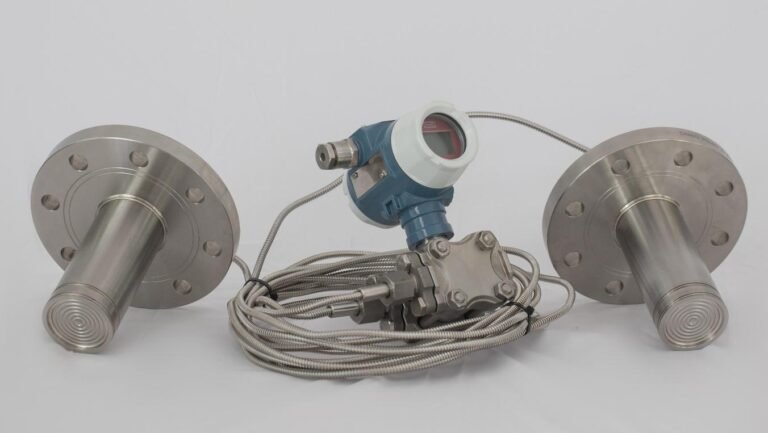
A remote diaphragm seal moves the compliance boundary off the transmitter body and onto a small, replaceable barrier. It presents a corrosion-resistant membrane to the sour fluid, transmits pressure through a fill fluid, and lets the transmitter itself sit outside the wetted envelope.
Build the seal membrane from a NACE-qualified corrosion-resistant alloy, and you only have to defend one wetted metallic part instead of the whole instrument. HMK diaphragm seals use Hastelloy C-276 membranes to ASTM B575 for aggressive duty, the same alloy family the material standards call out for sour and chloride service.
When you specify a seal for a sour line, match the membrane to both the H₂S and the chloride load, and confirm the fill fluid suits the process temperature. The seal only helps if the membrane and fill are chosen for the actual environment, not a generic corrosive rating.
Choosing wetted materials by H2S, chloride and temperature
Material choice for a sour instrument is a three-variable problem: H₂S partial pressure, chloride concentration, and temperature. The table below frames the common wetted materials. Confirm each row against your specific environment, because the standard’s limits, not the alloy name, decide acceptability.
| Wetted material (UNS) | NACE MR0175 status | Best sour-service use | Watch-out |
|---|---|---|---|
| 316 / 316L (S31600 / S31603) | Part 3, conditional | Low H₂S, low chloride taps | Environmental & hardness limits; cold work |
| Duplex 2205 (S31803 / S32205) | Part 3 | Moderate H₂S with chloride | Stay within hardness envelope |
| Super duplex 2507 (S32750) | Part 3 | High chloride, moderate H₂S | Temperature limits apply |
| 6-Moly (S31254) | Part 3 | High chloride service | Still has H₂S limits; cost |
| Hastelloy C-276 (N10276) | Part 3, nickel alloy | Severe H₂S + chloride; seal membranes | Cost |
| Alloy 625 (N06625) | Part 3 | Severe combined service | Cost |
| 17-4PH (S17400) | Restricted | Only H1150D, ≤33 HRC, stress-limited parts | Standard H900 not allowed |
| Alumina ceramic (Al₂O₃) | Outside metallic scope | Diaphragm immune to SSC | Brittle to point loads; handle with care |
| Tantalum | Acid-corrosion answer, not SSC | Reducing acids (HCl, H₂SO₄) | Not a sour-service selection by itself |
Two options sit apart from the alloys. An alumina (Al₂O₃) ceramic diaphragm is not a metal, so it falls outside the metallic-materials scope of MR0175 and is not subject to sulphide stress cracking; for the diaphragm itself, the hardest compliance question disappears.
A tantalum diaphragm is different again. It is chosen for reducing-acid corrosion such as hydrochloric or sulphuric acid, not for the SSC mechanism, so treat it as an acid-service answer rather than a sour-service one.
How to qualify a transmitter for sour service on the datasheet
Compliance is something you qualify and document, not something you buy off the shelf, so the datasheet and the request for quotation carry the real work. For each wetted part, state the alloy by its UNS number and its heat-treatment condition — 17-4PH without “H1150D” on the line is ambiguous, and a reviewer will reject it.
Ask for, per wetted metallic part:
- a 3.1 material certificate;
- a hardness test report against the relevant ceiling;
- a NACE MR0175 / ISO 15156 conformity statement;
- a post-weld heat-treatment record where a seal weld exists.
If any of those cannot be produced for a metallic wetted part, the part is not yet qualified for the sour line. A ceramic-diaphragm option that avoids the metallic question is often the faster path to a defensible specification.
Sour-service wetted materials from HMK TECH
HMK supplies pressure instruments with wetted materials suited to sour, H₂S-bearing service. The honest position is that HMK provides the materials and the selection support, not a NACE conformity certificate; formal NACE MR0175 / ISO 15156 qualification for a designated line is carried out by the purchaser or EPC against the project environment.
Within that scope, the HM23Y oilfield and mining-well transmitter is the natural starting point: a diaphragm in 17-4PH or Al₂O₃ ceramic, a 321-type stainless process connection, ranges to 220 MPa and a −40 to 125 °C service window. For a sour tap, the ceramic-diaphragm build is the cleanest route, because it takes the diaphragm out of the metallic sulphide-stress-cracking question entirely.
Where a metallic barrier is preferred, a remote diaphragm seal with a Hastelloy C-276 membrane keeps the compliance boundary small, the high-pressure ranges reach the pressures seen in gas re-injection, and the HM50 anti-corrosive transmitter with its tantalum diaphragm covers strong-acid media. All of these can be supplied with intrinsically safe Ex ia IIC T5 certification, which matters because a sour gas stream is also a flammable one.
Tell us your H₂S partial pressure, chloride level and temperature, and we will help you select the wetted material — including the ceramic-diaphragm option — and identify what your project needs to document for its own NACE qualification.
Selecting materials for a sour (H₂S) pressure tap?
Tell us your H₂S partial pressure, chloride level and temperature. Our engineers will help you choose the right wetted material — including the ceramic-diaphragm option that keeps the diaphragm out of the metallic NACE scope. We supply the materials and selection support; your project qualifies the line.
Discuss your sour-service applicationFrequently Asked Questions
What is a NACE MR0175 material?
It is a material used in a stated metallurgical condition, within a stated environment, that NACE MR0175 / ISO 15156 permits for H₂S service to resist sulphide stress cracking. Compliance belongs to the material-plus-condition-plus-environment, not to the alloy name on its own.
Is 316 stainless steel NACE MR0175 compliant?
Austenitic 316/316L is acceptable under Part 3 within defined limits on H₂S partial pressure, chloride, temperature and hardness. Outside those limits, or if cold work raises hardness past the ceiling, it is not, so 316 is conditionally acceptable rather than automatically compliant.
Is 17-4PH NACE MR0175 compliant?
Only in the double-aged H1150D condition at a maximum of 33 HRC, with applied stress limited to 50% of SMYS or 380 MPa and restricted to certain component types. Standard H900 17-4PH does not meet the requirement.
Does NACE MR0175 apply to instruments and pressure transmitters?
Yes. The standard applies to the wetted metallic parts of any equipment on a sour line, which includes a transmitter’s diaphragm, process connection and any seal weld, not only the pipe and valves.
Do you need a ceramic diaphragm for sour service?
You do not always need one, but an alumina (Al₂O₃) ceramic diaphragm is non-metallic, so it falls outside the metallic-materials scope of MR0175 and is not subject to sulphide stress cracking. For the diaphragm itself it removes the hardest compliance question, which is why it is a practical choice for many sour taps.
Is sour service the same as hydrogen service?
No. Sour service concerns cracking driven by H₂S, while hydrogen service concerns embrittlement by molecular or atomic hydrogen from a different source. The wetted-material logic overlaps but the environments and the governing clauses differ.