Diaphragm Seal Pressure Transmitter: When and How to Spec One
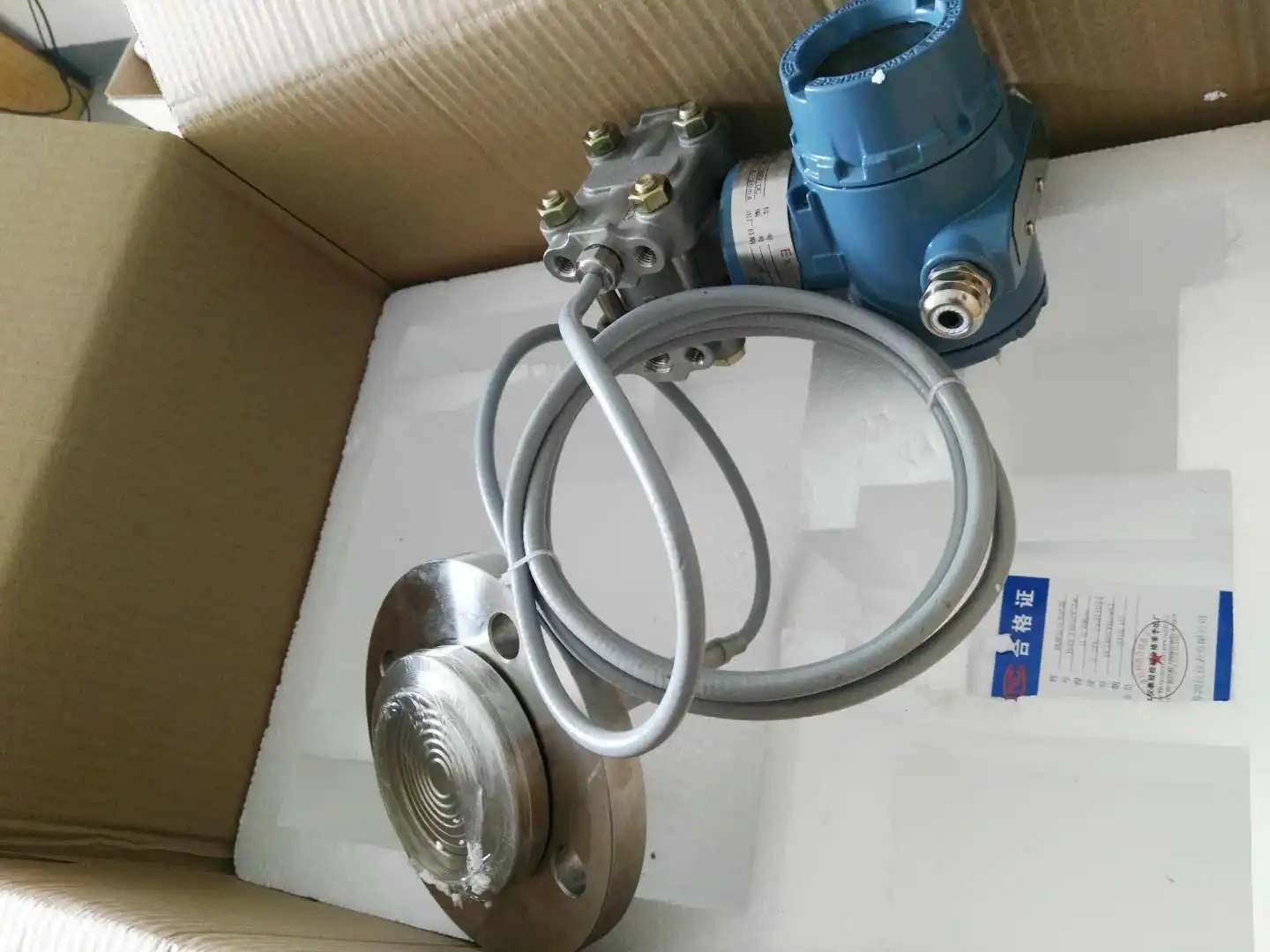
A diaphragm seal is what you add when the process would destroy, clog, or freeze inside an ordinary transmitter’s pressure port. It is a thin flexible membrane that sits between the process and the sensor, with the space behind it filled with an incompressible fluid that carries the pressure through to the sensing element. The membrane takes the abuse; the transmitter never touches the medium.
For hydrogen, fill-fluid permeation drives a different material choice; see the hydrogen pressure transducer guide.
For hot process media, a diaphragm seal is often paired with a high-temperature pressure transducer or a cooling element to keep the electronics within their rated limit.
That isolation solves a real problem, but it is not free: the fill fluid you add to make it work brings its own temperature error, a slower response, and an extra slice of the accuracy budget. This guide walks through when a diaphragm seal earns that trade, how to choose the membrane material and fill fluid, and how to decide between a flush direct-mount seal and a remote seal on a capillary.
What a diaphragm seal adds to a pressure transmitter
Start with what the seal does mechanically. The process pushes on the diaphragm; the diaphragm pushes on a trapped fill fluid; the fill fluid pushes on the transmitter’s own sensing diaphragm. Pressure is transmitted hydraulically, so the reading you get is the process pressure plus whatever the fill-fluid column and its thermal state add along the way. That added term, whatever the fill fluid contributes, is the part you now have to engineer.
In a standard transmitter the sensing element sees the process directly, and the only error sources are the sensor and the electronics. Add a seal and you have introduced a second fluid system, and every property of that fluid, its density, its thermal expansion, its vapor pressure, now shows up in your measurement.
So do not think of the seal as merely protecting the transmitter. Think of it as trading a clean, short, well-understood pressure path for a longer one you now have to manage. If you keep that in mind, the selection choices below follow logically.
When a diaphragm seal earns its place
Reach for a seal when the process attacks the wetted parts, plugs the port, or cannot reach the transmitter cleanly. In practice that means five situations:
If you are still deciding whether a bare wetted material can survive the medium without a seal, the corrosive-chemical transmitter guide maps those breakpoints by acid, concentration and temperature.
- The medium is corrosive beyond the transmitter’s standard 316L wetted parts.
- It is viscous, slurried, or crystallizing, and would pack a normal impulse line.
- It must stay sterile, as in hygienic and pharmaceutical service.
- It is hot enough to cook the electronics if mounted directly.
- The tapping point is awkward, and a flexible capillary is the only practical route.
If none of those apply, do not fit a seal. A clean, non-freezing liquid on an accessible tap is better served by a direct-connect transmitter or a short impulse line, because you avoid the temperature error and the response penalty entirely.
Engineers who fit seals to be safe on benign service usually degrade the measurement they were trying to protect. The seal is a targeted fix for a hostile process, not a default.
Diaphragm material by process fluid
The membrane is the only part that touches the process, so its material is the first hard call. Standard 316L stainless steel covers most water, oil, and mild chemical service. Once the fluid turns aggressive you move up the alloy ladder, and each step buys chemical resistance at a cost. Match the wetted membrane to the fluid before you look at anything else on the datasheet.
Diaphragm-seal construction itself follows ASME B40.100, and the alloy membranes use the same grades the material standards call out, such as Hastelloy C276 to ASTM B575. For sour or corrosive duty, cross-check the wetted material against NACE/AMPP MR0175.
For H₂S-bearing sour lines, our guide to NACE MR0175 sour-service material selection explains which wetted materials keep a pressure instrument compliant.
| Process fluid | Membrane material | Why |
|---|---|---|
| Water, oils, mild chemicals | 316L stainless steel | Standard, lowest cost, wide compatibility |
| Chlorides, seawater, dilute acids | Hastelloy C276 | Resists pitting and chloride stress cracking |
| Hydrochloric and reducing acids | Tantalum | Resists reducing acids that attack nickel alloys; not for HF or oleum |
| Oxidizing acids, phosphoric | Titanium | Passivates against strong oxidizers |
| Abrasive or sticky, non-corrosive | PTFE-coated or gold-plated | Coating adds anti-stick or a chemical barrier |
Two cautions. A thin coating such as PTFE is a barrier, not armor; it will not survive abrasive slurry the way a solid exotic membrane will. And an exotic membrane needs a matching exotic lower housing and fill port, or the fluid simply attacks the next part downstream. At the cold extreme the fill can gel or freeze outright, which is a selection of its own for cryogenic pressure measurement.
Fill fluid and the temperature error it introduces
The fill fluid is the seal’s hidden variable. Silicone oil such as DC 200 is the default; halocarbon oil suits oxygen and chlorine service; and food-grade fills like Neobee M20 are used where the fill could contact product. Whichever you pick, it expands when it warms and contracts when it cools, and that volume change presses on the sensing diaphragm as a false pressure. The result is a zero shift that tracks ambient temperature.
The error scales with the volume of trapped fluid, which is why capillary length matters so much. As a working figure, a ten-metre silicone-filled capillary can shift zero by roughly 50 mmH2O for a 40 °C ambient swing, small on a high-range gauge measurement but ruinous on a low differential-pressure or level span.
If you are measuring level on a tank with a DP transmitter, keep both capillary legs the same length so their thermal shifts cancel, keep the runs as short as the layout allows, and insulate or sun-shade capillaries exposed to daily temperature cycling. On a single-sided gauge measurement there is no second leg to cancel the shift, so short capillaries and a stable mounting temperature matter even more.
Flush direct-mount versus remote capillary seals
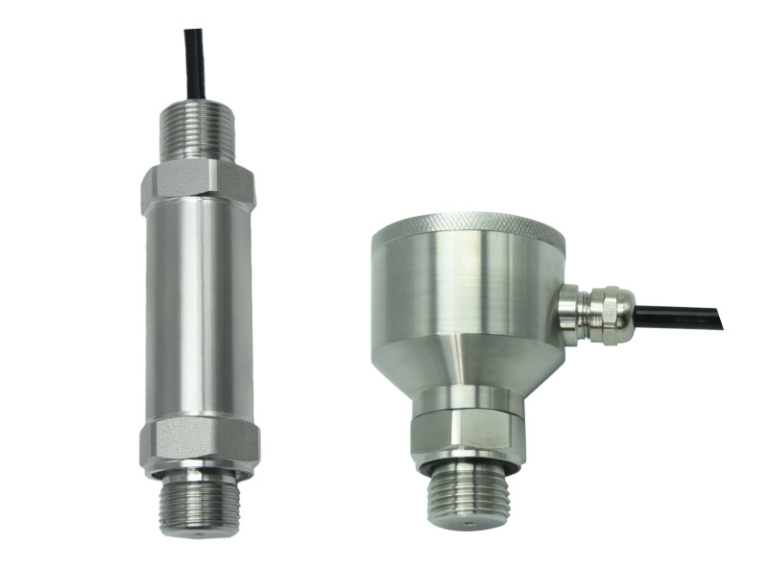
A flush direct-mount seal is exactly what defines a dedicated flush-mount pressure transducer: the diaphragm sits flush with the process connection, leaving no dead cavity to trap viscous media, slurry or hygienic product — which is why flush designs dominate food, pharma and wastewater service.
You have two ways to fit the seal, and the choice is a straightforward trade. A flush direct-mount seal bolts the membrane straight onto the transmitter body with no capillary. It gives the smallest fill volume, so the temperature error is minimal, and it is the right answer for hygienic service and for any tap you can reach.
A remote seal puts the membrane at the process and connects it to the transmitter through a fill-filled capillary. You accept the capillary’s temperature error and slower response in exchange for two things a flush mount cannot give: it moves the electronics away from a hot or vibrating process, and it reaches a tapping point the transmitter body cannot.
| Factor | Flush direct-mount | Remote capillary seal |
|---|---|---|
| Temperature error | Lowest (minimal fill volume) | Higher, grows with capillary length |
| Response time | Fast | Slower (capillary damps the step) |
| Hot / inaccessible process | Limited by electronics heat | Moves electronics away from heat |
| Best fit | Hygienic and reachable taps | High temperature, vibration, awkward taps |
If you choose a remote seal, remember the fill column has weight. Mount the seal below the transmitter and the standing head of fluid adds a fixed offset you must calibrate out. For silicone at about 935 kg/m³ and a two-metre drop, that offset is P = ρ × g × h = 935 × 9.81 × 2, roughly 18 kPa, or about 2.7 psi. It is a constant, so a zero trim removes it, but only if you know it is there. In the field I have seen more seal errors traced to that uncalibrated mounting offset than to any fault in the membrane itself.
One construction choice sits underneath both mounting styles: all-welded or bolted. An all-welded seal has no gasketed joint to weep, so it wins on vacuum, high-temperature, and hazardous or fugitive-emission service; the trade is that you cannot replace a punctured diaphragm and must scrap the whole seal. A bolted seal lets you open the assembly to clean or reface the diaphragm, which suits abrasive or fouling media where the membrane is a wear part, at the cost of a joint you have to maintain.
The accuracy and response-time you trade away
Two penalties come with every seal, and both belong in your error budget before you commit. First, accuracy: the seal system adds its own temperature effect on top of the transmitter’s published accuracy, so a 0.1 percent transmitter behind a long capillary no longer performs at 0.1 percent across a wide ambient range. Size the transmitter turndown with that combined error in mind, not the transmitter figure alone.
Second, response time. The fill fluid and the narrow capillary form a hydraulic filter, so a step change at the process reaches the sensor more slowly than it would on a direct connection. On steady level or gauge duty that lag is irrelevant. On fast pressure control or surge detection it is not, and a long, fine capillary can slow the loop enough to matter. If your service is both hostile and fast, favour a flush mount or the shortest possible capillary, and confirm the response figure against the seal maker’s data rather than assuming it.
Diaphragm-seal pressure transmitters by HMK TECH
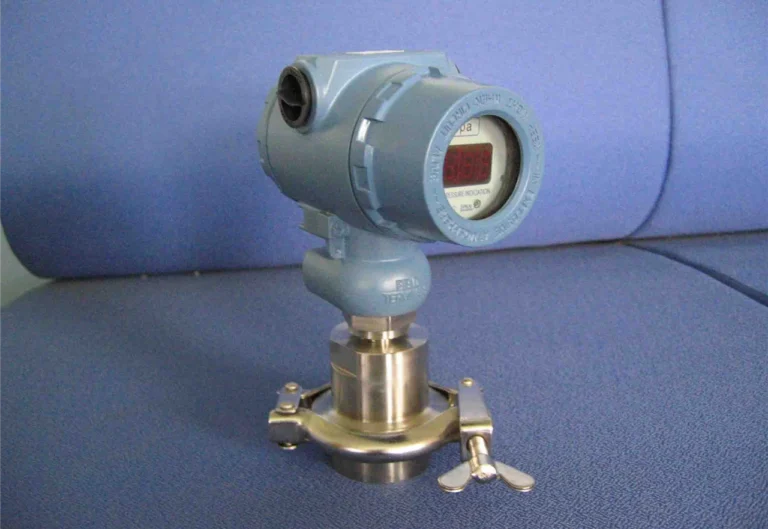
HMK’s flush direct-mount answer is the HM70 sanitary flat-membrane transmitter. Its 316L flush diaphragm mounts with no dead volume, carries threaded or tri-clamp connections for CIP and SIP lines, spans ranges up to 35 MPa at plus or minus 0.25 percent of full scale, holds IP67 ingress protection to IEC 60529, and is available with Ex ia intrinsic safety.
Its compensated range runs from minus 20 to 85 °C, which is the practical ceiling for a direct flush mount; above that the process heat reaches the electronics, and that temperature limit is exactly the signal to step up to a remote seal with a high-temperature fill or to a high-temperature design such as the HM26. For aggressive chemical service that outruns 316L, move to the anti-corrosive HM50 with a matched wetted material.
Three calls decide a diaphragm-seal transmitter; make each one deliberately:
- Membrane: match the wetted material to the fluid (316L, Hastelloy, tantalum, titanium, or a coating).
- Fill fluid: match it to the temperature range and any hygiene requirement, and keep capillaries short.
- Mounting: flush when you can reach the tap; remote only when heat, vibration, or access forces it.
Not sure which seal, membrane, or fill fluid your service needs?
Send us your fluid, range, and mounting layout and our engineers will spec it with you.
Request a QuoteBrowse Pressure ProductsFrequently Asked Questions
How does a diaphragm seal work in a pressure transmitter?
The process presses on a flexible isolating diaphragm. Behind the diaphragm is a trapped, incompressible fill fluid that transmits the pressure hydraulically to the transmitter’s sensing element, so the process never contacts the sensor. The reading is the process pressure plus any offset the fill-fluid column and its temperature add.
What is the standard diaphragm material for pressure transmitter seals?
316L stainless steel is the standard membrane and covers water, oils, and mild chemical service. For chlorides use Hastelloy C276, for hydrochloric and other reducing acids use tantalum (use Monel or PTFE for hydrofluoric acid), for strong oxidizers use titanium, and for sticky or abrasive but non-corrosive media use a PTFE-coated or gold-plated membrane.
When should you use a diaphragm seal pressure transmitter?
Use one when the medium is corrosive, viscous, crystallizing, sterile, or too hot to mount the transmitter directly, or when the tapping point cannot be reached cleanly. On clean, non-freezing, accessible service, skip the seal and connect directly to avoid its temperature error.
Does a diaphragm seal reduce accuracy?
Yes, it adds a temperature-dependent zero shift on top of the transmitter’s own accuracy. The error grows with the trapped fill volume, so long capillaries and low measuring spans are most affected. Short or balanced capillaries, insulation, and a stable mounting temperature keep it small.
Flush mount or remote capillary seal, which should I choose?
Choose a flush direct-mount seal for hygienic service and any reachable tap, because it minimizes fill volume and temperature error. Choose a remote capillary seal only when you must move the electronics away from heat or vibration, or reach an awkward tap, and then calibrate out the static head if the seal sits below the transmitter.