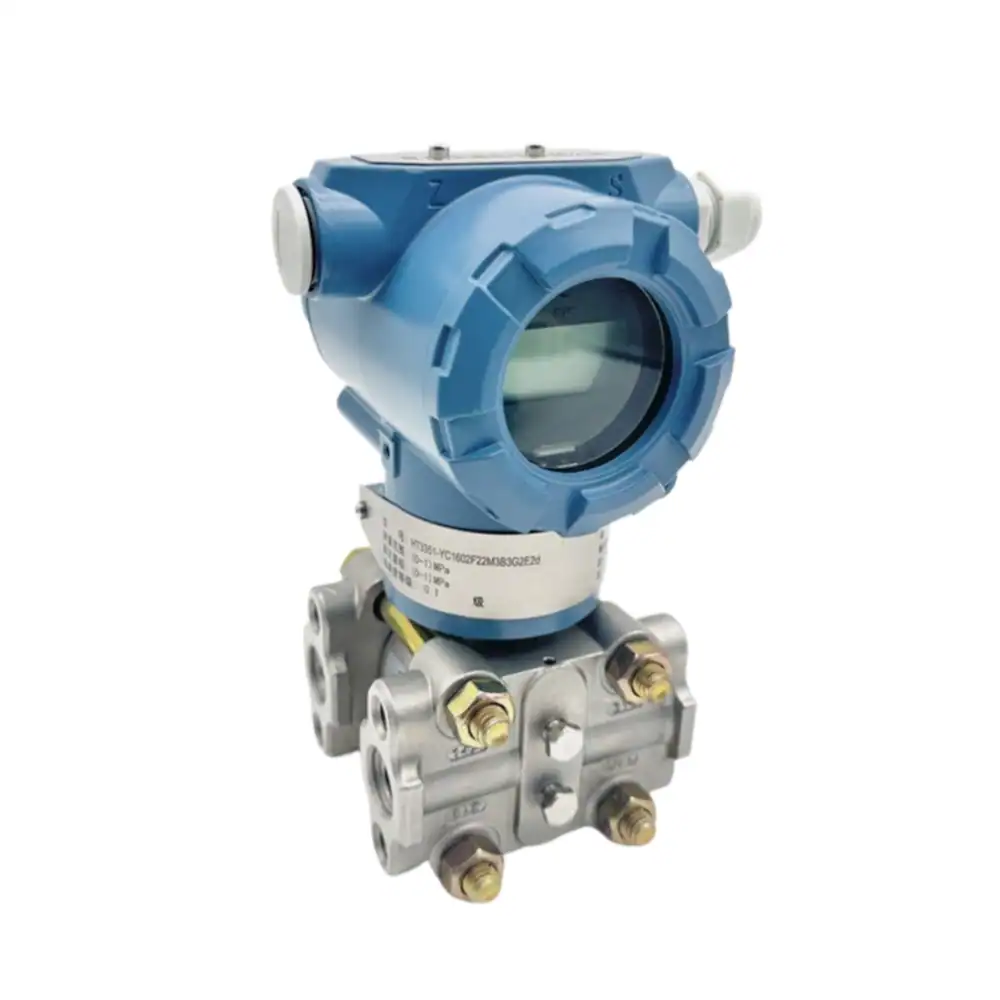
Product Overview
The HM1151 is a capacitor-type differential pressure transducer engineered for demanding industrial environments. Its advanced dual-chamber δ-cell design uses imported measurement technology to convert process pressure into precise 4–20mA output signals.
The measurement principle works by transferring process pressure to a central measuring membrane, which displaces by approximately 0.1mm under full scale. This membrane displacement converts directly to differential capacitance, which is then amplified and transformed into a stable 4–20mA current output. This design eliminates moveable mechanical parts, resulting in exceptional reliability and minimal maintenance requirements.
Trusted across petroleum, chemical, metallurgical, power generation, food processing, paper manufacturing, pharmaceutical, and mechanical industries, the HM1151 delivers high accuracy (±0.25%FS), excellent stability, and superior overload protection (500% positive, 600% negative immigration) for mission-critical applications.
Technical Specifications
| Parameter | Specification |
|---|---|
| Measuring Range | 0–0.125 KPa to 0–40 MPa (16 standard ranges) |
| Signal Output | 4–20mA, 2-wire or 4-wire system |
| Power Supply | 12–45V DC (24V DC typical) |
| Load Resistance | RL ≤ 50(VS−12)Ω |
| Accuracy | ±0.25%FS or ±0.5%FS (selectable) |
| Operating Temperature | Amplifier: −29 to +93°C (LT type: −25 to +70°C); Element: −40 to +104°C; High-temp option: +15 to +315°C |
| Static Pressure Rating | 4, 10, 25, or 32 MPa |
| Humidity | 0–100% RH (non-condensing) |
| Response Time | 0.2–1.67s (adjustable damping) |
| Dead Zone | None (≤0.1%) |
| Stability | Within basic tolerance for 6 months |
| Vibration Resistance | ±0.05%/g at 200Hz |
| Temperature Influence | Max scale: ±0.1%/55°C (total ±0.15%/55°C); Min scale: ±0.1%/55°C (total ±0.2%/55°C) |
| Process Connection | 1/4″–18NPT, 1/2″–14NPT, or custom |
| Signal Connector | G1/2 (DIN 43650C optional) |
| Weight | ~5.4 kg |
| Membrane Materials | 316L stainless steel, Hastelloy C, Monel, Tantalum (corrosion-resistant options) |
| Flange Materials | Electroplated carbon steel, 316L stainless steel, Hastelloy C, Monel |
| Sealing | NBR or Fluorubber O-rings |
Key Features
Dual-Chamber δ-Cell Design
Advanced measurement technology converts process pressure to differential capacitance with ~0.1mm membrane displacement.
Wide Range Coverage
16 standard measuring ranges from 0.125 KPa to 40 MPa accommodate virtually any industrial pressure measurement need.
Certified Explosion-Proof Design
Type d II BT4 and intrinsically safe II CT6 certifications enable safe operation in hazardous classified zones.
Low Maintenance
No moveable parts eliminate the need for routine maintenance while ensuring consistent performance over extended operational periods.
Corrosion-Resistant Materials
Optional membrane materials including 316L stainless, Hastelloy C, Monel, and Tantalum resist aggressive chemical environments.
Adjustable Damping
Response time adjustment (0.2–1.67s) allows tuning to match process dynamics and eliminate noise-induced fluctuations.
Industrial Applications
Oil & Gas Processing
Reliable pressure monitoring for crude processing, refining operations, and pipeline transport with explosion-proof certification.
Chemical Plants
Process monitoring with corrosion-resistant materials for aggressive chemical environments and temperature extremes.
Power Generation
Steam pressure measurement and boiler monitoring for thermal and nuclear facilities requiring high stability and precision.
Water & Wastewater
Flow and filtration pressure control in municipal and industrial water treatment systems with proven long-term reliability.
Pulp & Paper
Bleaching and pressing process monitoring with stable 4–20mA output for integrated control systems.
Food & Beverage
Sanitary applications with stainless steel design for processing, packaging, and cold-chain management systems.
Ordering Guide
The HM1151 is offered in a full series with interchangeable components, allowing you to configure the transmitter for your specific application requirements.
Measuring Range Options
| Range Code | Measuring Range |
|---|---|
| 1 | 0–0.125 KPa |
| 2 | 0–0.25 KPa |
| 3 | 0–0.5 KPa |
| 4 | 0–1 KPa |
| 5 | 0–2.5 KPa |
| 6 | 0–5 KPa |
| 7 | 0–10 KPa |
| 8 | 0–25 KPa |
| 9 | 0–40 KPa |
| 10 | 0–100 KPa |
| 11 | 0–250 KPa |
| 12 | 0–1 MPa |
| 13 | 0–2.5 MPa |
| 14 | 0–10 MPa |
| 15 | 0–25 MPa |
| 16 | 0–40 MPa |
| Custom | Custom ranges available on request |
Material & Configuration
| Component | Options |
|---|---|
| Membrane | 316L stainless, Hastelloy C, Monel, Tantalum |
| Flange | Electroplated carbon steel, 316L, Hastelloy C, Monel |
| Sealing | NBR or Fluorubber |
| Connection | 1/4”–18NPT, 1/2”–14NPT, custom |
| Signal Output | 4-wire 4–20mA standard |
| Optional | Explosion-proof (Type d II BT4 or II CT6) |
Related Products
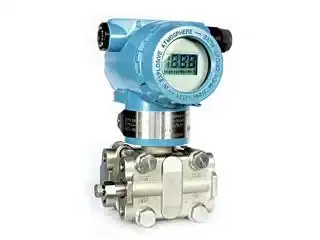
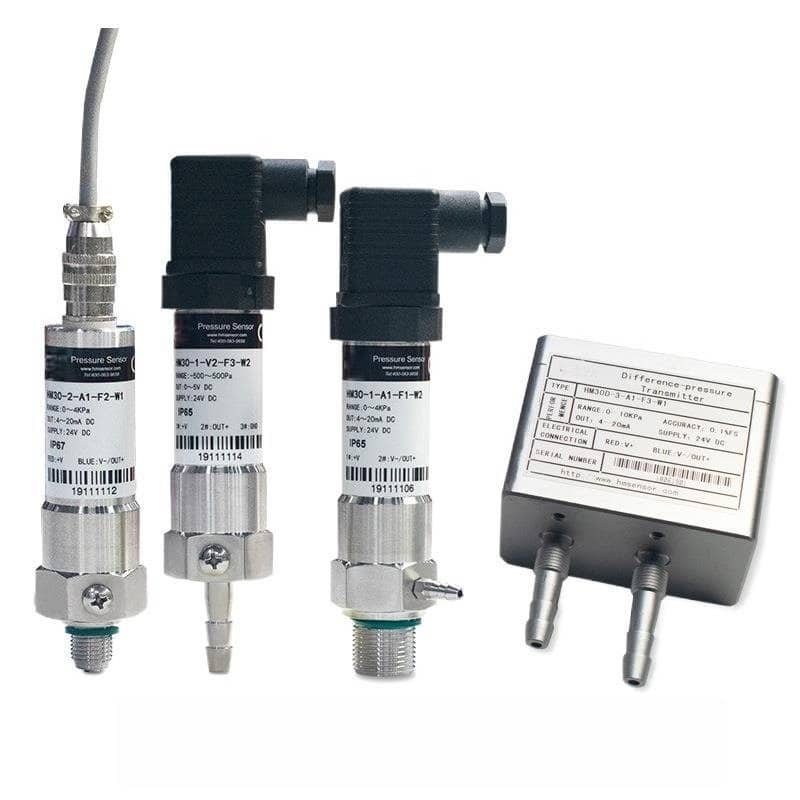
Frequently Asked Questions
Need a Pressure Measurement Solution?
Tell us about your application requirements. Our engineers typically respond within 12 business hours with a customized recommendation.