IP Ratings for Pressure Transmitters: How to Specify
Two pressure transmitters sit in front of you on the datasheet. One is marked IP65, the other IP68, and the price difference is small. The temptation is to take the higher number and move on. That choice can cost you a flooded terminal chamber, a drifting zero, and a replaced transmitter a few months after commissioning, because the IP code does not mean what most BOMs assume it means. If you are putting one protection grade on a line today for an outdoor box, a washdown skid, or an occasionally-flooded pit, this guide settles which grade you actually need and which traps quietly waste money.
The protection grade is not a quality ranking. It is a pair of test results against a defined standard, and reading it correctly is the difference between a transmitter that survives its environment and one that fails in the first wet season.
What the two IP digits actually control
IP stands for Ingress Protection, which IEC 60529:2013 defines. The two digits after the letters are independent test results, not a single score. The first digit, from 0 to 6, rates protection against solids and dust. The second digit, from 0 to 9, rates protection against water. A 6 in the first position means dust-tight, the highest solid rating. The second digit is where most of the confusion lives.
| Code | First digit (solids) | Second digit (water) | Plain meaning |
|---|---|---|---|
| IP65 | 6 = dust-tight | 5 = low-pressure jets | Outdoor, rain, low-pressure hose-down |
| IP66 | 6 = dust-tight | 6 = powerful jets | Heavy washdown, deck equipment |
| IP67 | 6 = dust-tight | 7 = immersion to 1 m, 30 min | Temporary flooding, brief submersion |
| IP68 | 6 = dust-tight | 8 = continuous immersion, per maker | Permanent submersion to a stated depth |
| IP69 / IP69K | 6 = dust-tight | 9K = high-pressure, high-temp jets | Sanitary washdown, food and pharma |
Read the second digit as a description of one specific water test, not as a promise that the device beats every lower test. That single point is where specification errors begin.
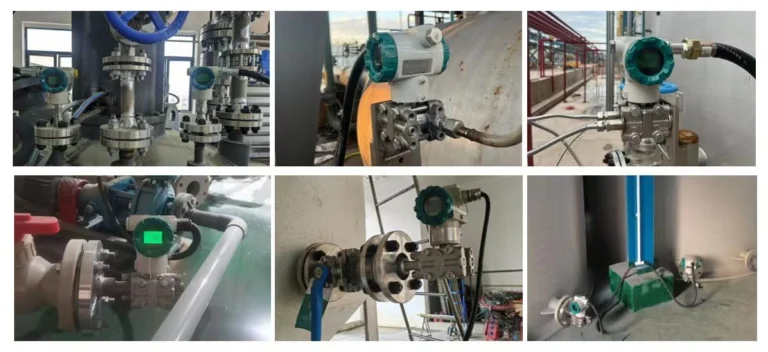
Matching the grade to your install environment
Start from where the transmitter will live, then read the grade backward from that. For a standard outdoor installation, a junction box on a tank farm, a pump skid exposed to rain, IP65 or IP66 is the working range. Our general-purpose transmitters such as the HM20 and HM25 are rated IP65, and the HM20 reaches IP67 with the right electrical connection. For brief flooding, a pit that backs up in heavy rain or a sump that occasionally tops its float, you want IP67 so the housing survives a 30-minute immersion at 1 m without ingress.
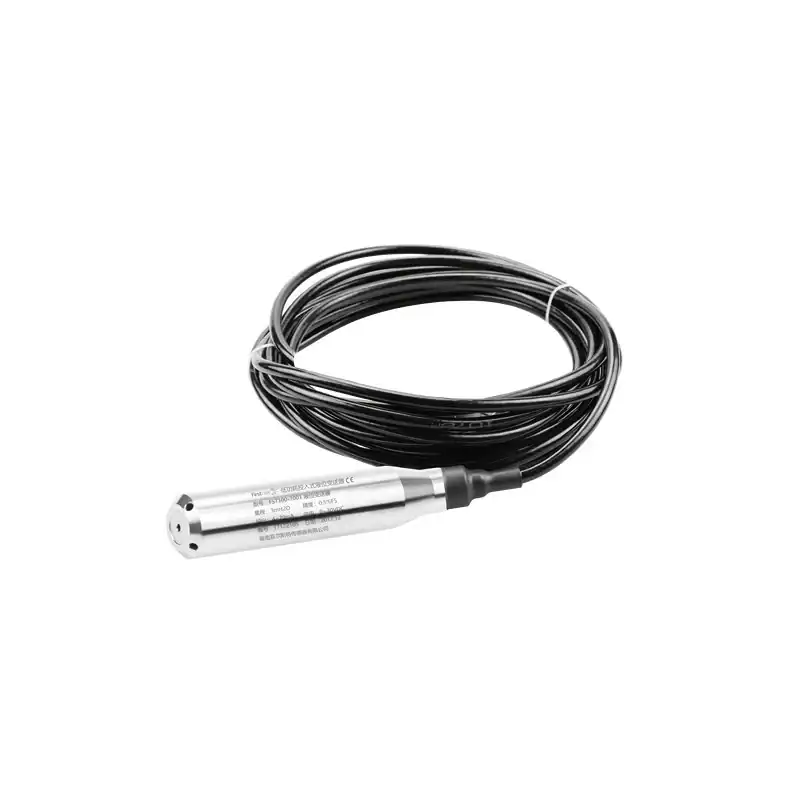
Permanent submersion is a different category entirely. A submersible level transmitter hanging in a well or a tank spends its whole life underwater, so it needs IP68 referenced to a stated depth. Our HM21 submersible is rated IP68 for exactly this duty. If your application is a submerged level measurement rather than a pressure tap, the submersible level transmitter guide covers the depth, cable, and sealing decisions that matter there. For above-ground pressure service, you rarely need IP68, and paying for it without the stated depth behind it buys you nothing.
Why an IP68 label without a stated depth means little
Here is the clause that catches buyers. IEC 60529:2013 fixes IP67 at 1 m for 30 minutes, but it does not fix IP68. The standard defines IP68 only as conditions more severe than IP67, agreed between the manufacturer and the user. In other words, IP68 is a number the maker completes. One supplier’s IP68 might mean 2 m for a day; another’s might mean 10 m continuously.
So an IP68 stamp with no depth or pressure beside it is not a specification, it is a marketing claim. If you are specifying a transmitter for any submerged or flood-prone duty, demand the depth or the head pressure that the IP68 rating was tested to, in metres of water or in bar. A credible submersible datasheet states it. If the figure is missing, treat the rating as unproven and ask before you buy.
The second digit is not cumulative
Most engineers assume an IP68 device automatically passes the IP65 and IP66 jet tests. It does not. The water tests in IEC 60529:2013 are separate, and immersion sealing is a different mechanism from jet sealing. A static O-ring that holds back still water under pressure can still let a focused hose jet drive water past it, because the jet attacks the seal from an angle the immersion test never applies.
This is the trap. If your transmitter faces both occasional flooding and high-pressure washdown, a single IP68 rating does not cover you. You need a dual rating, written as IP66/IP68, which states that the device passed both the powerful-jet test and the continuous-immersion test. When you see only IP68 on a washdown line, stop and ask whether the jet case was ever tested.
Washdown lines need IP69K, not IP68
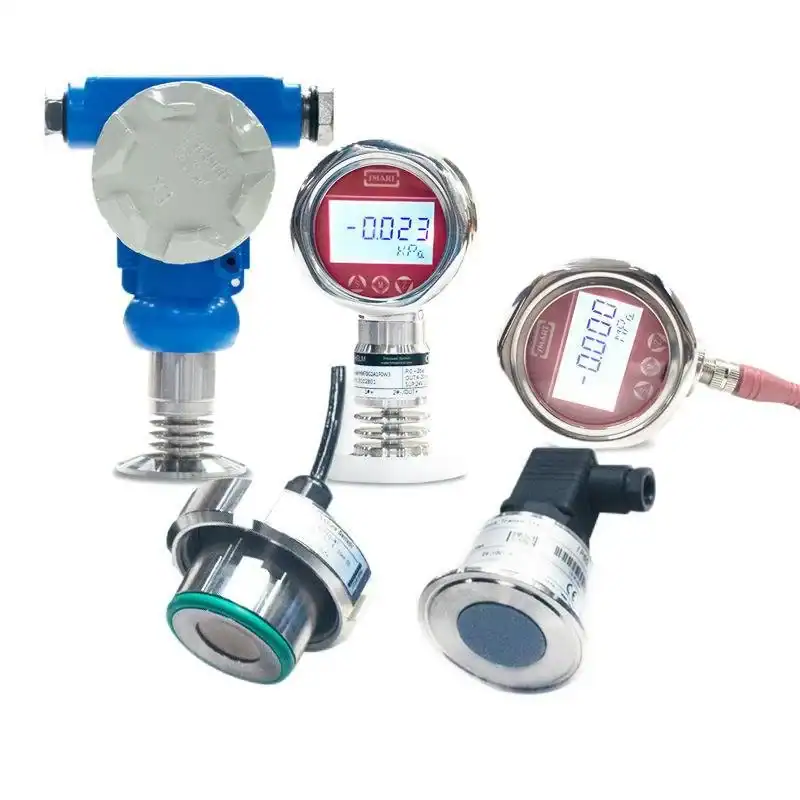
Washdown and hygienic lines add a second demand beyond the IP rating: no crevices for product to lodge in. That is where a flush-mount pressure transducer earns its place, presenting a smooth process-flush diaphragm that cleans in place while the housing still carries the IP66/IP67 sealing this guide describes.
Sanitary and hygienic processes raise the bar again. A clean-in-place or steam-in-place line sees high-pressure water at high temperature, around 80 to 100 bar and 80 °C, delivered at 14 to 16 L/min from 100 to 150 mm away. That is the IP69K test, defined in ISO 20653:2013 and now folded into IEC 60529:2013. IP68, built for still immersion, says nothing about surviving an 80 bar steam jet.
If you are specifying for food, beverage, or pharmaceutical washdown, look for IP69K explicitly, not a high immersion rating. For standard sanitary measurement on clean-in-place lines, our flush-diaphragm HM70 sanitary transmitter carries an IP67 housing, which suits enclosed hygienic service; where a line is genuinely hosed at IP69K pressures, confirm that grade on the datasheet before you commit. The rule is simple. Match the rating to the actual cleaning method, not to the highest number on the shelf.
IP to NEMA cross-reference, and why it runs one way
North American projects often specify NEMA enclosure types instead of IP, and the two systems do not map cleanly. NEMA 250-2020 and IEC 60529:2013 test different things, so the conversion is approximate and it only runs in one direction.
| NEMA type | Approximate IP equivalent | What NEMA adds that IP omits |
|---|---|---|
| NEMA 4 | IP66 | External icing |
| NEMA 4X | IP66 | Corrosion resistance, external icing |
| NEMA 6 | IP67 | External icing |
| NEMA 6P | IP68 | Corrosion resistance, external icing |
A NEMA type can be cross-referenced down to an IP grade, but an IP grade cannot be promoted up to a NEMA type. The reason is that NEMA 250-2020 also tests corrosion resistance, gasket aging, and external icing, none of which IEC 60529:2013 measures. So an IP66 transmitter is not automatically NEMA 4X, because nobody verified its corrosion behaviour. When a North American spec calls for NEMA 4X and your transmitter shows only IP66, treat that as an open question, not a settled equivalence.
Where water really gets in: cable, connector, breather
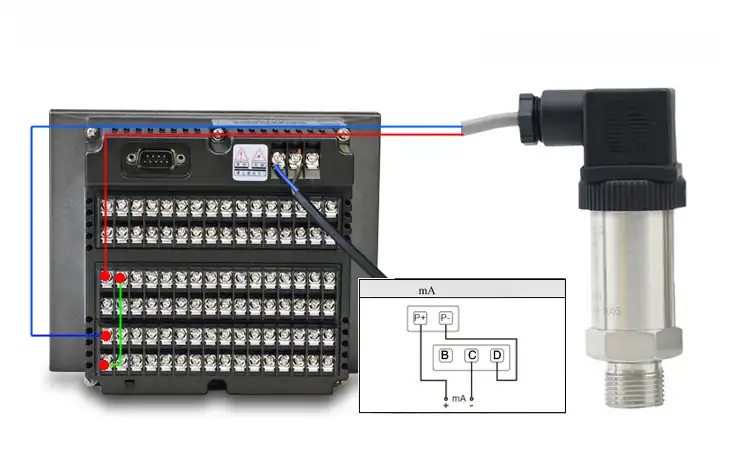
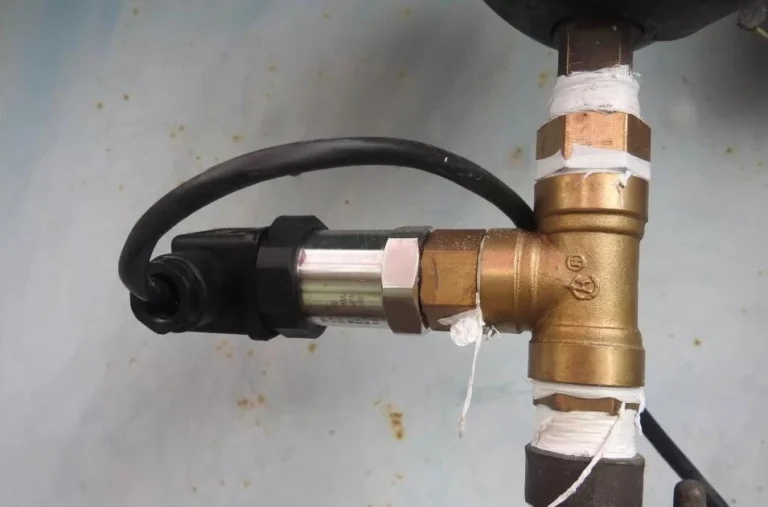
On outdoor installations, the housing is rarely the leak path. Water reaches the electronics through the cable entry, the connector, or the breather, and the rating you read on the body can be undone by the way you terminate it. The clearest proof is on the datasheet itself: the HM20 is rated IP65 with a cable gland and IP67 with an M12 connector, the same sensor, two grades, decided entirely by the electrical connection.
Three field rules follow from that. Tighten and seal the cable gland to its rated torque, because a hand-tight gland is an open door. Form a drip loop so water runs off the cable below the entry instead of tracking into it. And on a vented gauge transmitter, protect the breather, since the vent tube that references atmosphere is also the path that lets humid air in, condense overnight, and drift the zero. In the field on outdoor tank-farm junction boxes, we traced an overnight zero drift of about 2 to 3 %FS on a nominally IP67 transmitter to condensation entering through an unprotected breather, not a failed housing; resealing the gland and fitting a breather filter cleared it. Specify the seal as carefully as you specify the rating.
Specifying the right protection on your BOM
Turn the rating decision into a short checklist your BOM can carry, so the grade and its conditions travel together to the supplier.
- Outdoor or rain-exposed: IP65 or IP66; HM20 / HM25 class. Specify the cable gland sealing.
- Occasional flooding or brief submersion: IP67; confirm the M12 connector if you need the higher grade.
- Permanent submersion: IP68 with a stated depth in metres or bar; HM21 submersible class. Reject any IP68 without the figure.
- Both flooding and jets: dual rating IP66/IP68, not IP68 alone.
- Sanitary washdown (CIP/SIP): IP69K explicitly; verify the grade, do not assume immersion ratings cover it.
Write the protection grade, its test conditions, and the cable termination requirement as three lines on the BOM, not one. A transmitter survives its environment when the rating, the connection, and the sealing are specified together. For the full pressure range and the IP grade of each model, see our pressure transmitters, and for hazardous-area duty note that ingress protection and explosion protection are separate certifications, covered in the intrinsically safe transmitter guide.
Frequently Asked Questions
What’s the difference between IP67 and IP68 for a pressure transmitter?
IP67 is a fixed test: dust-tight, plus immersion to one metre for thirty minutes. IP68 is dust-tight plus continuous immersion to a depth the manufacturer defines, which must be more severe than IP67. For a transmitter, IP67 suits brief flooding while IP68 with a stated depth suits permanent submersion.
Is an IP68 pressure transmitter waterproof for permanent submersion?
Only to the depth the manufacturer tested and stated. IP68 on its own is not a depth promise, because IEC 60529:2013 leaves the conditions to the maker. Always read the metres of water or bar figure beside the IP68 rating before you submerge the device permanently.
What IP rating do I need for an outdoor pressure transmitter?
IP65 or IP66 covers most outdoor installations exposed to rain and low to medium-pressure hose-down. Step up to IP67 only if the location can flood or briefly submerge the housing. Seal the cable gland to its rated torque regardless of the grade.
How does IP compare to NEMA 4X?
NEMA 4X is roughly IP66, but the match runs one way only. NEMA 250-2020 also tests corrosion resistance and external icing, which IEC 60529:2013 does not, so an IP66 device is not automatically NEMA 4X without separate corrosion verification.
Do I need IP69K for washdown or food applications?
Yes, if the line is cleaned with high-pressure, high-temperature jets such as CIP or SIP. IP69K, from ISO 20653:2013, tests exactly that case; IP68 does not. Specify IP69K explicitly rather than relying on a high immersion rating.
Why does my transmitter get moisture inside despite a high IP rating?
The water almost always enters through the cable gland, the connector, or the breather, not the rated housing. A loose gland, a missing drip loop, or an unprotected vent tube lets humid air in, where it condenses and drifts the zero. Seal the termination to match the housing rating.
Not sure which IP grade your installation needs?
Tell us the environment and we will spec the right protection grade, connection, and sealing for your pressure or level transmitter.
Request a Quote Browse Pressure Products