How to Measure Vacuum Pressure: 6-Step Field Procedure
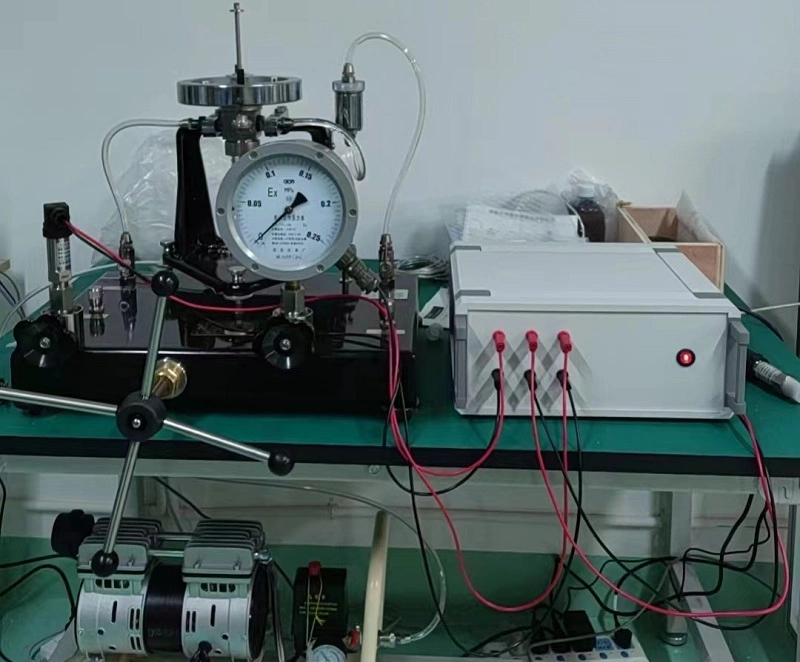
You walk up to a chiller, a vacuum tower, or a freeze-dryer with a gauge in hand. You already know vacuum sits below atmosphere. The question is whether the number you are about to read means anything. This guide walks through the six steps we use in the field to take a vacuum reading that holds up to a process engineer’s spec sheet or a refrigeration commissioning report.
What “Vacuum Pressure” Actually Means in the Field
Vacuum pressure is measured by comparing a closed system’s pressure to the local atmosphere, then selecting a gauge by your target range — rough (above 1 Torr), medium (1 Torr down to 1 mTorr), high (1 mTorr down to 10⁻⁷ Torr), or ultra-high vacuum (below 10⁻⁷ Torr). The reading is always relative to a reference, and the reference you pick decides which number lands on your datasheet.
Three references show up in real work. Gauge-referenced vacuum counts down from local atmosphere, so −80 kPa or 23.6 inHg of vacuum means the system sits that far below the bar outside the wall. See our breakdown of negative gauge values if the minus sign still feels strange. Absolute-referenced vacuum counts up from a perfect vacuum, so the same system reads 21 kPa abs or 158 Torr. A compound gauge shows both sides of atmosphere on one dial — what most HVAC technicians own. The unit walkway to keep straight: 1 atm = 760 Torr = 760,000 micron = 14.7 PSIA = 101.325 kPa abs = 29.92 inHg.
Pick the Right Vacuum Gauge for Your Range
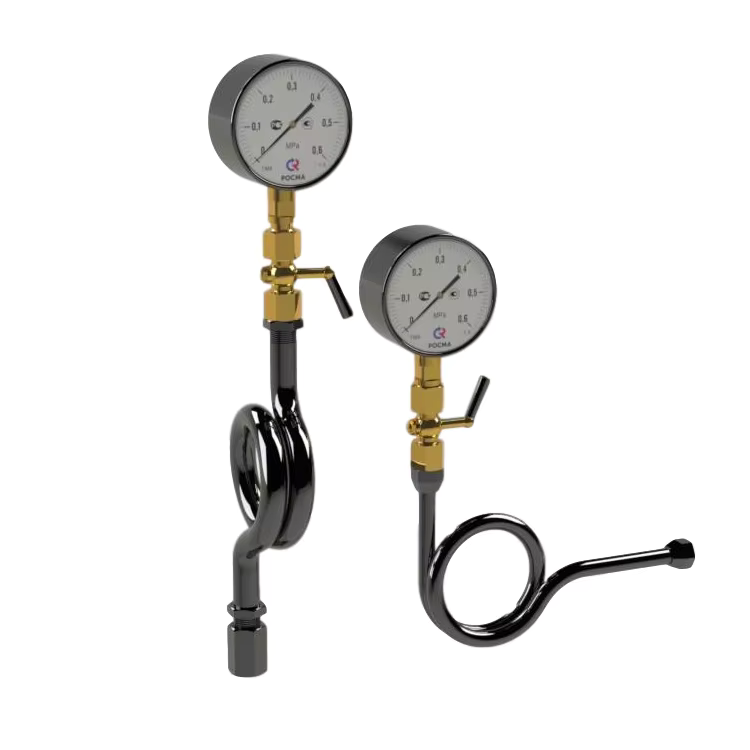
A Bourdon-tube compound gauge will read down to about 1 Torr but with field-typical accuracy of 5 to 25 percent of full scale on the vacuum side — broadly consistent with the verification limits in JJG 86-2015 Verification Regulation for Bourdon-Tube Pressure-Vacuum Gauges. Below 1 Torr the mechanical element loses resolution faster than the dial face can show. The technology classes below are the ones we spec on real projects; the accuracy ranges are field-typical and align with vendor datasheets and the Leybold vacuum fundamentals reference.
| Vacuum range | Recommended technology | Field-typical accuracy |
|---|---|---|
| Rough (above 1 Torr) | Bourdon-tube compound, capacitive diaphragm sensor | 5–25% FS mechanical / 0.5% FS sensor |
| Medium (1 Torr to 1 mTorr) | Pirani / thermocouple | 5–10% of reading |
| High (1 mTorr to 10⁻⁷ Torr) | Capacitance manometer, hot/cold cathode | 0.5–2% of reading |
| UHV (below 10⁻⁷ Torr) | Ionization gauge | 10–30% of reading |
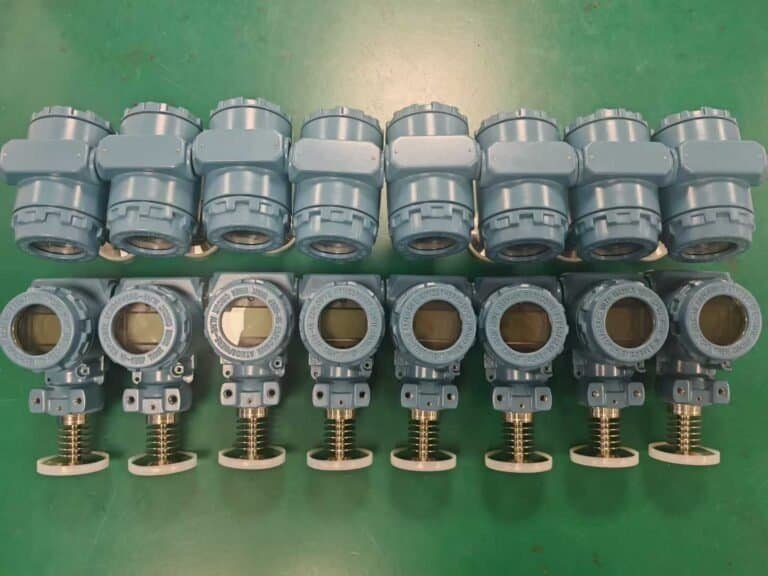
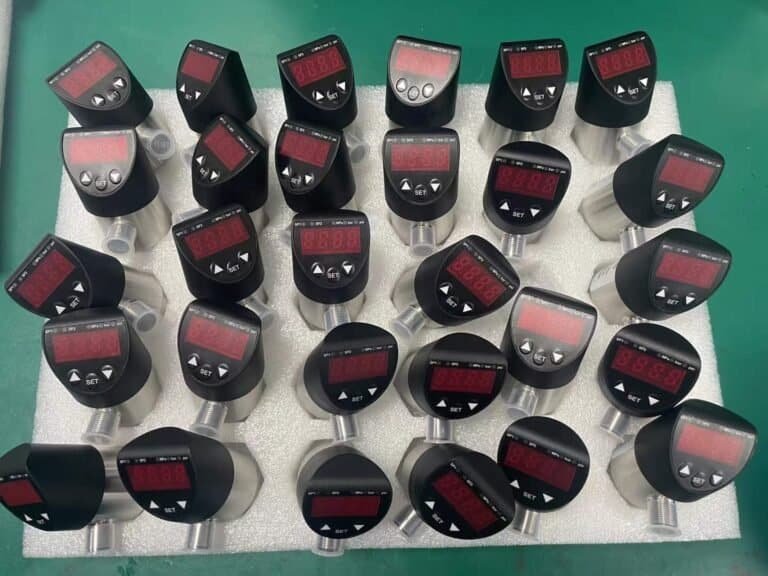
For HVAC evacuation a thermocouple micron gauge is the right tool. For a process vacuum tower running at 28 kPa abs, our HE27 vacuum and absolute pressure sensor gives you ±0.5% FS across −100 kPa to 3.5 MPa with a 4-20 mA loop into the DCS, one order of magnitude tighter than any Bourdon dial. The decision tree is short: HVAC means micron gauge, process vacuum means diaphragm sensor, lab and semiconductor means capacitance manometer or ionization gauge. The pressure transmitter types guide covers the full sensor family.
If the target is written in one unit and the instrument reads another, convert it with the mmHg to psi, psi to mmHg or torr to psi converters before setting the range.
6-Step Procedure to Measure Vacuum Pressure
We have used this sequence on refinery vacuum distillation units, on lyophilizer commissioning, and on the bench. The steps are not optional — skipping step three is the single most common reason a “good” reading turns out wrong.
- Confirm the target. Write down the spec before you connect anything. HVAC evacuation targets below 500 micron; process vacuum towers run 20 to 50 kPa abs; semiconductor pump-down may target 67 mPa or below.
- Select the gauge by range. Use the table above. On a mixed-range system, choose the gauge that resolves the tightest target you have to demonstrate.
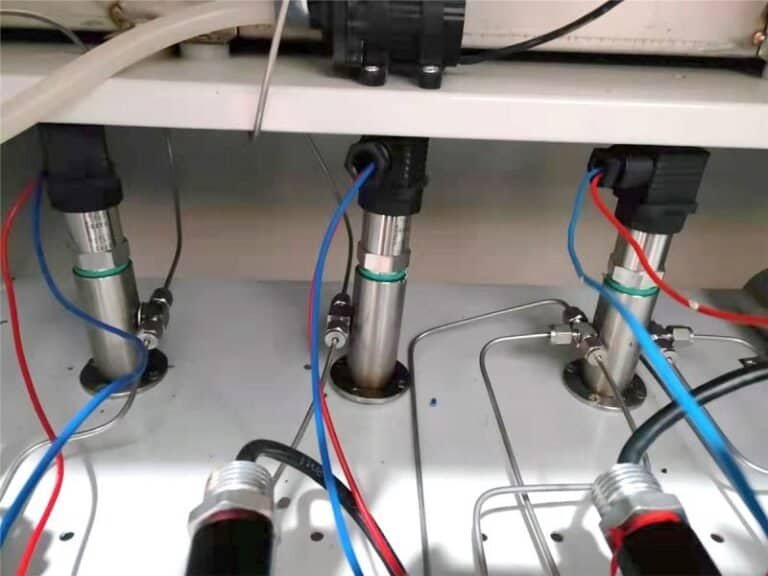
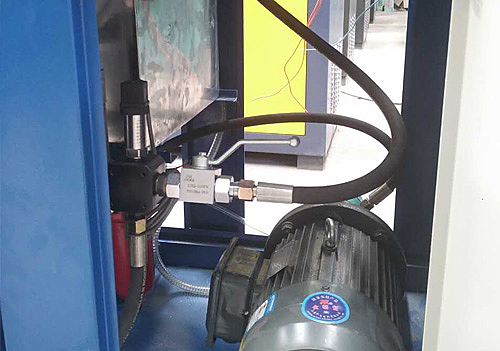
- Install at the system, not at the pump. Put the gauge or sensor on the system port, downstream of the isolation valve. A gauge bolted to the pump body reads the pump’s blank-off pressure, which is always lower than the real system pressure. We have watched this single mistake invalidate an entire 8-hour pump-down on a pharmaceutical vacuum oven.
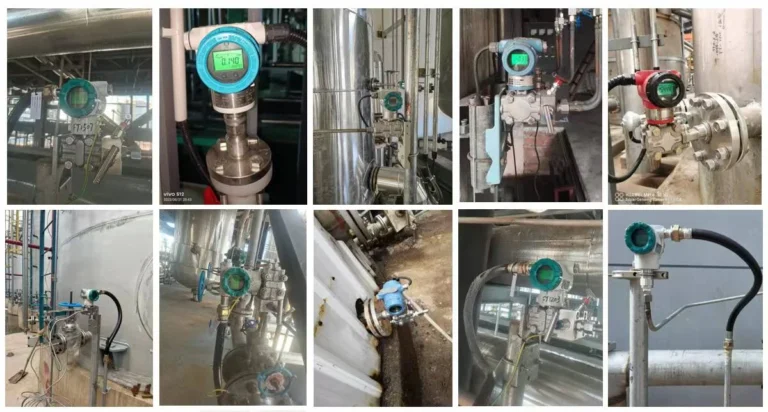
- Start evacuation and watch the curve. A clean dry system falls fast and smooth. A wet system stalls at 5 to 15 Torr while water boils off. Sinopec refinery operators report that vacuum distillation units commonly run a transmitter on the column overhead in parallel with a local gauge so the DCS sees the curve while the operator sees the dial.
- Isolate the pump and monitor decay. Close the isolation valve between system and pump. A tight system holds; a leaking system rises. The HVAC rule is under 1,000 micron rise in 10 minutes. For process vacuum the criterion comes from your own spec, but the principle is the same: rise rate proves vacuum, not the instantaneous low.
- Record and compare to spec. Log the steady-state reading and the decay rate against the acceptance criterion. China’s GB/T 18443.7-2010 Test Methods for the Performance of Cryogenic Insulated Pressure Vessels — Part 7: Vacuum Measurement and the U.S. reference work at NIST — Tilford, Chapter 2: Pressure and Vacuum Measurements both treat the rise-rate test as the binding result.
Step three is where most field disputes start, and step five is where most pump-downs fail acceptance. For loop wiring on step four see our 4-20 mA wiring guide; for dial reading on step six see how to read a pressure gauge.
Where You Connect the Gauge Changes Everything
A 10 micron leak rate at the gauge tee can shift the steady-state reading by two orders of magnitude on a small chamber. Soft tubing, push-on fittings, and unused valve handles are the usual suspects. Use brass or stainless compression fittings, replace any o-ring older than the date code on the pump, and tighten with a wrench. Pressure-gauge connection practice is codified in ASME B40.100-2013 Pressure Gauges and Gauge Attachments, which applies to the vacuum side of compound gauges as well.
The system-port-not-pump-port rule has one corollary: the gauge belongs downstream of the isolation valve, so closing the valve traps the system reading. If the gauge sits between the pump and the isolation valve, you cannot run step five. The vacuum gauge guide shows the common piping mistake.
The 500-Micron Rule (HVAC) vs Industrial Process Targets
The 500-micron rule comes from the refrigeration industry: a refrigerant circuit that pulls to 500 micron and holds within 1,000 micron over 10 minutes is dry and tight enough for charging. The number does not transfer to other industries.
| Application | Target vacuum | Reference unit |
|---|---|---|
| HVAC refrigerant evacuation | 500 micron, rise < 1,000 µm/10 min | inHg / micron |
| Vacuum distillation column | 20–50 kPa abs | kPa abs / mmHg |
| Freeze-dryer (lyophilizer) | 50–200 mTorr | mTorr |
| Semiconductor process chamber | < 67 mPa (≈ 500 µTorr) | mTorr / mPa |
Semiconductor chambers and HVAC lines both pass the verb “evacuate”, but the targets sit six orders of magnitude apart. Two confusion points: 29.92 inHg is one atmosphere, which is no vacuum, not full vacuum. 1 bar absolute is also approximately atmospheric, not full vacuum — full vacuum is 0 bar abs.
Decay Test — How to Tell Moisture vs Leak
Once the pump is isolated, the pressure rise tells you what is wrong. A slow, decelerating rise that flattens out is residual moisture boiling off. The cure is more pump time, sometimes with the system heated. A linear, steady rise that does not flatten is a real leak. The cure is finding it: soap test on fittings, helium sniff at the flanges, or pressure rise at successive isolation points.
A 10-minute hold catches gross leaks. A 20-minute hold catches medium leaks plus most moisture confusion. A 30-minute hold is the lab-grade benchmark we use when a freeze-dryer batch is on the line. Anything shorter than 10 minutes is a guess.
When a Vacuum Sensor Beats a Gauge
A mechanical gauge gives you a number when you walk up to it. A vacuum transmitter gives the same number to the DCS every second for the next ten years. The HE27 sensor runs ±0.5% FS across −100 kPa to 3.5 MPa with a 4-20 mA, 0-5 V, or 0.5-4.5 V output, plus ≤4 ms response time and ±0.2% FS/year long-term stability. We have specced it on vacuum distillation columns where the local gauge serves walk-rounds and the transmitter serves trending and alarming.
The pattern repeats on lyophilizers, vacuum ovens, and any cryogenic vessel needing continuous proof of envelope integrity. The gauge fails to silence; the transmitter feeds the 24-hour trend chart. Install both, and let the gauge be the second opinion.
For continuous monitoring rather than a spot reading, the HM27 vacuum and absolute pressure transmitter delivers the same measurement as a 4–20 mA signal, with an absolute reference that does not drift with the barometer.
5 Common Field Mistakes That Wreck Your Vacuum Reading
We see the same five problems year after year:
- Gauge installed at the pump. Measures the pump, not the system. Move it downstream of the isolation valve.
- No isolation step. Without closing the pump off, you cannot tell a tight system from a hard-pulling pump.
- Soft hoses and reused o-rings. A 10-foot vinyl hose can leak 100 micron per hour on a small chamber. Use compression fittings.
- Mixed units on the data sheet. A spec in mTorr read on an inHg dial creates a 25× error. Pick one unit per project.
- Five-minute hold time. Water needs time. Isolate at minute 5 and you cannot tell leak from residual moisture. Wait 10 minutes, 20 if the system saw atmosphere overnight.
FAQ
How is vacuum pressure measured?
By comparing a closed system’s pressure to local atmosphere with a gauge or sensor sized to the expected range, and reading after the pump is isolated so the value reflects the system, not the pump.
How do you calculate vacuum pressure?
Vacuum gauge reading = atmospheric pressure − absolute pressure. A chamber at 21 kPa abs against 101 kPa atmosphere shows 80 kPa of vacuum (or −80 kPa gauge).
What is 29.92 inHg of vacuum?
It is one atmosphere. A compound gauge reading 29.92 inHg of vacuum means no vacuum has been pulled, not full vacuum. Full vacuum is 0 abs, which on the gauge dial is the bottom of the scale.
Is 1 bar a full vacuum?
No. 1 bar absolute is approximately atmospheric (1 atm = 1.013 bar). Full vacuum is 0 bar abs, unreachable in practice; high-vacuum systems run between 10⁻⁵ and 10⁻⁷ bar.
What unit is vacuum measured in?
HVAC uses inHg and microns. Process plants use kPa abs and Torr. Semiconductor and lab work use mTorr or mbar. Match your spec sheet first; convert only when you have to.
Need to Tighten Your Vacuum Loop?
For continuous monitoring, the HE27 vacuum and absolute pressure sensor is the model we spec on industrial vacuum lines: −100 kPa to 3.5 MPa, ±0.5% FS, 4-20 mA / voltage output, IP67. Send your spec sheet and we will recommend a model in 24 hours. Still picking gauge types? Start with the vacuum gauge selection guide.