mmHg to PSI Converter
A millimetre-of-mercury reading is almost always an absolute pressure, so it converts to psia rather than psig. 1 mmHg = 0.0193368 psi, so 760 mmHg is 14.696 psi absolute. This converter returns the absolute psi, the equivalent gauge pressure at sea level and the vacuum depth, together with a full mmHg to psi conversion table.
mmHg to psi conversion table
Values are absolute (psia). At sea level, subtract 14.696 psi to get the equivalent gauge reading.
| mmHg | psi (absolute) | kPa absolute | Vacuum depth (psi below 1 atm) |
|---|---|---|---|
| 1 | 0.019337 | 0.13332 | 14.677 |
| 10 | 0.19337 | 1.3332 | 14.503 |
| 25 | 0.48342 | 3.3331 | 14.213 |
| 50 | 0.96684 | 6.6661 | 13.729 |
| 100 | 1.9337 | 13.332 | 12.762 |
| 120 | 2.3204 | 15.999 | 12.376 |
| 200 | 3.8674 | 26.664 | 10.829 |
| 380 | 7.3480 | 50.663 | 7.348 |
| 500 | 9.6684 | 66.661 | 5.028 |
| 760 (1 atm) | 14.696 | 101.325 | 0 |
| 1000 | 19.337 | 133.32 | above atmosphere |
| 1520 (2 atm) | 29.392 | 202.65 | above atmosphere |
What an mmHg reading actually represents
One millimetre of mercury is the pressure produced by a 1 mm column of mercury at 0 °C under standard gravity, which is 133.322387415 Pa. That definition rests on a mercury column standing against a sealed vacuum, which is why mmHg almost always denotes an absolute pressure rather than a gauge pressure.
This trips people up more often than the arithmetic does. A barometer reading 760 mmHg is not 760 mmHg above the surrounding air, it is the surrounding air. If you hand that number to a gauge-referenced instrument as though it were a gauge value, you overstate the real pressure by one full atmosphere, which is 14.696 psi. On a vacuum dryer or a leak-test rig that single mistake is usually the difference between a sensible range and an unusable one.
The exact factor, and where it comes from
The conversion is a ratio of two defined pressures. One millimetre of mercury is 133.322387415 Pa and one pound per square inch is 6894.757293 Pa. Dividing gives the two factors you need:
- 1 psi = 51.714925 mmHg
- 1 mmHg = 0.019336777 psi
You can check the factor against a value you already know. Standard atmospheric pressure is 760 mmHg, and 760 × 0.019336777 = 14.696 psi, which is exactly one standard atmosphere. If a conversion you have been given does not reproduce that number, the factor is wrong.
mmHg and Torr are numerically the same
A torr equals 1/760 of a standard atmosphere, or 133.322368 Pa. A conventional millimetre of mercury is 133.322387415 Pa. The ratio between them is 1.000000142, so they differ by roughly 1.4 parts in ten million.
No industrial pressure transmitter resolves that difference, and neither does any calibration standard you are likely to meet outside a national metrology laboratory. In practice you can treat 1 mmHg and 1 torr as equal and keep whichever label your industry uses: vacuum and semiconductor work tends to say torr, while medical, barometric and laboratory work tends to say mmHg. If your source data is in torr, the torr to psi converter · mbar to psi and its reverse apply the same arithmetic.
Absolute or gauge: matching the reading to a transmitter
You order a pressure transmitter with a reference, and no amount of software scaling will change it afterwards. An absolute-reference instrument measures against a sealed vacuum, so its zero never moves. A gauge-reference instrument measures against whatever the barometer is doing today, so its zero moves with the weather and with site altitude.
If your specification is written in mmHg absolute, for example evacuate to 25 mmHg absolute, you need an absolute-reference transmitter. Reading that setpoint on a gauge-referenced instrument is not a units problem, it is a reference problem: the same physical vacuum will read differently in a high-pressure weather system than in a low one. The error is not small either. A barometric swing from 760 to 730 mmHg is 30 mmHg, which is 0.58 psi, and on a 25 mmHg absolute setpoint that swing is larger than the setpoint itself.
Where the process only cares about suction relative to ambient, such as a vacuum gripper or a pump inlet, a negative-gauge instrument is the simpler and cheaper choice.
Worked examples
1. Standard atmosphere. 760 mmHg × 0.019336777 = 14.696 psia. Gauge equivalent at sea level is 0 psig.
2. A vacuum dryer held at 25 mmHg absolute. 25 × 0.019336777 = 0.483 psia. The vacuum depth is 760 − 25 = 735 mmHg, which is 735 × 0.019336777 = 14.21 psi below atmosphere. Specify an absolute transmitter with a range of roughly 0 to 1 psia, not a 0 to 15 psig instrument reading near its bottom end.
3. A familiar 120 mmHg. 120 × 0.019336777 = 2.32 psi. This is the number people recognise from blood pressure, and it is a useful sanity check that mmHg values in the low hundreds are only a couple of psi.
4. Half an atmosphere. 380 mmHg × 0.019336777 = 7.348 psia, which is exactly half of 14.696 psia, as it should be.
Where mmHg shows up in industrial work
Barometric and altitude references are still quoted in mmHg, and so is most laboratory vacuum work below atmospheric. Vacuum drying, freeze drying and degassing recipes are commonly written as an absolute mmHg setpoint. Leak testing uses mmHg for both the starting vacuum and the allowable pressure rise over a hold period. Medical device manufacture and the calibration of the instruments used there keep mmHg because the clinical scale is in mmHg.
What these share is that the number is absolute and usually small, which is exactly the case where range selection matters most. Converting to psi is only the first step; the second is choosing an instrument whose reference and span suit an absolute reading near the bottom of the scale.
Frequently Asked Questions
How many psi are in 760 mmHg? 14.696 psi absolute. 760 mmHg is standard atmospheric pressure, so the gauge equivalent at sea level is 0 psig.
Is mmHg the same as Torr? For all practical purposes yes. They differ by a factor of 1.000000142, about 1.4 parts in ten million, which no field instrument can resolve.
How much force is 120 mmHg? 120 mmHg is a pressure, not a force, and it equals 2.32 psi. To get a force you multiply by the area it acts on, so 2.32 psi acting on one square inch is 2.32 pounds.
Is an mmHg reading absolute or gauge? Almost always absolute, because the unit references a mercury column standing on a vacuum. Confirm this on the specification before you order a transmitter reference.
How do I convert mmHg to psig? Convert to psia first, then subtract local atmospheric pressure. At sea level that is psig = mmHg × 0.019336777 − 14.696. Below one atmosphere the result is negative, which is a vacuum.
Instruments for absolute and vacuum measurement
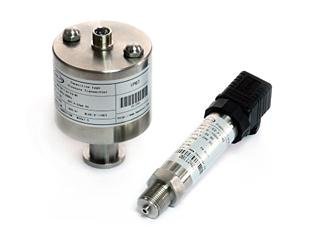
HM27 Vacuum & Absolute Pressure Transmitter
Negative-gauge, silicon absolute from 5 kPa, and a capacitance thin-film absolute variant reading from 0.02 Pa, unaffected by gas composition. Up to ±0.1 % FS with 316 stainless wetted parts.
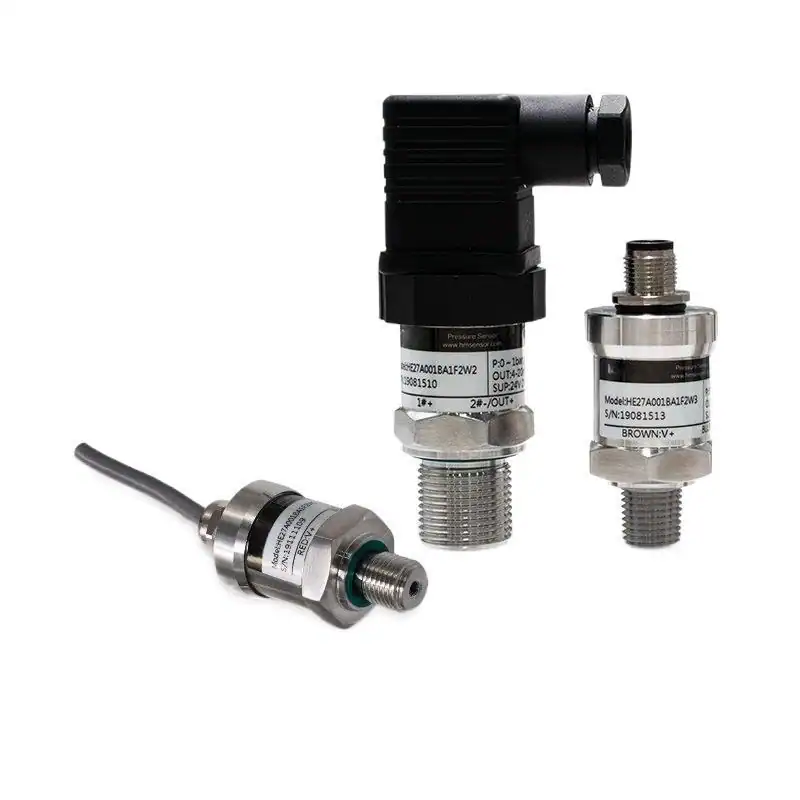
HE27 Vacuum & Absolute Pressure Sensor
The OEM sensor form of the same measurement, for absolute and vacuum ranges built into your own equipment rather than mounted as a field transmitter.
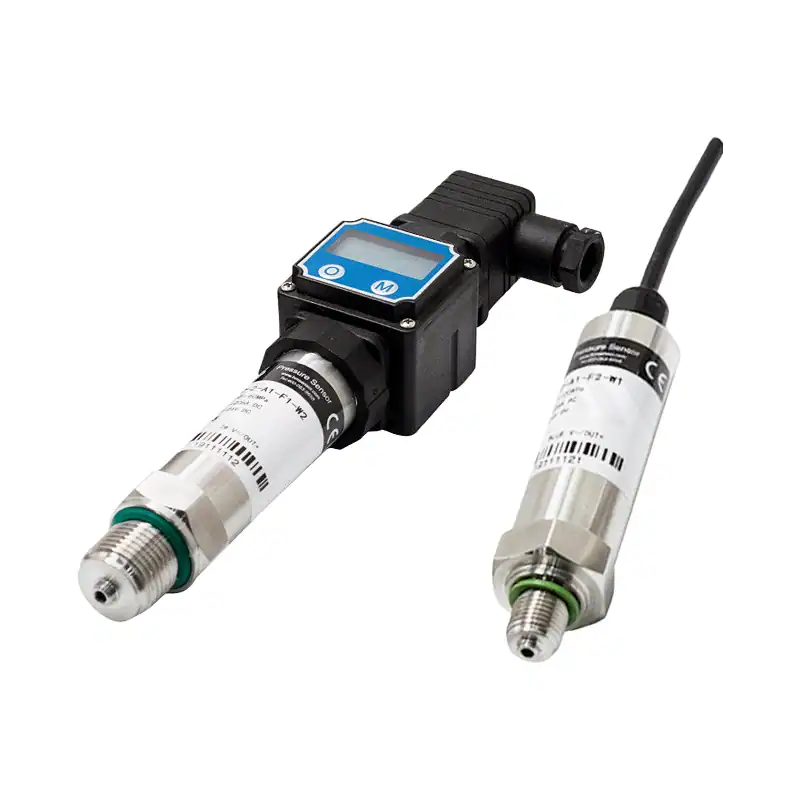
HM20 General Purpose Pressure Transmitter
Gauge or absolute ranges with ±0.25 % FS and a 4–20 mA output, suited to lines that cross between vacuum and positive pressure.