Can Gauge Pressure Be Negative? Yes — When and How
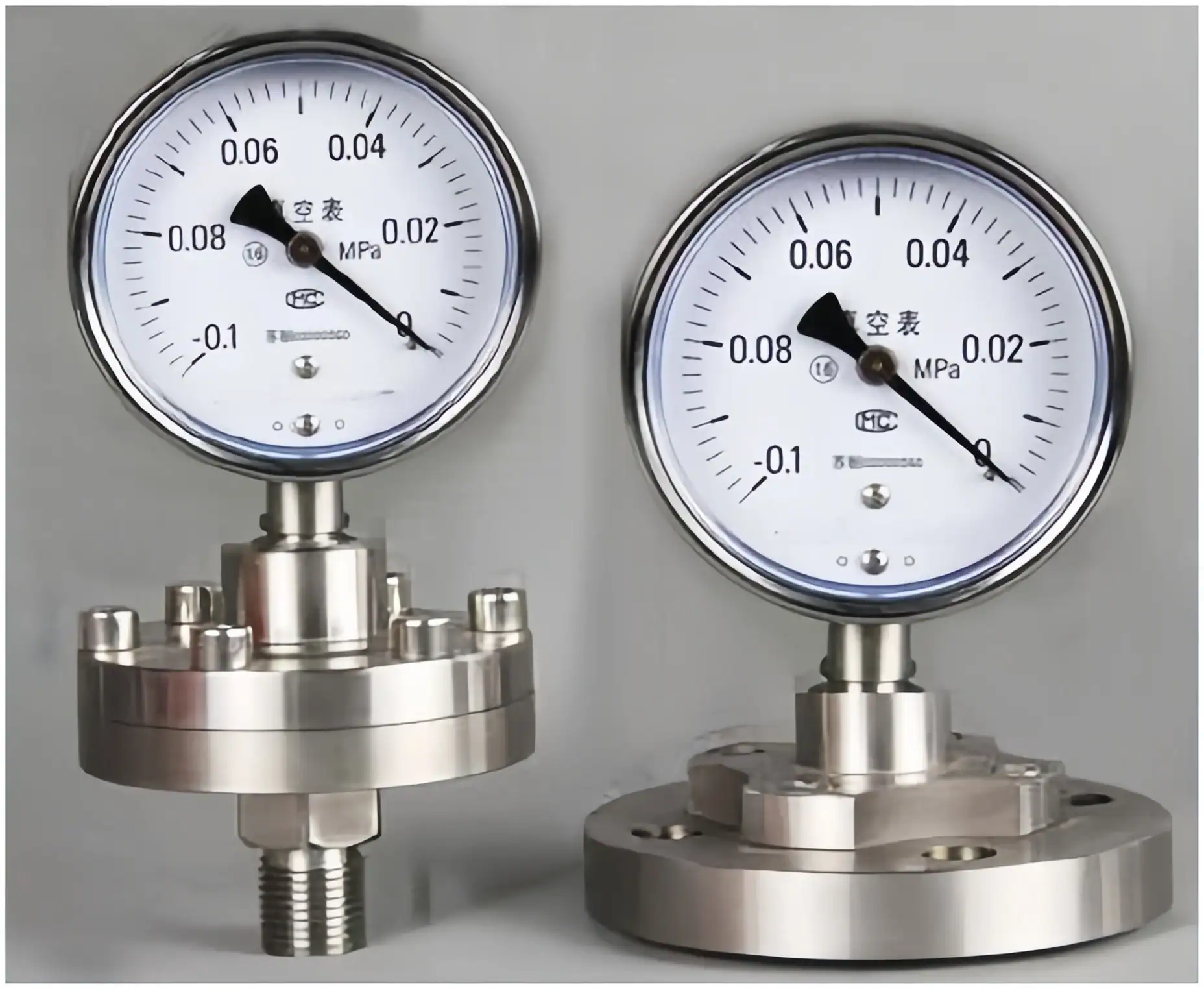
Yes, gauge pressure can be negative. A negative reading simply means the pressure inside the system has dropped below the local atmospheric pressure pushing on the instrument from the outside. That sub-atmospheric condition is a vacuum, and it shows up in distillation columns, steam condensers, pump suction lines, and vacuum dryers every day in normal industrial operation — covered in the ASME PTC 19.2 Pressure Measurement code.
Yes — Gauge Pressure Can Be Negative (Short Answer)
In 35+ years commissioning refinery instrumentation, I have walked past compound gauges reading -90 kPa on column overheads more times than I can count, and not once was the gauge faulty. That reading was the production target. If your needle has just dropped below zero, the first question is not is it broken? but what is this system supposed to read here?
This guide covers what the negative reading means physically, a unit conversion table for the bench, where it appears across a process plant, how to pick the right instrument, and when the negative reading becomes a real safety concern. For HVAC, refrigeration, boiler-draft, and automotive vacuum applications, see our cross-application companion guide (publishing 2026-05-13); for vacuum-gauge dial mechanics, see how to read a vacuum gauge.
Why “Negative” Doesn’t Mean “Wrong” — The Atmospheric Zero
A pressure gauge does not measure pressure in absolute terms. It measures pressure relative to the atmosphere outside its case. That choice of reference is what makes negative readings both possible and necessary.
- Absolute pressure — referenced to a perfect vacuum. Always ≥ 0.
- Gauge pressure — referenced to local atmospheric pressure. Can be positive or negative.
- Vacuum (or compound) pressure — the negative half of the gauge scale, often reported as a positive number with the word vacuum attached.
When the system inside your tank or pipe is lower in pressure than the atmosphere pushing on the outside of the gauge case, the elastic element is deflected inward and the needle swings left of zero. The internal pressure has not gone below nothing; physically that is impossible. It has gone below your reference point, which is a different statement.
There is a hard physical limit. At sea level, atmospheric pressure averages about 1.013 bar absolute, so the deepest a gauge pressure can ever read is −1.013 bar, a perfect vacuum inside the system. Any compound gauge or transmitter labelled “-1 bar / -100 kPa” is sized to that physical floor. At elevation the floor moves with you: a gauge in Lhasa never reads as deep a vacuum as one in Houston.
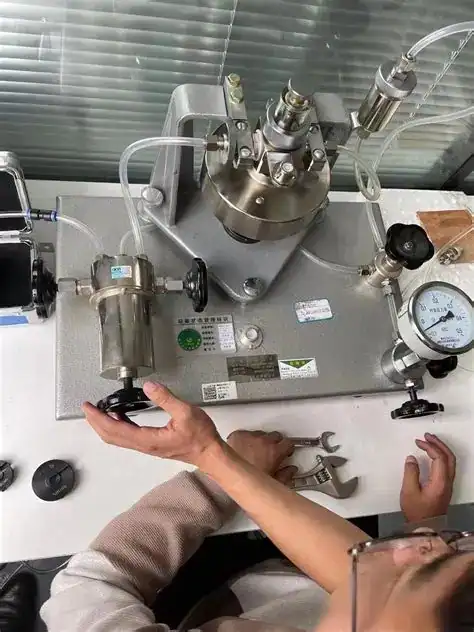
For the underlying math — how P_gauge, P_abs, and P_atm fit together with three worked examples — see our gauge pressure formula guide; the absolute-reference rearrangement P_abs = P_gauge + P_atm with vacuum and altitude cases is in the absolute pressure formula guide.
Negative-Pressure Conversion Table — psig ↔ inHg ↔ mbar ↔ kPa ↔ bar
Negative pressure shows up in a confusing mix of units depending on industry and region: refineries lean on kPa or bar, North American mechanical contractors use psig and inches of mercury, HVAC engineers use inWC for the very small ranges, and instrument calibration labs default to mbar. Here is a single cross-reference for the negative half of the gauge scale you can keep at your bench:
| psig | inHg | mbar | kPa | bar |
|---|---|---|---|---|
| 0 | 0 | 0 | 0 | 0 |
| -2 | -4.07 | -138 | -13.79 | -0.138 |
| -4 | -8.14 | -276 | -27.58 | -0.276 |
| -6 | -12.21 | -414 | -41.37 | -0.414 |
| -8 | -16.28 | -552 | -55.16 | -0.552 |
| -10 | -20.36 | -689 | -68.95 | -0.690 |
| -12 | -24.43 | -827 | -82.74 | -0.827 |
| -14.7 | -29.92 | -1013 | -101.33 | -1.013 |
The bottom row is the physical floor at sea level — perfect vacuum. Any gauge claiming to read below -14.7 psig or -29.92 inHg is either using an absolute scale, or operating at altitude where the atmospheric pressure floor is shallower. For the full PSIA / PSIG / vacuum mapping with an altitude correction table, see our PSI variant cheat sheet.
China’s national standard GB/T 1226-2017 for general pressure gauges codifies the dual-direction dial layout used on combination compound gauges (typically -0.1 to +X MPa), and matches the IEC and EU convention used in most European refineries.
Where You’ll See It in a Process Plant
Negative gauge pressure is not a curiosity. For several common unit operations, it is the design intent. Four occurrences appear most often, with a healthy reading window for each:
1. Vacuum distillation columns (-90 to -95 kPa). In a refinery’s vacuum-tower (VDU), the overhead is held under deep vacuum so the heavy fractions boil low enough not to crack thermally. A typical setpoint sits at -93 kPa gauge. Read -85 kPa or shallower and the steam-jet ejector is losing capacity; read better than -95 kPa and you are sucking air through a flange leak or the column-bottom liquid seal.
2. Steam-turbine condensers (-95 kPa typical). A condenser’s vacuum is the back-pressure on the entire steam cycle, and 1 kPa of degraded vacuum is worth measurable plant heat-rate. Operators trend the shell pressure transmitter against a load-corrected curve every shift; an unexplained 3 kPa drift is enough to dispatch a thermography survey on the air-removal section.
3. Centrifugal pump suction lines (-0.1 to -0.5 bar gauge typical). Whenever a pump lifts liquid from a tank below it, suction pressure must drop below atmospheric to overcome the static head. This is normal: the limit is set by the pump’s NPSH requirement, not by zero. For the spiral and helical Bourdon elements that read these ranges on local indicators, see our Bourdon manometer guide.
4. Vacuum dryers and packaging machines (-0.4 to -0.9 bar gauge). Pharmaceutical and food-processing trains pull active vacuum to remove residual solvents or seal a pouch. The gauge tells the operator whether the chamber reached its target within cycle time and whether the seal held over the dwell.
For HVAC rooms, refrigeration suction, boiler-furnace draft, and automotive intake vacuum, the windows differ. See our cross-application companion guide on negative pressure gauge applications (publishing 2026-05-13).
Choosing the Right Instrument: Standard, Compound, Vacuum, Transmitter
Whether your gauge can show a negative reading at all comes down to which instrument you specified, and a wrong specification is the most common reason engineers think a gauge is broken when it isn’t.
| Instrument | Range example | Negative-side accuracy | Best fit | DCS / remote |
|---|---|---|---|---|
| Standard pressure gauge | 0 to +X | None — stop pin at zero | Systems that cannot ever go sub-atm | None |
| Compound gauge | -1 bar to +X bar | ±1.5 to ±4% FS (mechanical) | Pump suction, vacuum dryer, condenser local read | None |
| Dedicated vacuum gauge | -1 to 0 bar | ±1.5 to ±2.5% FS | Condenser, vacuum tower local read | None |
| 4-20 mA pressure transmitter | configurable, e.g. -1 to +10 bar | ±0.1 to ±0.4% FS | Anything needing DCS logging, alarming, or trending | Yes (4-20 mA + HART) |
China’s verification regulation JJG 52-2013 for general, compound, and dedicated vacuum gauges defines three accuracy classes (±1.5%, ±2.5%, and ±4% of full scale) that set the boundary between an instrument suitable for safety-relevant reading and one suitable only for indication. The corresponding ANSI symbol families for dial gauges and transmitters are codified in ANSI/ISA-5.1 for P&ID work.
A note on the compound-gauge accuracy column. We benchmarked a basket of low-cost mechanical compound gauges (the kind commonly found on imported skid packages) against a calibrated digital reference across the -0.6 to -0.95 bar segment, and most drifted to the wide side of their nominal class within the first 18 months of process service. So when a control target sits in the deep-vacuum band, a 4-20 mA transmitter is the more honest specification, not just the nicer one. For the broader instrument-family taxonomy (sensing technology, output protocol, certification), see our pressure transmitter types pillar.
The last column in the table is what most often forces the upgrade. A mechanical compound gauge can show the operator the local reading on the dial, but it cannot feed the DCS, it cannot trip an alarm, and it cannot store a trend. If any of those three matter, you are shopping for a transmitter; see the upgrade matrix below.
The Dangerous Side: When Negative Pressure Can Hurt Equipment
Sub-atmospheric gauge readings can be perfectly normal, but they can also be a quiet warning that something is about to fail. Four risk patterns recur across plant audits:
1. Vessel implosion. At sea level, atmospheric pressure pushes inward at 1.013 bar over the entire external surface of a tank. A standard storage tank designed for slight over-pressure (for example +1 to +5 kPa) will buckle inward if the internal pressure is allowed to drop to even -2 kPa during cleaning, draining, or thermal cooldown. Always verify a tank’s vacuum design pressure before isolating its vacuum-relief vent.
2. Cavitation in pump suction. A centrifugal pump cavitates when the local fluid pressure at the impeller eye drops below the fluid’s vapor pressure. The textbook engineering check is:
NPSHa = (Patm − Pvap) / (ρ × g) + Hs − Hf
For 25 °C clean water, Pvap ≈ 3.17 kPa absolute, and any suction-side gauge reading worse than about -0.3 bar gauge has already eaten into the safety margin and demands a fresh NPSHa-vs-NPSHr check against the pump’s manufacturer curve. For 60 °C condensate the margin tightens further: Pvap rises to roughly 19.9 kPa absolute, and the suction-pressure floor moves up correspondingly.
3. Sealed gauge installed in a vacuum loop. A sealed gauge references its own factory-sealed atmosphere capsule, not the local atmosphere. If installed where it sees vacuum, it reads against a frozen reference and the displayed value drifts with whatever the local atmospheric pressure happens to be doing. We have seen sealed gauges quietly under-report condenser vacuum by 8 to 12 kPa for months before a turnaround caught it.
4. Stop-pin dead zone. A standard non-compound gauge has a mechanical stop pin at zero. If the system pulls vacuum, the needle parks against the pin, and the operator sees a “0” reading with no warning that the system is actually at -0.5 bar.
Diagnostic Decision Tree: Needle Just Dropped Below Zero — Now What?
Before you escalate, walk this four-question tree. It catches the majority of “the gauge is broken” calls in my experience.
Question 1: Is this gauge physically capable of showing a negative reading? Look at the dial face. If the scale starts at 0 with no markings to the left, this is a standard gauge. The needle parking against the stop pin will be misread as “zero”, and you actually have no idea what the system is doing. Replace with a compound gauge or compound-rated transmitter before troubleshooting any further.
Question 2: Could this be a sealed gauge installed in a vacuum loop? A sealed gauge typically carries an “S” suffix in the manufacturer code and a small “Sealed” label near the connection. If installed where it sees vacuum, it will under-report by an amount that drifts with local barometric pressure. Confirm in the bill of materials, then replace with a compound or vacuum-rated instrument.
Question 3: Should this section of the plant be under vacuum by design? Pull up the P&ID. If a vacuum jet, ejector, condenser, vacuum pump, or a downhill pump suction feeds this line, the negative reading is the design intent. Verify the magnitude is in window per the operating envelope, not whether negative readings exist at all. Each PT, PIT, or PDT bubble on that drawing is decoded in our P&ID transmitter symbol guide.
Question 4: When was this gauge last calibrated? Per JJG 52-2013, compound and vacuum gauges in process service should be verified at least annually. A drifted zero on an aging compound gauge is the most common false negative-reading source. Pull the gauge, send it to the calibration bench, and substitute a calibrated test gauge in the meantime.
When to Upgrade from Compound Gauge to a 4-20 mA Transmitter
If your application requires any of the criteria below, a mechanical compound gauge has stopped being the right specification, and a 4-20 mA pressure transmitter is the upgrade:
| Need | Compound gauge | 4-20 mA transmitter |
|---|---|---|
| Accuracy better than ±1.5% FS | No | Yes (±0.1 to ±0.4% FS) |
| Remote / DCS read | No | Yes |
| Alarm trip / SIS integration | No | Yes |
| Long-term zero drift compensation | No (mechanical creep) | Yes (digital re-zero) |
| Hazardous-area certification | Limited | Yes (Ex ia / Ex d) |
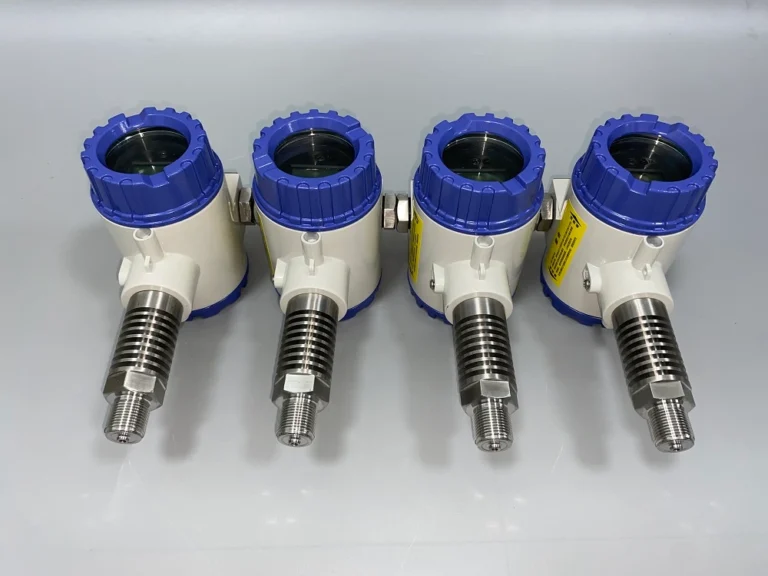
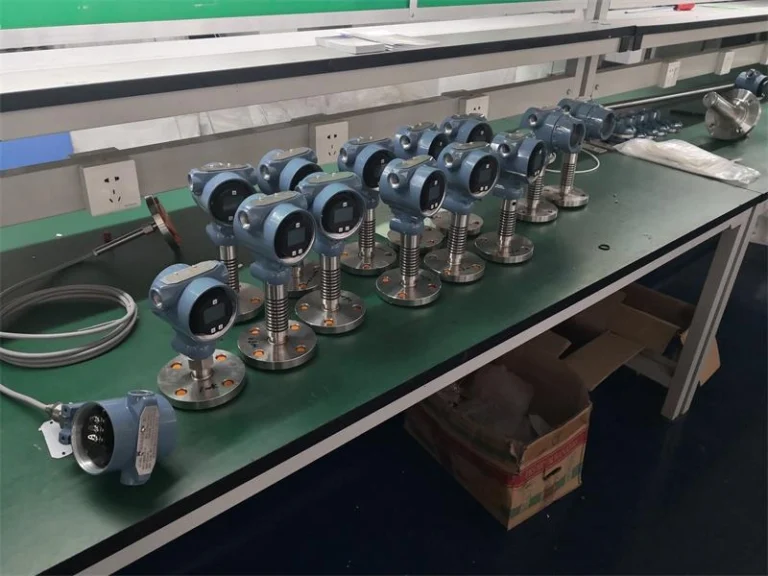
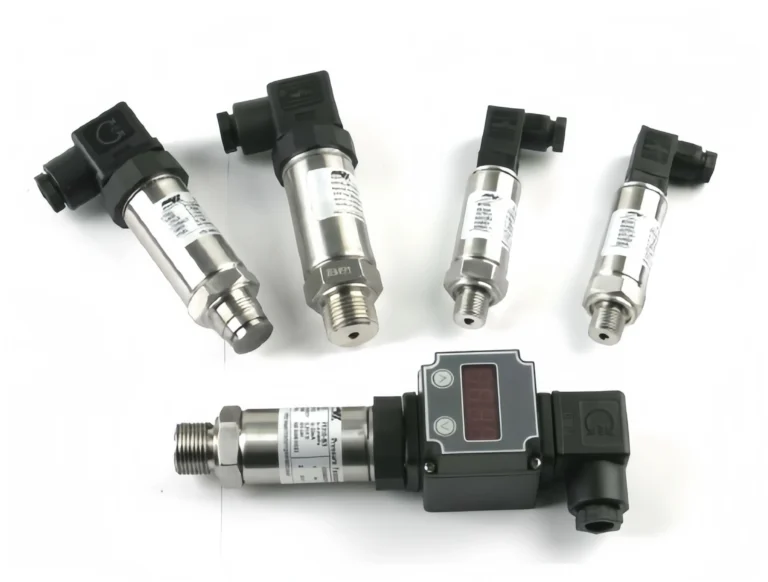
For the typical compound-range process duty — sub-atmospheric down to -100 kPa together with a positive pressure span — the HMK HM30 Micro Differential Pressure Transmitter is sized exactly for this case. The HM30 spans 0-500 Pa at the low end up to 0-700 kPa DP at the high end, with a configurable negative-side capability of 0 to -100 kPa, at ±0.4% FS standard accuracy and an optional ±0.1% FS class. M20×1.5, G 1/4, and a Φ8 barb are the stock process connections.
For deeper-vacuum applications (semiconductor process, lab vacuum distillation, freeze drying), the HMK HM27 Vacuum & Absolute Pressure Transmitter measures down to 0.02 Pa absolute, which is far below what any mechanical compound gauge can resolve.
For the broader transmitter-family options (sensing technology, output protocol, certification), see our pressure transmitter types pillar. For the cousin selection question on the temperature side, see temperature element vs transmitter.
FAQ
Can a standard pressure gauge read negative pressure?
No. A standard gauge has a mechanical stop pin at zero. When the system pulls vacuum, the needle parks against the pin and reads “0” — telling you nothing. Use a compound gauge or compound-rated transmitter instead.
What is the lowest gauge pressure possible?
At sea level the floor is -1.013 bar = -14.7 psig = -29.92 inHg = -101.3 kPa, corresponding to a perfect vacuum. The floor shifts shallower at altitude because it tracks local atmospheric pressure.
Is negative gauge pressure the same as vacuum?
Yes — same physical condition, two naming conventions. A vacuum gauge reports “60 kPa vacuum”; a compound gauge reports “-60 kPa gauge”. Both describe the same state.
Can absolute pressure be negative?
No. Absolute pressure is referenced to perfect vacuum and is bounded at zero. Only gauge pressure can carry a negative sign.
What is the difference between positive, negative, and zero gauge pressure?
Positive = system above atmospheric. Negative = system below atmospheric (vacuum). Zero = system equals atmospheric. The atmospheric reference point outside the gauge case is what gives all three values meaning.
Cross-domain companion: For HVAC, cleanroom, hospital isolation, refrigeration, boiler, or automotive applications of negative pressure (with typical readings and instrument selection per industry), see Negative Pressure Gauge Applications: 5 Industries & How to Pick the Right Gauge.
See also: how to measure that vacuum reading in the field for the bench-to-publication six-step workflow.
Next step: Send your spec sheet for a model recommendation in 24 h. Get in touch →