PSIA vs PSIG vs PSI: Spec-Sheet Cheat Sheet for Engineers
Every pressure transmitter datasheet, calibration certificate, and P&ID drawing throws three- or four-letter pressure unit suffixes at you: PSI, PSIA, PSIG, sometimes PSID, occasionally PSIS. Pick the wrong one and a 100 PSI gauge becomes 114.7 PSI in operation, a relief valve trips early, or a calibration cert references the wrong reference. This guide decodes all five labels, gives you the exact conversion math, and shows how to read them on real spec sheets from HMK, WIKA, and Rosemount.
What PSI Really Means
PSI stands for pound-force per square inch. It is a customary US unit that measures how much force a fluid or solid pushes against each square inch of contact area. By itself, the symbol PSI does not say what reference point the measurement is anchored to — that is the job of the suffix letter (A, G, D, or S) that comes after. For the foundational overview, see what PSI means as a pressure unit.
The numeric size of one PSI in other common pressure units (NIST SP 811 traceable):
| From 1 PSI | Value | Unit |
|---|---|---|
| SI base | 6,894.76 | Pa |
| SI x 10³ | 6.8948 | kPa |
| SI x 10⁶ | 0.006895 | MPa |
| Metric tech | 0.0689 | bar |
| Atmospheric ratio | 0.0680 | atm |
| Mercury column | 51.7149 | Torr (mmHg) |
| Mercury column | 2.0360 | inHg |
| Water column | 27.7076 | inH₂O |
For instant conversions in either direction, use the HMK MPa to PSI converter or PSI to bar converter; both use the exact ISO 80000-4 / NIST SP 811 factor.
PSIA: Absolute Pressure (vs Perfect Vacuum)
PSIA — pounds per square inch absolute — is pressure measured against a perfect vacuum (0 PSIA). A sealed chamber containing nothing reads exactly 0 PSIA; the air pressing on you at sea level reads about 14.696 PSIA. Because PSIA references vacuum, the reading never goes negative and is independent of weather or elevation.
PSIA is the right unit when you need to know total pressure, not pressure relative to something. Three common situations call for it: barometric weather stations, vacuum systems where the reference would otherwise shift with altitude, and process work that crosses the atmospheric line in both directions. For more on the absolute side of pressure, see our absolute vs gauge pressure guide.
PSIG: Gauge Pressure (vs Atmospheric)
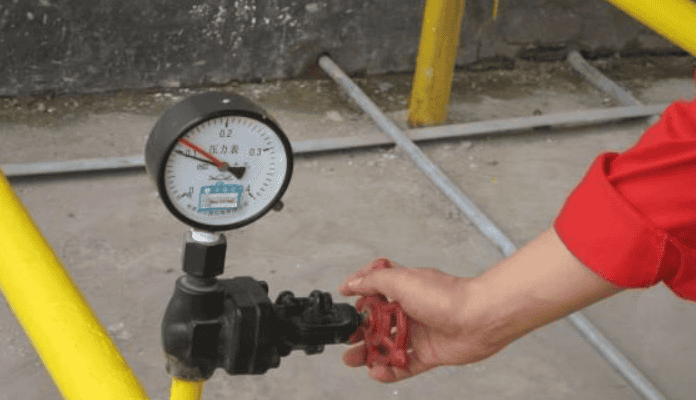
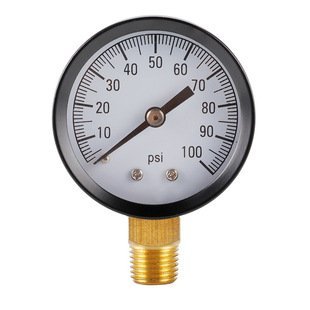
PSIG — pounds per square inch gauge — is pressure measured against the local atmosphere. A pressure gauge that reads 0 PSIG when its port is open to the air is doing exactly what it should: it ignores the 14.7 PSI atmospheric column that pushes equally on both sides of its diaphragm.
A worked example clears the math: a car tyre filled to 32 PSIG at sea level contains an absolute pressure of 32 + 14.696 = 46.696 PSIA. The tyre sidewall sees the gauge value, and a metrology lab certificate records the absolute value. Most industrial process gauges, transmitters, and pumps spec PSIG. That is what operators on the floor read on the dial. For the reading mechanics see how to read a pressure gauge, and for vacuum and compound ranges read can gauge pressure be negative.
PSID and PSIS: The Forgotten Two (Differential and Sealed)
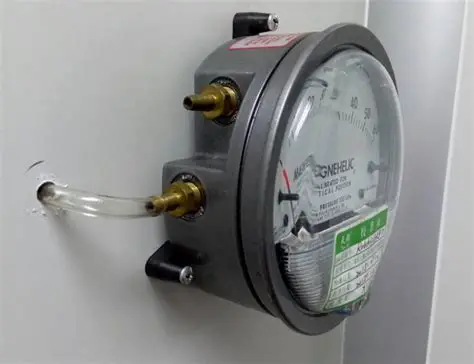
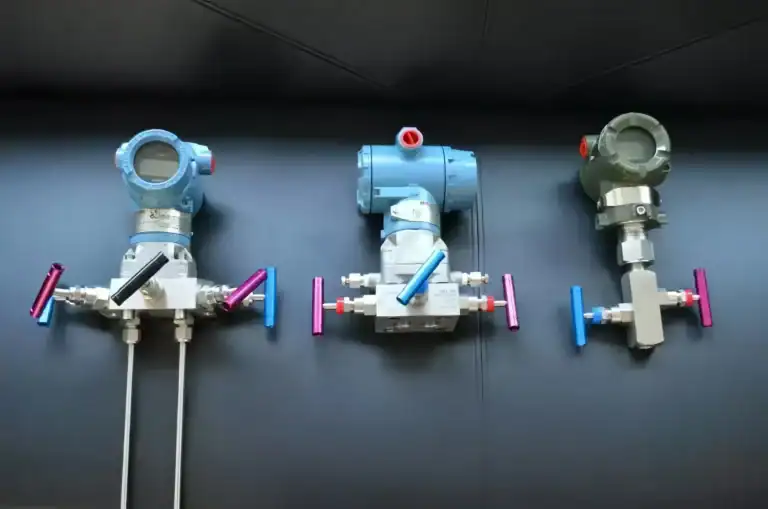
PSID — differential — measures the difference between two pressure ports rather than against vacuum or atmosphere. PSID is the working unit for orifice-plate flow meters, filter-clogging alarms, level measurement on closed tanks, and any application where the absolute or gauge value at either port matters less than the gap between them. A clean filter might read 2 PSID; a filter due for change might read 15 PSID. The HM3051 smart differential pressure transmitter family is engineered for PSID work; see the DP transmitter calibration guide for how the two ports are zeroed against each other.
PSIS — sealed — is a rare fifth label you mostly meet on high-range transmitters. A PSIS transmitter has its reference side sealed at atmospheric pressure at the time of manufacture, then welded shut, so it does not breathe with the weather. At 5,000 PSIS full-scale the difference is negligible; at 0 to 30 PSIS, the same drift would be a meaningful error. The classic PSIS pitfall: ordering one for a low-range application that actually needs PSIG so the reading tracks local barometric pressure.
Conversion Formula and Worked Examples
The PSIA ↔ PSIG conversion is a single subtraction or addition by the local atmospheric pressure (Patm):
PSIA = PSIG + Patm
Four worked examples cover the common cases engineers run into:
| Given | Find | Result |
|---|---|---|
| 100 PSIA reactor head pressure | PSIG reading on gauge | 85.30 PSIG |
| 60 PSIG tank wall reading | PSIA for safety calc | 74.70 PSIA |
| 0 PSIG (gauge at rest) | PSIA | 14.70 PSIA |
| 0 PSIA (perfect vacuum) | PSIG | −14.70 PSIG |
The last row matters: a true vacuum is −14.7 PSIG. Real industrial gauges that read negative are doing compound-range vacuum measurement, not absolute. For a metric refresher, our MPa to PSI converter handles the SI-side math.
For the math behind these conversions — the full gauge pressure formula with three rearrangements and three industrial worked examples — see our gauge pressure formula guide; the inverse case (P_abs = P_gauge + P_atm with hydrostatic and altitude-correction examples) is covered in the absolute pressure formula guide.
Altitude Correction: Why Sea-Level Math Breaks Above 1,000 ft
The 14.696 PSI atmospheric constant assumes sea level. Real-world plants in Denver, Mexico City, or any high-altitude facility see noticeably less atmospheric weight pressing on every gauge port. A transmitter calibrated as PSIG at sea level will read the same gauge value at altitude (because PSIG self-zeros to local atmosphere); a PSIA transmitter shipped from a sea-level calibration lab will arrive showing a “wrong” zero at altitude that operators sometimes mistake for sensor drift.
| Elevation (ft) | Elevation (m) | Patm (PSIA) | PSIG offset from sea level |
|---|---|---|---|
| 0 | 0 | 14.696 | 0.00 |
| 1,000 | 305 | 14.175 | −0.52 |
| 2,000 | 610 | 13.664 | −1.03 |
| 5,000 | 1,524 | 12.226 | −2.47 |
| 10,000 | 3,048 | 10.108 | −4.59 |
| 14,000 | 4,267 | 8.632 | −6.06 |
The Patm column above comes from the US Standard Atmosphere 1976 model with a sea-level reference of 14.696 PSI. For high-altitude work, calibrate transmitters at the install site whenever the budget allows; or specify PSIG over PSIA so the field zero takes care of itself. Accuracy class, covered in detail in our accuracy class decoded, sets a tighter limit on how much altitude error you can tolerate before re-zeroing.
Reading Spec Sheets: HMK / WIKA / Rosemount SKU Suffix Decode
Each major instrument vendor encodes PSI variant directly into the model number on the spec sheet. Knowing the suffix saves a phone call to the distributor and prevents specifying the wrong transmitter for a sealed-system or differential application.
| Vendor | Gauge (PSIG) | Absolute (PSIA) | Differential (PSID) |
|---|---|---|---|
| HMK product line | HM20 | HM27 (vacuum / absolute) | HM3051 (smart DP) |
| WIKA A-10 family | A-10 (default) | A-10-A | DPS (separate line) |
| Rosemount 3051 | 3051CG | 3051CA | 3051CD |
Two SKU decode examples in practice:
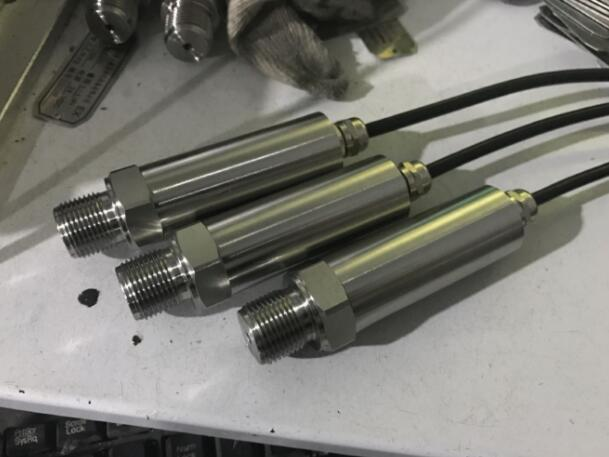
A real-world decode example: Rosemount 3051CA1-A-22-A-1A-K5. The CA after 3051 means absolute (PSIA); the 1 that follows is the 0–30 PSIA base range; the rest is option codes. Specifying this for a vented atmospheric tank would give 14.7 PSIA at “empty” instead of the 0 reading operators expect on a vented system. On the HMK side, the equivalent absolute product is the HM27 vacuum / absolute pressure transmitter; for vented tanks, specify a gauge unit like the HM20 general-purpose pressure transmitter instead.
For background on the wider product taxonomy, see our pressure transmitter types pillar and temperature compensation guide — both shape which PSI variant your application actually needs.
ASME B40.100 and ISA Marking Conventions
Two industry standards govern how the PSI suffix is shown on the gauge face and in P&ID drawings. ASME B40.100-2022 (Pressure Gauges and Gauge Attachments) is the authoritative US specification. It states that pressure units shown on a dial without a suffix are interpreted as gauge pressure unless explicitly labeled otherwise. So a face that reads “0–100 PSI” means PSIG by default. To call out absolute or differential, the dial must add the A, G, or D letter explicitly.
On the drafting side, ISA-5.1-2024 (Instrumentation Symbols and Identification) allows the same default convention for symbols and tag descriptions inside P&ID drawings. A pressure transmitter tagged “PT-201” without a unit suffix is implicitly PSIG; “PT-201-A” or a callout box with “PSIA” makes it absolute. The convention saves drawing clutter, but it puts the burden on spec writers to clearly mark non-default variants. Our P&ID symbol guide walks through pressure-transmitter tagging in full.
Field experience: HMK applications team has tracked the same root cause many times. Drift-investigation tickets often turn out to be PSIA-vs-PSIG label confusion at the calibration cert level, not actual sensor drift. The fix is always the same: read the suffix on the cert against the suffix on the spec, and reconcile before chasing the transmitter.
Quick Pressure-Unit Conversion Card
When the PSI line on a spec sheet needs to land in a metric BOM (or vice versa), the conversion factors below cover the eight pressure units engineers most often switch between:
| Convert | Multiply by |
|---|---|
| PSI → bar | 0.068948 |
| PSI → kPa | 6.8948 |
| PSI → MPa | 0.0068948 |
| PSI → atm | 0.068046 |
| PSI → mmHg (Torr) | 51.7149 |
| PSI → inHg | 2.0360 |
| PSI → inH₂O | 27.7076 |
For instant bidirectional math, use the HMK pressure unit converter, the dedicated PSI to bar tool, or the MPa to PSI calculator. All three reference the same NIST factors above.
Frequently Asked Questions
Is tyre pressure PSIG or PSIA?
Tyre pressure is PSIG. A pressure gauge at the petrol station references local atmosphere, so a 32-PSI reading is 32 PSIG. Absolute pressure inside the same tyre is 32 + 14.7 = 46.7 PSIA at sea level. Tyre placards always quote PSIG even when the “G” is dropped.
How do I know if a datasheet uses PSIA or PSIG?
Check the model line first (HMK HM27 for absolute, HM20 for gauge, HM3051 for differential), then the units block on the spec sheet (it usually spells out “psi gauge” or “psi absolute” in the range row). When neither is explicit, ASME B40.100 defaults the reading to gauge; if the application is safety-critical, call the supplier rather than infer.
What happens to PSIG accuracy at high altitude?
PSIG accuracy is generally unaffected because the transmitter zeros itself to local atmosphere on every reading. PSIA accuracy does shift: a transmitter shipped from a sea-level calibration lab to a plant at 5,000 ft will appear to read about 2.5 PSI lower at zero than expected. Re-calibration at install elevation is the standard fix, and the altitude correction table above gives the magnitude.
When should I order a PSID transmitter vs two PSIG transmitters?
Use one PSID transmitter when the engineering need is the difference (filter drop, flow orifice, level on closed tank). Two PSIG transmitters can substitute, but each carries its own accuracy and zero drift, and subtracting them in software doubles the uncertainty budget. A single 0–100 PSID transmitter at 0.075% FS will outperform two 0–500 PSIG transmitters whose readings are then differenced.
Does ASME require the “g” or “a” suffix on the gauge face?
Not strictly. ASME B40.100-2022 allows omitting the suffix when the reading is gauge pressure (the default). The suffix becomes mandatory when the variant is absolute, differential, or sealed. ISA-5.1-2024 follows the same convention for instrument tagging. Best practice on HMK build sheets is to mark the variant explicitly regardless, so downstream calibration techs do not have to assume.