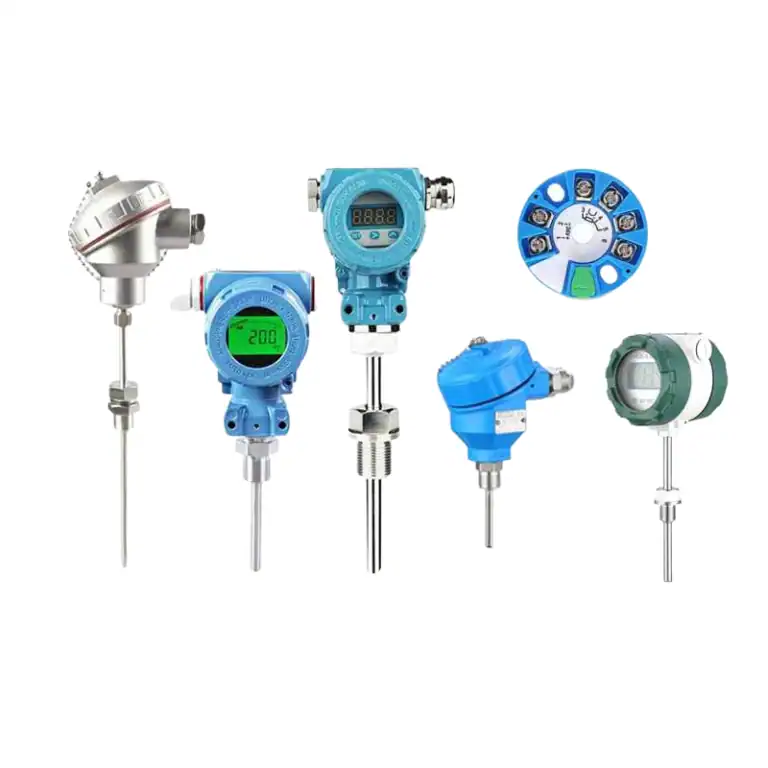
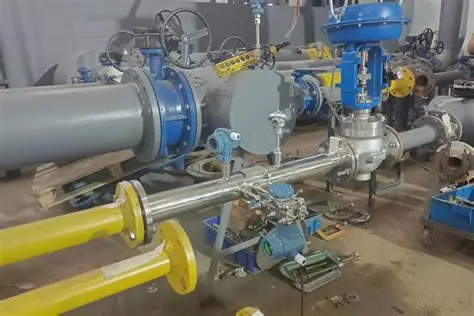
Oil & Gas Pressure Instrumentation: A Selection Guide
A pressure transmitter that works fine on a water-treatment skid can fail in weeks on a sour gas wellhead. The reason is not the sensor cell but everything around it: the range, the wetted material, the enclosure rating, and the temperature it sees.
If you are specifying pressure instruments for an oil and gas project, the useful question is not “which transmitter is best” but “which transmitter matches this point in the process.
This guide walks the three stages of the value chain — upstream, midstream, and downstream — and maps each typical measuring point to a concrete instrument choice, with the ranges and materials you actually need to check.
Why Oil & Gas Is Hard on Pressure Transmitters
Four conditions make oil and gas harder than most process duties, and each one pushes you toward a specific design choice:
- Wide ranges — from near-vacuum on a pipeline slug catcher to well over 20,000 psi at a wellhead — call for a metal sensing element rather than a thin-film cell.
- Aggressive media — hydrogen sulphide, chlorides, and produced fluids that carry sand — need a wetted material qualified against sulphide stress cracking.
- Classified areas mean the electronics must be intrinsically safe or explosion-proof, inside a certified enclosure.
- Temperature swings, from an Arctic well pad to a refinery process line above 200 °C, call for a high-temperature cell or a remote seal.
The value-chain view below is the fastest way to keep these straight, because the dominant constraint shifts as the product moves from the well to the refinery gate.
Wellhead and Casing Pressure on the Upstream Side
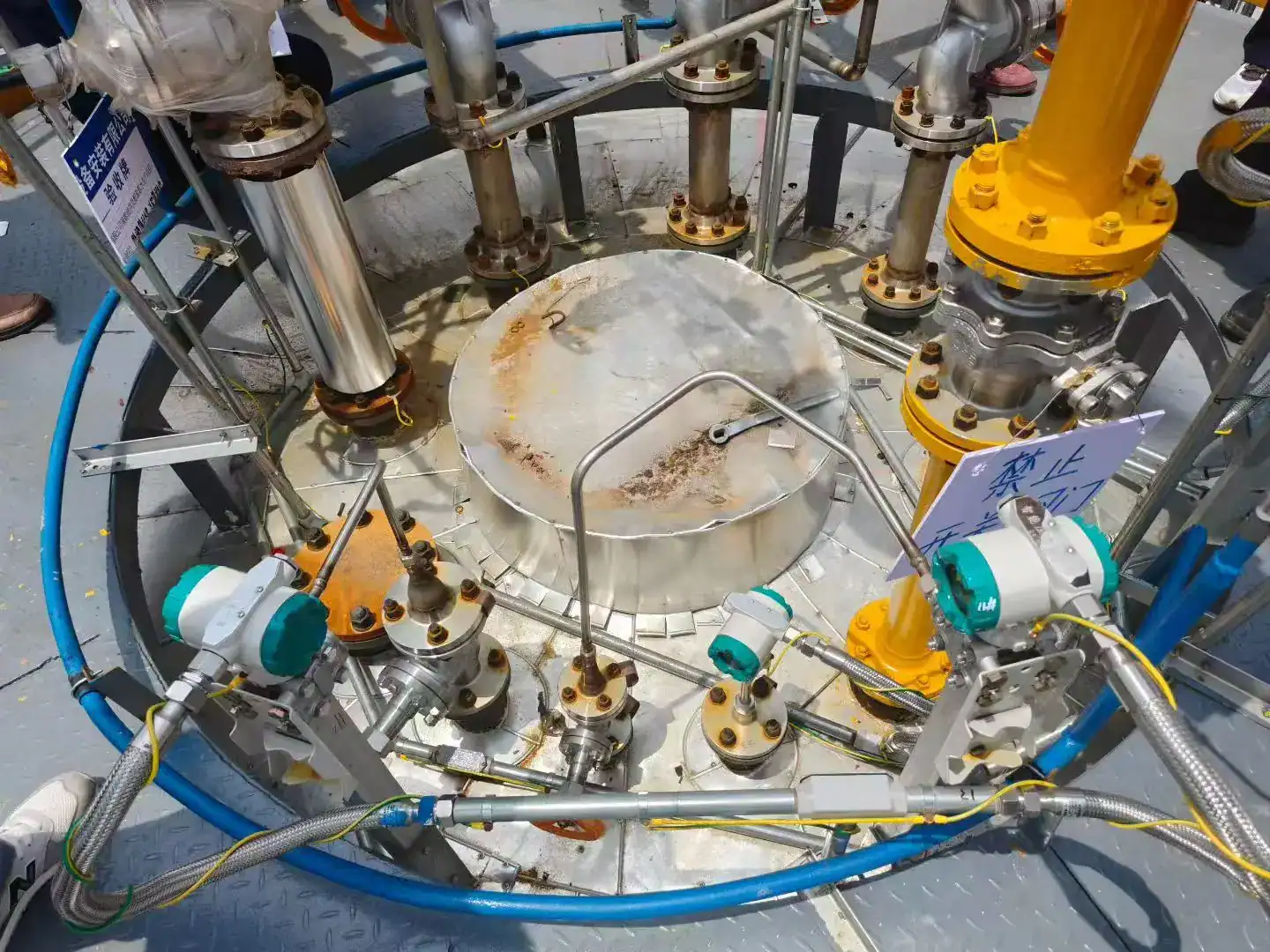
Upstream is where range and material bite hardest. On a wellhead or Christmas tree you are usually measuring tubing pressure and casing pressure, often with two transmitters wired to separate channels so the operator sees both at once.
For acid and caustic duties beyond oil and gas, wetted-material breakpoints by medium and concentration are covered in the guide to pressure transmitters for corrosive chemicals.
The API Spec 6A rates surface wellhead equipment in standard working-pressure classes up to 20,000 psi, so your transmitter has to sit comfortably inside that envelope with margin, not at the edge of its span.
For this duty we point most projects to the HM23Y oilfield and mining-well transmitter. It reads to 220 MPa (about 2,200 bar, or roughly 31,900 psi) and uses an anti-clogging design with a 17-4PH stainless or Al₂O₃ ceramic diaphragm.
When you need still more headroom, the HM28 sapphire transmitter carries a titanium diaphragm and a 260 MPa range, which suits high-pressure test and injection points. The sapphire-on-silicon and ceramic elements both keep the produced fluid off any soft seal, and that is the property that keeps a wellhead transmitter alive through a sand-laden season.
Pipeline, Separator and SCADA Duty in the Midstream
Midstream shifts the problem from raw range to distance and flow. Gathering lines, transmission pipelines, and metering stations are spread across sites that a technician may reach once a quarter, so a wired 4-20mA loop back to a control room is often impractical.
For those points a battery or solar wireless transmitter that reports into SCADA is usually the better fit, and the HM200J solar wireless transmitter is built for exactly that unattended, off-grid role.
Metering and separator duty is different again, because there the value you want is differential pressure across an orifice plate or a level in a separator vessel. A smart DP transmitter earns its place here.
We generally specify the HM3051 smart differential pressure transmitter, which offers HART over 4-20mA, ranges to 40 MPa, and 316L or Hastelloy wetted parts for the more corrosive separator streams. Pairing a DP transmitter with an orifice or a Venturi gives you flow without adding a separate flow meter to the pipeline.
Heat and Corrosion in Downstream Refining
Downstream, temperature and corrosion take over from raw range. Refinery and petrochemical process lines run hot, and a standard transmitter mounted directly on a 250 °C line will drift or fail at the seal. You have two clean options, and which one you pick depends on how hot and how corrosive the line is.
The first option is a high-temperature transmitter rated for the process, and our high-temperature pressure transmitter guide covers where a hot-rated cell holds up and where it does not. For differential-pressure duty on those hot lines, that means a differential pressure transmitter rated for high temperature.
The second option is a diaphragm-seal (remote-seal) assembly that moves the electronics away from the heat through a filled capillary, which our diaphragm seal selection guide works through in detail.
For aggressive downstream streams such as acids and chlorides, the HM50 anti-corrosive transmitter reads to 60 MPa and is built around corrosion-resistant wetted parts, so it holds up where a plain 316L body would pit.
Selecting Materials for Sour Service
Sour service is the material decision that catches the most projects, so treat it as its own check rather than an afterthought.
Wherever hydrogen sulphide is present, NACE MR0175 / ISO 15156:2020 governs which alloys you may use in the wetted path, and the goal is to avoid sulphide stress cracking in a part that sees full line pressure.
A transmitter body and diaphragm that pass on a sweet well can crack on a sour one, even at the same pressure. A case documented by Liu and co-workers on China’s Puguang giant gas field reports produced gas near 15% H₂S (Liu et al., 2014). That is among the highest sour content developed anywhere, and at that concentration the wetted-material call is not something you can defer.
Two material routes work well. A precipitation-hardened stainless such as 17-4PH is acceptable only in a controlled, qualified heat-treated condition, so you should confirm the hardness limit with the supplier rather than assume it.
The cleaner route for many sour points is a ceramic (Al₂O₃) diaphragm, which is inert to H₂S and sidesteps the sulphide-cracking question entirely. We walk through the full alloy and hardness logic in our NACE MR0175 sour-service material guide.
One honest note: HMK supplies the wetted materials and can advise on them, but we do not issue NACE compliance certificates, so the material call stays with your metallurgy or QA function.
Explosion Protection Types for Classified Areas
Because oil and gas gases are flammable, the transmitter you install in the field almost always needs an explosion-protection method, and there are three common ones to keep straight. The IECEx scheme and IEC 60079-0:2017 define these methods.
Intrinsically safe designs limit loop energy so a spark cannot ignite the atmosphere, non-incendive designs suit less severe zones, and flameproof (Ex d) designs contain any ignition inside the enclosure. For the field-mounted role we point projects to the HM60 explosion-proof transmitter with an Ex d enclosure and IECEx marking.
Enclosure integrity matters as much as the certificate. A welded, all-metal pressure boundary with no soft seal is what lets a transmitter survive vibration, weather, and the occasional overpressure without leaking. Our hazardous-location pressure transmitter guide explains how the protection method, the gas group, and the temperature class fit together so you order the right variant the first time.
Oil & Gas Pressure Transmitters by HMK TECH
We would rather be clear about the boundary than oversell it. HMK is well suited to surface upstream points, gathering and transmission pipelines, separator and metering duty, refinery and petrochemical lines, and sour-service material selection, and our pressure transmitter range covers those points across the HM and HE families. That is where our ranges, materials, and certifications line up with the duty.
What we do not build is a deep-subsea or downhole tool. If your scope calls for a downhole gauge rated for thousands of metres, or an ROV-deployed subsea transmitter certified for hyperbaric immersion, a specialist in that niche is the right call.
Treat that as a separate line item. For an offshore surface platform the picture is different, and our marine and offshore pressure transmitter guide covers the salt-spray and vibration side of that duty. Matching the tool to the point, and being honest about the edges, is what keeps an oil and gas instrument list defensible.
Frequently Asked Questions
What pressure transmitter should I use on a wellhead?
Use a high-range transmitter with a metal or ceramic diaphragm and a certified enclosure. A model reading to 220 MPa such as the HM23Y gives you room above typical API 6A working-pressure classes while keeping produced fluid off any soft seal.
Is a ceramic pressure transmitter good for oil and gas?
Yes, particularly for sour and abrasive service. An Al₂O₃ ceramic diaphragm is inert to hydrogen sulphide and resists sand erosion, which is why it is a common choice on wellhead and produced-fluid points.
What makes a transmitter suitable for sour (H₂S) service?
The wetted materials must meet NACE MR0175 / ISO 15156:2020 so they resist sulphide stress cracking. Either a qualified, hardness-controlled 17-4PH or a ceramic diaphragm is the usual answer, and the compliance sign-off stays with your QA function.
Do I need an explosion-proof transmitter for oil and gas?
In a classified area, yes. You choose among intrinsically safe, non-incendive, and flameproof (Ex d) methods based on the zone and gas group; the HM60 with an Ex d enclosure and IECEx marking covers most field-mounted points.
Does HMK make downhole or subsea pressure transmitters?
No. We focus on surface upstream, midstream pipeline, and downstream refinery duty. Downhole gauges and ROV-deployed subsea transmitters are a specialist niche and should be sourced separately.
Need to match transmitters to your oil & gas points? Send us the line list or the wellhead, pipeline, and refinery conditions, and we will map each point to a model, range, and wetted material. Request a quote or browse the full pressure range.
About the author — Li Long, Application Engineer at HMK. 20+ years of field instrumentation across 20+ countries, covering on-site installation, commissioning, and application optimisation for oil & gas, water treatment, chemical, and power. Read more from Li Long.