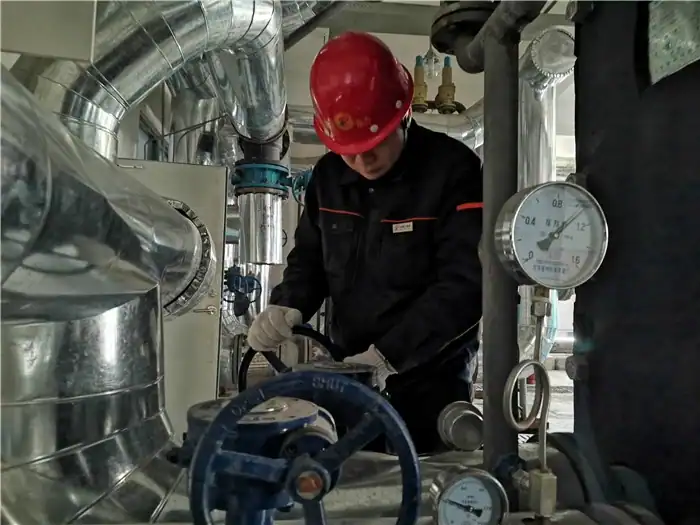
Flush Mount Pressure Transducer: Selection Guide for Sanitary, Sticky & High-Temp Service
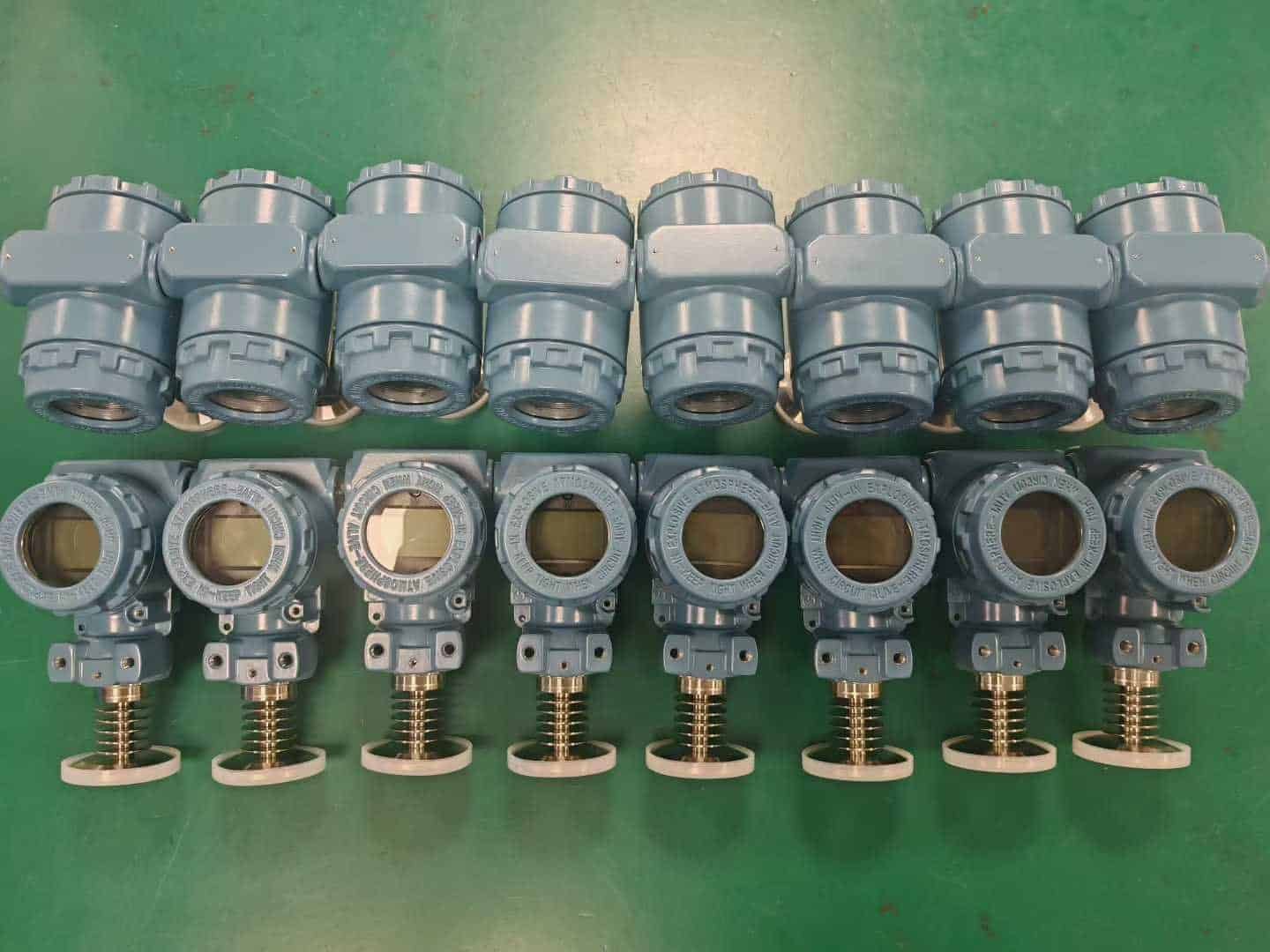
Flush mount pressure transducers earn their place when standard threaded ports cause real production problems. The sensor diaphragm sits on the process wall with no recessed pocket, so sticky, chunky, or hot media never have a cavity to clog or scorch inside.
Flush mount is not a single product. It is a geometry that must be matched with the right diaphragm material, connection type, and temperature spec for your process. This guide walks through when flush mount actually helps, which wetted material fits your medium, and how HMK’s HM70, HM28, and HM60 families map to real-world sanitary, high-pressure-corrosion, and hazardous-area applications. For a step-by-step method covering connection, surface finish and the CIP/SIP temperature limit, see choosing a sanitary pressure transmitter for CIP/SIP lines.
What is a Flush Mount Pressure Transducer?
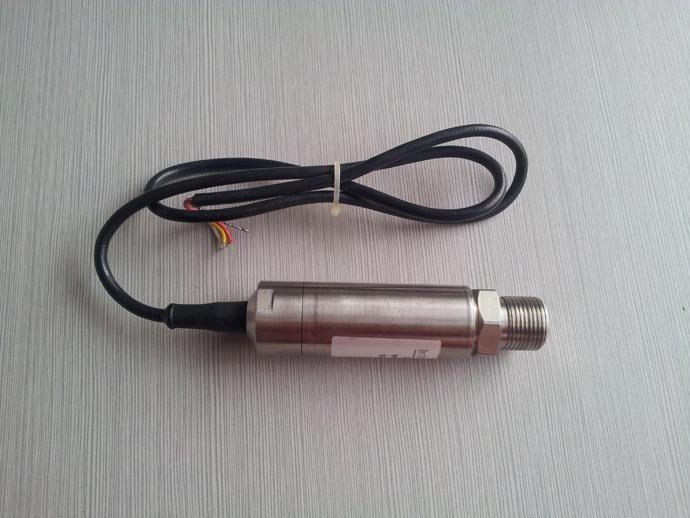
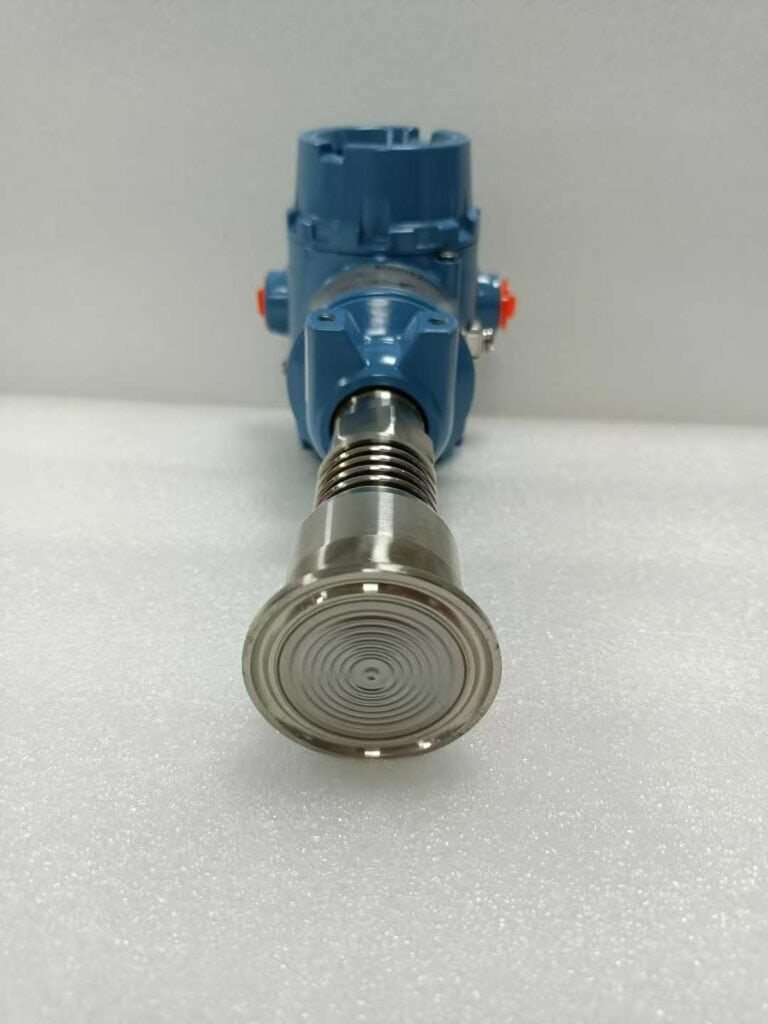
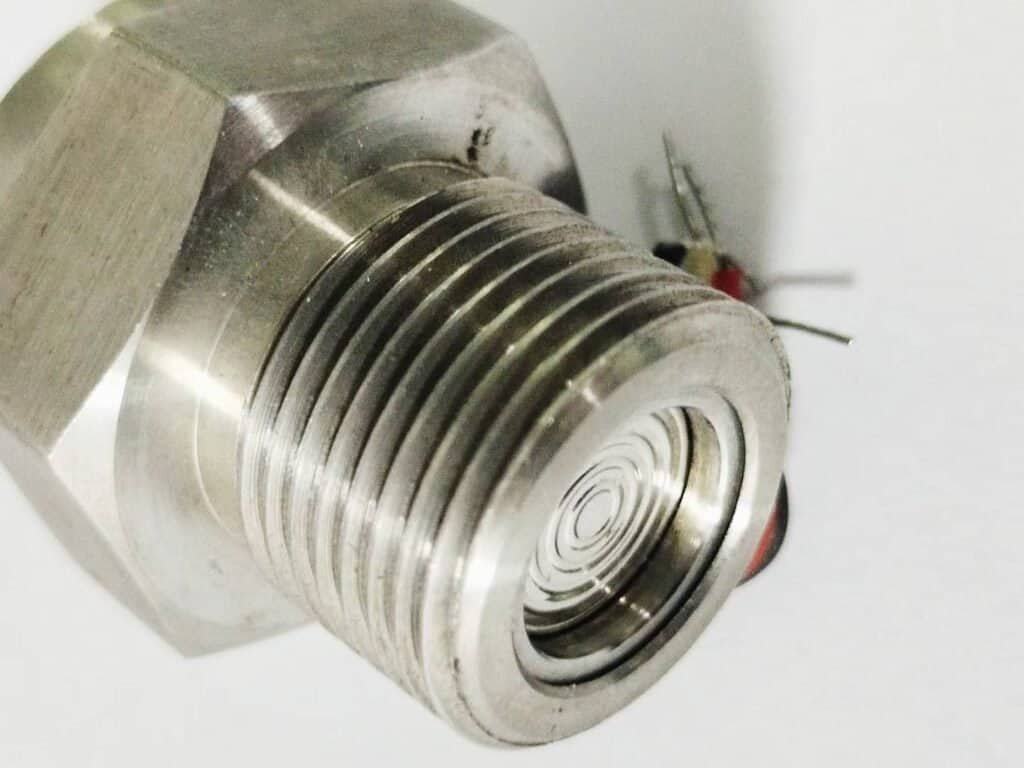
A flush mount pressure transducer sits its sensing diaphragm level with the process pipe wall. No threaded extension, no 6 to 12 mm recessed pocket. Media flows past the diaphragm face without a cavity where solids can build up or steam can pool.
Do not confuse the term with a flush proximity switch, which is a binary detector for conductive media. A flush mount transducer outputs a continuous 4-20 mA or HART signal for absolute, gauge, or differential pressure across the full process range.
Vendors use three names for the same geometry: flush mount, flush diaphragm, and front-flush. HMK and most European manufacturers use flush diaphragm in product titles, while North American datasheets lean on flush mount. The spec sheet detail that matters is whether the diaphragm face is truly level with the sealing surface or recessed by even 1-2 mm. A 2 mm recess in a flush-diaphragm product is not the same as zero recess and will fail in the stickiest cement-slurry and food-paste applications.
See HMK’s full pressure transmitter category for the flush and threaded lineup side by side.
Why Standard Threaded Transmitters Fail in Certain Media
Three failure patterns repeat across service calls.
Pocket clogging. A threaded transmitter has a 6-12 mm internal bore from thread root to diaphragm. Cement slurry, latex, tomato paste, and pharma pastes bridge across that bore within days. The reading locks, damps, or drifts.
Dead-leg contamination. In CIP lines, the threaded pocket is a dead leg. Cleaning chemicals rinse the main pipe but miss the diaphragm. Bacterial regrowth starts at the pocket first. Dairy plants lose sanitary certification over this.
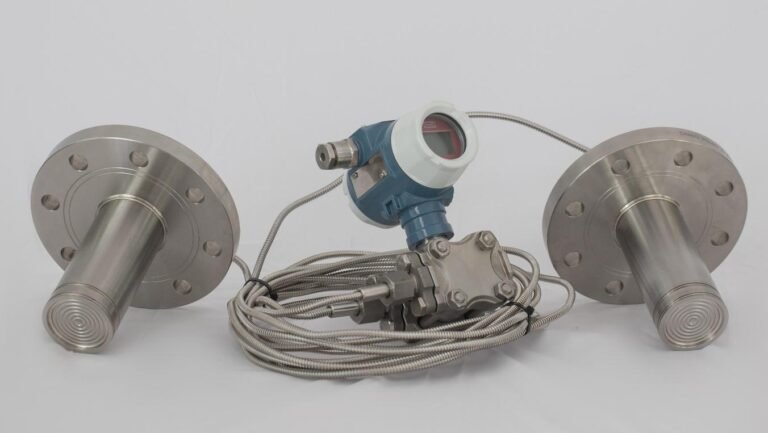
Remote seal failures. Remote diaphragm seals with filled capillaries solve the flush problem but add their own failure mode. Maintenance data published in Chinese instrumentation-society journals tracks remote-seal assemblies at Chinese petrochemical and cement plants at roughly 11 percent annual failure, mostly from capillary crystallization or oil loss.
I saw this pattern on a refinery residue-oil pump outlet last winter. The remote-seal capillary crystallized during a shutdown. The reading locked at 70 percent. We swapped to a direct flush diaphragm transmitter and the drift cleared within a shift.
The differential pressure transmitter working principle page explains the remote-seal vs direct-flush trade-off in more depth for DP applications.
When You Actually Need Flush Mount (Application Matrix)
Not every process needs flush mount. The decision boils down to viscosity, solids loading, and cleaning regime. Three signals push the choice from “nice to have” to “required”: media that builds up in a threaded pocket within days, CIP protocols that cannot clean a 6-12 mm recess, and process temperatures that demand direct diaphragm sensing without a filled capillary.
| Application | Viscosity / Solids | Temp (°C) | Flush Required? | Clean Cycle (Threaded → Flush) |
|---|---|---|---|---|
| Latex paint batching | 5,000 cP, 0-2% solids | 20-40 | Must | Weekly → Quarterly |
| Cement slurry blending | 200 cP, 40-60% solids | 20-50 | Must | Daily → Monthly |
| Dairy / food paste CIP | 50-2,000 cP | 4-85 | Must | Per-shift → Per-CIP |
| Pharma slurry dosing | 100-5,000 cP, 5-30% solids | 15-40 | Must | Per-batch → Monthly |
| Thermoplastic extruder melt | 1,000-100,000 cP | 180-350 | Must | Purge cycle, shift-by-shift (no CIP) |
| Solids-laden wastewater | 10-500 cP, 2-20% solids | 10-40 | Recommended | Monthly → Quarterly |
| Bitumen / hot-melt | 10,000-500,000 cP | 120-250 | Must | Weekly → Monthly |
| Dredge slurry | 500 cP, 30-50% sand | 4-35 | Recommended | Daily → Weekly |
A cement-slurry client in Shandong cut transmitter cleaning from monthly to annual after switching from threaded with remote seal to direct HM70 flush. The cycle reduction paid back the product premium in the first quarter and saved roughly 40 production-downtime hours per year.
Flush mount is overkill for clean water, clean air, or cool hydraulic fluid below 60 °C. Standard threaded ports handle those with no penalty.
Which Diaphragm Material Fits Your Process
Flush mount geometry fails just as fast as threaded if the diaphragm material is wrong for the medium. The table below rates six wetted materials against six common media based on GB/T 16824.1-2018 corrosion data cross-referenced with ASTM G31 immersion tests and hmsensor.com field records. Ratings come from accelerated tests at 25 °C plus field audits; real service life varies with flow velocity, aeration, and trace-element content.
| Wetted Material | HCl 10% | H₂SO₄ 98% | NaOH 30% | NaOCl 12% | Steam 180°C | Brewery CIP |
|---|---|---|---|---|---|---|
| 316L stainless | ✗ | ⚠ | ✓ | ⚠ | ✓ | ✓✓ |
| Hastelloy C-276 | ✓ | ✓ | ✓✓ | ✓✓ | ✓ | ✓✓ |
| Tantalum | ✓✓ | ✓✓ | ✗ | ⚠ | ⚠ | ✓ |
| Monel 400 | ✓ | ⚠ | ✓ | ✗ | ✓ | ✓ |
| PTFE coating | ✓✓ | ✓ | ✓✓ | ✓✓ | ✗ | ⚠ |
| Titanium Gr 2 | ⚠ | ✗ | ✓ | ✓✓ | ✓ | ✓ |
Three field-service rules: Hastelloy C-276 is the safe default for mixed-acid and CIP service; tantalum wins for hot concentrated acids below 150 °C; PTFE coating is the budget shortcut for chloride-heavy streams under the same ceiling. Above 150 °C with chlorides, tantalum or a PTFE-lined remote seal are the only safe picks.
Sanitary service
3-A and EHEDG require Ra ≤ 0.8 μm for wetted surfaces, with Ra ≤ 0.4 μm for high-care dairy and pharma. Chinese GB/T 5750 drinking water and GB 16798 food machinery standards align with the 0.8 μm baseline. HMK HM70 Sanitary Flush-Mount ships at 0.8 μm as standard with 0.4 μm optional. For adjacent chemical and ultra-high-pressure applications, see HE28 Sapphire and HM22 High-Accuracy.
Diaphragm Seal vs Flush Diaphragm: Same Idea, Two Forms
The terms overlap, so it helps to separate them. A flush-mount transducer has an integral diaphragm: the isolating diaphragm is welded into the process connection of the instrument itself. A diaphragm seal pressure transmitter can mean that same integral design, or a remote seal, where a separate diaphragm seal assembly connects to the transmitter through a capillary filled with system fluid. Both isolate the sensor from the process; the difference is whether the diaphragm sits on the instrument or out on the line.
Choose the integral flush version for most sanitary, sticky, and clogging service, because it has the shortest fill path, the smallest temperature error, and the fastest response. Reach for a remote capillary seal only when the process is too hot for the electronics to sit on the line, when the tapping point is hard to reach, or when severe vibration would damage a body-mounted transmitter. The trade-off is that a capillary adds temperature error and slows the response, and the longer the capillary the worse both become, so keep it as short as the installation allows.
The fill fluid matters as much as the diaphragm
The system fluid behind the diaphragm sets the temperature limits and decides whether the seal is safe for the process if the diaphragm ever ruptures. Match it to the service:
- Silicone oil is the default and covers most service from about -40 to 200 °C.
- Halocarbon (oxygen-compatible) fill for oxygen or chlorine service; never use a hydrocarbon oil there.
- FDA-listed fill for food, dairy, and pharmaceutical lines, so a diaphragm failure cannot contaminate product.
- High-temperature fill when the process runs above the silicone limit.
Specs That Matter Beyond ‘Flush’
Once you pick flush geometry and the right diaphragm material, five more specs decide whether the transducer lasts five years or five months.
Process connection. Match the plant standard. Tri-clamp DN25-DN80 for sanitary; G1/2, G1, and M20×1.5 for industrial. A wrong connection thread kills an otherwise correct sensor on install day.
Pressure range and overpressure. Size for 1.5× normal operating pressure with at least 2× overpressure rating. HM70 sanitary runs ±0.25% FS typical across -100 kPa to 35 MPa; HM28 Sapphire covers ultra-high pressure up to 260 MPa at ±0.1% FS for refinery and offshore service.
Process temperature. Media above 120 °C demand a cooling extension, not bare housing exposure. Field rule: 150 mm at 200 °C, 250 mm at 300 °C. Skip the extension and the electronics cook inside a 70 °C rated housing.
Response time and signal. 4-20 mA is the universal choice; HART adds remote diagnostics for plants with DCS integration. Response under 50 ms suits control loops; slower sampling works for batch monitoring. See HART vs 4-20 mA for the full comparison and 4-20 mA wiring for practical hookup.
Protection and hazardous area. IP67 as baseline; Ex ia IIC T4 Ga for explosive atmospheres. Refineries, LNG terminals, and grain handling all need intrinsic safety certification on the data sheet, not just in the brochure.
Reliability comes from pre-shipment burn-in, not just spec compliance. HMK runs every HM70 through 2,000 hours of 85 °C caustic CIP cycling on an accelerated test rig before it leaves the factory; the field return rate across seven years of production sits below 0.3 percent.
Honeywell and TE Connectivity carry broad catalogs but their flush-sanitary SKUs sit in premium tiers; Dynisco and Ashcroft lead in extruder-melt and subminiature flush; HMK covers general sanitary, flat-membrane, and dual-certified hazardous-area flush with three live product families.
One more spec often overlooked: the sensing element itself. Flush-mount diaphragms isolate the process, but the transducer behind that diaphragm can be piezoresistive or capacitive — and the choice affects low-pressure resolution, overload survival, and long-term drift. If you’re weighing this decision, compare piezoresistive and capacitive sensing for flush-mount applications.
Installation and Common Mistakes
Buying the right flush mount transducer only gets you halfway. Installation mistakes cause more service calls than sensor failures.
Seat the diaphragm axial, not offset. The sealing surface must meet the mating face with a fresh gasket of correct durometer. An offset seat cocks the diaphragm a fraction of a millimeter and shows up as drift within weeks. Never reuse a crushed PTFE or EPDM gasket.
Cool hot media with an extension. Process above 120 °C needs 150 mm at 200 °C or 250 mm at 300 °C. Short the extension and the housing electronics cook at 70 °C.
Match every mechanical and electrical spec at the drawing stage. A Jiangsu dairy contractor last spring forced a G1/2 threaded head into a DN25 tri-clamp seat, crushed the diaphragm, and reported “dead on arrival.” It was installed dead. Same rule for grounding: one shield termination at the transmitter body keeps VFD noise off the 4-20 mA loop.
Zero the sensor on a clean face. A flush diaphragm picks up residue within a week. Zeroing against that film hides real drift later. Clean first, then zero.
The differential pressure transmitter working principle page covers the electrical side of pressure transmitter commissioning in more detail.
HMK Flush-Mount Product Options
Three HMK families cover the common flush-mount cases. Pick by process connection, pressure range, and certification need.
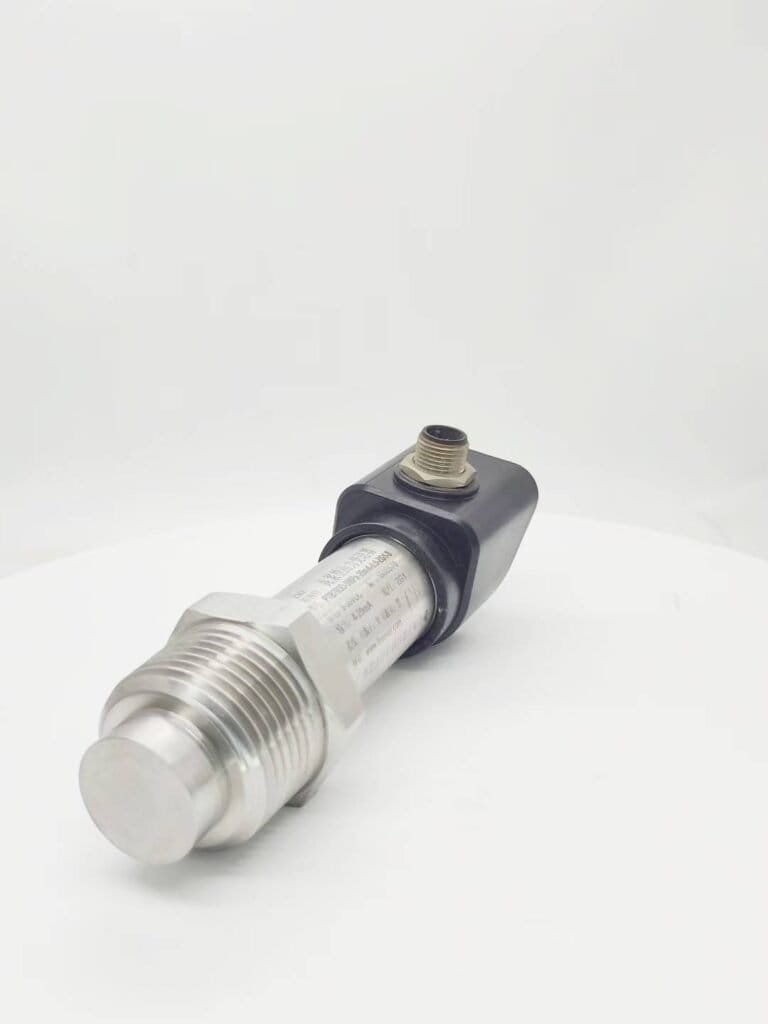
HM70 — Sanitary Flush-Mount Transmitter (primary). 316L flat membrane with no dead zones, M30×1.5 external thread or Tri-Clamp connection, -100 kPa to 35 MPa range, ±0.25% FS typical accuracy, CIP/SIP compatible up to 85 °C daily cycling, Ex ia II CT5 intrinsic safety, IP67. The workhorse for dairy, brewing, pharma, and bottling lines. See HM70 Sanitary Flush-Mount Pressure Transmitter for the full spec sheet.
HM28 — Sapphire Pressure Transmitter (secondary). Titanium flush diaphragm with sapphire sensing element, range up to 260 MPa, ±0.1% FS accuracy, M20×1.5 threaded process connection. Titanium resists the mixed-acid and chloride streams that pit 316L, and the sapphire cell holds zero under high-cycle pulsation. Pick HM28 for offshore platforms, petroleum refining, and extreme-corrosion service where operating pressure exceeds the HM70 ceiling. Details at HM28 Sapphire Pressure Transmitter.
HM60 — Explosion-Proof Pressure Transmitter (related). CNEx dual-certified Ex ia ⅡCT5 intrinsically safe plus Ex d ⅡCT6 flameproof; the combined HM60-ED variant eliminates the external safety barrier. Flush-diaphragm configuration is optional, range -100 kPa to 200 MPa, three accuracy classes selectable (±0.1%, ±0.25%, ±0.4% FS). The right pick for Zone 1/2 hazardous areas in oil fields, mining, and chemical plants where both intrinsic safety and flameproof protection sit on the plant spec. Full datasheet: HM60 Explosion-Proof Pressure Transmitter.
Frequently Asked Questions
Is a flush-mount transducer the same as a diaphragm seal pressure transmitter?
Effectively yes for the integral type: a flush-mount transducer is a diaphragm seal built into the instrument. The phrase diaphragm seal also covers remote seals connected by a capillary, which you would choose only for very hot, inaccessible, or high-vibration points. Both isolate the sensor from the process behind a media-matched diaphragm.
What fill fluid is used in a diaphragm seal?
Silicone oil by default, covering roughly -40 to 200 °C. Specify a halocarbon fill for oxygen or chlorine service, an FDA-listed fill for food and pharmaceutical lines, and a high-temperature fill above the silicone limit.
Related: When the flush diaphragm also sees high process temperature, pair it with the methods in the high-temperature pressure transducer guide.
Related reading: marine & offshore pressure transmitter selection guide.