Pt100 vs Pt1000: Which RTD Should You Use?
Pt100 and Pt1000 read the same platinum curve and meet the same accuracy class, so the question is never really which one is “better.” What decides it are three practical things: lead-wire error, self-heating, and what your instrument expects at its input. For how the two accuracy classes themselves differ, see our guide to Pt100 Class A vs Class B. I have specified both across refinery and HVAC work for years. Almost every time someone picks the wrong one, the reason traces back to one of those three, not to the element itself. Here is how I work through the choice.
Still choosing between an RTD and a thermistor? See RTD vs thermistor first.
Once you have picked the element, browse HMK industrial RTD temperature sensors.
What Pt100 and Pt1000 Actually Are
Both are platinum resistance temperature detectors (RTDs). The number is just the nominal resistance at 0 °C: a Pt100 reads 100 Ω, a Pt1000 reads 1000 Ω. That is the entire difference in the element. They use the same platinum and follow the same resistance-temperature curve, defined by IEC 60751:2008 with a temperature coefficient of 0.003851 per °C. That curve is tied to the international temperature scale, ITS-90, as realized by metrology institutes like NIST and NPL. So a Pt1000 is really just a Pt100 scaled up by a factor of ten.
That scaling carries straight into sensitivity. A Pt100 changes about 0.385 Ω per °C; a Pt1000 changes about 3.85 Ω per °C. It is the same percentage change, but ten times the absolute ohms, and almost everything else in this comparison follows from it. If you need the resistance at a given temperature, our RTD Pt100 / Pt1000 calculator runs the Callendar-Van Dusen conversion, so I will not reprint a reference table here.
| Property | Pt100 | Pt1000 |
|---|---|---|
| Resistance at 0 °C | 100 Ω | 1000 Ω |
| Sensitivity (slope) | ~0.385 Ω/°C | ~3.85 Ω/°C |
| Curve / coefficient | IEC 60751:2008, α = 0.003851 | IEC 60751:2008, α = 0.003851 |
| Tolerance classes | AA / A / B (same) | AA / A / B (same) |
Accuracy: Same Class, Different Resolution
The most common misconception, and one competitor page selling Pt1000 leans on directly, is that a Pt1000 is more accurate than a Pt100. For anything that matters to a specification, it is not.
IEC 60751:2008 defines accuracy in degrees, not ohms, and the tolerance classes apply identically to both. A Class A element is ±0.15 °C at 0 °C, whether it is a Pt100 or a Pt1000. Class AA is ±0.1 °C, Class B is ±0.3 °C, and the ASTM E1137 grades follow the same logic. What sets the tolerance band is how well the platinum is trimmed to the curve, not the base resistance. So a Class A Pt100 and a Class A Pt1000 are equally accurate on paper.
What a Pt1000 genuinely buys you is resolution and noise immunity. Because each degree moves ten times as many ohms, lead resistance and electrical noise become a much smaller fraction of the signal. That is a real advantage. But it lives in the cabling and the input stage, not in the accuracy class of the element, and keeping the two straight is what separates a clean spec from a sales claim. If you are still choosing between an RTD and a thermocouple, our RTD vs thermocouple guide covers that earlier fork.
The Real Differentiator: Lead-Wire Resistance
This is where the ten-to-one scaling earns its keep, and it is the single most useful thing to understand about the pair.
In a two-wire connection, the lead-wire resistance adds directly to the element resistance. The instrument cannot tell the two apart, so it reads the extra ohms as extra temperature. How big that error gets depends on sensitivity: divide the lead resistance by the slope. A Pt100 lands at roughly 2.6 °C per ohm of loop resistance; a Pt1000 sits near 0.26 °C per ohm. Same wire, an order of magnitude less error.
Put a real cable on it and the gap is hard to ignore. With a typical copper lead near 0.17 Ω per meter for the round trip, a two-wire Pt100 drifts about 0.4 °C for every meter of cable. A Pt1000 drifts closer to 0.04 °C. Over a 20-meter run that is nearly 8 °C of uncorrected error on the Pt100, against well under 1 °C on the Pt1000. The exact ohms-per-meter shift with conductor gauge, but the ratio between the two holds.
So the practical rule falls out cleanly. A Pt1000 will often run two-wire over a modest cable and still be acceptable. A Pt100 over any real distance needs three-wire or four-wire connection to compensate the leads. For the methods themselves, see our guide to 2-wire, 3-wire, and 4-wire RTD connections. And if you are weighing lead error to decide whether to mount a transmitter right at the sensor, our note on temperature element vs transmitter picks up there.
Self-Heating and Power
The same scaling turns up a second time, in self-heating. An RTD reads temperature by passing a small excitation current through the element, and that current dissipates power as heat right at the sensing point. The power goes as I squared times R, so the element always sits a little warmer than the medium it is meant to measure.
A Pt100 is usually driven at around 1 mA, sometimes a few. A Pt1000 has ten times the resistance, so the same signal voltage needs only about a tenth of the current, on the order of 0.1 to 0.5 mA. Less current through a higher resistance dissipates less power, so the Pt1000 self-heats less for an equivalent reading. In stirred liquid none of this matters, because the medium carries the heat away. It starts to bite in still air, in small thin-film probes, in vacuum, and in battery-powered gear where the lower current also helps runtime. Measuring static air with a small element is exactly where the Pt1000 has a quiet edge.
Availability, Temperature Range, and Instrument Compatibility
Before any of the physics, element format and what is actually stocked tend to tilt the decision.
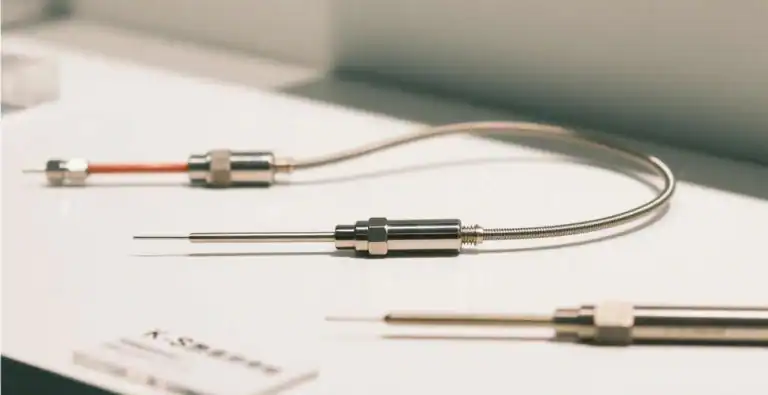
Pt100 elements come in both thin-film and wire-wound construction. The wire-wound versions reach the widest and highest ranges, which is why they dominate industrial process work up to 600 °C and beyond. Pt1000 elements are most often thin-film, a format that suits HVAC, automotive, refrigeration, building controls, and the 3D-printer hotends you will find argued over in hobby forums. Both meet the same standard; the difference is what each world stocks and qualifies.
The compatibility point is the one that quietly bites people, so I will be blunt about it. Most industrial transmitters, PLC RTD input cards, and DCS channels are built for Pt100. Drop a Pt1000 into a loop whose input expects Pt100, and the reading is simply wrong until something gets reconfigured. On a fixed-function input it may not be possible at all. On one refinery retrofit I worked on, the designer specified Pt1000 thin-film probes to save on three-wire cabling. The installed transmitters were hard-wired for Pt100, and the project ended up paying for the change twice. I have hit the same mismatch on packaged skids more than once. Check the input first.
Decision Matrix: Pt100 or Pt1000
Run your application down the table below. It is built on different axes than our broader industrial temperature sensor selection guide, which helps you choose the element type and assembly in the first place. This one assumes you are already on an RTD and only need to settle 100 versus 1000.
| Your situation | Lean Pt100 | Lean Pt1000 |
|---|---|---|
| Long cable run, two-wire only | — | Yes (lead error 10x lower) |
| Three or four-wire available | Yes | Yes |
| High temperature (above 300 °C) | Yes (wire-wound) | — |
| Battery or low-power device | — | Yes (lower excitation) |
| Still air, small probe | — | Yes (less self-heating) |
| Existing input is Pt100 | Yes (default) | Only if reconfigurable |
| Industrial process, 4-20 mA loop | Yes | — |
| HVAC, automotive, refrigeration | — | Yes |
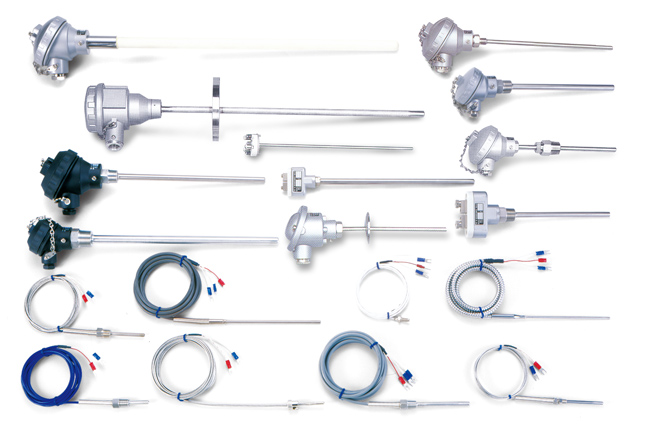
In industrial process measurement the default is Pt100, and that is the world HMK builds for. Our Pt100 RTDs come in three builds, each pairing with a Pt100-input transmitter. If your world is HVAC or OEM equipment running two-wire on a budget, a Pt1000 is the sensible choice, as long as the receiver is expecting it.
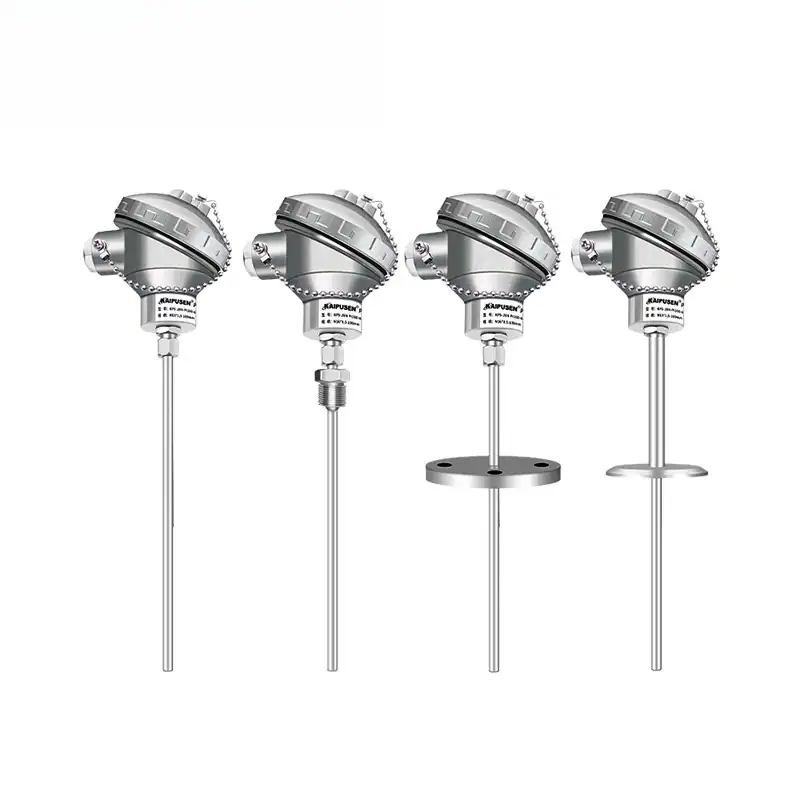
Sheathed (MI) Pt100 RTD
Mineral-insulated, tight and fast, for high-temperature and bendable points.
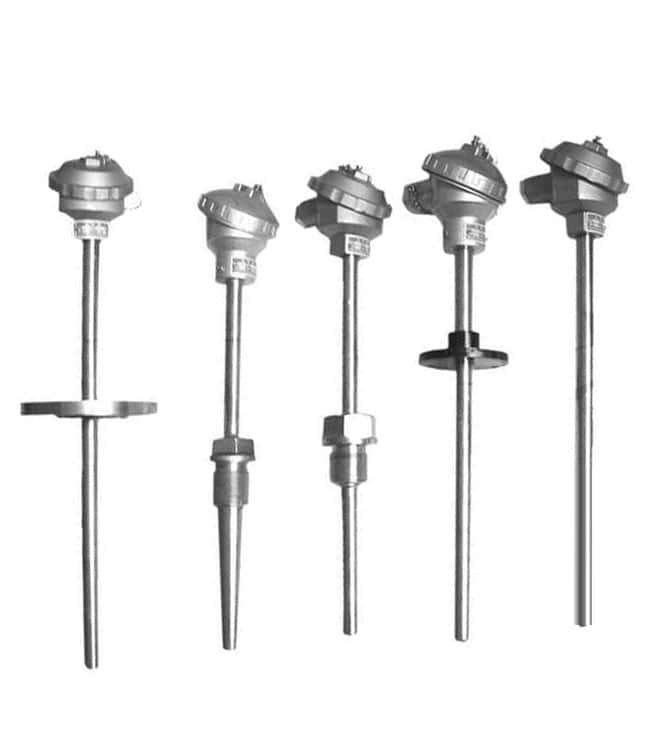
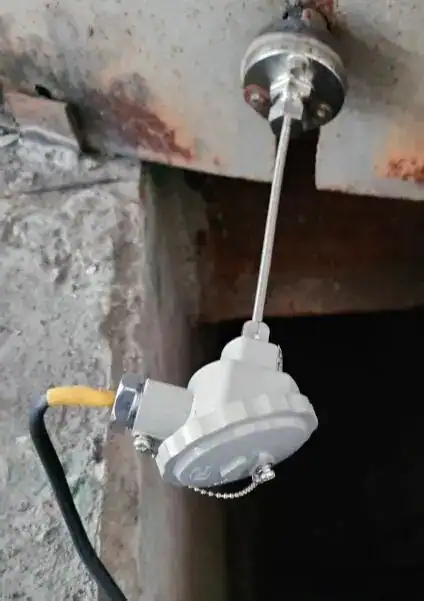
Assembled Pt100 RTD
Standard thermowell-mounted assembly for general industrial process points.
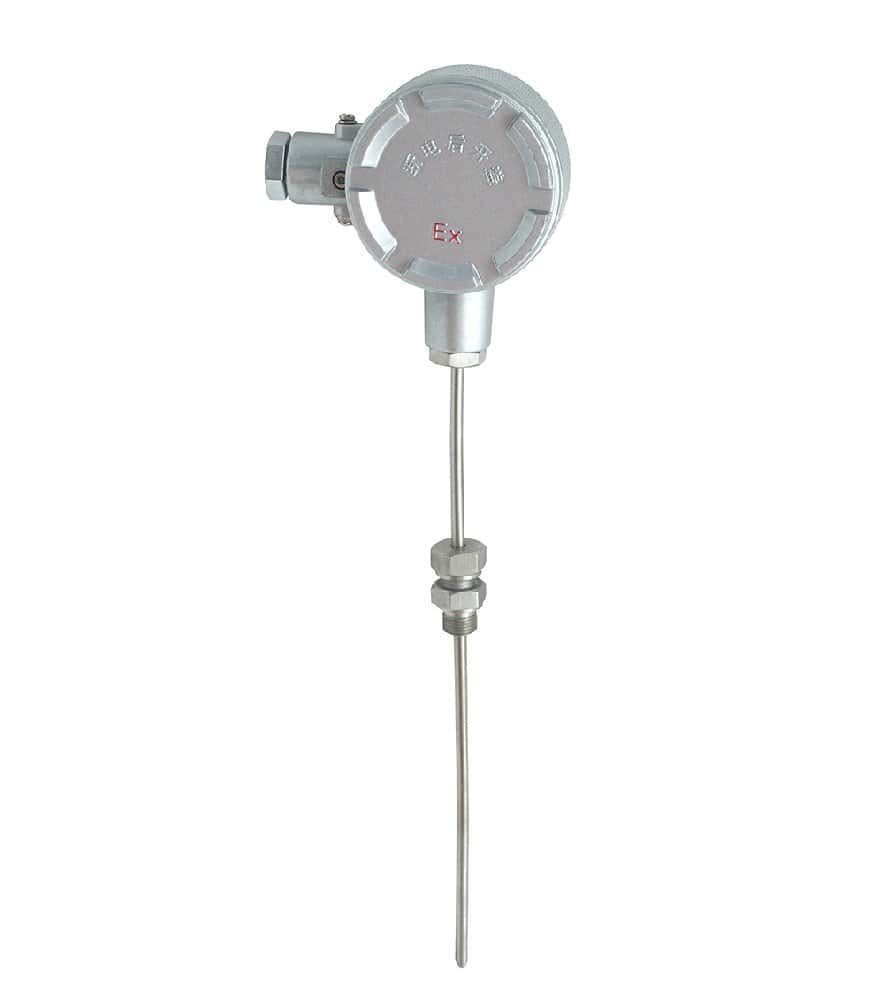
Explosion-Proof Pt100 RTD
Flameproof build for hazardous areas in oil, gas, and chemical plants.
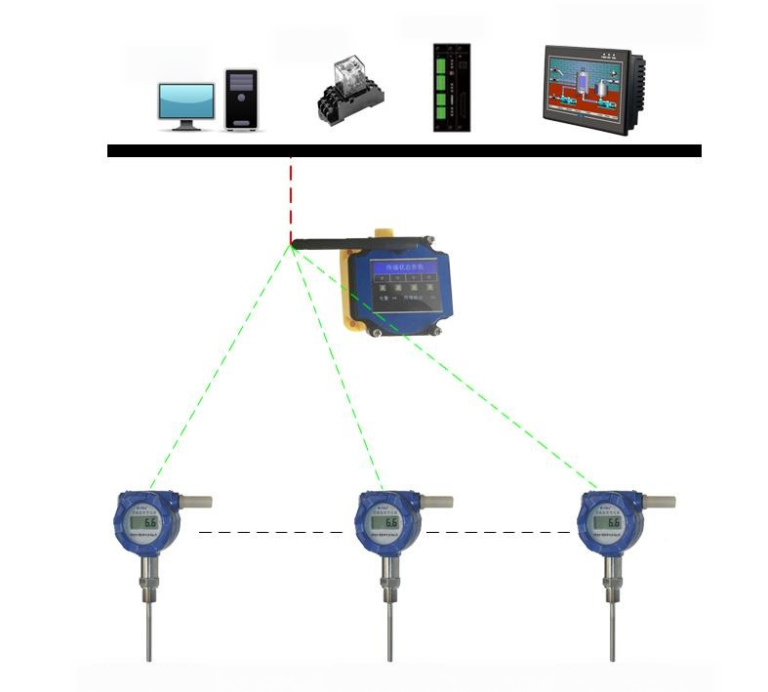
Pair any of these with a Pt100-input HM100 temperature transmitter or SBW transmitter, or browse the full temperature sensors and transmitters range.
Frequently Asked Questions
Is Pt1000 more accurate than Pt100?
No, not by specification. IEC 60751:2008 defines accuracy in degrees, and Class AA, A, and B apply identically to both. A Class A Pt100 and a Class A Pt1000 share the same ±0.15 °C tolerance at 0 °C. The Pt1000 advantage is lower sensitivity to lead resistance and noise. That improves the measurement in the wiring, not the accuracy class.
What does Pt1000 mean?
Pt is platinum. 1000 is the nominal resistance in ohms at 0 °C. A Pt1000 reads 1000 Ω at 0 °C and follows the same IEC 60751:2008 curve as a Pt100, which reads 100 Ω. Everything else scales by ten.
Is the Pt100 and Pt1000 curve different?
No. Both follow the same IEC 60751:2008 resistance-temperature relationship, with the same coefficient of 0.003851 per °C. The Pt1000 curve is the Pt100 curve multiplied by ten in resistance. So a Pt1000 changes about 3.85 Ω per °C, against 0.385 Ω per °C for a Pt100.
Can I use a Pt1000 with two-wire connection?
Often yes. Lead-wire error per ohm is about ten times lower than a Pt100. So a Pt1000 tolerates a modest two-wire run where a Pt100 would need three or four wires. Over long cables you should still calculate the error. But two-wire is a realistic option for a Pt1000 in a way it rarely is for a Pt100.
Which should I use for long cable runs?
A Pt1000 if you are limited to two-wire, because the lead error is ten times smaller. If you can run three-wire or four-wire, a Pt100 is fine over long distances. The extra wires compensate the lead resistance directly.
Do industrial transmitters accept Pt1000?
Many do. But Pt100 is the industrial default, and many installed transmitters, PLC cards, and DCS inputs are configured for Pt100 only. Always confirm the input supports Pt1000 before specifying one into an existing system.
Specifying RTDs for a process line?
Tell us the temperature range, cable length, wiring, and what your existing transmitter or PLC input expects. We will return a one-page recommendation with the right HMK Pt100 RTD build and matching transmitter.