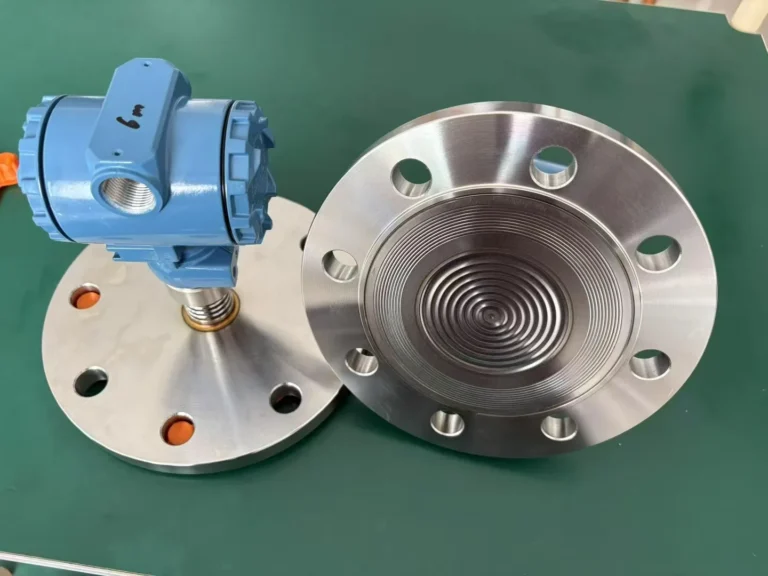
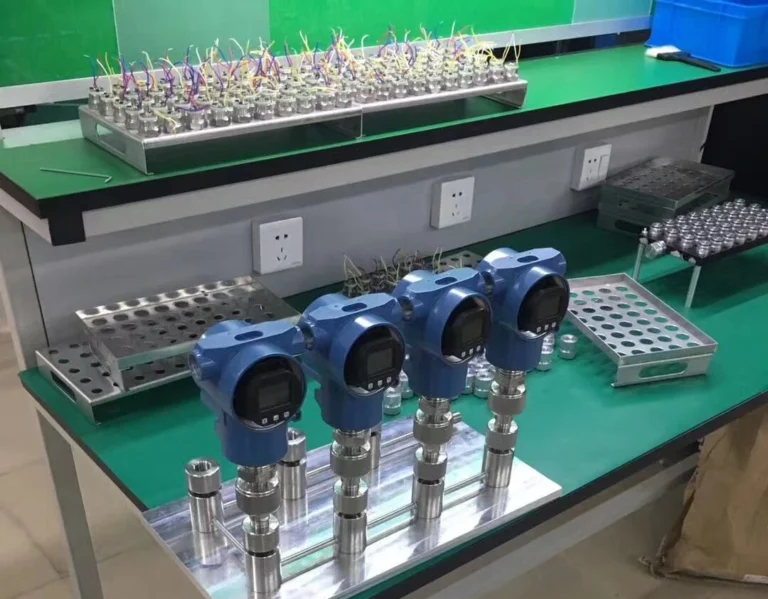
Negative Pressure Gauge Applications: HVAC, Cleanroom, Medical, Refrigeration, Boiler & Automotive
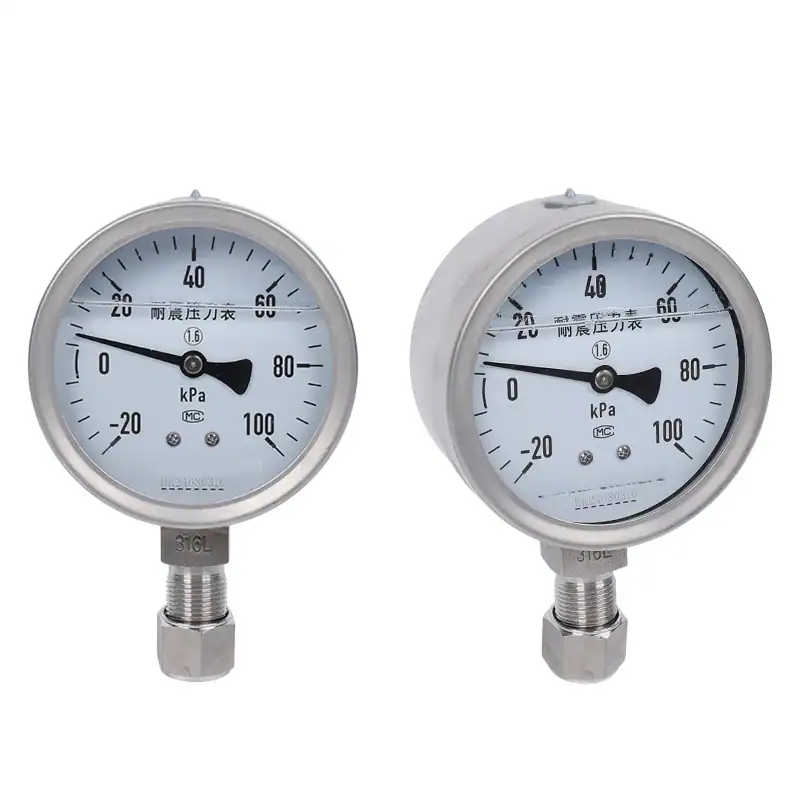
When a gauge on your wall reads below zero, the first question is not is this dial broken? It is is this reading normal for the system I am standing in front of? The answer depends on which system. HVAC duct, cleanroom airlock, hospital isolation room, refrigeration suction line, boiler furnace, and a car’s intake manifold all run negative on purpose, but the typical reading and the right instrument differ for each. This guide walks through all five industrial domains plus automotive, then maps each to the gauge type you should specify. For the underlying physics of why gauge pressure can drop below zero, see our companion article Can Gauge Pressure Be Negative? Yes — When and How.
For cleanroom and isolation-room pressure specifically, our room pressure monitoring guide covers the standard setpoints and how to pick a low-range sensor.
What “Negative Pressure Gauge” Means in Your Application
A negative pressure gauge is any pressure-indicating instrument scaled to read values below local atmospheric. It does not measure a “negative number” in the absolute sense: atmospheric is the reference zero, and any pressure beneath that reference shows as a negative reading on the dial.
Three gauge families read negative:
- Vacuum gauge — single-direction dial, zero on the right, sweeps left to a maximum vacuum near -30 inHg (-1 bar absolute).
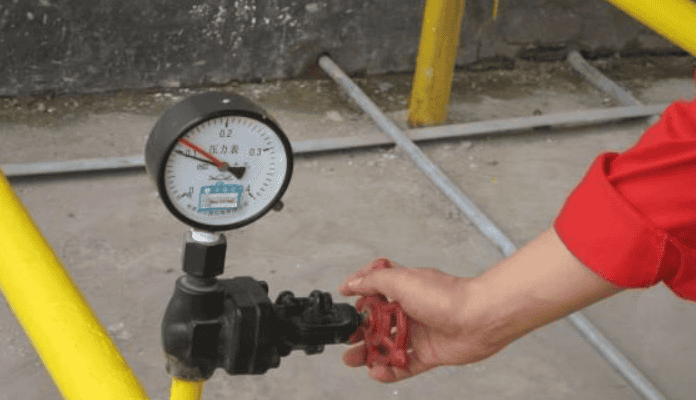
- Compound gauge — bi-directional dial with zero in the middle or off-set, reads both vacuum and positive in one instrument. Standard in refrigeration manifold sets.
- Differential pressure gauge or transmitter — measures the difference between two ports. With the low side held at atmosphere, the indication is effectively negative when the high side is below atmosphere. Magnehelic and digital micro-DP transmitters fit here.
In every application below, the field question is the same: what is the typical reading and which of those three families fits the budget, accuracy, and signal-output requirement?
Negative Pressure on Automotive Systems: Intake, Brake Booster, EVAP
Cars run three small vacuum circuits that legitimately read negative on a gauge:
- Intake manifold vacuum — at idle a healthy gasoline engine reads roughly -0.5 to -0.7 bar (-50 to -70 kPa, or -15 to -21 inHg). Drop or fluctuation indicates vacuum leak, EGR malfunction, or worn rings.
- Brake booster vacuum — pulled from the intake manifold or by a dedicated vacuum pump, typical -0.3 to -0.5 bar.
- EVAP system leak test — OBD-II purge-and-seal cycles pull the fuel-vapor circuit to about -2 kPa for a few seconds.
One common misconception worth clearing: tire pressure is never negative. A flat tire is at 0 psig (atmospheric), not below it. Tire pressure gauges are not in this category at all.
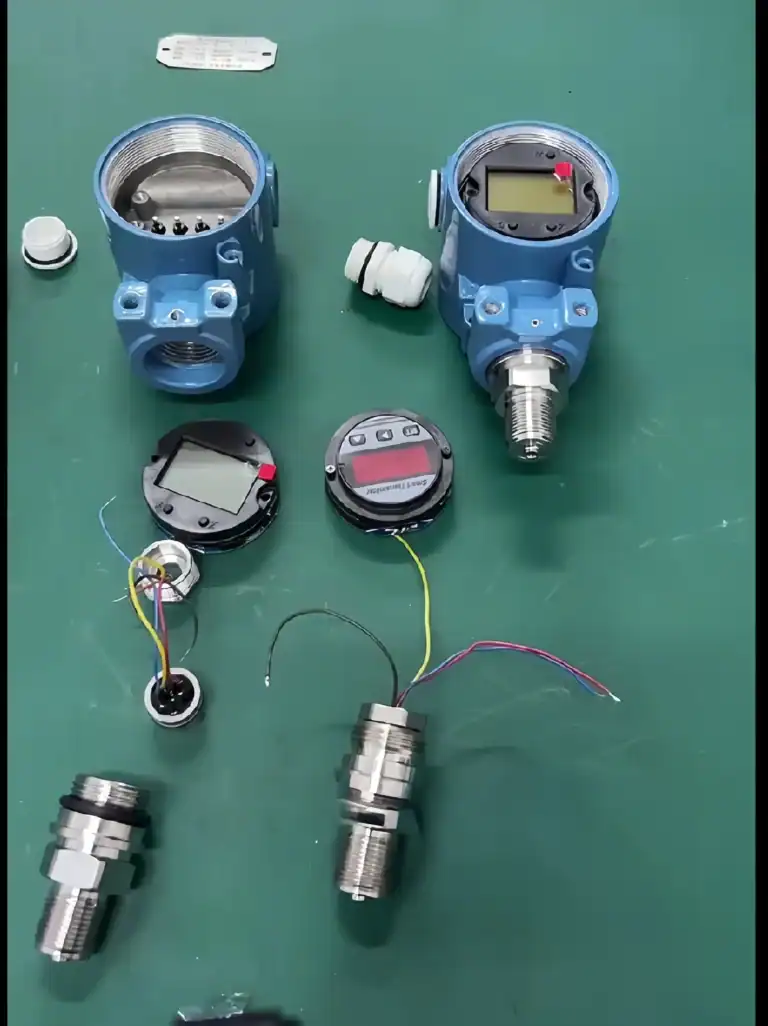
The instrument: a mechanical vacuum gauge with a -30 to 0 inHg or -1 to 0 bar scale handles all three. For diagnostic work where you want to log the trace, a digital pressure transmitter such as the HM30 Micro Differential Pressure Transmitter with its -100 to 700 kPa range covers the full intake-manifold envelope at ±0.25% FS accuracy.
Negative Pressure in HVAC, Cleanrooms & Medical Isolation Rooms
This is the densest application family: three sub-domains that share the same physics but specify very different magnitudes.
HVAC duct, AHU return, and filter monitoring
Across an air handler’s filter bank you expect a small negative on the return side, typically -0.5 to -2 inWC (-125 to -500 Pa) clean, rising in magnitude as the filter loads. Magnehelic gauges on the AHU door are the industry default: analog dial, no power needed, IP-rated housing. Replace the filter when the differential climbs about 0.5 inWC above its clean-filter reading.
Cleanroom airlock and pharma / semiconductor critical space
For ISO Class 5–8 pharma and semiconductor cleanrooms, ISO 14644-4 and EU GMP Annex 1 recommend a pressure cascade of 10–15 Pa between zones, with a minimum of about 5 Pa between adjacent cleanliness grades and at least 10 Pa between clean and non-clean areas. China’s GB 50457-2008 Pharmaceutical Industry Cleanroom Design Code aligns with this practice. Magnehelic gauges in the 0 to -0.25 inWC range are common on the room exterior; digital micro-DP transmitters feed the BMS for trend logging and alarming.
Healthcare airborne-isolation rooms
For airborne-infection isolation rooms in hospitals, ANSI/ASHRAE/ASHE Standard 170 Ventilation of Health Care Facilities specifies a minimum of -2.5 Pa (-0.01 inWC) relative to the corridor, with at least 12 air changes per hour. CDC’s airborne-infection isolation guidance and the AIA Guidelines for Design and Construction of Healthcare Facilities echo the same threshold. China’s GB 51039-2014 Code for design of general hospitals sets a comparable rule. Some hospital practice runs at -8 to -12 Pa to add safety margin. The reading instrument is almost always a Dwyer magnehelic gauge or a digital DP transmitter wired to the BAS, and a 24-hour failure of negative pressure here is a reportable infection-control event.
A note on HMK product fit: this sub-domain spans ±2.5 Pa to ±50 Pa, the lowest end of any application here. Magnehelic remains the industry default for the wall-mounted indicator. For digital BMS integration, the HMK micro-DP family starts at a 0–500 Pa full-scale model, usable for the upper end of cleanroom monitoring at reduced turndown. For ±5 Pa cleanroom or ±2.5 Pa isolation-room thresholds, contact us for an OEM low-range solution.
Negative Pressure on Refrigeration Suction Lines & Evacuation
Refrigeration uses negative readings in two distinct phases.
During evacuation, before the system is charged, technicians pull the circuit down to approximately -29.5 inHg gauge (about 500 microns absolute, or near-perfect vacuum) to remove air and moisture. The reading on the compound gauge of a refrigeration manifold set pegs at the bottom of the dial.
During operation, the suction-side reading depends on the refrigerant and the evaporator saturation temperature. Approximate low-side gauge pressures at two common evaporator points:
| Refrigerant | Saturation pressure at 5°C (gauge) | Saturation pressure at -10°C (gauge) |
|---|---|---|
| R-22 | ~70 psig (+4.8 bar) | ~26 psig (+1.8 bar) |
| R-410A | ~118 psig (+8.1 bar) | ~64 psig (+4.4 bar) |
| R-32 | ~116 psig (+8.0 bar) | ~61 psig (+4.2 bar) |
| R-134a | ~25 psig (+1.7 bar) | ~10 psig (+0.7 bar) |
| R-404A | ~96 psig (+6.6 bar) | ~50 psig (+3.5 bar) |
So most everyday HVACR work in the operating range reads positive, not negative. Negative readings during normal run-time generally mean a deeper-than-expected low-side condition: overcharge with a metering problem, very low ambient on a heat pump in heating mode, or a sealed compressor that has lost suction-side gas. Compound gauges (bourdon mechanical, manifold sets) are still the field standard here because the same instrument must sweep from full vacuum during evacuation through positive operating pressures. A digital transmitter such as the HM30 can verify the deep-vacuum reading during evacuation as a calibrated cross-check, but the day-to-day instrument is the manifold gauge.
Negative Pressure in Boiler Draft & Furnace
Industrial boilers run their fireboxes deliberately negative to keep flue gas from escaping into the boiler room. Two architectures dominate:
- Natural-draft boilers — chimney buoyancy alone pulls the furnace to about -0.3 to -1.0 inWC (-75 to -250 Pa). No fan, no controls; the draft is whatever the stack provides.
- Balanced-draft boilers — a forced-draft (FD) fan pushes combustion air in while an induced-draft (ID) fan pulls flue gas out. The control system trims both fans so the furnace stays at a setpoint of typically -0.1 to -0.5 inWC. Sinopec’s industrial-boiler operating manual for coal-fired stations uses -0.2 inWC as the standard furnace draft setpoint, with alarm if magnitude drops below -0.05 inWC (positive pressure risk) or exceeds -0.8 inWC (excess infiltration).
The reading instrument for the wall-mounted local indicator is an inclined manometer or a low-range magnehelic gauge with a 0 to -1 inWC scale. For the control loop, a digital micro-DP transmitter is the right choice: the HMK HM30 in its 0–500 Pa model with negative-side capability covers the typical -75 to -500 Pa boiler-draft envelope at ±0.25% FS, with a 4–20 mA output that drops directly into the DCS draft-control loop.
One Instrument Across All Five Domains? Magnehelic vs Compound vs Digital Transmitter
There is no single gauge that fits every application above. Three instrument families dominate this space, each anchored by established brands:
| Instrument family | Industry-standard brands | Best fit | Limits |
|---|---|---|---|
| Magnehelic / inclined manometer | Dwyer-Omega (Magnehelic Series 2000 dominant), aafintl, Setra | HVAC duct, cleanroom, healthcare isolation, boiler local indicator | Low-range mechanical only; no signal output without bolt-on transducer; ±2% FS accuracy |
| Compound gauge (bourdon mechanical) | WIKA, Ashcroft, Mid-West | Refrigeration manifold, evacuation cross-check, general process spot-reading | ±1.6% FS class typical; mechanical only; full vacuum-to-positive range |
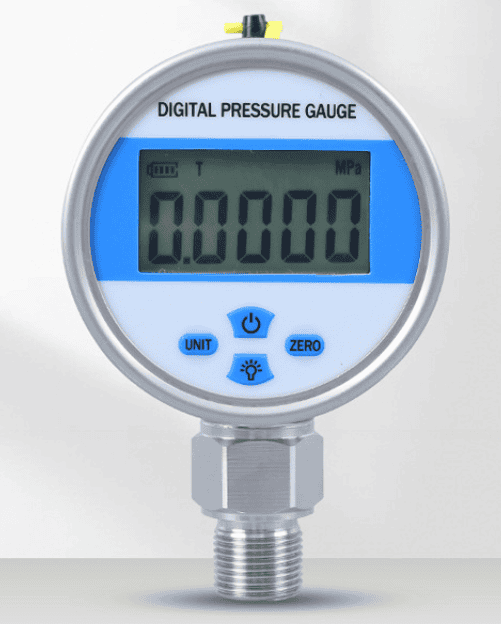
| Digital DP transmitter | HMK, Sensirion, Setra, Rosemount | BMS / DCS integration, alarming, data logging, any-domain digital path | Higher unit cost; needs power supply; programming and calibration overhead |
The decision is rarely about which is best in the abstract. It is about which signal the next downstream system needs.
A wall indicator that a maintenance tech reads with their eyes is mechanical. A BMS that has to alarm a healthcare facility manager at 2 a.m. when an isolation room flips positive needs a digital transmitter feeding a 4–20 mA or Modbus signal into the BAS.
For a digital upgrade path that fits all five domains except the ±2.5 to ±5 Pa medical/cleanroom extreme, the HM30 Micro Differential Pressure Transmitter covers 0–500 Pa to 0–700 kPa with optional ±0.1% FS accuracy and a 4–20 mA / RS-485 output. Pair it with a Dwyer magnehelic on the wall and you have both the eye-level indicator and the BMS feed.
When to Step Back and Talk to a Process Engineer
This guide stays in non-process applications: HVAC, cleanroom, hospital, refrigeration, boiler, automotive. If your system is a refinery vacuum tower, a chemical reactor under reduced pressure, an evaporator in a pharma API plant, or any unit where the negative reading itself drives a chemistry or safety calculation, the failure mode and the SIL classification matter more than the instrument family.
In those cases the gauge selection runs through process-engineering rules: sealed gauge vs absolute vs compound, diaphragm seal material vs media, accuracy class against the loop’s SIL target, redundancy strategy. Lin Jun’s process-side companion piece Can Gauge Pressure Be Negative? Yes — When and How walks through the refinery and reactor logic in detail. For an HMK transmitter selection conversation across both worlds, our Pressure Transmitter Types pillar maps the full product matrix.
FAQ
Can my car’s tire pressure gauge read negative?
No. Tire pressure is always at or above atmospheric. A flat tire reads 0 psig, not below it. Tire gauges are scaled 0 to 60 psig and have no vacuum range.
What magnehelic gauge range do I need for a cleanroom?
For a standard pharma or semiconductor cleanroom at -5 Pa to -25 Pa, a 0 to -0.25 inWC (0 to -62 Pa) range gives the right resolution. For healthcare isolation rooms at -2.5 Pa, a 0 to -0.10 inWC range is more precise.
Can a compound gauge work for both HVAC duct and refrigeration?
Mechanically yes, but the typical compound gauge scale (-30 inHg to +300 psig) gives almost no resolution in the -1 to -5 inWC HVAC range. For HVAC use a magnehelic; reserve the compound for refrigeration and general process work.
Where can I buy a digital negative pressure gauge or transmitter for industrial use?
HMK manufactures the HM30 micro differential pressure transmitter line covering 0–500 Pa to 0–700 kPa with optional ±0.1% FS. Direct sales contact form is on every product page; lead time is typically 2–3 weeks for standard configurations.
Who calibrates low-pressure gauges and transmitters?
Any ISO/IEC 17025-accredited calibration lab handles vacuum and low-range DP. For HMK transmitters specifically, our factory provides 17025-traceable calibration certificates with each unit; field re-calibration is recommended every 12 months for healthcare and pharma installations.
Next step: Send your spec sheet for a model recommendation in 24 h. Get in touch →