Pressure Transducer Applications: A 2026 Industry Selection Guide
You already know you need a pressure transducer. The question is which one, and that depends almost entirely on the industry it has to live in. A transducer that thrives in a 3,000-psi hydraulic press will flat-line in a 0.5-inH₂O cleanroom duct. A model rated for tap-water level monitoring will not survive ten months in a fertilizer reactor. This guide walks you through six decisions to settle before specifying a transducer, then maps eight industries to spec ranges and the HMK product family that fits each. After that we cover the mounting accessories that make or break an install, and the five application mistakes we keep seeing on field reports. If you have not locked in the type yet (gauge vs absolute vs DP, capacitive vs sapphire, 4-20 mA vs HART), our pressure transmitter types pillar is the better first stop.
What "applications" really means for a pressure transducer
A pressure transducer converts pressure into an electrical signal (millivolt, voltage, or 4-20 mA) without the on-board signal conditioning of a pressure transmitter. In day-to-day plant talk the three terms (sensor, transducer, transmitter) get used interchangeably; in spec sheets they do not. The distinction is covered in pressure sensor vs transducer vs transmitter.
For application purposes, two things matter. First, the transducer touches the process directly or through an isolation diaphragm, so whatever happens in your fluid happens to it. Second, it produces a signal something has to read, whether a PLC analog input, a HART master, an IO-Link gateway, or on the OEM side a millivolt input on a board.
So the question “pressure transducer applications” really asks: given my process media, temperature, mounting envelope, readout system, and industry regulations, which transducer survives and stays accurate over the next five to ten years? The rest of this guide is the answer.
Six questions to settle before you match a transducer to an application
Most application failures we see in the field trace back to a missed question on this list. Settle them in this order:
| # | Question | What it locks in |
|---|---|---|
| 1 | Pressure range and worst-case overpressure / vacuum spike? | Sensor element type and burst rating |
| 2 | Reference type — gauge, absolute, sealed gauge, or differential? | Whether the transducer needs a vent path or a sealed fill |
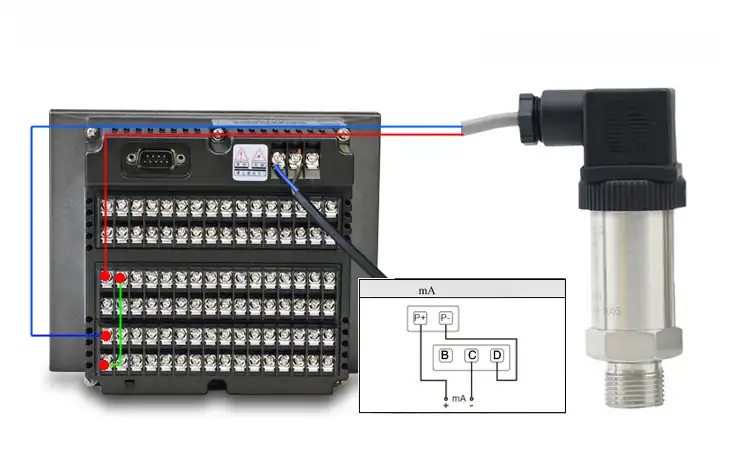
| 3 | Output and protocol the receiving system expects? | mV, 0-10 V, 4-20 mA, HART, IO-Link, RS-485, wireless |
| 4 | Wetted material the diaphragm and ports must resist? | 316L, Hastelloy, tantalum, ceramic Al₂O₃, gold-plated, PTFE |
| 5 | Environmental rating — IP, hazardous-area certification, vibration? | IP65/67/68, ATEX/IECEx Ex d / Ex i, MIL-STD-810 |
| 6 | Accuracy class your instrument loop justifies? | ±0.075 %FS metering grade vs ±0.5 %FS process grade |
For accuracy specifically, GB/T 22660-2008 (Chinese national general spec for industrial pressure sensors) and JJG 882-2019 (verification regulation for pressure transmitters) define the same accuracy ladder used by ASME B40.100, EN 837, and IEC 60770-1: 0.075 / 0.1 / 0.25 / 0.5 / 1.0 / 1.6 %FS. A “Class 0.25” device means the same maximum permitted error in any of those standards. Verification intervals differ region by region: JJG 882 sets a default 1-year verification cycle for any device used in trade, safety, or environmental monitoring; ASME and IEC leave the interval to the operator’s quality system. If your transducer crosses borders, the strictest of the regional rules typically governs.
Questions 1, 2, 4, and 5 apply equally to transducers and transmitters. Questions 3 and 6 are where they diverge: transducers offer more output flexibility (mV, V, mA all common) and a wider accuracy spread, while transmitters are typically narrower in both, the trade-off for built-in conditioning.
If your sensing-element type is not yet locked in, our pressure transmitter types pillar breaks the choice down by reference, sensing technology, output, and certification. Come back here once you have narrowed the type. From this point we assume you have picked the broad type and just need to match it to your application.
Industry-by-industry application guide
The table below is the short form. The seven short sections after it cover the constraints that actually decide each row.
| Industry | Typical range | Reference | Wetted material | Critical accessory | HMK family |
|---|---|---|---|---|---|
| Hydraulic systems & machine tools | 0–700 bar | Gauge | 316L | Snubber, overpressure stop | HM22, HM90 |
| HVAC & cleanroom (low-ΔP) | ±2.5 to ±10 in H₂O | DP / micro-DP | 316L | Static-pressure tap, NIST cal | HM30, HM23 |
| Oil & gas pipelines & wellhead | 0–600 bar / vacuum | Gauge / absolute | 316L + diaphragm seal | Ex d enclosure, surge protection | HM3051, HM23Y, HM60 |
| Chemical & petrochemical | 0–250 bar | Gauge / DP | Hastelloy / tantalum / PTFE | Diaphragm seal + capillary | HM50, HM3051 |
| Food & beverage (sanitary) | 0–25 bar | Gauge | 316L, Ra ≤ 0.8 µm | Tri-clamp + flush diaphragm | HM70 |
| Pharma / bioprocess | 0–10 bar | Gauge / absolute | 316L EHEDG-listed | Autoclavable, CIP/SIP | HM70, flush-mount |
| Water / wastewater submersible level | 0–30 m H₂O | Sealed gauge | 316L + lightning protector | IP68, vented cable | HM21, HM21F |
| R&D / lab / aerospace test | 0–1,000 bar | Absolute / gauge | 316L / sapphire | NIST cal certificate | HM3051, HM27, HM28 |
Hydraulic systems & machine tools
Hydraulic pressure is not smooth. It is a square-wave train of pump strokes and valve closures that hammers the diaphragm thousands of times an hour. A transducer here needs an overpressure rating of at least 1.5× max working pressure, a snubber in the port, and a response fast enough not to smear the peaks the controls need to see. Pair an HM22 high-accuracy transducer with a porous-metal snubber for steady-state monitoring; switch to the HM90 dynamic pressure transmitter for water-hammer transients on press circuits.
HVAC & cleanroom (low-ΔP)
Cleanroom and HVAC pressure work happens at ±2.5 to ±10 in H₂O, three orders of magnitude below process pressure. A standard 0–10 bar transducer cannot resolve it. You need a micro-DP transmitter with a low-FS span and a static-pressure tap routed away from disturbed flow. The HM30 micro-DP transmitter covers most of this, with NIST-traceable calibration available; for compressor-side HVAC/R loops the HM23 takes over.
Oil & gas pipelines & wellhead
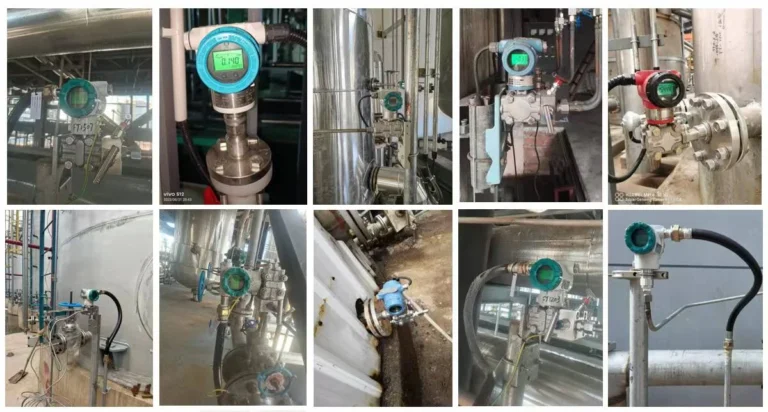
Outdoor service, hazardous area, vibration, and intermittent corrosive condensate. Anything you spec must be Ex d (flameproof) or Ex ia (intrinsically safe) rated, IP67+ enclosed, and protected from lightning surges on long cable runs. An inspection sweep of 1,500 mechanical gauges we worked on at a Sinopec refinery (East China upstream block) showed 23 % of mechanical gauges with weather-cracked dials, 7 % with bent pointers, and 4 % with corroded process seals from condensate sitting in the impulse line over a winter. Transducers replace the dials but inherit the same environment, so they need the same protective canopies, heated impulse lines on freezing services, and surge-suppression at both the device and the receiver. The HM3051 smart DP transmitter handles metering-grade pipeline service; the HM23Y oilfield/mining-well transmitter is purpose-built for wellhead vibration; the HM60 explosion-proof covers Zone 1 / Class I Div 1.
Chemical & petrochemical reactors
The wetted-material decision dominates. HG/T 20507-2014, the Chinese petrochemical instrument selection regulation, cross-references typical reactor media to required diaphragm metallurgy. Its scope is narrower but more concrete than NACE MR0175 alone: HF and HCl service drives tantalum or PTFE-clad; chloride brines above 60 °C drive Hastelloy C-276 (316L cracks within months); high-temperature polymer reactors above 200 °C drive flush-mount tantalum diaphragms with capillary-mounted electronics. ISA 75 categories map onto the same metallurgy ladder for valve trim and provide a useful cross-walk in mixed-vendor specs. The HM50 anti-corrosive transmitter ships with five wetted options (316L / Hastelloy / tantalum / PTFE / monel) and a remote-seal capillary version for reactors that would cook a direct-mount sensor’s electronics.
Food, beverage & bioprocess (sanitary / hygienic)
Sanitary service spans dairy, brewing, soft drinks, pharma, and bioprocess, governed by an overlapping set of standards: 3-A Sanitary Standard 74- (US fittings), GB 4806 (Chinese food-contact material catalogue, requiring documented heat-lot traceability for any 316L wetted part), and EHEDG (European hygienic-design certification). Common requirements: 316L stainless, Ra ≤ 0.8 µm polish on wetted surfaces, flush diaphragm with no dead volume that traps product, and a tri-clamp or DIN 11851 connection that strips for CIP/SIP. WFI loops add 134 °C SIP cycles that destroy standard fluorocarbon O-rings within a few hundred cycles; pharma-rated devices use FFKM or metal-to-metal seals to outlast them. The HM70 sanitary flat-membrane transmitter covers food and beverage; for radial-mount bioreactors and fermenter side-walls, the flush-mount pressure transducer guide walks the geometry. Some buyers search for “pressure transducer in medical applications”; the answer is the same hygienic class with the stricter heat-lot traceability layer added. In hygienic service, the connection, surface finish and CIP/SIP temperature drive the choice; see our sanitary pressure transmitter selection guide.
Water / wastewater & submersible level
The transducer drops in the well. IP68 is mandatory; cable length pushes you toward vented cable (open atmospheric reference through the cable jacket) so barometric swings do not show up as 30 cm of phantom water level. Lightning is the silent killer on long open-air cable runs. The HM21 submersible level transmitter covers standard well/lift-station service; the HM21F lightning-protected variant adds gas-discharge tubes for storm-prone sites.
R&D / lab / aerospace test
Accuracy class drives this. Below ±0.075 %FS, you need a metering-grade transducer with calibration certificate and NIST-traceable as-found / as-left data. The HM3051 smart DP at ±0.075 % covers most of the lab spread. For vacuum work down to absolute zero reference, the HM27 vacuum-absolute replaces it. For aerospace fuel-system testing where the diaphragm has to read 350 °C continuous, HM28 sapphire is the only practical option in the HMK lineup.
Mounting and accessory choices that change which application really works
A transducer alone is not an application; the accessory chain around it is. Five decisions show up in almost every commission report:
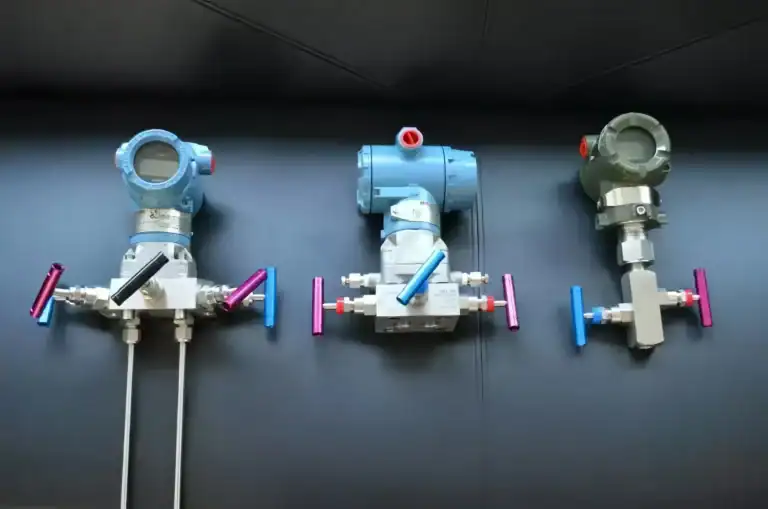
Snubbers, siphons & overpressure stops. Hydraulic and reciprocating-pump service needs a porous-bronze or stainless snubber that slows the pressure-rise rate without slowing the controls’ response. Steam service needs a U-shape pigtail siphon below the transducer to trap a water leg so the diaphragm reads water (≤ 100 °C) rather than direct steam (> 150 °C); the pressure gauge parts primer shows the same arrangement on mechanical gauges. Hydraulic deadhead and water-hammer events can spike to 5–10× working pressure, so add an overpressure stop or restricting orifice. The Sinopec sweep referenced earlier showed diaphragm fatigue dropping from a routine 9-month interval to 4+ years on circuits where snubbers were retrofitted.
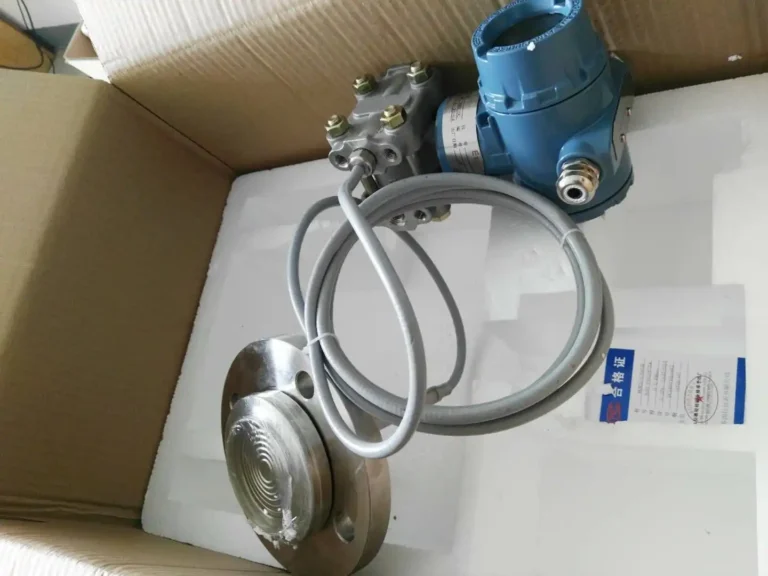
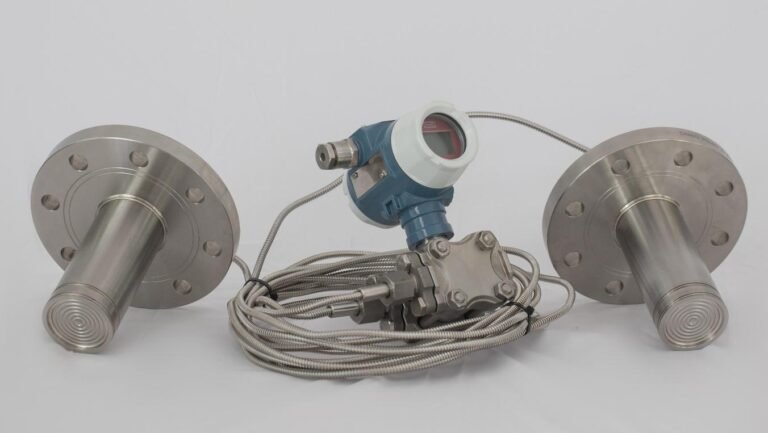
Diaphragm seals (chemical seals). When the process should not touch the transducer (corrosive media, slurries, viscous polymers, food that would solidify in a port), a diaphragm seal sits between them. Specify the seal’s wetted material independently from the transducer’s; the seal is the actual contact surface.
Capillaries. A diaphragm seal connected to the transducer body by a 1–10 m capillary line lets you mount the electronics in cooler air while the seal lives at process temperature. Capillary length and fill fluid (silicone DC-200, Halocarbon, sodium-potassium) determine the static head correction and the temperature-induced zero error.
Vented cable and lightning suppressors. Submersible installs need vented cable. Open-air installs longer than 20 m need gas-discharge surge protection at the receiver end. Both are install-time additions that retrofit poorly.
These decisions cost almost nothing relative to a re-bored process port or a destroyed transmitter.
Five application mistakes that cause early failure
The same five failures show up across most warranty returns:
1. Running outside the linear 80 % of range. Below 10 %FS or above 90 %FS, accuracy class no longer applies. The published ±0.25 %FS is only valid in the linear band. Spec a transducer whose calibrated span sits around your normal operating point, not whose maximum range does.
2. Skipping the snubber or siphon on pulsating or steam service. A 4-20 mA loop says nothing about peak overpressure. The diaphragm fatigues silently. Failure shows up as a slow zero shift, then a span shift, then a flat output. The fix is a small fitting at install time.
3. Mixing up gauge and absolute reference. A gauge transducer reads zero at atmosphere; an absolute one reads ~1 bar. Substituting one for the other and zeroing it in software hides the error until barometric pressure shifts in a storm front and your control loop chases it. Confirm reference type on the order line.
4. Ignoring temperature compensation specs. A transducer rated ±0.25 %FS at 25 °C may carry ±0.05 %FS / °C thermal zero drift in the fine print. In a 40 °C summer cabinet that adds ±0.75 %FS, three times the headline accuracy. The math is in pressure sensor temperature compensation.
5. Wiring a transducer with transmitter loop assumptions. A 0–100 mV transducer needs a high-impedance receiver close to the device, not 200 m of unshielded cable into a PLC analog card. The cable becomes a bigger error term than the sensor. Use a transmitter with built-in 4-20 mA driver, or co-locate signal conditioning at the transducer.
HMK product crosswalk: pick a transducer for your application in 30 seconds
| Your industry / scenario | Recommended HMK family | Common accessory |
|---|---|---|
| Hydraulic press, machine tool, mobile equipment | HM22 (steady) · HM90 (transient) | Porous-metal snubber, overpressure stop |
| HVAC duct, cleanroom ΔP, filter-loaded monitor | HM30 micro-DP | Static-pressure tap, NIST cal certificate |
| HVAC/R compressor, refrigeration loop | HM23 HVAC/R | Vibration mount, low-temp cable |
| Oil & gas pipeline, custody transfer, refinery | HM3051 smart DP, HM60 Ex d | Diaphragm seal + capillary, surge protector |
| Wellhead / mining / oilfield | HM23Y oilfield | Vibration mount, sealed connector |
| Chemical / petrochemical reactor | HM50 anti-corrosive | Tantalum or Hastelloy diaphragm seal |
| Food & beverage, dairy, brewery | HM70 sanitary | Tri-clamp, sanitary cable jacket |
| Pharma / bioprocess / biomedical fluid handling | HM70 sanitary + flush-mount guide | EHEDG fitting, autoclavable cable |
| Water/wastewater submersible level | HM21, HM21F lightning | Vented cable, surge arrestor |
| Lab / R&D / aerospace test | HM3051, HM27, HM28 | NIST cal certificate |
Browse all options on the pressure sensors & transmitters category page or jump straight to the pressure transmitter types pillar guide to validate the type choice first.
FAQ
Is a pressure transducer always the right device, or should I be using a pressure switch or a gauge instead?
A transducer gives a continuous analog signal and is the right pick when the loop needs to read the value, not just detect a threshold. If the only output you need is “above setpoint / below setpoint”, a pressure switch is simpler, cheaper, and has fewer failure modes. If a person only needs to glance at it locally with no controller involved, a mechanical or digital pressure gauge wins on cost.
Are pressure transducer applications the same conversation as pressure transmitter applications?
Mostly yes; they live in the same industries. The choice between transducer and transmitter is downstream of industry choice and depends on accuracy class, cable distance, and whether you want signal conditioning on-board. For long cable runs (> 20 m) or when wiring into a PLC analog card, a transmitter with built-in 4-20 mA driver is usually the better default.
How do regional standards (ASME B40.100, EN 837, GB/T 22660, IEC 60770-1) change which transducer I can use?
The accuracy ladder (0.075 / 0.1 / 0.25 / 0.5 / 1.0 / 1.6 %FS) is the same across all four. What differs is verification interval and wetted-material listing. Chinese GB and JJG documents add explicit wetted-material approval lists that ASME does not, and ATEX/IECEx certification (Europe and global Ex) is more specific than the US Class/Division nomenclature. If you ship to multiple regions, spec a transducer with all three certifications stacked (ATEX + IECEx + cFMus or cULus).
What ruins a pressure transducer fastest in field use?
Three things, in order: overpressure spikes without a snubber on hydraulic or pump service; temperature excursions beyond the compensated band; moisture ingress through a violated IP rating (cracked window, uncrimped gland). All three are install-time decisions, not transducer-quality decisions.
Related tool: Quick PSI ↔ Bar conversion while you spec: use our PSI to Bar Converter for unit math without leaving the page.
For a point-by-point map of upstream, midstream and downstream measuring points to specific transmitters, see our oil & gas pressure instrumentation selection guide.
For hydraulic systems specifically, see our guide to selecting a hydraulic pressure transducer.
Related: For furnace, boiler, steam and engine-test service, the high-temperature pressure transducer selection guide covers the four proven methods and how to pick one.