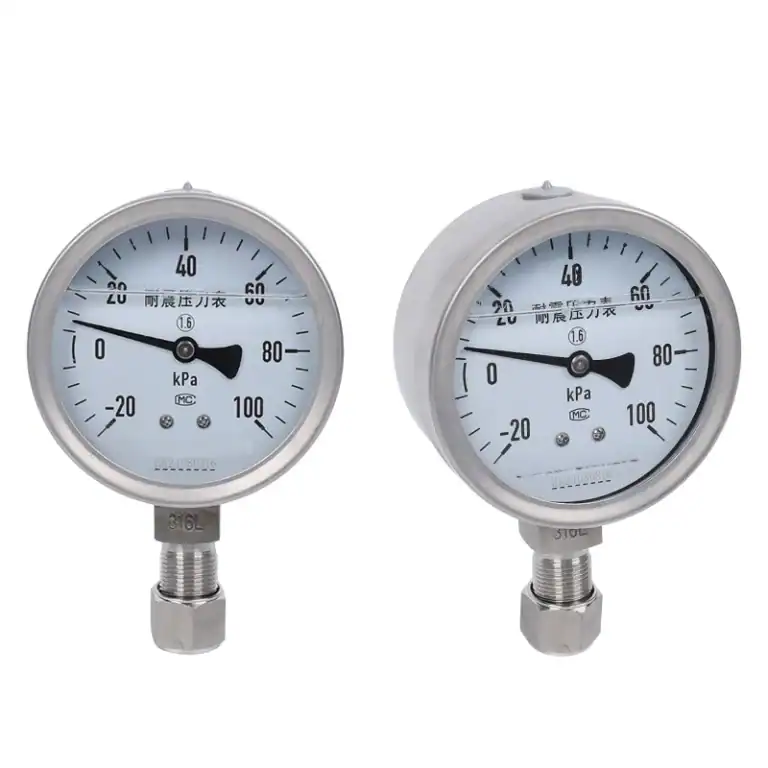
Gauge vs Absolute Pressure: The 95/5 Rule (and the Sealed-Gauge Trap) for Process Instrumentation
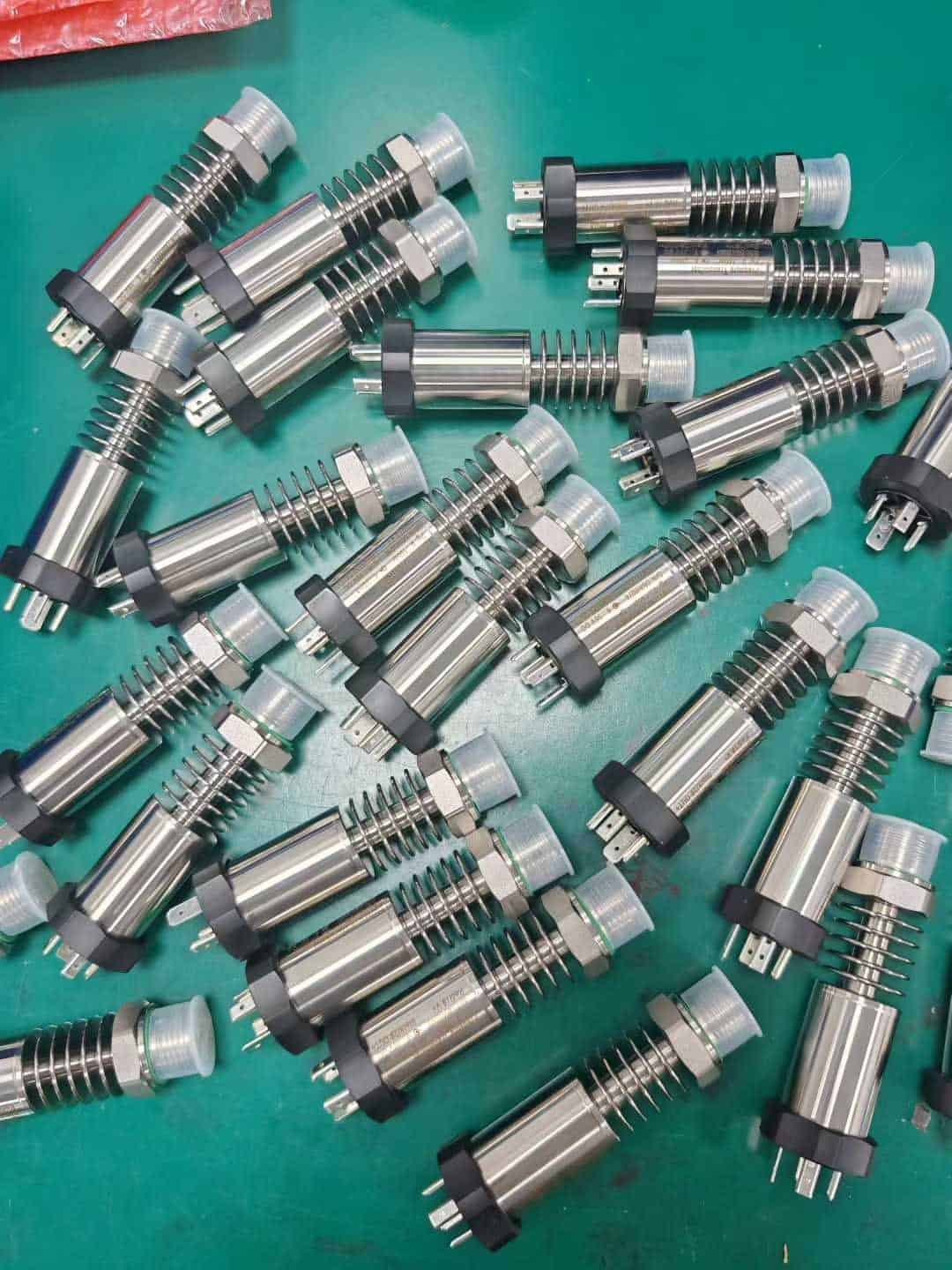
Absolute pressure is measured against a perfect vacuum (0 psia = no molecules). Gauge pressure is measured against local atmospheric pressure (0 psig = whatever the sky is doing today). For roughly 95% of process applications, gauge is the correct choice. Absolute is required when atmospheric pressure itself is part of the measurement — vacuum service, altitude-sensitive processes, and closed systems operating below about 2 bar.
The confusion isn’t in the definition. It’s in the 5% of edge cases, plus a third reference type — sealed-gauge — that trips up engineers every year because it looks like gauge on the spec sheet but behaves like a drifting absolute. This guide to absolute pressure vs gauge pressure selection gives you the decision framework, spec-sheet decoder, and altitude-drift numbers that matter on the job.
The One-Sentence Difference (and Why the Reference Matters)
A pressure transmitter doesn’t measure pressure directly — it measures the difference between the process fluid on one side of a diaphragm and a reference on the other. Change the reference, and the same physical pressure produces a different number. With the PSI unit defined as pound-force per square inch, the suffix letter (G, A, SG, V) tells you which reference is in play.
Three references are in common use:
- Perfect vacuum (0 psia) — the reference for absolute measurement. Never moves.
- Local atmospheric — ~14.7 psi at sea level, but breathes with the weather (±0.5 psi) and drops with elevation.
- Sealed factory reference — a small pocket of air captured inside the transmitter at the factory, then sealed off.
Atmospheric pressure isn’t constant. A weather system at a Houston refinery can shift a gauge reading by 0.3 psi overnight — noise if you’re measuring 500 psi steam, a real problem if you’re measuring 2 psi vacuum in a freeze-dryer. The question that matters: does atmospheric drift help or hurt your measurement? Once the reference is chosen, our PSI suffix cheat sheet shows how PSIA, PSIG and PSID land on the actual datasheet. For the calculation side, with three rearrangements and three industrial worked examples, see our gauge pressure formula walkthrough; the absolute-reference rearrangement P_abs = P_gauge + P_atm, with altitude and hydrostatic examples, is in the absolute pressure formula guide.
The 95/5 Rule: When Gauge Wins, When Absolute Wins
After 35 years of commissioning pressure loops, one rule holds up: gauge is right about 95% of the time. The trick is recognizing the other 5%.
(A note on the number: in pure refining and petrochemical service, the split is closer to 90/10 once you include vacuum towers and compressor performance work. Across general process instrumentation, 95/5 is the working shorthand. Either way, gauge is the default unless you can name a specific reason it isn’t.)
Use absolute when any of these apply
- Vacuum or near-vacuum service (below ~2 bar abs / 29 inHg). Atmospheric drift becomes comparable to the signal. A freeze-dryer at 50 mbar abs sees ±30 mbar of weather drift — more than half the reading.
- Altitude-sensitive processes or calibration work. In Denver or Salt Lake City, gauge transmitters read 2–3 psi lower than a sea-level lab would for the same true absolute pressure. Flow compensation, leak testing, and gas density math all inherit that bias.
- Sealed closed systems. Refrigeration loops, gas chromatographs, calibration standards, sealed reactors — if the process is decoupled from atmosphere, gauge adds weather noise to an otherwise stable signal.
Use gauge for the other 95%
- Equipment ratings are written in “over atmospheric” terms (MAWP 300 psig = 300 psi above ambient). Gauge means no conversion at the operator.
- Operator intuition maps to gauge: zero = open, negative = vacuum, positive = pressurized.
- Gauge sensors are mechanically simpler — one process port, one vent. Less to fail, lower cost, longer MTBF.
Quick decision table
| Application | Use | Why |
|---|---|---|
| Steam drum at ≥2 bar | Gauge | Atmospheric drift <0.3% of reading |
| Vacuum dryer at 50 mbar | Absolute | Atmospheric drift ~2× the signal |
| Denver refinery flow meter | Absolute | Elevation bias corrupts density calc |
| Open-top water tank level | Gauge | Reference is atmosphere by design |
| Sealed refrigerant loop | Absolute | No atmospheric connection |
That covers the textbook cases. There’s a third option most datasheets bury in a footnote — and it’s where experienced engineers still get burned.
The Sealed-Gauge Trap: The Third Option Nobody Talks About
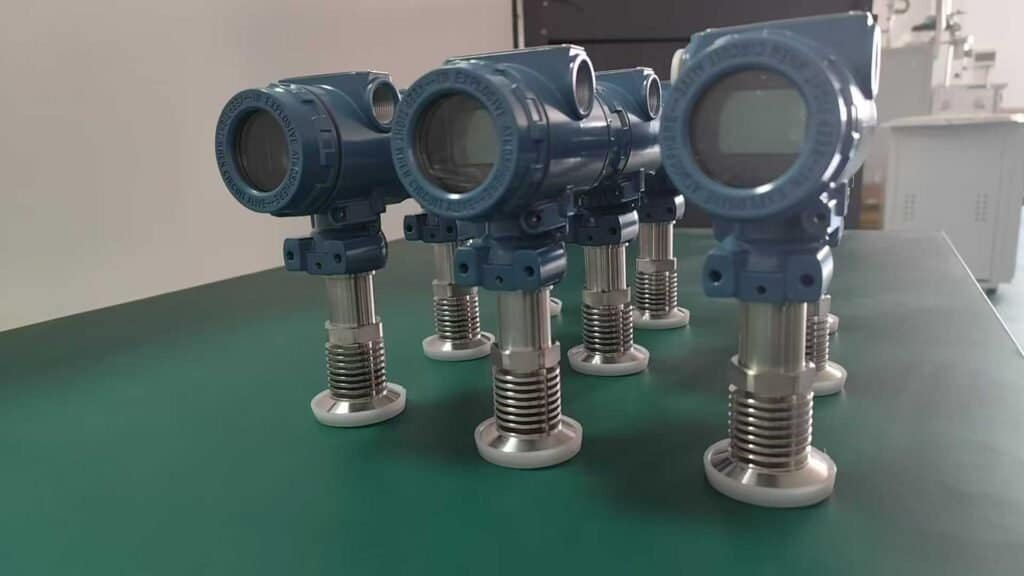
Sealed-gauge (labeled “SG” on datasheets) is a transmitter whose reference cavity is filled with air at the factory and then welded shut. Not vacuum. Not vented. A frozen snapshot of roughly 14.7 psi at 20 °C, carried for the sensor’s entire life.
Why it exists
The atmospheric vent on a standard gauge transmitter is a known weak point — plugs with corrosion, dust, insect nests, or freeze-ups in outdoor service. Sealed-gauge eliminates the vent. That sounds like a clean win. It isn’t always.
The trap
Sealed-gauge reads the same as standard gauge on the day it leaves the factory, at whatever barometric pressure was in the calibration room. After that, the reference is frozen while the process side continues to see real atmosphere. The difference shows up as zero drift:
- Weather drift: a 30 mbar barometric change produces a 30 mbar zero shift. Standard gauge would not move.
- Altitude drift: move an SG unit from a sea-level calibration lab to a Denver plant — the zero shifts ~180 mbar (2.6 psi) permanently.
A failure pattern I’ve seen repeatedly
Engineer picks SG because the field environment is hostile — outdoor compressor skid, salt spray, dust. Transmitter is calibrated at the OEM factory near sea level, shipped to a Colorado gas plant at 1,840 m. Day one: zero reads +2.9 psi. Operators chalk it up to startup and re-zero in place. Six weeks later a cold front drops barometric pressure 15 mbar overnight, and a low-pressure alarm at a 2 psi setpoint trips at 2 a.m. Three weeks of chasing a phantom leak later, root cause is spec selection — not the field. Standard gauge or absolute would have avoided all of it.
When sealed-gauge is actually right
Three narrow cases:
- Near sea level (<200 m elevation), moderate accuracy (±1% FS or looser) — weather drift is small vs. accuracy class.
- Fixed-elevation outdoor service with severe vent-side contamination (marine, heavy dust, corrosive gases) where venting is truly impractical.
- Sanitary / washdown service where the transmitter body must be hermetically sealed.
HMK’s position
We offer sealed-gauge variants on request, but only after an engineering review. Our field data shows misapplication is the dominant failure mode for SG installations — more than sensor failures, more than wiring issues. A 10-minute conversation before ordering prevents a month of troubleshooting later.
Reading a Spec Sheet: G, A, SG, V
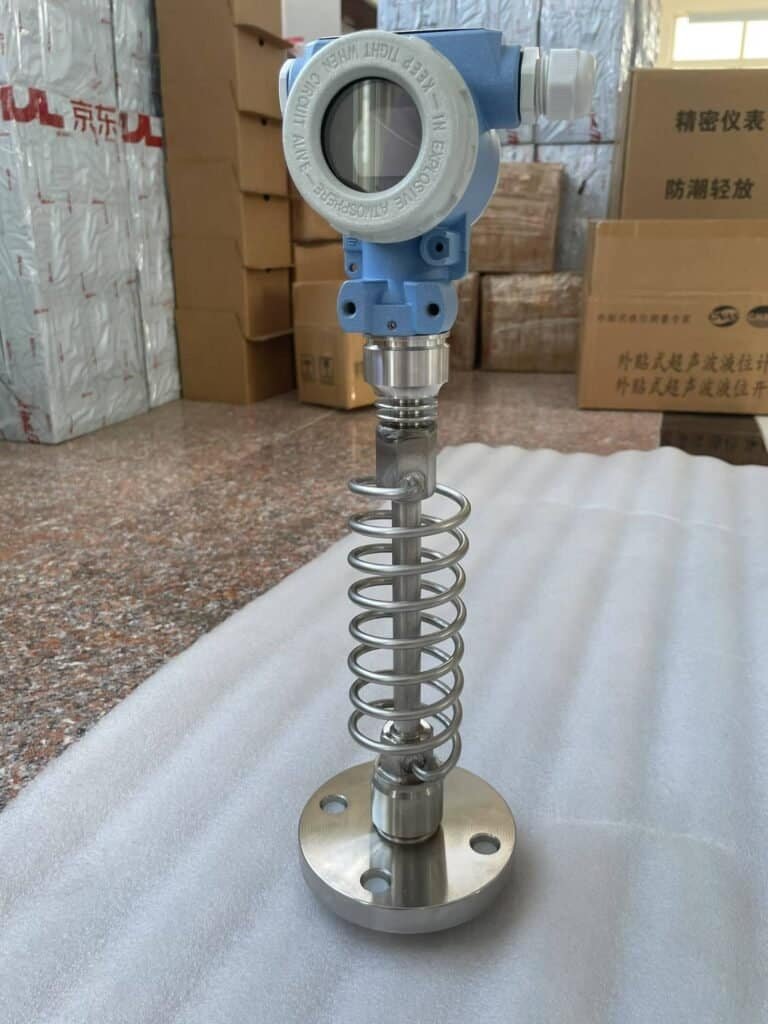
Every pressure transmitter datasheet carries a reference-type code. The convention isn’t fully standardized, so find the legend at the bottom of the spec table first.
| Code | Name | Reference | Zero point | Typical use |
|---|---|---|---|---|
| G | Gauge | Local atmosphere | Open to atmosphere | 95% of process |
| A | Absolute | Perfect vacuum | Evacuated cavity | Vacuum, altitude, closed systems |
| SG | Sealed-gauge | Factory-captured atmosphere (frozen) | Sealed 1 atm reference | Outdoor / contaminated vent |
| V | Vacuum | Local atmosphere | Below atmosphere only | Vacuum chambers, packaging |
Cross-brand translation
- HMK, Rosemount: G / A / SG / V
- WIKA: lowercase g / abs / sg / −g (sometimes e for “effective” = gauge)
- Endress+Hauser: gauge / abs / sealed spelled out
- Legacy German datasheets: ü (Überdruck) = gauge, absolut = absolute
If you’re cross-referencing a quote, always find the legend before trusting the code.
The classic misorder
A project spec calls out “0–10 bar pressure transmitter” without specifying reference. Procurement orders gauge because it’s cheapest. Installation finds a tank under nitrogen blanket, isolated from atmosphere. Zero drifts with the weather. Three months later, calibration against a deadweight tester blames the tester rather than the reference mismatch.
Always write the reference type into the PO. “0–10 bar A” and “0–10 bar G” are different instruments.
Altitude Drift: How Much Your Gauge Reading Lies at Elevation
Most articles say “consider altitude” and move on. What engineers want is the number: how much is my gauge reading off when altitude matters?
All values below are the gauge reading when the true absolute pressure at the process tap is exactly 1 bar (1,000 mbar).
| Location | Elevation | Atm pressure | Gauge reading for 1 bar abs | Error vs sea level |
|---|---|---|---|---|
| Houston, TX (Gulf Coast) | 15 m | 1,011 mbar | −11 mbar (−0.16 psi) | 0.0% |
| Salt Lake City, UT | 1,288 m | 870 mbar | +130 mbar (+1.89 psi) | +14.1% |
| Denver, CO (“Mile High”) | 1,600 m | 834 mbar | +166 mbar (+2.41 psi) | +17.7% |
| Colorado Springs, CO | 1,839 m | 810 mbar | +190 mbar (+2.76 psi) | +20.1% |
| Leadville, CO (mining) | 3,094 m | 693 mbar | +307 mbar (+4.45 psi) | +31.8% |
A process tap at exactly 1 bar absolute, measured with a properly calibrated gauge transmitter, displays +2.4 psi in Denver versus −0.2 psi on the Gulf Coast. Same fluid, same true pressure, 18% apparent difference.
Where the bias bites
- Compressor performance curves. OEM curves are referenced to standard conditions. At Colorado Springs elevation, a gauge-based polytropic head calculation is ~20% off factory curve.
- Flow compensation. Mass-flow and compensated volumetric flow need absolute pressure in the density equation. Feed gauge into the math and your totalizer carries the altitude bias forever.
- Leak testing. Pressure-decay tests comparing a sea-level “before” to a high-altitude “after” register the elevation delta as a phantom leak.
- Custody transfer and emissions reporting. Regulatory math wants absolute. Gauge inputs survive internal audit until an external inspector catches it.
The rule: at elevations above ~300 m, use absolute transmitters for any measurement feeding a calculation. Reserve gauge for operator-facing “over-MAWP” displays where the bias is harmless.
Choosing the Right HMK Transmitter for Your Reference Type
Once the reference is decided, instrument selection narrows fast.
| You need | HMK model | Reference | Accuracy | Range |
|---|---|---|---|---|
| Standard gauge (95% default) | HM20 | Gauge | ±0.25% FS | 5 kPa–100 MPa |
| Premium high-accuracy gauge (German-sourced, tight thermal drift) | HM22 | Gauge | ±0.1% FS (±0.01%/°C) | 5 kPa–60 MPa |
| High-accuracy gauge (custody, lab) | HM25 | Gauge | ±0.1% FS | 5 kPa–40 MPa |
| Absolute / vacuum service | HM27 | Absolute & Vacuum | ±0.25% FS | 0–2 MPa abs |
| Absolute sanitary | HM70 | Absolute | ±0.1% FS | 5 kPa–10 MPa |
- HM20 is the right first answer unless a review flags vacuum, altitude, or closed-system service.
- HM22 is the German-sourced premium gauge — the lowest thermal drift in our line (±0.01% FS/°C), suited to high-ambient-variation outdoor service and calibration work.
- HM25 earns its keep when the measurement feeds a calculation or a transaction (gas metering, compressor testing).
- HM27 is the only model here designed for service below atmosphere. A low-range HM20 is not a vacuum transmitter — diaphragm and thermal behavior near zero absolute are different.
- HM70 is the absolute choice in sanitary service — flush diaphragm, CIP/SIP compatible.
Sealed-gauge is available on request across the HM20/HM22/HM25 families after engineering review. Send site elevation, accuracy target, and why you’re considering SG; we’ll recommend the cleanest solution — often a protected-vent standard gauge rather than a true SG variant.
If your service is also above +140 °F, cross-reference our high-temperature pressure transducer guide — reference type and thermal design interact.
Need a second opinion? Send your process conditions (pressure range, service, elevation, accuracy target) to HMK application engineering. Reference-type selection is part of every quote.
Frequently Asked Questions
What is the difference between absolute and gauge pressure?
Absolute pressure is measured from a reference of zero (perfect vacuum), so atmospheric pressure is included in the reading. Gauge pressure is measured from a reference of local atmospheric pressure, so zero gauge simply means the transmitter is open to the sky. At sea level, absolute ≈ gauge + 14.7 psi.
When should you use absolute pressure instead of gauge?
Three conditions justify absolute: (1) vacuum or near-vacuum service below ~2 bar absolute, where atmospheric drift becomes comparable to the signal; (2) altitude-sensitive processes or any calculation involving gas density, where elevation bias corrupts the math; (3) sealed closed systems — refrigeration, gas chromatography, calibration standards — where the process is decoupled from atmosphere and weather noise should not appear in the measurement.
Can you convert gauge pressure to absolute pressure?
Yes: absolute = gauge + local atmospheric. The trap is that “local atmospheric” isn’t always 14.7 psi — use the current barometer at your site, corrected for elevation. In Denver (~1,600 m) local atmospheric is about 12.1 psi, not 14.7. Using the wrong offset introduces the same bias as picking the wrong reference type.
What does “sealed gauge” mean on a pressure transmitter?
Sealed-gauge (SG) is a third reference type between pure gauge and pure absolute. The reference cavity is filled with air at factory conditions (typically 1 atm at 20 °C) and hermetically sealed. It doesn’t breathe with the weather — but it also doesn’t track real changes in local barometric pressure or elevation, so it drifts in ways standard gauge and true absolute do not. Use it only in narrow conditions (see the sealed-gauge section above).
Conclusion
The 95/5 rule covers almost every reference-type decision: gauge by default, absolute when vacuum, altitude, or sealed closed-system service makes atmospheric drift the enemy. Recognize sealed-gauge as the third option that looks cheap on the datasheet but carries real drift costs away from sea level.
HMK’s application engineers review reference-type selection as part of every quote — send your process conditions and we’ll flag any mismatches before the transmitter leaves the warehouse.
Lin Jun is a Sr. Instrumentation Engineer with 35 years of field experience in refining and petrochemical process control. He has commissioned pressure loops from the US Gulf Coast to the Rocky Mountain front range, and authored HMK’s internal application-engineering guidelines for pressure reference-type selection.
The sealed-gauge trap gets worse at low ranges. For ranges below 10 kPa, see the low pressure transducer selection guide — sealed gauge is disqualified there.
For sub-atmospheric measurements specifically, the vacuum gauge guide extends the same reference logic into the five vacuum sensor types and shows why a sealed-gauge transmitter under-reports actual vacuum.
See also: a procedural workflow for vacuum measurement for the bench-to-publication six-step workflow.