Instrumentation Tool
Thermocouple Wire Color Code Finder
Pick a standard and a thermocouple type to see which wire is positive, which is negative, and the jacket colour — plus a magnet trick to find polarity when the colours have faded.
Colour-code finder
Choose the wiring standard your plant follows and the thermocouple type.
Temperature sensors and transmitters
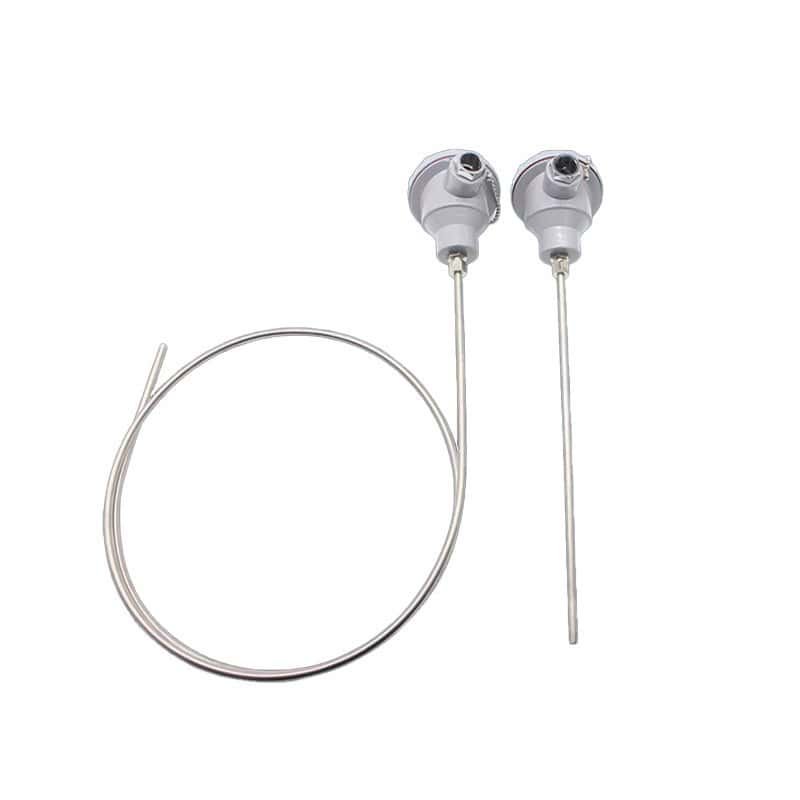
Sheathed Thermocouples
Sheathed thermocouples supplied in K, J, E, N and other calibrations.
View details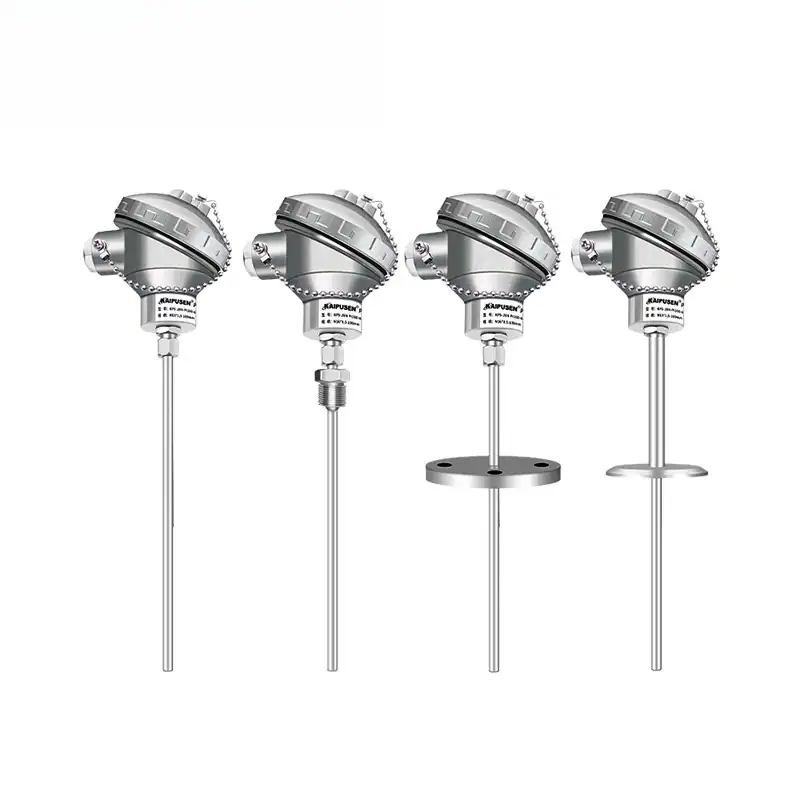
Sheathed RTD (Thermal Resistance)
Sheathed Pt100 RTD sensors for accurate mid-range temperature measurement.
View details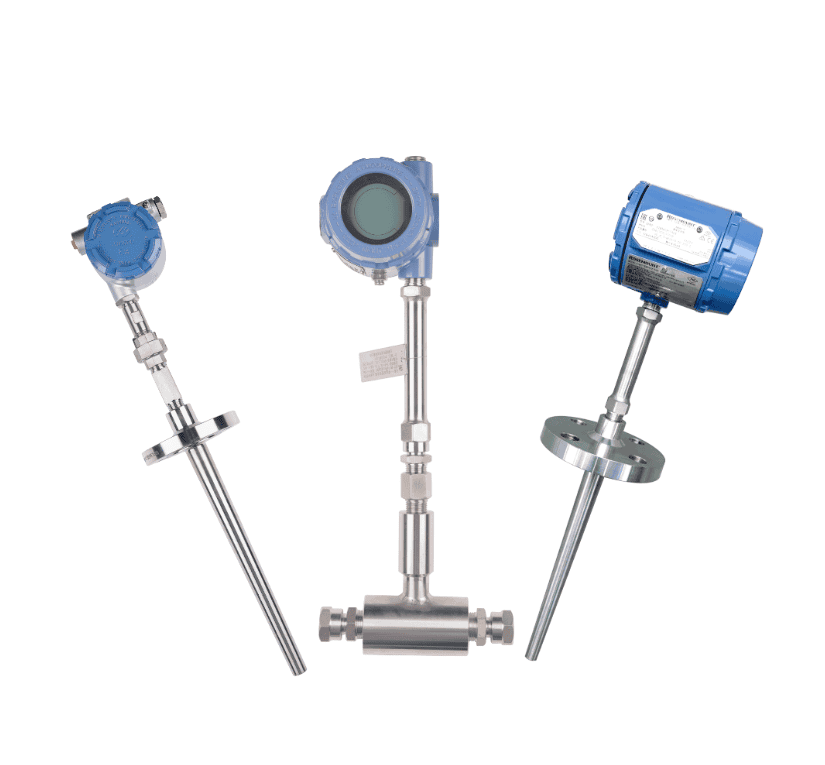
SBW Temperature Transmitter
Head-mounted temperature transmitter converting RTD or thermocouple input to 4–20 mA.
View detailsThermocouple and compensating/extension cable carry their type and polarity in the insulation colour — but the colour scheme depends on which standard the plant follows, and the schemes disagree. The single most useful fact: in the US ANSI/ASTM E230 scheme the negative leg is always red, while in the international IEC 60584-3 scheme the negative leg is always white. Get that backwards and the loop reads with reversed or doubled error.
Why a reversed pair is worse than an open one
A broken thermocouple usually fails obvious — the input drives full-scale or burns out. A reversed pair does not. The junction still produces a millivolt signal; it just has the wrong sign relative to the reference junction, so the instrument can read a plausible-but-wrong temperature that moves the wrong way as the process heats. On a long run with a compensating-cable splice, a single reversed joint can add roughly twice the cable’s own error. Colour codes exist to stop exactly that, which is why mixing an ANSI reel with an IEC reel mid-project is dangerous.
ANSI / ASTM E230 (USA) — negative is always red
Use the finder above for a single type. The pattern: the positive wire colour identifies the type, the negative wire is red, and the overall jacket tells you the wire grade (see below). These colours follow ANSI MC96.1 / ASTM E230; extension cable is marked with an “X” suffix (KX, JX…).
IEC 60584-3 (international) — negative is always white
IEC keeps the negative leg white for every type and colours the positive leg and the jacket by type. So a green-jacketed cable with a white negative is IEC Type K; a yellow-jacketed cable with a red negative is ANSI Type K. Same thermocouple, two different cable looks — the finder shows both so you can identify whatever is on the shelf.
Thermocouple grade vs extension grade — the jacket tells you
This is the detail most colour charts skip. There are two cable grades:
| Grade | What it is | ANSI overall jacket |
|---|---|---|
| Thermocouple grade (e.g. KX→solid) | Actual thermocouple alloys, used from the junction | Brown (general MgO/solid TC cable) |
| Extension grade (e.g. KX) | Cheaper matched alloys, used between head and reference junction | Same colour as the positive wire (e.g. yellow for K) |
Rule of thumb under ANSI: a brown jacket means thermocouple-grade cable; a jacket matching the positive-wire colour means extension grade. Extension cable must match the thermocouple type — KX with a Type K sensor, never JX.
Finding polarity when the colours have faded
On old or sun-bleached cable the colours can be unreadable. Two field methods recover polarity without a chart:
The magnet test (Type K)
Type K legs differ magnetically. The negative leg (KN, a nickel-aluminium alloy) is magnetic; the positive leg (KP, nickel-chromium) is essentially non-magnetic. Touch a small magnet to each bare conductor — the one that attracts is the negative (red, ANSI / white, IEC). This is a fast, tool-light check that works even when insulation colour is gone.
The millivolt test (any type)
Connect a millivolt meter and gently warm the junction (a fingertip is enough). If the meter reads upscale (positive), the lead on the meter’s positive terminal is the positive thermocouple wire. If it reads downscale, swap them. This works for every type, not just K.
FAQ
Which thermocouple wire is positive?
It depends on the type and standard — use the finder. As a rule, under ANSI the negative is red (so the other wire is positive); under IEC the negative is white.
Is red positive or negative on a thermocouple?
Under ANSI/ASTM E230, red is always the negative leg. This trips up technicians used to red-equals-positive electrical wiring.
How do I tell Type K from Type J cable?
Under ANSI both have a red negative, but the positive leg differs (K is yellow, J is white) and the extension jacket differs (K yellow, J black). The finder shows each.
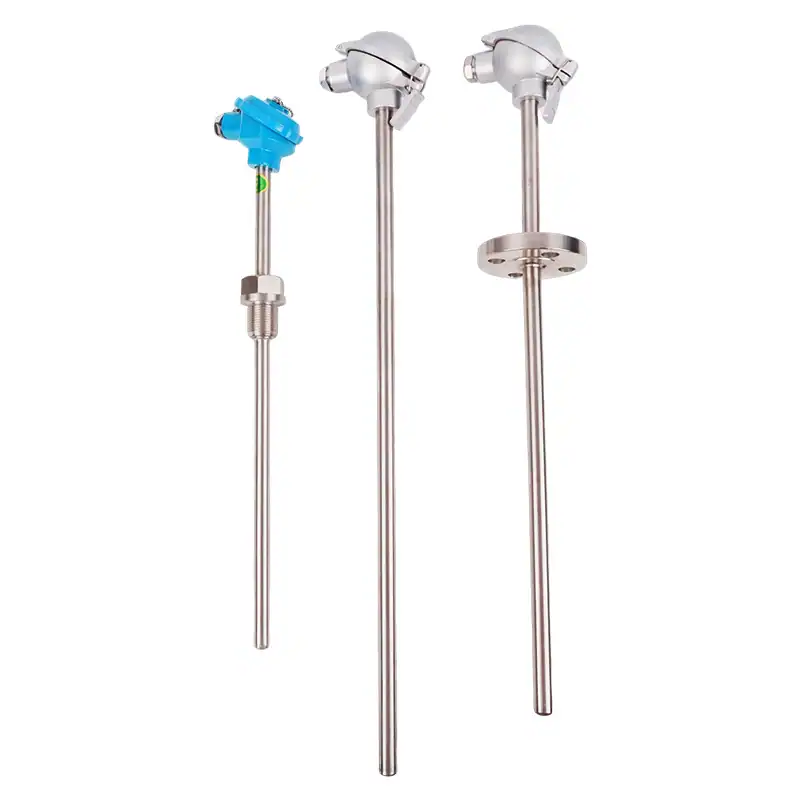
Recommended HMK temperature tools & products
Related tools & reading
• Thermocouple mV ↔ Temperature • Type K guide • Type J • Type T • Type E
• All HMK engineering tools