How to Read a Vacuum Gauge: Types, Units, and Traps

A vacuum gauge measures pressure below one atmosphere. It does this by comparing the process pressure to either absolute zero, the surrounding atmosphere, or a sealed reference, and the choice of reference is what makes the same physical condition show three different numbers. Reading one correctly starts with knowing which reference your gauge uses — the same logic that separates absolute pressure from gauge pressure on any process line.
This guide is written for engineers who specify or troubleshoot industrial, lab, or process vacuum systems. If you came here to tune a carburetor or pull down an air-conditioning service line, the manufacturer of your hand tool ships better instructions for that job than I can write here.
The trap that costs the most plant downtime is using a sealed-gauge pressure transmitter to read sub-atmospheric pressure. The negative numbers it shows are real, but they are not vacuum.
What a Vacuum Gauge Actually Measures
A vacuum gauge reports a pressure value, but the value only has meaning when paired with its reference. There are three references in routine industrial use:
- Absolute reference: pressure measured from true zero, where there are no gas molecules. A capacitance manometer in absolute mode reports this directly. The unit reads zero only at perfect vacuum.
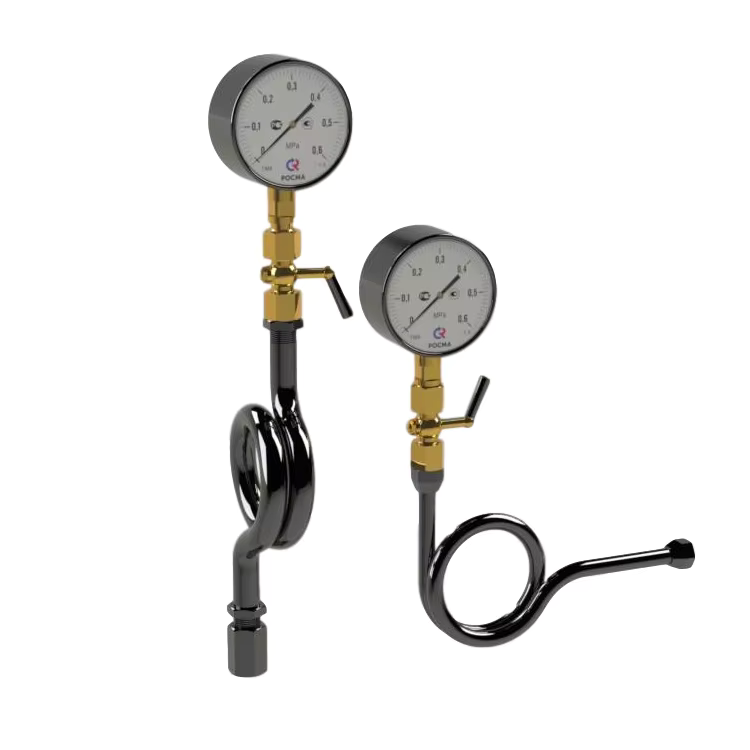
- Atmospheric (gauge) reference: pressure relative to the local atmosphere at the gauge port. A Bourdon vacuum gauge reads zero at ambient and goes negative as pressure drops below it.
- Sealed reference: a reference chamber inside the transmitter, sealed at one atmosphere when the device left the factory. This is the source of the trap covered later in this guide.
Five units appear on industrial nameplates. At one atmosphere they all describe the same condition: 1013 mbar = 760 Torr = 760 mm Hg = 29.92 inHg = 760,000 micron = 14.7 psi. A pressure-unit converter keeps the conversions straight; mixing them up by a factor of 25 between Torr and mbar is the second-most common reading error.
The Pressure Range Spectrum
Vacuum is a wide range — eleven decades from atmosphere down to UHV science work. Industry segments it into four bands.
- Rough vacuum, 1000 to 1 mbar: refrigerant evacuation, freeze drying, vacuum packaging.
- Fine vacuum, 1 to 10⁻³ mbar: vacuum metallurgy, pre-process pumpdown for coating chambers.
- High vacuum, 10⁻³ to 10⁻⁷ mbar: semiconductor deposition, electron microscopy.
- Ultra-high vacuum (UHV), below 10⁻⁷ mbar: surface science, particle accelerators.
No single sensor technology covers all four bands honestly. That is why the next section lists five, and the one after that maps each to a band.
Converting a vacuum reading? The mmHg to psi converter, torr to psi and the absolute, gauge and vacuum converter move a figure between Pa, Torr, mmHg, inHg and psi without losing track of the reference.
Five Sensor Technologies
Bourdon tube. A coiled metal tube straightens slightly as the inside pressure changes. Cheap, mechanical, no power. Useful from atmosphere down to about 1 mbar. Accuracy class 2.5 is typical, which is fine for “is the pump running” and useless below that.
Capacitance manometer. A thin metal diaphragm forms one plate of a capacitor; gas pressure deflects it. Reading is independent of gas type. Range covers 1000 mbar down to about 10⁻⁵ mbar with multiple heads, accuracy reaches 0.1% of reading. The HMK HE27 vacuum/absolute pressure sensor belongs to this family.
Pirani gauge. A heated wire loses heat to surrounding gas; thermal conductivity falls as pressure falls. Range 10⁻⁴ to 10 mbar. Reading is gas-dependent — the same Pirani reads 7× too high in pure hydrogen as in air.
Thermocouple gauge. A simpler thermal gauge using a thermocouple instead of a resistance wire. Range 10⁻³ to 10 mbar. Less accurate than Pirani, cheaper to replace, common on older HVAC and analytical instruments.
Cold cathode (Penning). Gas molecules are ionized by a high-voltage discharge; ion current scales with pressure. Range 10⁻¹⁰ to 10⁻² mbar. Only practical sensor for high vacuum and below.
The five technologies cover overlapping but non-identical pressure ranges. Plotted on a log scale they look like this:
In practice, no plant uses one technology alone. A Baosteel RH degasser running between 67 and 0.067 mbar runs a capacitance manometer for the high end and a Pirani for the low end on the same vessel, with the DCS switching readings at 1 mbar. Pirani alone reads garbage below 1 mbar in hydrogen-rich slag-recovery gas; capacitance alone is too expensive to scale to the four ports they actually need.
Sensor Selection — Which Type for Which Job
For most industrial applications the matrix below resolves the choice in one read:
| Sensor | Range (mbar) | Accuracy | Gas dependent? | Maintenance |
|---|---|---|---|---|
| Bourdon | 1000 – 1 | ±2.5% FS | No | None |
| Capacitance | 1000 – 10⁻⁵ | ±0.1% rdg | No | Re-zero yearly |
| Pirani | 10 – 10⁻⁴ | ±10% rdg | Yes | Filament replacement |
| Thermocouple | 10 – 10⁻³ | ±20% rdg | Yes | Filament replacement |
| Cold cathode | 10⁻² – 10⁻¹⁰ | ±10–30% rdg | Yes | Cathode cleaning |
Three rules cover most decisions:
- If the operating window is 1 to 1000 mbar and you need 0.5% or better, pick capacitance.
- If the same window and budget is the constraint, pick Pirani and accept the gas-correction tables.
- If you ever need to read below 10⁻³ mbar, you will end up with a cold cathode regardless of cost — nothing else works there.
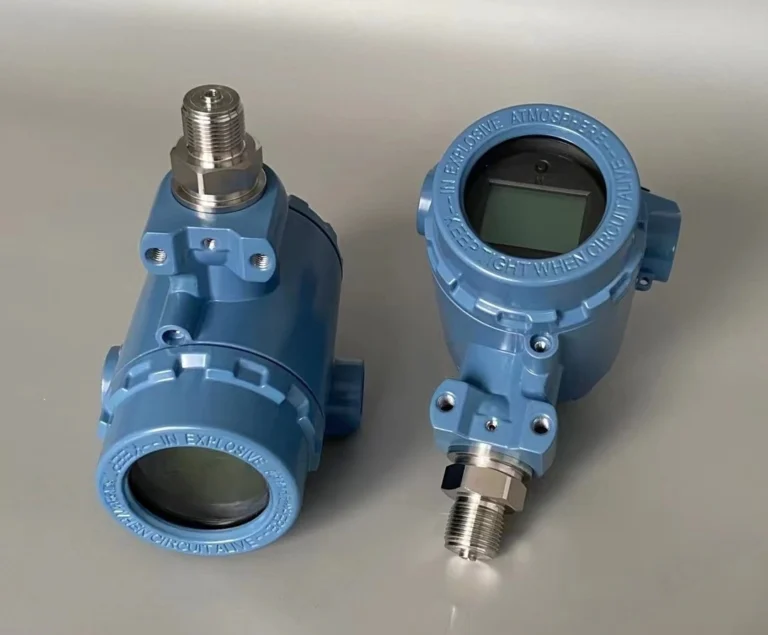
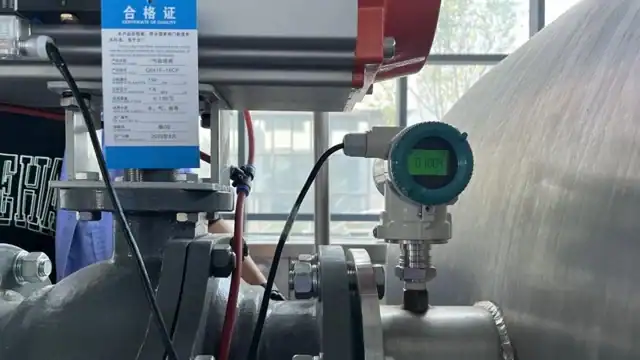
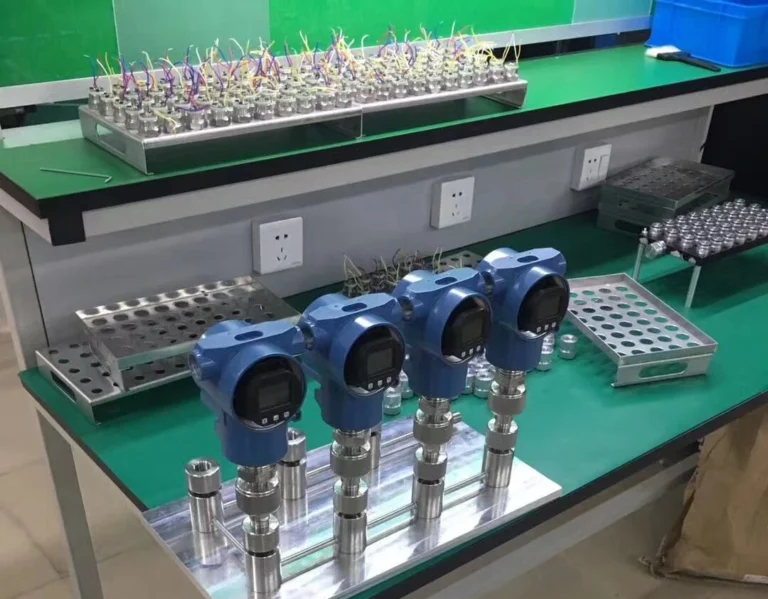
Where the reading has to leave the gauge and drive a control loop, the equivalent instrument is a transmitter rather than a gauge. The HM27 vacuum and absolute pressure transmitter covers negative-gauge, silicon absolute and capacitance thin-film absolute references down to 0.02 Pa, with a 4–20 mA output for a PLC or DCS.
The Sealed-Gauge Trap — Why Negative Numbers Don’t Mean Vacuum
The most expensive vacuum measurement mistake I have seen on real plants is using a sealed-gauge pressure transmitter to read pressure below one atmosphere.
A sealed-gauge transmitter has a reference cell inside its body, filled and sealed at one standard atmosphere when the device leaves the factory. The output is the difference between the process side and that sealed cell. When the process drops below atmosphere, the difference goes negative. The transmitter dutifully shows -50 kPa, -80 kPa, whatever the math gives.
The number is not vacuum. It is a difference relative to a sealed reference that is itself drifting. The sealed cell pressure changes with temperature: a transmitter sitting on an 80 °C process line carries an internal cell at roughly 1.18 atm, not 1.00 atm — by ideal-gas the sealed cell pressure rises with absolute temperature. It also changes with altitude: a unit factory-sealed at sea level reads several percent off when installed at 1500 m. Over years, the sealed cell leaks slowly through its weld; field surveys put the drift at 0.1% to 0.3% per year on common units.
A 2024 case at a Sinopec FCC regenerator made the cost concrete. Operators were monitoring slight negative pressure in the catalyst regeneration zone using a sealed-gauge transmitter. Display read -3.4 kPa. Actual vacuum, measured against an absolute capacitance reference brought on site for the audit, was -2.1 kPa. The 1.3 kPa gap — about 13% of the URL — was almost entirely sealed-cell temperature drift. They had been over-throttling the air blower for years on bad data.
The fix is not to recalibrate the sealed-gauge transmitter. It is to switch to an absolute-reference instrument for any vacuum service. The HMK HE27 vacuum/absolute pressure sensor keeps a true absolute reference and removes the entire trap.
How to Read a Vacuum Gauge — Step by Step
Reading a vacuum gauge correctly is a five-step routine. Skip step one and the rest of the steps cannot save you.
- Confirm the reference. Read the nameplate or datasheet. Look for “absolute,” “gauge,” or “sealed gauge / sealed reference.” If the document does not state it, treat it as sealed gauge until proven otherwise.
- Confirm the unit. mbar, Torr, inHg, micron, or Pa. The number on the screen is meaningless without it.
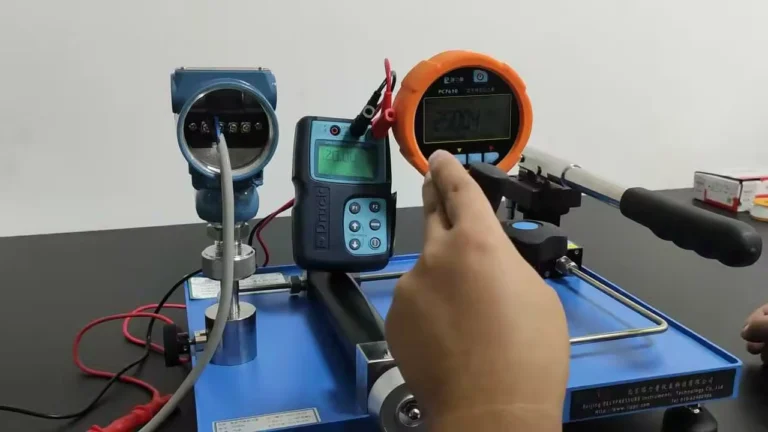
- Check the calibration sticker. Last calibration date and interval should be on every process gauge. Out-of-cal readings are noise.
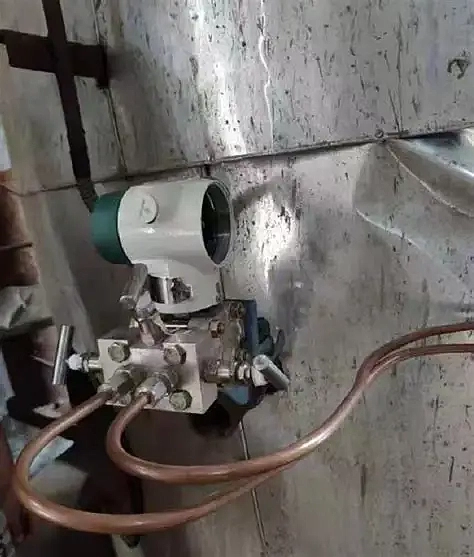
- Apply temperature corrections if the sensor sits remote from the process. Long impulse lines or poor heat tracing add real error — the same constraints that govern 4-20 mA pressure transmitter wiring apply here.
- Read, convert, and log. Convert to your plant’s standard unit at the source so the historian does not store mixed-unit data.
Calibration and Field Practice
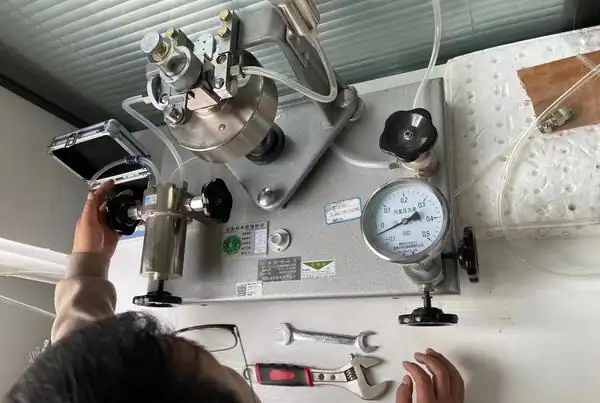
Vacuum gauges drift. The cadence depends on the sensor.
| Sensor | Calibration interval | Notes |
|---|---|---|
| Capacitance | 1 year | Re-zero monthly in clean service |
| Pirani | 2 years | Replace filament if reading no longer responds |
| Thermocouple | 2 years | Same filament-replacement caveat |
| Cold cathode | 3 years + cathode cleaning | Clean cathode every 6 months in dirty service |
The cleaning routine for cold cathode cathodes used in semiconductor wafer fabs is documented in Vacuum Science and Technology Journal 2023 issue 4: a 50:50 isopropanol-acetone ultrasonic clean followed by a 200 V DC degas pulse for 30 minutes. The same procedure is referenced in JJG 19-2015 Annex C as the recommended Chinese national-lab method.
For traceability, ISO 17025 covers the international framework. GB/T 18443.5-2010 is the matching Chinese national standard for capacitance vacuum-gauge calibration; it specifies static expansion calibration below 10⁻³ Pa where ISO 27893 prefers dynamic methods. JJG 19-2015 sets mandatory verification by a Chinese metrology lab, with a stricter cadence than the OIML R117 recommendation.
Two installation rules cost more in wrong readings than any calibration drift: keep the sensor away from radiated heat sources, and keep impulse line length under one meter where possible.
Related reading: How to Read a Pressure Gauge Correctly Every Time — analog dial basics, dual-scale traps, tell-tale needles, and 5-step calibration check from the field.
Common Vacuum Gauge Mistakes
- Mixing units. Reading 100 Torr as 100 mbar gives a 25% error in the wrong direction.
- Sealed-gauge for vacuum service. Covered above; switch to an absolute reference.
- Pirani in non-air gas. Hydrogen reads 7× high, helium 1.4× high. Apply the gas correction table or the displayed pressure is fiction.
- Cold cathode in oil-bearing process. Pump oil and process vapors coat the cathode within weeks; readings drift, then fail.
- Letting the calibration interval slip. A 12-month cap on every process vacuum gauge is cheaper than the first incorrect reading.
Four Steps Before Your Next Vacuum Spec
Before you sign off on the next vacuum-gauge purchase order or troubleshoot a suspect reading:
- Write down the actual operating window in mbar.
- Use the selection matrix above to pick the sensor technology that matches it.
- If your application includes any sub-atmospheric pressure measured by a process transmitter, replace the sealed-gauge unit with an absolute-reference HE27 or equivalent.
- Put the calibration interval into your CMMS so it does not slip past the cadence above.
The full HMK pressure transmitter family covers absolute, gauge, sealed-gauge, and differential references explicitly. If the line between transducer and transmitter still feels fuzzy, the pressure sensor vs transducer vs transmitter primer sorts the terminology. Pick the reference, then pick the model.
FAQ
See also: a six-step field procedure for measuring vacuum pressure for the bench-to-publication six-step workflow.