Well Water Level Sensor: How to Choose, Size & Install One
Putting a well water level sensor in is rarely the hard part. The hard part is the three decisions underneath it. Do you drop a submersible pressure probe down the casing, or sit an ultrasonic unit on top? Do you size the range by well depth, or by water column? And will the sensor stop the pump before the water runs out? Get those three right and almost any decent sensor works. Get them wrong and you either burn a pump or chase a reading that drifts every season. Here is how I work through it on a real well.
What a Well Water Level Sensor Actually Measures
A well water level sensor reports how much water sits above a reference point. That lets you protect the pump, automate a booster or irrigation set, or track how hard the aquifer is working. With the casing diameter known, the same reading also tells you roughly how much usable water is left before drawdown reaches the pump. Two numbers matter on a well: the static level when the pump is off, and the drawdown, the lower level the water falls to while the pump runs. The gap between them is what keeps a pump wet, and it is the number most homeowners never see until the pump starts sucking air.
Most electronic sensors do not measure level directly. A submersible type measures the hydrostatic pressure of the water column above it and converts that to height, because for water the relationship stays fixed. It is the same approach the USGS uses to monitor groundwater nationwide: a submerged pressure sensor reporting head. An ultrasonic type measures the time of flight of a sound pulse down to the surface and back. Either way, you are turning a physical signal into feet or meters of water, then into a 4-20 mA output your controller can read.
Three Sensor Technologies: Submersible Pressure vs Ultrasonic vs Capacitive
There are three technologies you will actually run into for wells, and each fails in a different place.
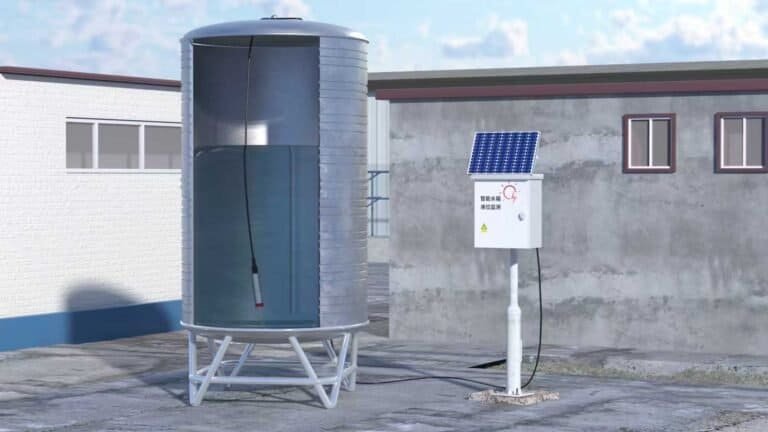
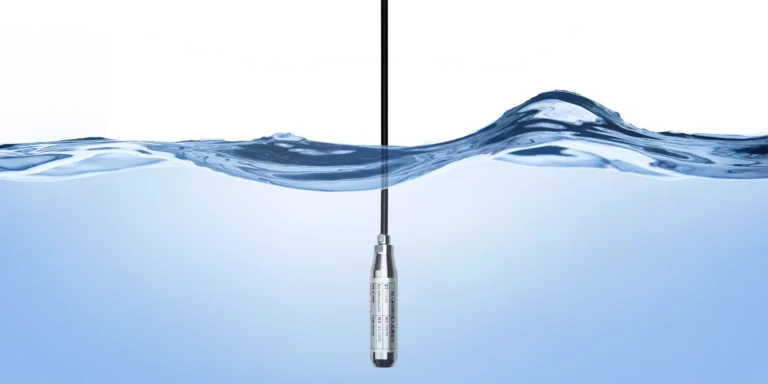
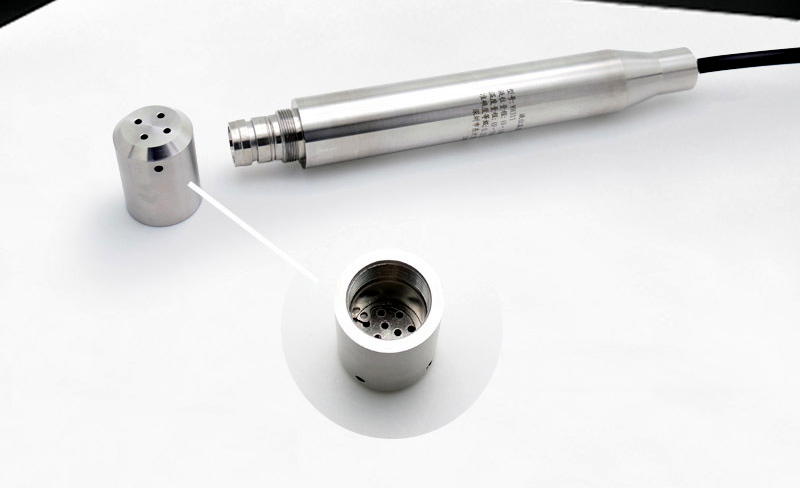
A submersible pressure transducer (also called a level probe) hangs on its cable down the casing and sits near the bottom, above the pump. It reads the head of water above the diaphragm. It is the workhorse for boreholes because it does not care about casing geometry, foam, or a crooked well, and it puts out a clean two-wire 4-20 mA signal that is linear with depth. This is the category HMK’s submersible level transmitter sits in, and the physics behind it is the same hydrostatic level measurement used across tanks and sumps.
An ultrasonic well sounder sits at the top of the well and fires a pulse down the bore. Nothing goes in the water, so there is no probe to foul and no cable to lower. The trade-off is that it needs a clear, reasonably straight shot down the casing; pump drop pipe, wiring, splices, and heavy condensation can scatter the echo, and very deep wells stretch its range.
A capacitive sensor infers level from the change in capacitance as water rises around the element. It is common in small tanks and some point-level jobs. But in a deep well, with changing water chemistry and long cable runs, it is the least forgiving of the three. It shows up rarely in serious well work.
| Technology | What it measures | Best on a well | Watch out for |
|---|---|---|---|
| Submersible pressure | Hydrostatic head above the probe | Most wells; deep, crooked, or foamy bores | Cable abrasion, vent-tube blockage, lightning |
| Ultrasonic (top-mount) | Echo time to the surface | Easy access, no-contact preferred | Obstructed or curved casing, very deep bores |
| Capacitive | Capacitance change vs water | Small, clean tanks; point level | Water chemistry drift, long cable runs |
Which One Should You Use?
Run the choice through five questions, in this order:
- Can you physically lower a probe past the pump and drop pipe? If access is clean, a submersible pressure probe is the default. If the casing is congested or you cannot pull anything out, lean ultrasonic.
- How deep is the water column you need to see? Submersible scales comfortably to hundreds of feet; ultrasonic gets harder as the bore deepens and narrows.
- Is the well water dirty, foamy, or aggressive? Foam and surface debris confuse an echo; a submerged diaphragm ignores them. Aggressive or mineral-heavy water pushes you toward corrosion-resistant wetted materials.
- What accuracy do you actually need? Pump protection tolerates more error than custody-style volume accounting. Don’t pay for tenths of a percent a stock well never needs.
- What is the budget and who maintains it? A top-mount unit is easy to service; a probe is cheap and rugged but means pulling cable if it ever fails.
For a residential deep well, the honest answer is usually a submersible pressure probe sized to the water column, because it is inexpensive, hands-off once set, and integrates with a simple pump controller. If you are a homeowner, the EPA private-well guidance is a good primer on what to monitor. A municipal or industrial well that runs continuously and reports to SCADA is the same probe with tighter spec and surge protection. Reach for an ultrasonic sounder mainly when you cannot, or do not want to, put anything in the water.
Sizing the Range and Reading Accuracy
This is where most well sensors are bought wrong. People size the range to the well depth. You should size it to the maximum water column above the probe, not to how deep the hole is.
Because well water is close to specific gravity 1.0, head converts to level directly: roughly 2.31 feet of water per psi. If the deepest the water ever stands above your probe is about 55 feet, a 0-60 ft probe is right. Putting a 0-250 ft probe on that same well does not buy you headroom, it throws away resolution and accuracy, because the error is a percentage of the full span. Common ranges are 0-15, 0-30, 0-60, 0-120, and 0-250 ft, or the metric equivalents. Picking the band that just clears your real maximum is the single biggest accuracy decision you make. The same logic scales all the way down a borehole: I have seen a single deep-well probe sized to a 0-1200 m column, on 1200 m of cable, carry the whole well on one 4-20 mA two-wire loop instead of stacking sections, with the range matched to the water rather than over-spec’d.
Speaking of accuracy, separate the two numbers honestly. A quality probe’s reference accuracy is tight: our deep-well submersible transmitter is rated 0.1% FS (4-20 mA two-wire, 9-36 VDC supply). What you live with in the field is the total error after temperature and long-term drift, and on deep wells that lands nearer 1% to 5% of span, not the headline lab figure (the performance terms are defined in IEC 60770 for process transmitters). That is fine for pump protection and trending. You close the gap by choosing the right span and a quality probe, like the HM21 submersible transmitter, not by over-ranging and hoping. Match the wetted material to the water too; for mineralized or corrosive well water, an anti-corrosive level transmitter earns its keep.
Installation and Dry-Run Pump Protection
The reason most people put a sensor on a well at all is to keep the pump from running dry, so install for that job first.
Check that the probe fits the bore before you order. Domestic wells are usually 2-inch or 4-inch (50 or 100 mm) cased holes, and a submersible level probe is slim enough to drop down either, but in a tight 2-inch casing leave clearance so the body cannot snag on casing joints or the rising main. In a crowded borehole that already carries a pump and a pitless adapter, route the probe down a clear quadrant and add a small weight or a centering guide so it hangs straight instead of resting against the pump cable.
Lower the probe so it sits above the pump intake, not down at the pump and not up in the seasonal swing zone. Mounting just above the intake means the controller sees the water approaching the pump and can stop it before the intake breaks suction, which is exactly the drawdown you want to catch. Run the two-wire 4-20 mA signal back to the controller; the current rises linearly with the water column, so a simple low-level setpoint becomes your dry-run cutout. Support the cable at the wellhead so its weight is not hanging on the probe body. Keep the vent tube (on a gauge-referenced probe) clear and dry: it references the reading to atmosphere, so a blocked or wet vent lets barometric swings show up as phantom level drift.
If you want the failure modes spelled out, our submersible level transmitter field guide walks through the six that cause most bad readings. The short version: secure the cable, set the probe above the intake, and tie the low-level alarm to the pump.
Outdoor Wells: Lightning, Corrosion, and Long Cable
A wellhead is one of the most lightning-exposed spots on a property, and a surge down a long sensor cable kills probes and pump electronics every storm season. On any outdoor well, specify a probe with built-in surge protection rather than adding it as an afterthought; that is the whole point of a lightning-protected level transmitter on exposed installations. For mineral-laden, brackish, or chemically aggressive water, choose corrosion-resistant wetted parts so the diaphragm and housing survive. And on deep wells, plan the cable run the way NGWA well-construction practice recommends: support its weight, avoid splices in the bore, and keep the vent path protected from moisture. None of this is exotic, but it is the difference between a sensor that lasts years and one you replace after the first bad summer.
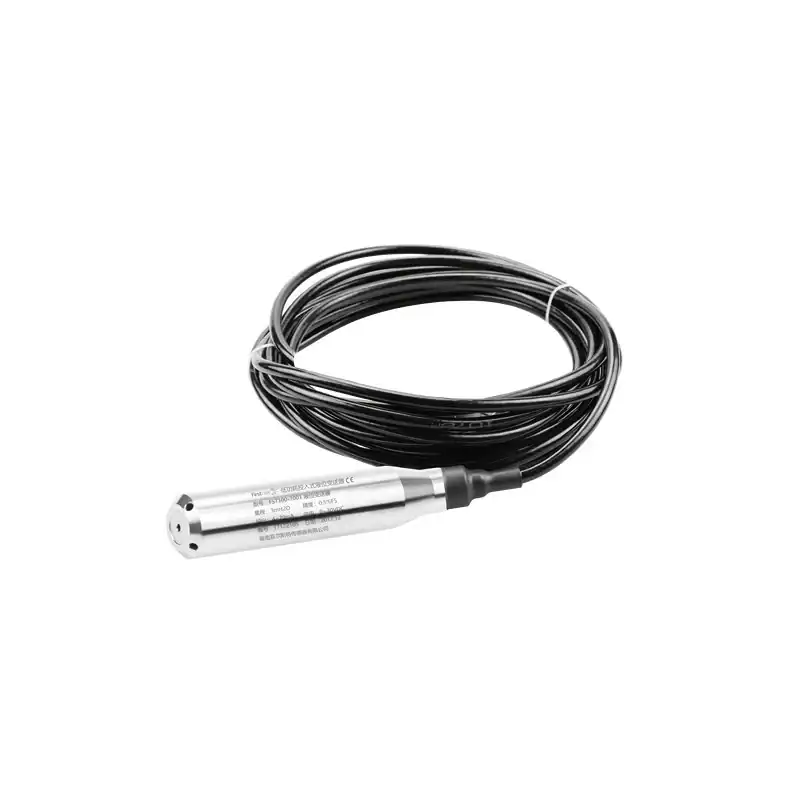
HM21 Submersible Level Transmitter
The default well probe: two-wire 4-20 mA, ranges to match the water column, rugged for boreholes and tanks.
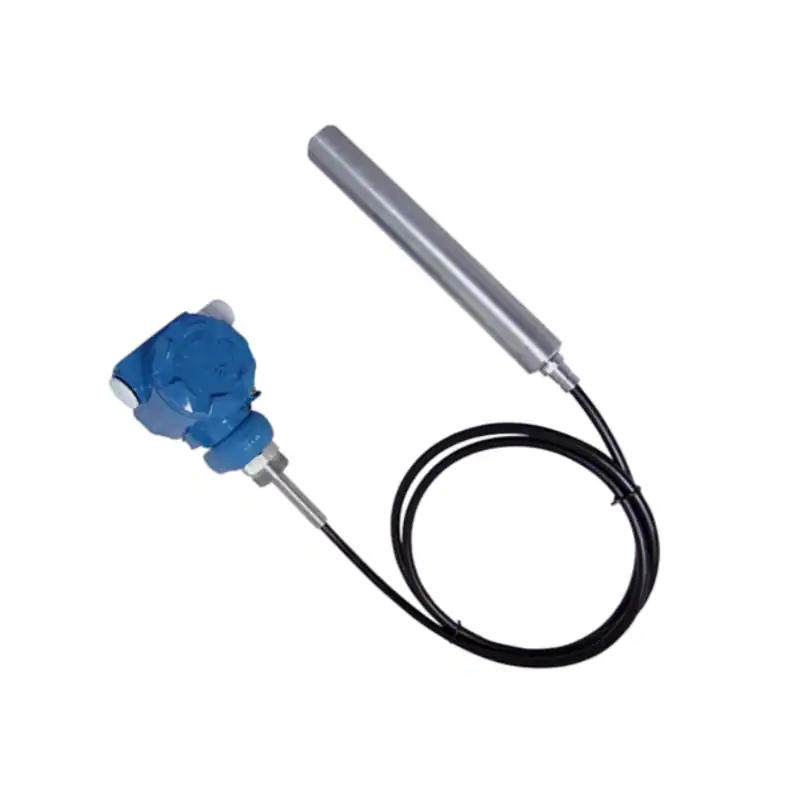
HM21F Lightning-Protected Level Transmitter
Built-in surge protection for exposed outdoor wellheads where lightning is a real risk.
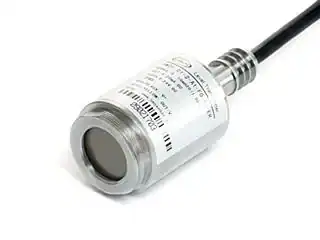
HM21R Anti-Corrosive Level Transmitter
Corrosion-resistant wetted parts for mineralized, brackish, or chemically aggressive well water.
When you are ready to match a probe to your well, the full lineup of continuous level transmitters covers standard, lightning-protected, and corrosion-resistant builds.
Frequently Asked Questions
What sensor is best for a deep well?
For most deep wells, a submersible pressure transducer mounted above the pump. It scales to hundreds of feet, ignores foam and casing geometry, and gives a clean 4-20 mA signal. Use a top-mount ultrasonic sounder only when you cannot put anything in the water.
How do I size the range for a well water level sensor?
Size to the maximum water column above the probe, not the well depth. If water stands at most about 55 ft over the probe, a 0-60 ft range is right. Over-ranging wastes accuracy because error is a percentage of full span.
How does a level sensor protect my pump from running dry?
Mount the probe just above the pump intake and wire its low-level point to the pump controller. As drawdown approaches the intake, the 4-20 mA signal drops past your setpoint and cuts the pump before it breaks suction.
Submersible pressure or ultrasonic well sensor — which is more accurate?
On a clear, straight, accessible well both can be accurate; field accuracy is typically 1 to 5 percent of span for either. Submersible stays reliable in deep, foamy, or congested bores, so it is usually the more accurate choice in practice.
What are the disadvantages of a water level sensor?
Submersible probes can suffer cable abrasion, vent-tube blockage, and lightning damage if unprotected. Ultrasonic units struggle with obstructed or curved casing and very deep bores. Capacitive units drift with water chemistry. Matching technology to the well removes most of these.
Do I need lightning protection on a well sensor?
On any outdoor wellhead, yes. The exposed location and long cable make surge damage common, so specify a surge-protected probe from the start rather than retrofitting after a failure.
Match the right level probe to your well
Send us the well details — depth, maximum water column above the probe, water chemistry, indoor or outdoor — and we will return a one-page recommendation with the right HMK probe, the right range, and the dry-run setup.