FREE ENGINEERING TOOLS
Pressure to Liquid Level Calculator
Convert a hydrostatic pressure reading into liquid level using h = P / (ρ · g). Four input pressure units (psi, bar, kPa, mH₂O), four output level units (m, ft, in, mm), gauge or absolute reference, and a dynamic HMK probe recommendation based on your computed range. The reverse-direction companion of our hydrostatic pressure calculator; for the full principle, see our hydrostatic level measurement guide.
Calculator
Liquid level
Recommended HMK probe for this range
Loading…
How the Formula Works
Hydrostatic pressure at the bottom of a static liquid column equals fluid density times gravity times height: P = ρ · g · h. Inverting for level gives h = P / (ρ · g). The density term ρ equals specific gravity (SG) times the reference density of water (1000 kg/m³ at 4 °C). Standard gravity is 9.806 65 m/s²; local gravity varies by latitude and elevation by about ±0.3 %.
For the physics in depth — and the full submersible-versus-DP configuration decision — see our hydrostatic level measurement guide.
Gauge vs Absolute Reference
An open or vented tank exposes the liquid surface to atmosphere, so gauge-referenced sensors (probe with vented cable, or DP with LP port open to air) read true liquid head directly. A sealed or pressurized tank holds a gas blanket above the liquid that shifts with temperature, nitrogen padding, or process pressure. Use the absolute mode in the calculator above when your sensor reads absolute pressure; the tool subtracts P_atm to recover the hydrostatic component.
In practice, sealed tanks should be measured with a DP transmitter — see our DP Level Measurement guide for the four mounting configurations and LRV/URV math.
Common Fluid Specific Gravity Reference
| Fluid | SG @ 20 °C | Pressure per meter |
|---|---|---|
| Fresh water | 1.000 | 9.81 kPa/m |
| Seawater | 1.025 | 10.05 kPa/m |
| Diesel | 0.85 | 8.34 kPa/m |
| Kerosene (light hydrocarbon) | 0.80 | 7.84 kPa/m |
| Glycol blend (50%) | 1.04 | 10.20 kPa/m |
| Brine / heavy slurry | 1.20 | 11.77 kPa/m |
| Sulfuric acid (98%) | 1.83 | 17.95 kPa/m |
Use these as first-pass values. For control-loop accuracy, verify SG at process temperature — a 0.3 % density shift per 20 °C is common for water-based fluids, larger for hydrocarbons.
Related Tools and Guides
- Forward calculator (height → pressure): Hydrostatic Pressure Calculator
- Level to stored volume: Tank Volume Calculator
- Pressure unit conversion: Pressure Unit Converter
- 4–20 mA loop math: 4-20mA Signal Calculator
- Hub article: Hydrostatic Level Measurement: Submersible vs DP
- Submersible deep-dive: Submersible Level Transmitter: 6 Failure Modes
- DP deep-dive: DP Level Measurement: Principle, Setup & How to Pick
Frequently Asked Questions
Which pressure unit should I use?
Use whatever your sensor reports. The calculator converts internally to Pa, so any of psi, bar, kPa, or mH₂O gives the same answer for a given pressure. The internal precision is high enough that rounding between units adds no observable error.
How does specific gravity affect the level reading?
Linearly. If you calibrate for water (SG 1.0) but your process fluid is at SG 0.85, the true level is about 18 % higher than the calculator shows when fed your default SG. Always set SG to the actual process fluid at process temperature; the preset dropdown above covers the most common service fluids.
When does a sealed tank need a DP transmitter?
Any time the gas blanket above the liquid has variable pressure. Switch the calculator to Absolute mode if your sensor reads absolute pressure, but for production work a DP transmitter with the LP port piped to the top air space gives a true differential reading independent of blanket pressure. See our DP Level Measurement guide for the closed wet-leg and dry-leg configurations.
Which HMK probe matches my level range?
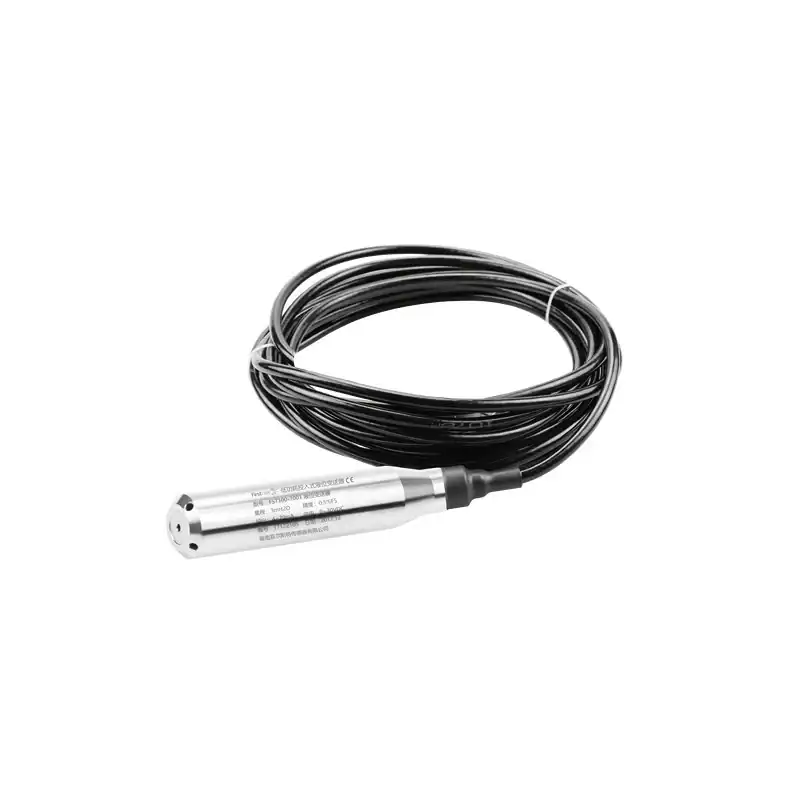
The recommendation card above updates as you change inputs. Quick reference: HM21 for fresh-water and brackish-water service up to ~30 m; HM21R for sodium hypochlorite, dilute acids, seawater (titanium body); HM21F for outdoor service with lightning risk; HM210 for remote tanks without existing 4–20 mA wiring (LoRa output); HM3051 for sealed or pressurized tanks where a DP transmitter is the right configuration.
Recommended HMK Products
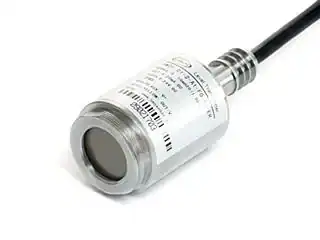
The calculator gives you a level reading. These are the matching HMK submersible probes and DP transmitter to put the calculation into service.
Recommended Reading
Three companion guides that explain when this calculator is the right tool and what setup it pairs with.
- Hydrostatic Level Measurement: Submersible vs DP, Explained by Physics — the hub article that sits behind this calculator.
- Submersible Level Transmitter: 6 Failure Modes That Destroy Accuracy — the field traps to avoid once the probe is in the well.
- DP Level Measurement: Principle, Setup & How to Pick — what to do when the tank is sealed or pressurised.
Standards and References
The hydrostatic formula and units in this calculator follow ISO 80000-4 (Quantities and units — Fluid mechanics). U.S. national-standard pressure reference values are maintained by NIST Pressure Metrology. For a neutral classroom treatment of hydrostatic pressure applied to level measurement, see Control.com’s textbook chapter.
Level transmitters for this calculation
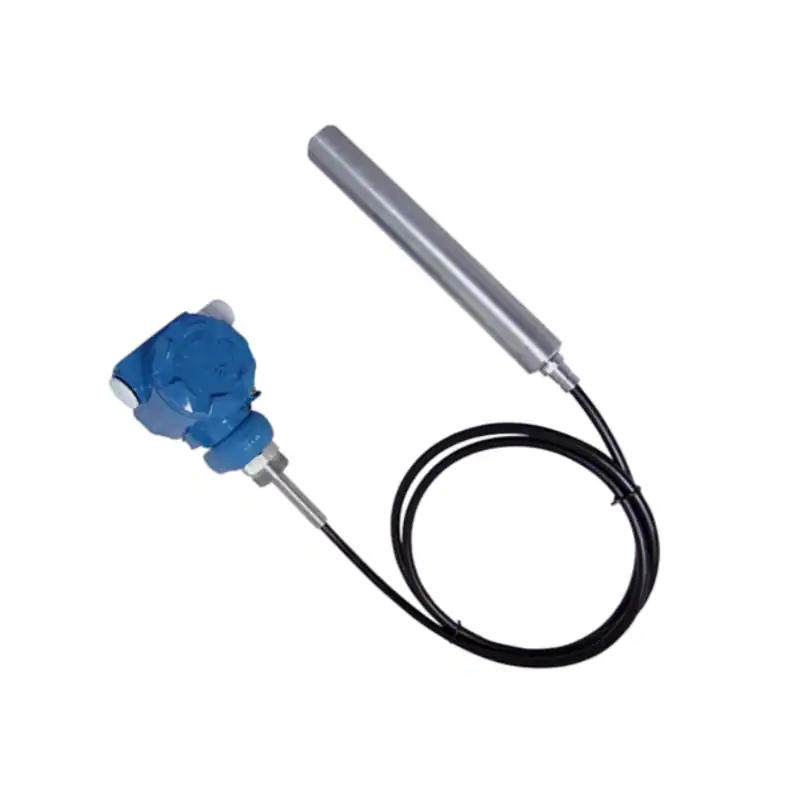
HM21 Submersible Level Transmitter
Submersible level transmitter for wells, tanks and open channels.
View details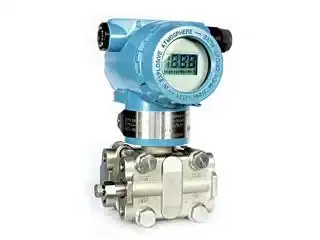
HM3051 Smart DP Transmitter
Smart DP transmitter with digital compensation for level and flow duty.
View details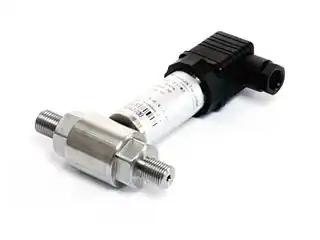
HM31 Differential Pressure Transmitter
Differential pressure transmitter for flow, level and filter monitoring.
View details