Bar to kPa Converter
One bar is exactly 100 kilopascals. The arithmetic is trivial — what actually costs engineers time is knowing whether the number is gauge or absolute, and which transmitter range that bar figure maps to. This tool handles all three.
The bar to kPa formula is exact, not rounded
Both units are defined directly in pascals, so the conversion carries no rounding error at all:
- 1 bar is defined as exactly 100,000 Pa
- 1 kPa is defined as exactly 1,000 Pa
- Therefore kPa = bar × 100, and bar = kPa ÷ 100
That exactness matters more than it sounds. When you convert bar to psi, or kg/cm² to bar, you inherit a rounding decision that can quietly eat part of your accuracy budget. Converting bar to kPa never does. If a datasheet says 0–16 bar and your DCS is configured 0–1600 kPa, those two ranges are identical to the last digit, and any discrepancy you see on screen comes from something else — usually the gauge-versus-absolute question below.
A useful cross-check while you work: 1 bar = 14.5037737730 psi, and one standard atmosphere is 101.325 kPa, which is 1.01325 bar. Bar and atmosphere are close, but they are not the same unit — see the FAQ.
Bar to kPa conversion table
The psi column is there as a sanity check, not as the answer — if a number in your paperwork disagrees with this table by roughly 1.3 percent, you are almost certainly comparing gauge against absolute.
| bar | kPa | mbar | psi (cross-check) |
|---|---|---|---|
| 0.1 | 10 | 100 | 1.45 |
| 0.25 | 25 | 250 | 3.63 |
| 0.5 | 50 | 500 | 7.25 |
| 1 | 100 | 1,000 | 14.50 |
| 1.5 | 150 | 1,500 | 21.76 |
| 2 | 200 | 2,000 | 29.01 |
| 2.5 | 250 | 2,500 | 36.26 |
| 3 | 300 | 3,000 | 43.51 |
| 4 | 400 | 4,000 | 58.02 |
| 6 | 600 | 6,000 | 87.02 |
| 10 | 1,000 | 10,000 | 145.04 |
| 16 | 1,600 | 16,000 | 232.06 |
| 25 | 2,500 | 25,000 | 362.59 |
| 40 | 4,000 | 40,000 | 580.15 |
| 60 | 6,000 | 60,000 | 870.23 |
| 100 | 10,000 | 100,000 | 1,450.38 |
| 250 | 25,000 | 250,000 | 3,625.94 |
| 600 | 60,000 | 600,000 | 8,702.26 |
| 1,000 | 100,000 | 1,000,000 | 14,503.77 |
The table stops at 1,000 bar on purpose. That is 100 MPa, the top of the widest pressure transmitter range HMK builds. Tables that run to 100,000 bar look thorough but describe pressures no field instrument measures.
Gauge and absolute change the number, not the formula
The multiply-by-100 rule converts the unit. It does not convert the reference. A reading of 6 bar g and a reading of 6 bar a are 101.325 kPa apart — and that offset is where most conversion arguments on a commissioning site actually come from.
| bar g | kPa g | kPa a | bar a |
|---|---|---|---|
| 0 | 0 | 101.325 | 1.01325 |
| 1 | 100 | 201.325 | 2.01325 |
| 2.5 | 250 | 351.325 | 3.51325 |
| 6 | 600 | 701.325 | 7.01325 |
| 10 | 1,000 | 1,101.325 | 11.01325 |
Put that offset next to an accuracy specification and the size of the problem becomes obvious. On a 0–10 bar transmitter rated ±0.25 percent of span, the error budget is ±0.025 bar. The gauge-to-absolute offset is 1.01325 bar — roughly forty times the entire error budget. No amount of calibration fixes a reference mismatch. If you are working near vacuum or with sealed systems, our guide to absolute versus gauge pressure covers when each reference is the correct one to specify.
The calculator above applies the offset with the standard atmosphere of 101.325 kPa. If the plant sits at altitude, replace it with the real local barometric pressure — at 1,500 m that value is closer to 84 kPa, and using 101.325 instead would build a 17 kPa error into every absolute conversion you do that day.
Matching a bar figure to a real transmitter range
European and Middle Eastern specifications are usually written in bar. HMK scales its catalogue in Pa, kPa and MPa. That mismatch is the practical reason people land on this page, so here is the map — the ranges are the actual published ranges of the instruments, not marketing round numbers.
| If your spec says | That is | Instrument to look at |
|---|---|---|
| 0.001–1 bar | 0.1–100 kPa | HE30 wind and micro-differential sensor, 100 Pa to 100 kPa |
| 0.005–7 bar differential | 0.5–700 kPa | HM30 micro-differential transmitter, 500 Pa to 700 kPa |
| -1 to 0 bar g | -100 to 0 kPa | HM27G negative gauge, 0 to -100 kPa |
| 0.05–1,000 bar | 5 kPa to 100 MPa | HM20 at ±0.25 % FS, or HM25 at ±0.1 % FS with gauge or absolute reference |
One caution when you convert a range rather than a single value: converting the units does not change the turndown. A 0–16 bar transmitter operated at 0–1.6 bar is being used at 10:1 turndown whether you write the range in bar or in kPa, and the accuracy penalty is the same. The turndown ratio calculator quantifies it, and this article explains why the penalty appears.
The same accuracy looks different in each unit
A 0–10 bar transmitter specified at ±0.25 percent of full scale is accurate to ±0.025 bar. Express the identical instrument in kPa and the same error becomes ±2.5 kPa. Nothing changed except the digits, but the kPa figure reads as a hundred times larger and regularly triggers a phone call during factory acceptance testing. It is worth writing the tolerance in both units on the calibration certificate when a project spans regions.
Where bar is used, and where kPa is expected
Bar dominates European and Middle Eastern process specifications, hydraulic equipment and most pressure gauge dials outside North America. kPa is standard in Australia and New Zealand, common across Asia-Pacific HVAC and water utilities, and is the unit of choice wherever the specification is written strictly to SI — the pascal is the SI unit, and bar is only accepted for use alongside it.
For completeness, the automotive case that brings a lot of traffic to conversion pages: tyre placards in kPa and gauges in bar describe the same thing, so 2.5 bar is 250 kPa. Beyond that the guidance here is written for process instrumentation, and a tyre gauge is not the instrument to buy from this page.
Frequently asked questions
Is 1 bar 100 kPa?
Yes, exactly. Both units are defined in pascals — 1 bar is 100,000 Pa and 1 kPa is 1,000 Pa — so the factor of 100 is a definition rather than a measured approximation.
Is 1 bar 14 psi?
Close, but round it carefully. One bar is 14.5037737730 psi. Using 14 psi introduces a 3.5 percent error, which is more than ten times the span accuracy of a typical industrial transmitter.
What does 2.5 bar mean in kPa and psi?
2.5 bar is 250 kPa and 36.26 psi. If the figure came from a tyre placard it is a gauge pressure, so the absolute equivalent is 351.325 kPa.
Is 1 bar equal to 1 atm?
No. One standard atmosphere is 101.325 kPa, or 1.01325 bar. The 1.325 percent gap is small enough to be ignored in conversation and far too large to ignore when specifying an absolute pressure range.
How do I convert bar gauge to kPa absolute?
Multiply the bar figure by 100, then add the local atmospheric pressure in kPa — 101.325 kPa at sea level. The converter at the top of this page does both steps when you switch the reference to absolute.
Need the transmitter behind the number, not just the conversion?
Tell us the range in whichever unit your specification uses — bar, kPa, MPa or psi — plus the reference and the process medium, and we will come back with the matching model and range code.
Related converters and calculators
Working the other direction? Use the kPa to bar converter, which adds a millibar column for low-range work. Other pairs in the same family: bar to psi, kPa to psi, MPa to psi and the multi-unit pressure unit converter. For reference changes rather than unit changes, the absolute, gauge and vacuum converter is the right tool. The full set is indexed on the engineering tools page.
Transmitters scaled in bar and kPa
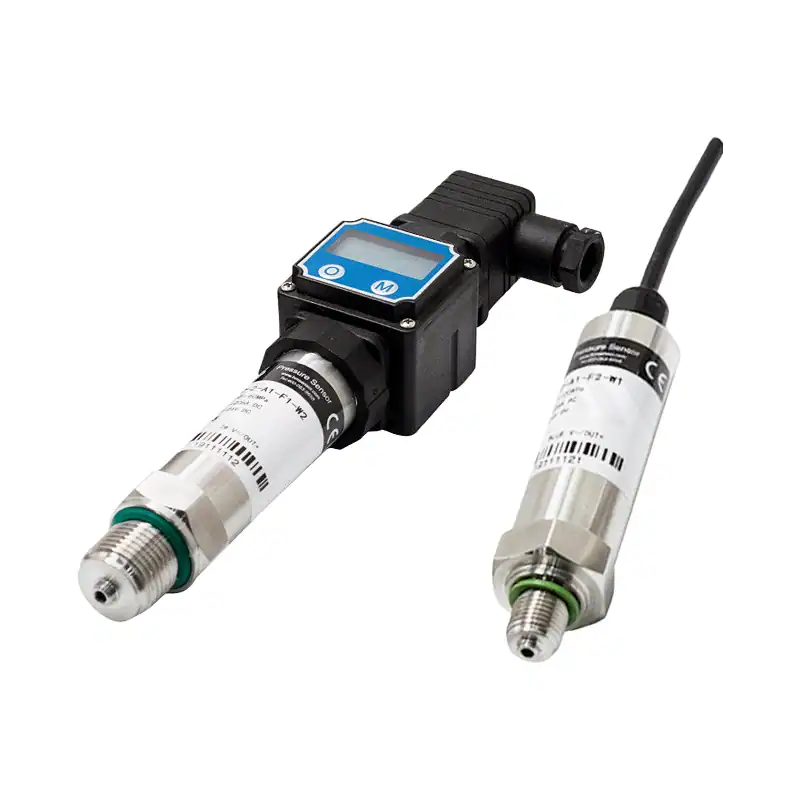 HM205 kPa to 100 MPa (0.05 to 1,000 bar)General-purpose diffused silicon transmitter, ±0.25 % FS, 4-20 mA.
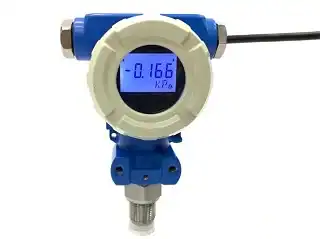 HM25-100 kPa and 5 kPa to 100 MPa±0.1 % FS with local display, gauge or absolute reference.
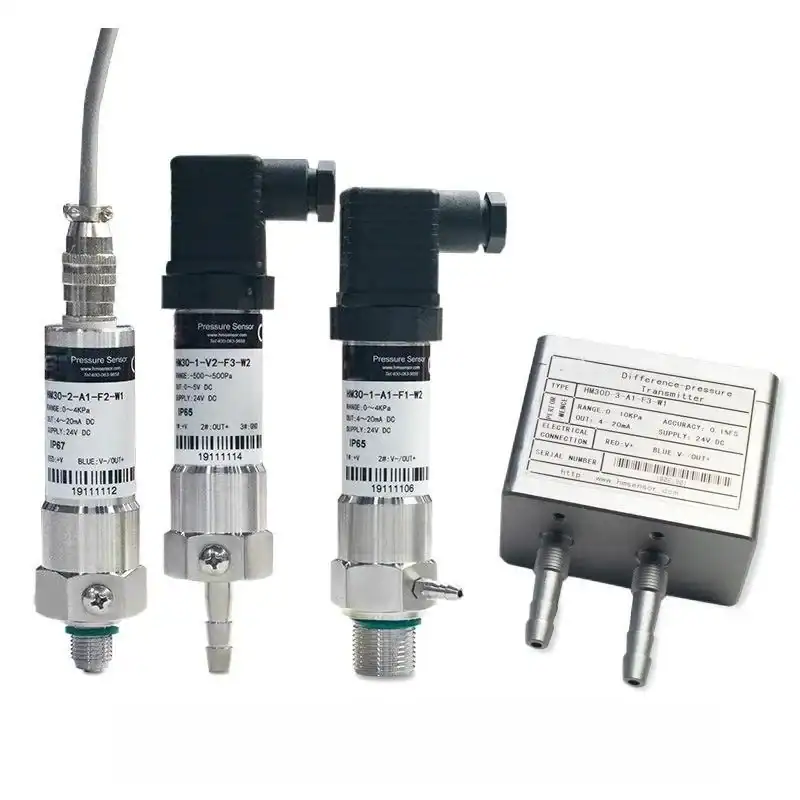 HM30500 Pa to 700 kPa (0.005 to 7 bar)Micro-differential transmitter with response under 2 ms.
Written by Lin Jun · Pressure Instrumentation Engineer, HMK-TECH. Conversion factors follow the SI definitions of the bar and the pascal; instrument ranges quoted are the published ranges of the products linked above.