Temperature Sensor Series
Multi-Point Thermocouples
Distributed temperature profiling with 2 to 40 measurement points in a single assembly. Designed for reactors, synthesis towers, storage tanks, and pipelines where temperature gradients across multiple positions must be monitored simultaneously. Rated up to 1200°C and 15 MPa.
What Are Multi-Point Thermocouples?
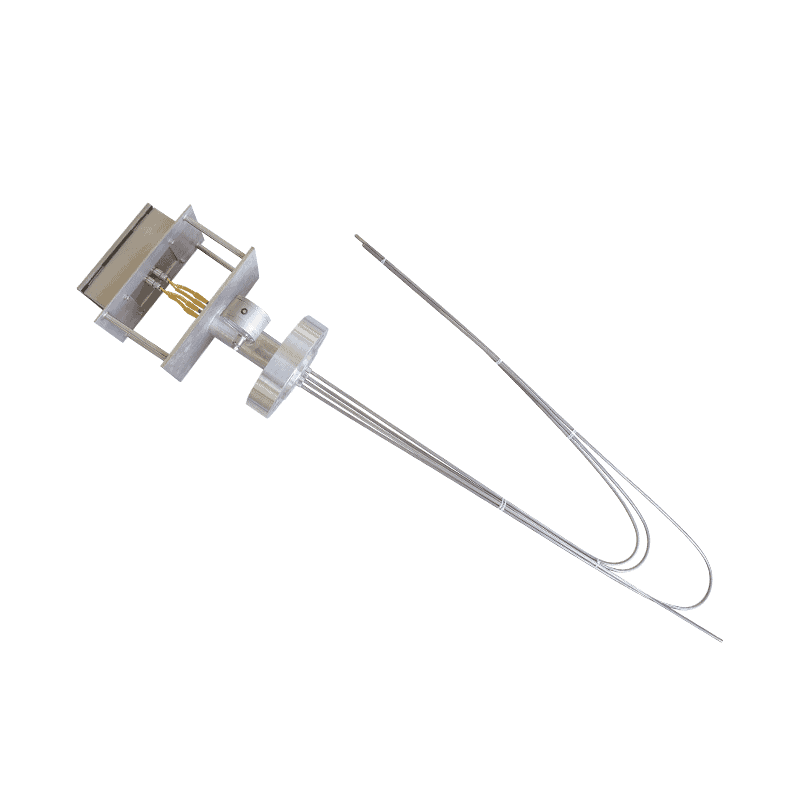
Multi-point thermocouples are specialized temperature sensing assemblies that house multiple measuring junctions — typically 2 to 40 points — within a single protective sheath. Each junction is positioned at a precise depth, enabling a complete temperature profile across a vessel, reactor column, or storage tank from just one process penetration.
They are essential in petrochemical reactors, distillation columns, catalytic crackers, polymer reactors, and large storage vessels where understanding the temperature gradient at different depths is critical for process optimization, safety, and product quality.
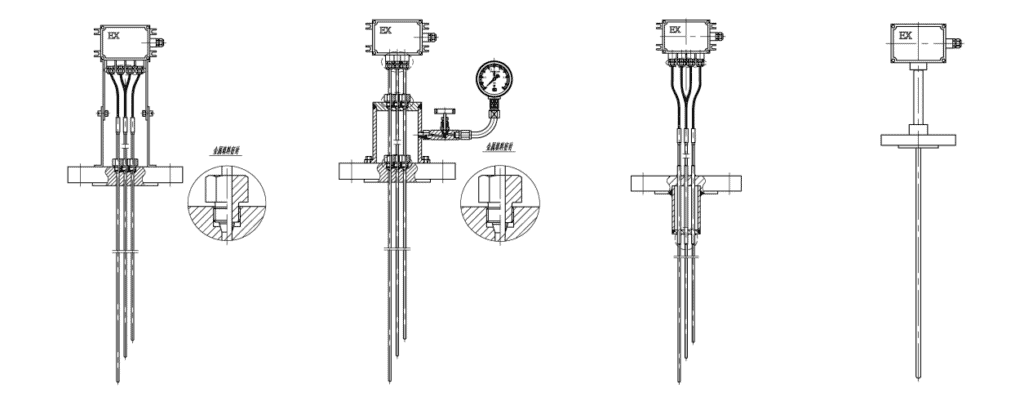
Our WRN-440 series multi-point thermocouples are available in binding-type (WRN-440DTR), single-point sealed (WRN-440D), and multi-point composite (WRN-440DTF) configurations. Supporting thermocouple types K, E, J, T, N and RTD types Pt100/Cu50, they cover measurement ranges from -200°C to 1200°C with pressure ratings up to 15 MPa.
Designing a multi-point measurement? Start with the engineer’s guide to temperature sensor selection—it explains how to balance accuracy, response time, and protection across each measurement point.
Technical Specifications
| Parameter | Specification |
|---|---|
| Sensor Type | Thermocouple / RTD (Thermal Resistance) |
| Temperature Range | -200°C to 1200°C (TC type dependent) |
| Thermocouple Types | K (0–1200°C), E (0–800°C), J (0–600°C), T (-200–350°C), N (0–1200°C) |
| RTD Types | Pt100 (-200–500°C), Cu50 (-50–150°C) |
| Measurement Points | 2–40 points per assembly |
| Pressure Rating | ≤15 MPa (2,175 psi) |
| Sheath Material | 304 SS, 316/316L SS, 310S SS, Hastelloy C-276, Inconel 600 |
| Structure Types | Binding (DTR), Single-point sealed (D), Composite (DTF) |
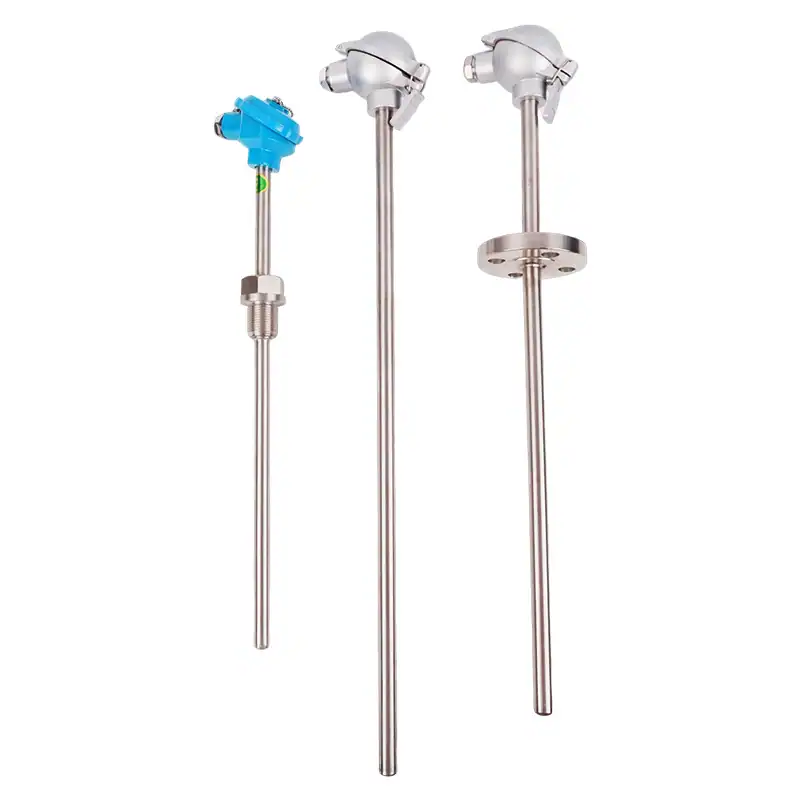
| Connection Head | Explosion-proof, weather-proof, or terminal block |
| Process Connection | Flanged (DN25–DN150), threaded (M27×2, G1/2″), welded |
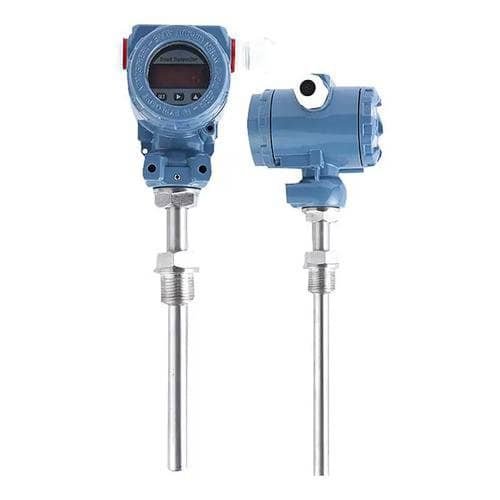
| Output Signal | mV (TC), Ω (RTD), optional 4–20mA with transmitter |
Key Features
2–40 Measurement Points
Configure from 2 to 40 individual sensing junctions in a single assembly. Eliminates multiple process penetrations and reduces installation complexity.
High Pressure Rating ≤15 MPa
Engineered for demanding high-pressure environments including hydrocracking units, high-pressure reactors, and deep vessel applications.
Multiple Structure Types
Choose from binding-type (DTR), single-point sealed (D), or composite (DTF) designs to match your specific installation requirements.
Wide Thermocouple Selection
Type K, E, J, T, N thermocouples and Pt100/Cu50 RTDs cover virtually any temperature range from -200°C to 1200°C.
Corrosion-Resistant Sheaths
Available in 304 SS, 316L SS, 310S, Hastelloy C-276, Inconel 600, and titanium for aggressive chemical and high-temperature environments.
Flexible Output Options
Native mV/Ω signals or optional integrated 4–20mA/HART transmitters for direct connection to DCS/PLC systems.
Model Selection & Ordering Guide
| Model | Type | Description |
|---|---|---|
| WRN-440DTR | Binding Type | Individual MI thermocouple cables bundled in a common sheath. Maximum flexibility in point placement; elements are individually replaceable. |
| WRN-440D | Single-Point Sealed | Each measurement point individually sealed at the tip. Best for high-pressure applications requiring independent point isolation. |
| WRN-440DTF | Composite Type | Multiple junctions in a single multi-hole ceramic insulator. Most compact design; ideal for small-diameter installations and high point density. |
How to Specify Your Multi-Point Thermocouple
| Selection Parameter | Options & Guidance |
|---|---|
| Number of Points | 2–40 points. Determined by vessel height/depth and required measurement resolution. |
| Point Spacing | Custom spacing per your vessel drawing. Minimum depends on sheath diameter and configuration. |
| Thermocouple Type | K (general purpose), N (high stability), E (high sensitivity), J (reducing atmospheres), T (cryogenic) |
| Structure | Binding (DTR) for serviceability, Composite (DTF) for compact, Sealed (D) for high pressure |
| Sheath Material | 304 SS (standard), 316L (corrosive), Hastelloy C-276 (severe corrosion), Inconel 600 (high temp) |
| Process Connection | Flanged (DN25–DN150 per ANSI/DIN), threaded (M27×2, G1/2), or welded pad |
| Insertion Length | Custom per vessel dimensions. Specify total length and each measurement point depth. |
Applications
Chemical & Petrochemical
Monitor multi-zone reactor temperatures, distillation columns, and catalytic cracking towers for optimal process control and yield.
Oil Refining
Profile temperatures across crude oil distillation columns, vacuum towers, and hydrocracking units with high-pressure rated probes.
Polymer & Plastics
Measure temperature gradients in polymer reactors and extruders to ensure uniform product quality and prevent thermal degradation.
Power Generation
Monitor boiler tube banks, superheater sections, and exhaust gas paths to optimize combustion efficiency and safety.
Food & Pharmaceutical
Validate sterilization and pasteurization processes with multi-point profiling. Sanitary connections meet GMP and FDA requirements.
Storage & Distribution
Profile large storage tanks, silos, and vessels at multiple depths to detect stratification and ensure uniform temperature distribution.
Custom Industry Solutions
Beyond standard configurations, we engineer application-specific multi-point thermocouple assemblies for the most demanding industrial environments. Each solution is designed from the ground up to meet exact process requirements.
Cryogenic Storage Tank RTD
Application: LNG, LPG, liquid ethylene, and liquid ammonia cryogenic storage tanks
• Flexible, bendable RTD cables up to 150m in a single run
• Specialized mounting kits for interlayer walls, inner/outer tank walls, purge lines, and tank bottoms
• Designed for extreme low-temperature service
Wall-Contact Reactor Thermocouple
Application: Multi-point temperature measurement in chemical reactors
• Spring-loaded wall-contact tip on each sensor for faster thermal response and higher accuracy
• Shared support steel strip for easy field insertion and removal
• Multiple material options for contact spring clips
High-Pressure Flexible Thermocouple
Application: Hydrocracking, catalytic reforming, and high-pressure reactor systems
• Flexible, bendable thermocouple cables for complex reactor geometries
• Triple sealing method with 4-layer leak prevention structure
• Dual independent sealing chambers with integrated pressure monitoring
Purge Gas Synthesis Tower TC
Application: Topsøe-process ammonia/fertilizer synthesis towers
• Single-cable multi-point structure with internal purge tube
• Inert gas purge flushes corrosive gases from inside the sheath
• Dual-flange high-pressure packing seal rated above 15 MPa
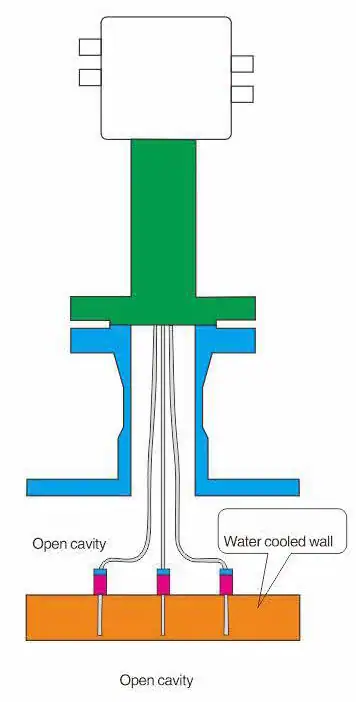
GSP Gasifier High-Pressure TC
Application: Siemens GSP gasifier water-cooled wall and annular gap temperature profiling
• Flexible thermocouple cables with single-element removable design
• Dual sealing components with protective cover at flange connection
• Engineered for extreme gasification environments
Aerospace Gasifier Multi-Point TC
Application: HT-L aerospace gasifier temperature profiling
• Flexible, bendable thermocouple cables for complex gasifier geometry
• Dual-layer leak prevention with single-element removable design
• Optional sealed chamber with leak detection monitoring capability
Frequently Asked Questions
Get Expert Help with Multi-Point Thermocouples
Whether you need a standard configuration or a fully customized multi-point thermocouple assembly, our engineering team is ready to assist. Tell us about your process requirements — temperature range, insertion length, number of sensing points, and mounting style — and we’ll recommend the optimal solution.
Our engineers typically respond within 12 business hours with a detailed technical proposal and competitive quotation.