Inches of Water (inH2O) to PSI Converter
Select the water reference temperature most calculators silently fix — and read your DP transmitter range straight across into psi, mbar and kPa.
What an inch of water actually measures
An inch of water column is the pressure produced by a one-inch-tall column of water: inH2O = ρwater × g × h, with h = 0.0254 m and g = 9.80665 m/s². Because water is light compared with mercury, the unit resolves very small pressures finely — one psi is about 27.7 inH2O, so a span that would be a fraction of a psi becomes tens of readable inches. That is exactly why duct static pressure, filter and coil differential, burner draft and low-density liquid level are graduated in inH2O (also written inWC, in. w.c. or iwg) rather than psi. Converting to psi is what you do when a gauge, a transmitter output or a spec sheet speaks psi and the rest of the system speaks water column.
The reference temperature most converters hide
Water density falls as it warms, so the inH2O-to-psi factor depends on the water temperature the unit is referenced to — and most online converters fix one value without telling you which. The three references actually used in industry differ by about 0.18%:
| Reference temperature | Water density (kg/m³) | 1 inH2O = | 1 inH2O = |
|---|---|---|---|
| 39.2°F / 4°C (ISO) | 999.972 | 0.0361263 psi | 2.4908 mbar |
| 60°F / 15.56°C (US default) | 999.017 | 0.0360918 psi | 2.4884 mbar |
| 68°F / 20°C (lab) | 998.207 | 0.0360625 psi | 2.4864 mbar |
The selector above defaults to 60°F, the convention behind most North American DP and HVAC instrument scales. On a precision transmitter specified to ±0.1% FS, the 4°C-versus-60°F gap is roughly the same size as the accuracy budget, so it is worth matching the reference your instrument’s datasheet or governing standard uses rather than accepting whatever a hidden factor assumes.
inH2O to psi: worked examples
Worked at the 60°F reference. To convert, multiply the inches of water by the factor for your reference temperature; psi = inH2O × 0.0360918.
| Inches of water | psi | mbar | kPa |
|---|---|---|---|
| 10 inH2O | 0.3609 psi | 24.884 mbar | 2.4884 kPa |
| 30 inH2O | 1.0828 psi | 74.653 mbar | 7.4653 kPa |
| 100 inH2O | 3.6092 psi | 248.844 mbar | 24.8844 kPa |
| 250 inH2O | 9.0229 psi | 622.110 mbar | 62.2110 kPa |
| 400 inH2O | 14.4367 psi | 995.376 mbar | 99.5376 kPa |
A single inch is the anchor worth memorising: 1 inH2O = 0.0360918 psi = 2.4884 mbar = 0.24884 kPa at 60°F. At the ISO 4°C reference the same inch is 0.0361263 psi — close, but not identical, which is the whole point of stating the reference.
DP transmitter range cheat-sheet
Low-range differential transmitters are usually catalogued in inH2O. This table converts the common spans to psi, mbar and kPa at 60°F so you can match a water-column requirement to a transmitter range without re-deriving the factor each time.
| inH2O range | psi | mbar | kPa |
|---|---|---|---|
| 0–10 inH2O | 0–0.361 psi | 0–24.88 mbar | 0–2.488 kPa |
| 0–25 inH2O | 0–0.902 psi | 0–62.21 mbar | 0–6.221 kPa |
| 0–100 inH2O | 0–3.609 psi | 0–248.84 mbar | 0–24.884 kPa |
| 0–250 inH2O | 0–9.023 psi | 0–622.11 mbar | 0–62.211 kPa |
| 0–400 inH2O | 0–14.437 psi | 0–995.38 mbar | 0–99.538 kPa |
The HMK HM30 covers the bottom of this band for air and gas duct work, while the HM31 carries the higher spans and liquid service; both are graduated so the inH2O figure on the drawing maps directly onto the ordered range.
Notation traps: inH2O vs inWC vs iwg vs iwd
The same physical unit travels under several labels, and mixing them up is a common source of confusion on drawings:
| Symbol | Reads as | Where it appears |
|---|---|---|
| inH2O / inWC / in. w.c. | inches of water column | generic; the unit itself |
| iwg / in. w.g. | inches of water, gauge | HVAC static pressure, referenced to atmosphere |
| iwd | inches of water, differential | filter / coil ΔP across two taps |
The arithmetic is identical — an inch is an inch — but the reference is not: a gauge (iwg) reading is against atmosphere, while a differential (iwd) reading is the drop across two ports. Always confirm whether a stated inH2O figure is gauge or differential before you size a transmitter to it, because the same number on the wrong reference points at the wrong instrument.
Where inH2O shows up in the field
Typical bands help sanity-check a converted figure. Duct static pressure in commercial HVAC sits roughly between 0.5 and 6 inH2O; a loaded filter or coil differential is often alarmed at 1–3 inH2O; combustion air and furnace draft run from a fraction of an inch to a few inches; clean-room and containment differentials are tiny, around 0.01–0.05 inH2O; and low-density liquid level in shallow tanks can read tens of inches of water. If a converted psi value lands far outside the band you expect, the cause is usually a wrong reference temperature, a gauge-versus-differential mix-up, or a transmitter range that does not match the service.
Frequently Asked Questions
Is 1 psi 27.68 or 27.7 inches of water?
Both, depending on the water reference temperature. At 4°C (ISO) 1 psi is 27.6807 inH2O; at 60°F (the common US instrument reference) it is 27.7071 inH2O; at 68°F it is 27.7296 inH2O. The converter lets you pick the reference rather than hiding it.
What is the difference between inH2O at 4°C and 60°F?
Water is denser at 4°C, so an inch of it makes slightly more pressure: 1 inH2O = 0.0361263 psi at 4°C versus 0.0360918 psi at 60°F. The gap is about 0.18%, which matters when you calibrate a high-accuracy DP transmitter.
How many inH2O is a typical DP transmitter range?
Low-range DP transmitters are commonly built for 0–10, 0–25, 0–100, 0–250 or 0–400 inH2O. At 60°F those correspond to about 0.36, 0.90, 3.61, 9.02 and 14.4 psi respectively.
Related converters & tools
- PSI to Inches of Water — the reverse conversion
- Pressure Unit Converter — all 15 pressure units at once
- DP Level Calibration — find LRV and URV for DP level transmitters
- DP Flow Calculator — differential pressure to flow rate
- PSI to Feet of Head — the other water-column unit
- inHg to PSI — vacuum / barometric inches of mercury to psi
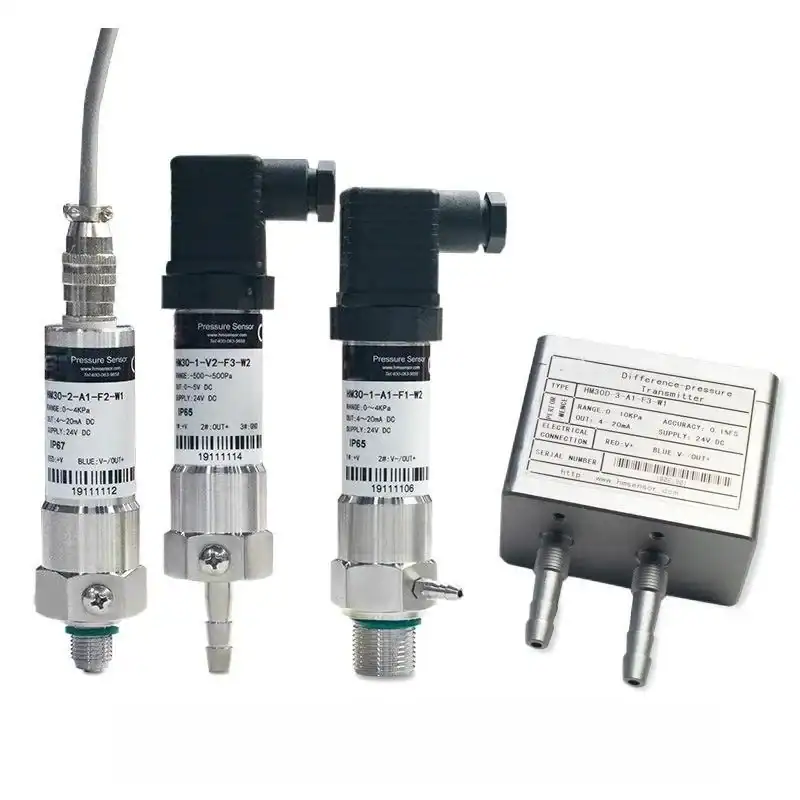
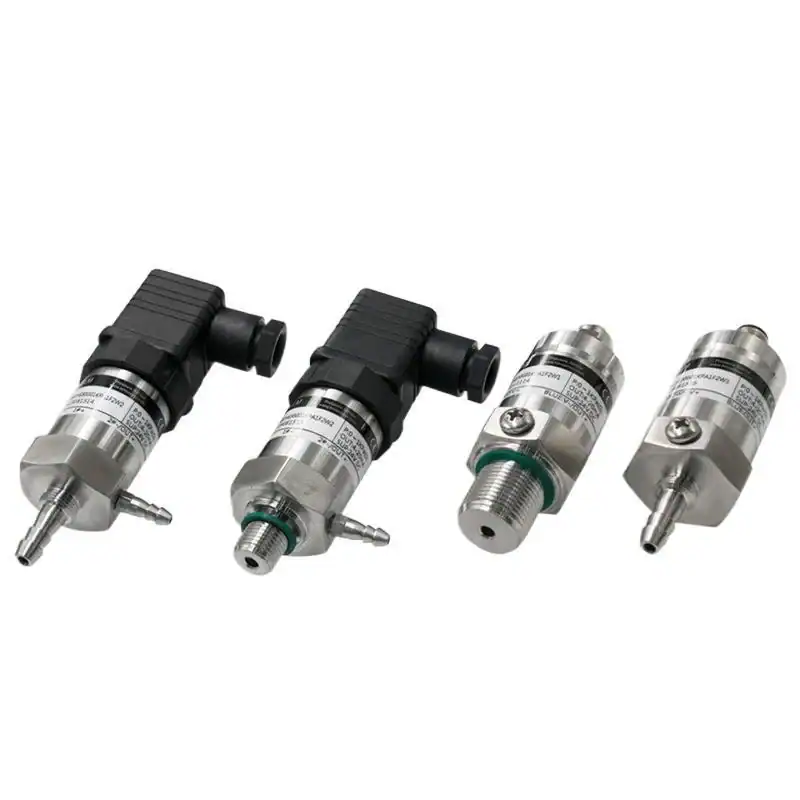
Need the transmitter behind the number?
Tell us the range in inH2O or psi and the service — air, gas or liquid DP — and we will spec the right differential-pressure transmitter.