Instrumentation Tool
psi to kPa Converter
Convert pounds per square inch to kilopascals with the exact factor — the direction you need when a US gauge reading has to go into an SI datasheet, a metric-spec project, or a control system configured in kPa.
psi ↔ kPa Converter
Enter a value in either box — the other updates live. The reference selector only labels the result (gauge / absolute); converting the unit never changes the reference.
Pressure transmitters for these ranges
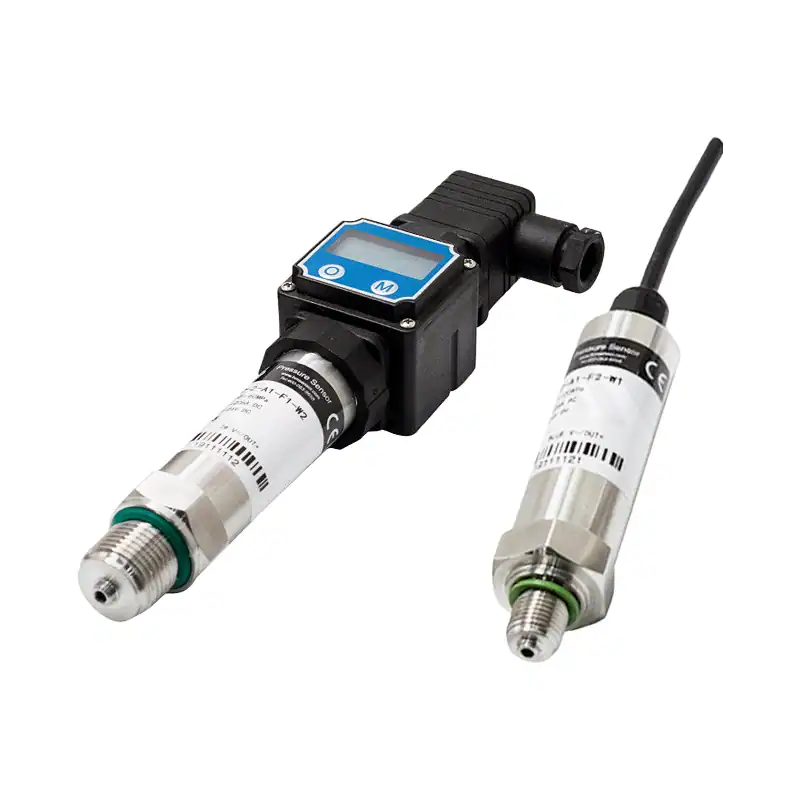
HM20 General Purpose Pressure Transmitter
Gauge or absolute ranges with ±0.25 % FS and a 4–20 mA output. The general-purpose choice for most process lines.
View details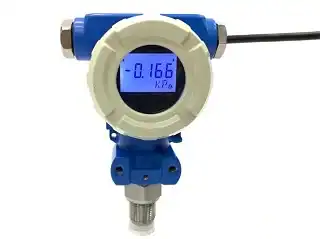
HM25 Industrial Pressure Transmitter
Industrial transmitter with HART support, built for demanding process environments.
View details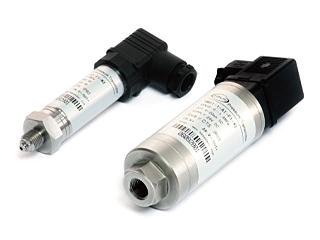
HM29 Digital Intelligent Pressure Transmitter
Digital intelligent transmitter with on-board configuration and diagnostics.
View detailspsi is what you read off a US gauge, a pump nameplate, or an imperial datasheet. kPa is what an SI datasheet, a metric-spec project, or a control system configured in engineering units wants to see. Converting from psi to kPa is the direction you hit when you bring US-built equipment into a metric plant, document a field reading for an ISO submittal, or scale a transmitter into a PLC that displays kilopascals. The arithmetic is one multiply — the care is in the engineering-unit scaling and the rounding, which this page walks through.
The conversion factor
One psi is one pound-force per square inch, which works out to 6 894.757 pascals. So:
1 psi = 6.8947572932 kPa
1 kPa = 0.14503773773 psi (the reverse, handled by our kPa to PSI converter)
To go from psi to kPa you multiply by 6.89476. Because kPa values come out roughly seven times larger than the psi number, a small rounding of the factor moves the kPa result more than you might expect — use the full constant when the kPa value is going into a specification or a control system.
Putting a psi reading into a kPa control system
This is where psi→kPa actually bites. Say a pressure transmitter is a 4–20 mA device ranged 0–100 psi, but the DCS, PLC or SCADA screen displays the loop in kilopascals. The engineering-unit (EU) scaling in the controller has to map 4 mA to 0 kPa and 20 mA to 689.48 kPa — not 100, and not some rounded 690. If someone types 700 kPa as the span, every reading on that loop is off by ~1.5% for the life of the installation.
Common US gauge ranges in kPa
When you replace or re-spec a US gauge or transmitter into metric units, these are the standard imperial ranges and their kPa equivalents (for reference, the HMK HM20 covers 5 kPa to 100 MPa and can be ordered to any of these spans):
| Range (psi) | Range (kPa) | Typical use |
|---|---|---|
| 0–15 psi | 0–103.4 kPa | Low pressure, tank, vacuum-adjacent |
| 0–30 psi | 0–206.8 kPa | Building water, low air |
| 0–60 psi | 0–413.7 kPa | Compressed-air branch, pumps |
| 0–100 psi | 0–689.5 kPa | General plant air / process |
| 0–160 psi | 0–1103.2 kPa (1.1 MPa) | Compressed-air headers |
| 0–300 psi | 0–2068.4 kPa (2.07 MPa) | Hydraulic, steam |
| 0–600 psi | 0–4136.9 kPa (4.14 MPa) | High hydraulic |
Significant figures going up to kPa
Because the kPa number is larger, the decimals carry less weight individually but the whole-number part carries more. Atmospheric pressure is a good check: 14.696 psi = 101.325 kPa. If you rounded the input to 14.7 psi you would get 101.35 kPa — a 0.025 kPa difference that is meaningless for a field check but matters if 101.325 kPa is your absolute-pressure reference datum. For control-system EU config and calibration records, convert from the unrounded psi value.
Quick reference table (psi → kPa)
| psi | kPa | psi | kPa |
|---|---|---|---|
| 1 | 6.895 | 30 | 206.843 |
| 5 | 34.474 | 50 | 344.738 |
| 10 | 68.948 | 100 | 689.476 |
| 14.696 | 101.325 | 150 | 1034.214 |
| 15 | 103.421 | 200 | 1378.951 |
| 20 | 137.895 | 300 | 2068.427 |
FAQ
What is 1 psi in kPa?
1 psi = 6.8948 kPa. Multiply any psi value by 6.89476 to get kPa.
What is 14.7 psi in kPa?
14.696 psi (one standard atmosphere) = 101.325 kPa. The rounded 14.7 psi gives 101.35 kPa.
How many kPa is 100 psi?
100 psi = 689.48 kPa. If it is a gauge reading (100 psig) the answer is 689.48 kPaG.
Need the other direction?
Use the kPa to PSI converter — same calculator, reversed, with a datasheet-to-field worked example.
Recommended HMK transmitters
Related tools & reading
• kPa to PSI Converter (the reverse) • Pressure Unit Converter (all units) • psi to bar • MPa to psi • bar to kPa
• All HMK engineering tools