MPa to PSI Converter
Type a value in either field. The other side updates instantly using the exact ISO/NIST factor 1 MPa = 145.0377377 PSI.
MPa to PSI Conversion Reference Table
Common pressure values you encounter in process instrumentation, hydraulic, and high-pressure service. Values are rounded to 4 decimals; for full precision use the calculator above.
| MPa | PSI | Typical use |
|---|---|---|
| 0.1 | 14.5038 | Atmospheric reference / low gauge |
| 0.5 | 72.5189 | HVAC supply / low-pressure process |
| 1 | 145.0377 | Common gauge full-scale reference |
| 2.5 | 362.594 | Industrial process / steam line |
| 5 | 725.189 | High-pressure boiler / hydraulic |
| 10 | 1,450.38 | Hydraulic press / forge |
| 16 | 2,320.60 | PN16 EU flange rating (typical) |
| 25 | 3,625.94 | High-pressure process / wellhead |
| 40 | 5,801.51 | Hydraulic high-pressure circuit |
| 50 | 7,251.89 | Hopkinson bar / dynamic test rig |
| 70 | 10,152.6 | Common HM22 high-range full-scale |
| 100 | 14,503.77 | CYG401/402 dynamic full-scale |
MPa to PSI Formula
The conversion factor is exact and traceable to ISO 80000-4 and NIST SP 811. PSI (pound-force per square inch) is defined as 6,894.757293168 pascals; megapascal (MPa) is defined as 1,000,000 pascals. The ratio gives 145.0377377 PSI per MPa (exact to 7 decimals).
For most engineering work, four decimal places is enough. For metering-grade calibration certificates, use the full eight-decimal factor; for quick field math, 145 PSI ≈ 1 MPa is good to within 0.026 percent.
Common Conversion Examples
Pressure ranges you actually encounter in the field:
MPa vs PSI — When Each Is Used
PSI dominates US-spec equipment (ASME, ANSI, SAE); MPa dominates Chinese GB / JJG and most SI-aligned engineering practice. The split shows up most often when a Chinese-built pressure transmitter spec sheet lists 0–25 MPa and the US-side BOM needs the same range in PSI for procurement.
In pressure transmitter spec sheets, both units typically appear together; the digital display shows the local convention while the data sheet lists the SI equivalent. MPa is the SI-derived unit (106 Pa); NIST SP 811 lists PSI as a customary US unit accepted for use alongside SI. GB/T 1226 China national pressure gauge standard uses MPa as the primary scale.
In your own loop, pick whichever unit the operators on the floor read fastest. Mixing units mid-loop is the most common source of bad calibration readings we see in field reports. For MPa-PSI conversions specifically, watch the decimal placement: 25 MPa is 3,625.94 PSI, not 362.594 — an order-of-magnitude error here can mis-spec a relief valve set point.
Frequently Asked Questions
What is the formula to convert MPa to PSI?
Multiply MPa by 145.0377377 to get PSI, or divide PSI by 145.0377377 to get MPa. Both directions use the exact ISO 80000-4 / NIST SP 811 factor.
Is 1 MPa equal to 1 PSI?
No. 1 MPa = 145.0377 PSI, so they differ by a factor of about 145. MPa is much larger; a 0–1 MPa transmitter covers the same range as a 0–145 PSI transmitter.
How many PSI is in 1 MPa?
1 MPa = 145.0377377 PSI exactly. For quick mental math, 1 MPa is approximately 145 PSI, which is accurate to about 0.026 percent.
Why is MPa used in China and PSI in the USA?
PSI is a customary US unit derived from pound-force and square-inch. MPa is the SI-derived unit (106 pascals). Chinese GB/T 1226, JJG 52, and most European DIN/EN standards use MPa as the primary pressure scale; ASME, ANSI, and SAE use PSI. Most modern transmitter spec sheets list both.
Can I use this calculator for PSIA, PSIG, and PSID?
Yes — the conversion factor (145.0377) is the same regardless of reference. The reference type stays unchanged through conversion: MPa(a) ↔ PSIA, MPa(g) ↔ PSIG, and differential pressures in MPa convert directly to PSID. See our PSIA vs PSIG cheat sheet for full label decoding.
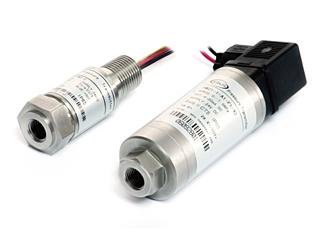
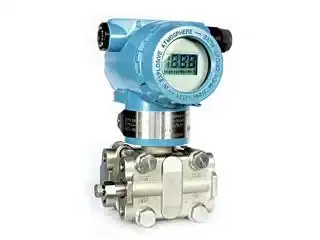
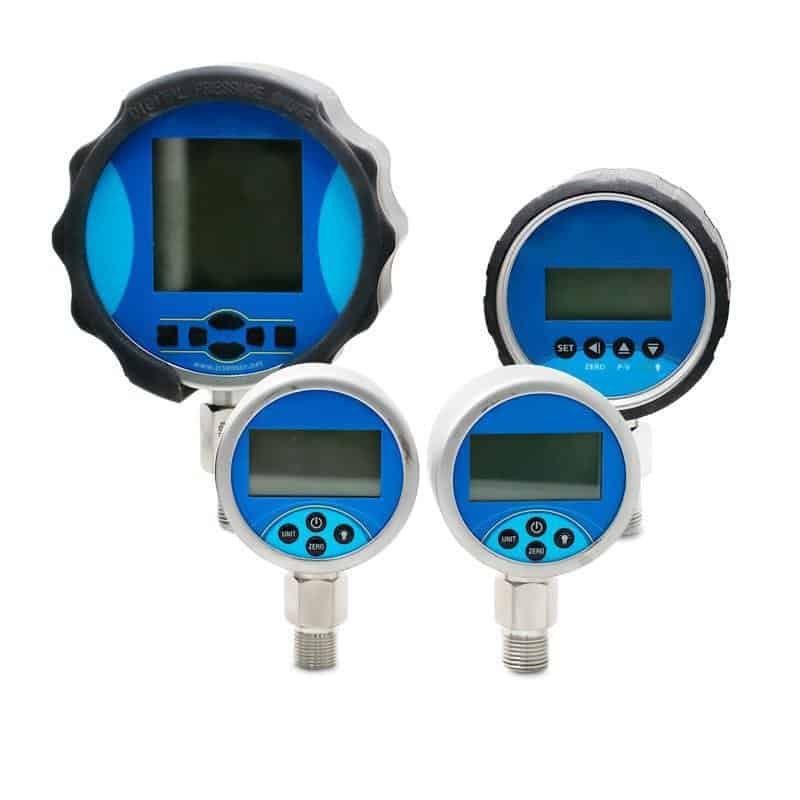
Recommended HMK Products
All three units are available on the gauge face or transmitter display:
Need Help Selecting a Pressure Transmitter?
Match unit, range, accuracy class, and certifications in one go. Send your spec brief and our team replies within one business day.
Transmitters for high-pressure service
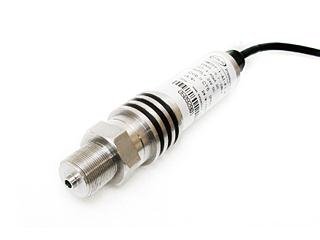
HM28 Sapphire High-Pressure Transmitter
Sapphire sensing element for high-pressure service, where MPa-scale ranges are routine.
View details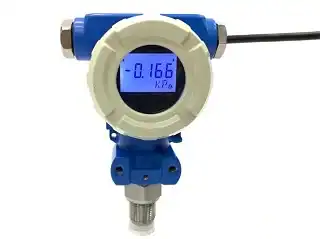
HM25 Industrial Pressure Transmitter
Industrial transmitter with HART support, built for demanding process environments.
View details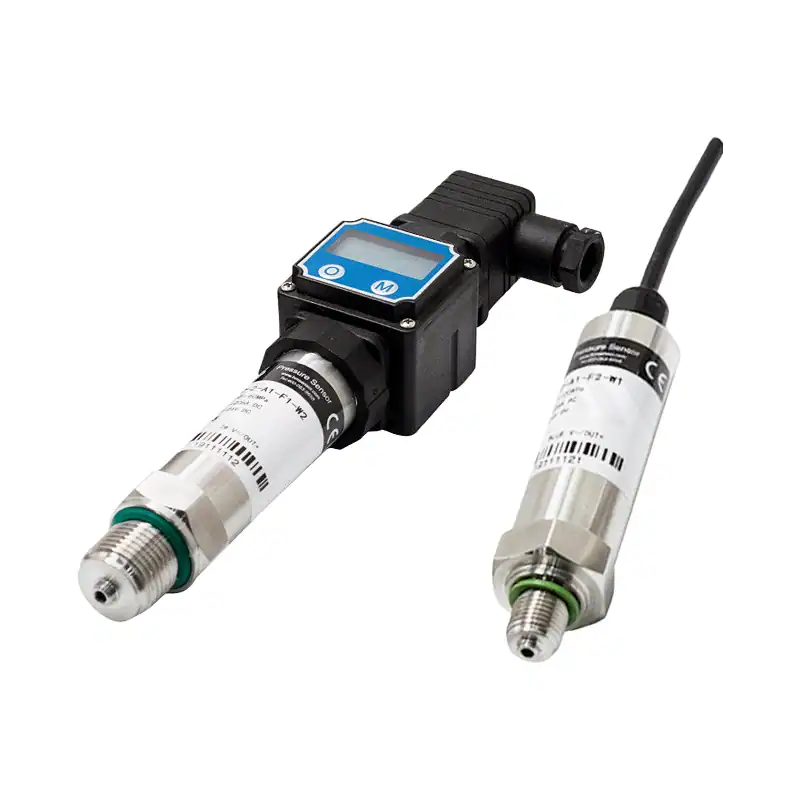
HM20 General Purpose Pressure Transmitter
Gauge or absolute ranges with ±0.25 % FS and a 4–20 mA output. The general-purpose choice for most process lines.
View details