PSI to kg/cm² Converter
Convert pounds per square inch to kilogram-force per square centimetre (kgf/cm²) — the unit still printed on gauges across India, Southeast Asia, the Middle East and Latin America — with the exact factor and the gauge-versus-absolute rules a real setpoint needs.
Turning a psi setpoint into kg/cm²
The reverse conversion matters most when the number you own is in psi but the person reading it works in kg/cm². That happens constantly: a US- or EU-built pump, valve or transmitter arrives with a psi nameplate at a plant whose operators, drawings and spare gauges are all scaled in kg/cm²; or a quotation has to state a working pressure in the customer’s units before an order will move. The maths is a single factor — psi × 0.070306958 = kg/cm² — but the discipline is making sure the reference and the rounding survive the translation, because a setpoint that is off by a couple of percent can fail a witnessed acceptance test.
The exact factor, derived
One pound-force per square inch is 6894.757293 Pa (NIST SP 811). One kilogram-force per square centimetre is 9.80665 N over 1×10⁻⁴ m², which is 98066.5 Pa exactly. Dividing gives 6894.757293 ÷ 98066.5 = 0.070306958 kg/cm² per psi; the inverse is 14.223343307 psi per kg/cm². A quick mental check: kg/cm² is a larger unit than psi, so the kg/cm² number is always the smaller of the two — 100 psi is about 7 kg/cm², not 1400.
Lift a gauge reading to absolute before you convert — when it matters
psi and kg/cm² both exist in gauge and absolute forms, and the reference has to be carried through the conversion, not assumed. A psig setpoint converts straight to kg/cm²G (gauge), because both are referenced to local atmosphere. But if the receiving document is in ata — the absolute technical atmosphere common on older Asian and Russian equipment — you must first lift the psi gauge value to psia by adding local atmospheric pressure (≈14.696 psi at sea level), then convert. Skipping the lift is the single most common reverse-conversion mistake, and it shifts the result by about 1.033 kg/cm². The rule: convert gauge-to-gauge and absolute-to-absolute; only cross between them with a deliberate atmospheric add or subtract.
A psi → kg/cm² → bar → Pa cross-reference
Because a kg/cm² audience usually also wants bar and the SI value, this table carries common psi setpoints through all three — the quick sheet for issuing a quotation or a calibration certificate into a kg/cm² market.
| psi | kg/cm² | bar | Pa |
| 15 | 1.055 | 1.034 | 103,421 |
| 30 | 2.109 | 2.068 | 206,843 |
| 50 | 3.515 | 3.447 | 344,738 |
| 100 | 7.031 | 6.895 | 689,476 |
| 150 | 10.546 | 10.342 | 1,034,214 |
| 300 | 21.092 | 20.684 | 2,068,427 |
| 500 | 35.153 | 34.474 | 3,447,379 |
Ordering a replacement transmitter in the customer’s range
When a psi-scaled instrument is being sourced for a kg/cm² site, quoting the transmitter span in both units removes an ordering error before it happens. A 0–100 psi loop is a 0–7.03 kg/cm² loop; a 0–500 psi loop is 0–35.15 kg/cm². HMK’s HM20 general-purpose transmitter can be ordered in the exact span the site needs — anywhere from −100 kPa to 100 MPa, in gauge or absolute — so the replacement matches both the original psi calibration and the kg/cm² dial the operators still read.
Worked example
A relief valve is set at 150 psig and the local maintenance sheet is in kg/cm²G. Converting: 150 × 0.070306958 = 10.55 kg/cm²G (≈10.34 bar). If the same value had to be logged as ata, first add atmospheric pressure: (150 + 14.696) psi × 0.070306958 = 11.58 kg/cm²A.
Frequently asked questions
What is 1 psi in kg/cm²?
1 psi = 0.070306958 kg/cm². So 100 psi ≈ 7.03 kg/cm².
Is psi to kg/cm² the same as psi to bar?
Close but not identical. 1 psi = 0.0689476 bar and 0.070306958 kg/cm²; kg/cm² is about 1.97% smaller than bar, so the two results differ.
How do I convert psi to ata (absolute kg/cm²)?
Add local atmospheric pressure to the psi gauge value first (≈14.696 psi at sea level), then multiply by 0.070306958.
Why does my new transmitter not have a kg/cm² scale?
kg/cm² (the technical atmosphere) was deprecated by SI; modern instruments read in bar, kPa, MPa or psi. Convert the legacy value and order the transmitter in a matching span.
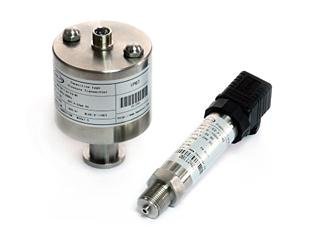
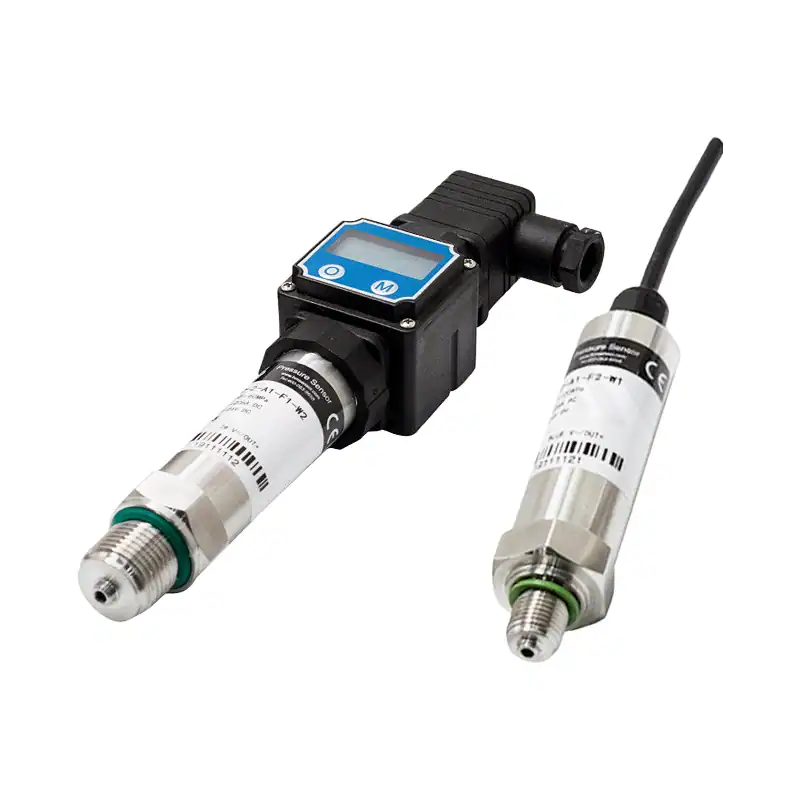
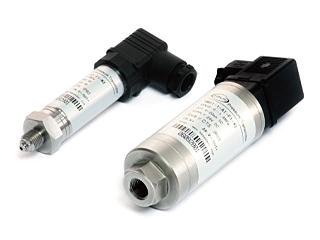
Need the absolute or gauge transmitter behind the number?
Tell us the range in kg/cm², psi or bar and whether it is absolute, gauge or compound, and we will spec the right transmitter.