inHg to PSI Converter (Inches of Mercury to psi)
Built for vacuum and barometric work — tells you whether your inHg reading is a vacuum-gauge value or an absolute pressure, not just a number.
What an inHg reading actually means
Inches of mercury is mostly a vacuum and barometric unit, and that is where converters quietly go wrong. The same figure — say 29.92 — means two different things depending on the gauge: on a barometer it is an absolute pressure (about one atmosphere), while on a vacuum gauge “29.92 inHg of vacuum” is a depth below atmosphere, i.e. almost full vacuum, close to zero absolute. Before you convert an inHg value to psi you have to know which one you are holding. This tool asks that question with a gauge-versus-absolute switch, so the psi it returns is the right kind — psia for an absolute reading, or a negative psig plus the residual psia for a vacuum reading. For the closely related torr (mmHg) scale used in vacuum science, use the torr to psi converter.
The factor, and the hidden reference temperature
The base conversion is psi = inHg × 0.491154 at the conventional 0°C / 32°F mercury reference, which is the same reference that makes 1 atm = 29.92 inHg = 14.696 psia. Because mercury expands as it warms, gas-industry 60°F and laboratory 68°F references give slightly smaller factors:
| Reference temperature | 1 inHg = | 1 psi = | 1 atm = |
|---|---|---|---|
| 32°F / 0°C (conventional) | 0.491154 psi | 2.036021 inHg | 29.9213 inHg |
| 60°F / 15.56°C | 0.489778 psi | 2.041741 inHg | 30.0053 inHg |
| 68°F / 20°C | 0.489395 psi | 2.043339 inHg | 30.0288 inHg |
The selector defaults to the conventional 32°F reference because vacuum and weather work is anchored to the 29.92 inHg standard atmosphere. Most competing converters fix one reference silently; this one labels the factor it used on every result.
Vacuum gauge vs absolute: convert the right way
In vacuum-gauge mode the reading is a depth below atmosphere, so the gauge pressure is negative and the absolute pressure is what is left above zero: psig = −inHg × 0.491154, and psia = 14.696 − inHg × 0.491154. A reading of 25 inHg of vacuum is therefore -12.279 psig, with only 2.417 psia of residual pressure remaining. Thirty inches of vacuum is effectively full vacuum — zero absolute. One field subtlety the single-factor converters miss: “30 inHg of vacuum” is only reachable when the barometer is high. At altitude the atmosphere is lower, so a perfect vacuum reads fewer inHg, and a gauge that cannot pass about 25–28 inHg there may be working correctly.
inHg to psi worked examples
Worked in vacuum-gauge mode at the conventional reference. Each row shows the negative gauge pressure, the residual absolute pressure and its kPa equivalent.
| Vacuum reading | psig | psia (residual) | kPa abs |
|---|---|---|---|
| 1 inHg | -0.491 psig | 14.205 psia | 97.94 kPa |
| 5 inHg | -2.456 psig | 12.240 psia | 84.39 kPa |
| 15 inHg | -7.367 psig | 7.329 psia | 50.53 kPa |
| 25 inHg | -12.279 psig | 2.417 psia | 16.67 kPa |
| 29.92 inHg | -14.695 psig | 0.001 psia | 0.00 kPa |
Two barometric anchors are worth memorising: 29.92 inHg absolute = 14.696 psia = one standard atmosphere, and a barometer reading of 29.93 inHg is about 14.700 psia — an absolute pressure near standard, not a gauge value.
inHg to psi to psia to kPa cross-table
The first psi column is the straight absolute-equivalent of the inHg value (inHg × factor); the psia column is the residual absolute pressure if the same number is read as vacuum depth. Both views in one place help when a vacuum spec and a transmitter datasheet use different references.
| inHg | psi (abs-equiv) | psia if read as vacuum | kPa (abs-equiv) |
|---|---|---|---|
| 5 inHg | 2.456 psi | 12.240 psia | 16.93 kPa |
| 10 inHg | 4.912 psi | 9.784 psia | 33.86 kPa |
| 15 inHg | 7.367 psi | 7.329 psia | 50.80 kPa |
| 25 inHg | 12.279 psi | 2.417 psia | 84.66 kPa |
| 29.92 inHg | 14.695 psi | 0.001 psia | 101.32 kPa |
Sizing a vacuum or absolute transmitter from an inHg spec
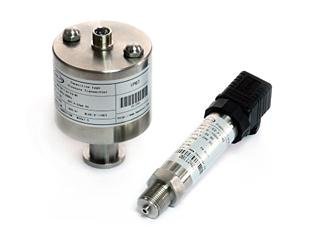
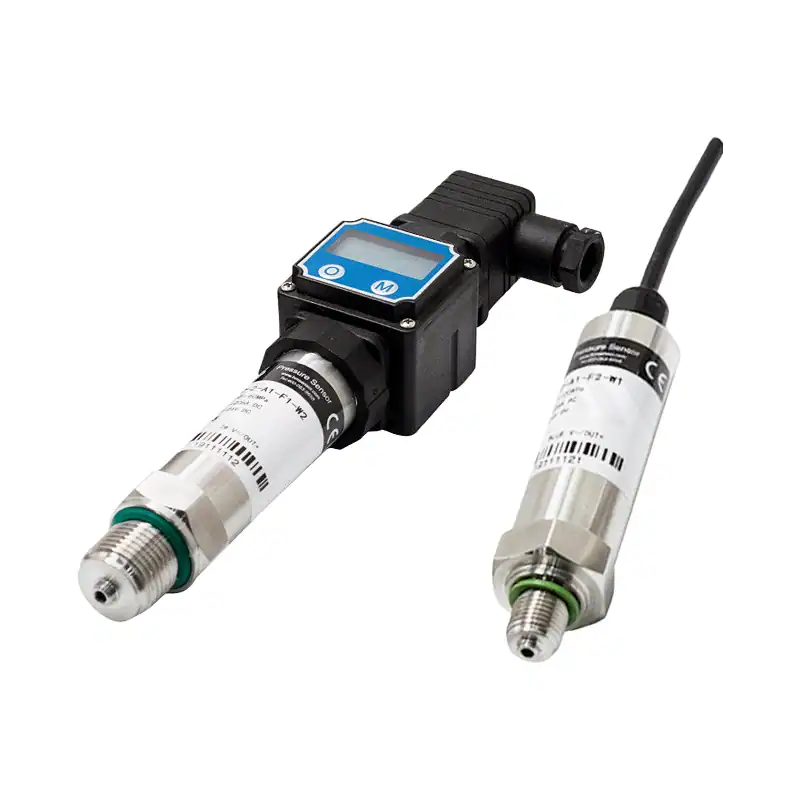
To pick an instrument, convert the inHg span into the pressure type the transmitter is rated in. A 0–30 inHg vacuum requirement is a 0 to about 14.7 psia absolute span, or a 0 to roughly −14.7 psig compound span — so it points at an absolute or compound-range transmitter, not a plain gauge unit. The HMK HM27 covers vacuum and absolute directly (HM27G negative-gauge, HM27A silicon absolute), while the HM20 carries compound and negative-gauge ranges; converting the inHg figure first tells you which class and span to order.
Frequently Asked Questions
What is 30 inHg in psi?
As an absolute reading, 30 inHg is about 14.73 psia. As a vacuum-gauge reading it is roughly 14.7 psi of vacuum depth, i.e. close to full vacuum (near 0 psia), because 29.92 inHg equals one atmosphere.
What does a barometer reading of 29.93 inHg mean in psi?
It is an absolute pressure of about 14.700 psia, essentially one standard atmosphere. A barometer reads absolute pressure, so it is not a gauge or vacuum value.
Is inHg the same as inHg of vacuum?
No. Plain inHg (inHgA) is an absolute pressure measured up from zero; inHg of vacuum is a depth measured down from atmosphere. The converter has a switch for each, because they convert to psi differently.
Related converters & tools
- PSI to inHg — the reverse conversion
- Absolute, Gauge & Vacuum Converter — switch between pressure references
- Pressure Unit Converter — all 15 pressure units at once
- PSI to kPa — psi to kilopascal scaling
- Inches of Water to PSI — low-range DP/HVAC water column to psi
Need the vacuum or absolute transmitter behind the number?
Tell us the range in inHg, psi or kPa-abs and whether it is gauge, vacuum or absolute — we will spec the right transmitter.