Atm to PSI Converter (Standard Atmosphere)
Converts atmospheres to psi and shows that the result is psia (absolute). It also separates the standard atmosphere from the technical atmosphere and the bar, which are easy to mix up on a spec sheet.
atm gives you psia, not psig
The atmosphere is an absolute unit. One standard atmosphere is the pressure of the air column at sea level, measured up from a perfect vacuum. So when you convert atm to psi, the answer is psia, absolute pounds per square inch, not the gauge value a shop gauge shows. One atmosphere is 14.69595 psia, yet a pressure gauge sitting in that same air reads 0 psig, because a gauge measures the difference from ambient. Miss this and a spec that says “3 atm” gets entered as 44 psig when it really means 44.09 psia, about 29.4 psig. The converter labels the result psia and also gives the equivalent psig relative to a standard 1 atm ambient, so you can read both and take the one your instrument uses. The difference between absolute and gauge pressure is the thing to get right here. If the pressure you are specifying must not drift with the weather, such as a sealed reference or a vacuum process, that is a cue to pick an absolute transmitter rather than a gauge one.
The exact factor
The conversion is psi = atm × 14.69594878. It is exact because the standard atmosphere is defined as 101325 Pa, and one psi is 6894.757293 Pa (NIST SP 811); dividing the two gives 14.69594878 psi per atm. The reverse factor is 1 psi = 0.06804596 atm. In the same definition, 1 atm is also exactly 760 torr and 101.325 kPa.
| 1 atm = | 1 psi = |
|---|---|
| 14.69594878 psi (psia) | 0.06804596 atm |
| 101.325 kPa | 6.894757 kPa |
| 1.01325 bar / 760 torr | 0.068948 bar |
atm vs technical atmosphere (at) vs bar
Three different “atmospheres” circulate in spec sheets, and they are not equal. The standard atmosphere (atm) is 101325 Pa. The technical atmosphere (at) is one kilogram-force per square centimetre, 98066.5 Pa, roughly 3.2 percent smaller, and it still shows up on older Chinese, Russian and German equipment marked kgf/cm². The bar is a third value, exactly 100000 Pa. Treat a kgf/cm² rating as a standard atmosphere and you over-state the pressure by about half a psi per unit, which adds up on a multi-atmosphere range. The selector above switches the factor so a kgf/cm² value converts correctly.
| Unit | in Pa | in psi | in atm |
|---|---|---|---|
| Standard atmosphere (atm) | 101325 Pa | 14.69595 psi | 1 |
| Technical atmosphere (at, kgf/cm²) | 98066.5 Pa | 14.22334 psi | 0.96784 |
| Bar | 100000 Pa | 14.50377 psi | 0.98692 |
Is 14.7 psi exactly 1 atm?
Almost. One standard atmosphere is 14.69595 psia, so the familiar 14.7 psi rounding runs high by about 0.028 percent; 14.7 psi is really 1.000276 atm. For everyday gauge work 14.7 is fine. It stops being fine in two places: absolute-pressure arithmetic, where the small error builds up across a wide span, and instrument calibration, where you want the true 14.69595 psia so the zero and span references stay traceable. When accuracy matters, use the full factor, which this tool applies by default.
atm to psi worked examples
Standard-atmosphere mode at the exact factor. The psig column is relative to a standard 1 atm ambient.
| atm | psia | psig (vs 1 atm) | kPa | bar |
|---|---|---|---|---|
| 0.5 atm | 7.34797 psia | -7.3480 psig | 50.663 kPa | 0.50663 bar |
| 1 atm | 14.69595 psia | 0.0000 psig | 101.325 kPa | 1.01325 bar |
| 2 atm | 29.39190 psia | 14.6959 psig | 202.650 kPa | 2.02650 bar |
| 3 atm | 44.08785 psia | 29.3919 psig | 303.975 kPa | 3.03975 bar |
| 5 atm | 73.47974 psia | 58.7838 psig | 506.625 kPa | 5.06625 bar |
| 10 atm | 146.95949 psia | 132.2635 psig | 1013.25 kPa | 10.1325 bar |
Altitude and local barometric pressure
One atmosphere is a standard sea-level value; the air pressure you actually stand in falls with altitude and drifts with weather. At about 1500 m the local barometric pressure sits near 0.83 atm, and in Denver or Mexico City it is well under one. That is why absolute transmitters reference an internal vacuum rather than the local atmosphere. A gauge instrument reads zero against whatever the barometer happens to be, so its absolute meaning shifts with elevation and passing weather, while an absolute instrument holds its reference. When a process has to be controlled to a true pressure, such as degassing, sterilisation, altitude simulation or sealed-system leak testing, convert the atm target to psia and specify an absolute range.
Sizing an absolute transmitter from an atm spec
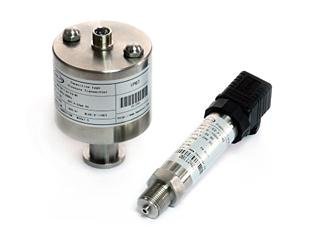
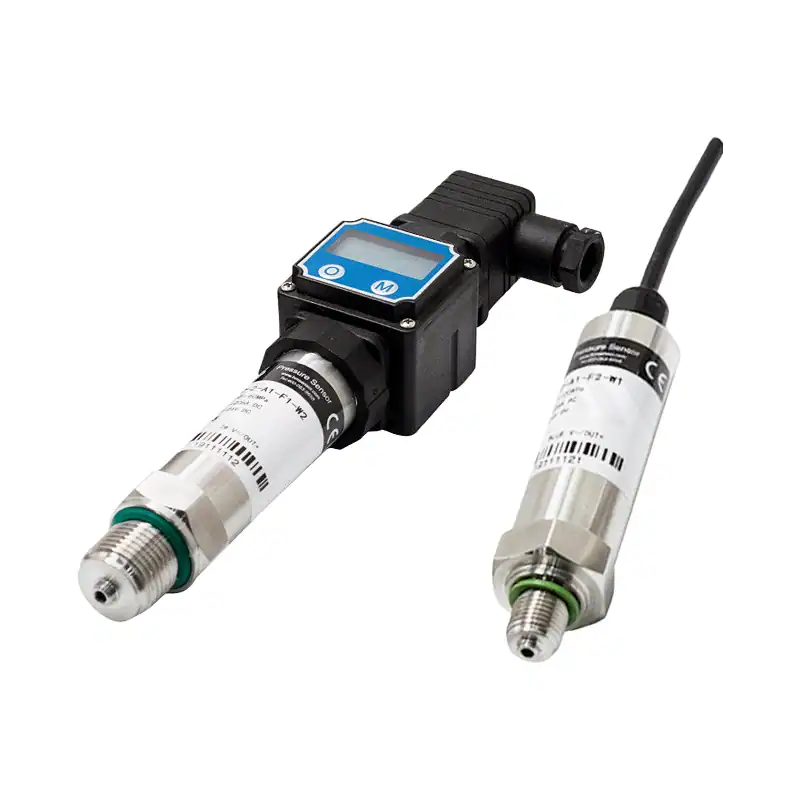
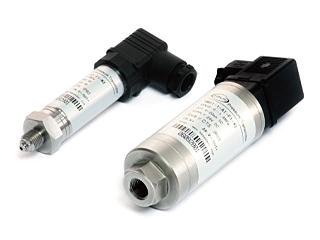
To pick an instrument, turn the atmosphere figure into the pressure type the transmitter is rated in. A “0 to 3 atm absolute” requirement is a 0 to 44.09 psia span; a “1 atm ± 0.2 atm” sealed-reference target is a narrow absolute band around 14.7 psia. Both call for an absolute transmitter, not a gauge one. The HMK HM27 measures absolute and vacuum directly (HM27A silicon absolute, HM27CA capacitive absolute) from 0.02 Pa to 1 MPa, and the HM29 lets you set the exact absolute span and units on site. Converting the atm spec to psia first tells you the class and range to order.
Frequently Asked Questions
What is 1 atm in psi?
One standard atmosphere equals 14.69594878 psia. As a gauge value in that same atmosphere it is 0 psig.
Is atm to psi absolute or gauge?
Absolute. The atmosphere is measured from a perfect vacuum, so converting atm to psi gives psia. Subtract 14.696 to express it as psig relative to a standard 1 atm ambient.
Is 1 atm the same as 1 bar or 1 kgf/cm²?
No. 1 atm is 14.696 psi (101325 Pa); 1 bar is 14.504 psi (100000 Pa); 1 technical atmosphere or kgf/cm² is 14.223 psi (98066.5 Pa). They are close but distinct.
What is 55 psi in atmospheres?
About 3.74 atm (55 × 0.068046). Use the reverse psi to atm converter for the other direction.
Need the absolute or gauge transmitter behind the number?
Tell us the range in atm, psia or kPa and whether it is absolute, gauge or compound, and we will spec the right transmitter.