Torr to PSI Converter (Vacuum Pressure)
A torr reading is an absolute pressure, not a gauge value, so it converts to psia. This converter gives you the absolute psi and the residual gauge pressure at the exact factor, and lets you switch between an absolute level and a vacuum depth.
What a torr reading actually means
Torr turns up mostly in vacuum and semiconductor work, and it is nearly always an absolute pressure, measured up from a perfect vacuum. One standard atmosphere is exactly 760 torr, so a chamber held at 5 torr sits at 5 torr absolute, about 0.097 psia, well down in rough vacuum. That is the reverse of a shop gauge, which reads zero at atmosphere and rises from there.
So decide what your number represents before you convert it. If it is the absolute vacuum level, you want the answer in psia. If it is the depth pulled below atmosphere, that reads as a negative gauge pressure. The switch above covers both cases: an absolute torr value returns a small psia, while vacuum-depth mode returns the negative psig plus the residual psia left in the chamber. The distinction is not cosmetic. A torr spec entered against a gauge-referenced range gives the wrong number.
The exact factor, and where it comes from
The factor is psi = torr × 0.0193367747. One torr is 1/760 of a standard atmosphere, so 101325 Pa ÷ 760 = 133.3223684 Pa, and one psi is 6894.757293 Pa (NIST SP 811). Divide the two and you get 0.0193367747 psi per torr, with the reverse being 1 psi = 51.71493257 torr.
| 1 torr = | 1 psi = | 1 atm = |
|---|---|---|
| 0.0193367747 psi | 51.71493257 torr | 760 torr (exact) |
| 133.3224 Pa | 6894.757 Pa | 101325 Pa |
Torr holds on in high-vacuum work because 760 is an exact, round divisor of the atmosphere. The same pressures written in kPa or psi run to several decimal places.
Torr vs mmHg — are they the same?
In practice yes, by definition not quite. A millimetre of mercury (mmHg) is fixed by the mercury column: a 1 mm column at 0 °C under standard gravity, which comes to 133.322387415 Pa. A torr is fixed as 1/760 of the standard atmosphere, 133.3223684 Pa. The gap is about one part in seven million, so on any real instrument the two read the same, and most vacuum gauges are scaled in either. The difference only surfaces in high-accuracy metrology, though it is worth knowing which definition a reference uses when two datasheets disagree in the last digit. A value already in mmHg uses the same factor here; a value in microns (millitorr) needs dividing by 1000 first. For inches of mercury, use the inHg to psi converter instead.
Absolute vs gauge: mapping a torr reading to a psi transmitter
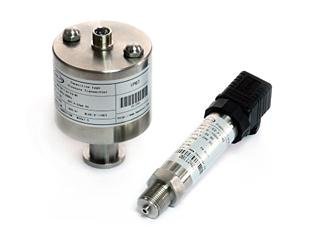
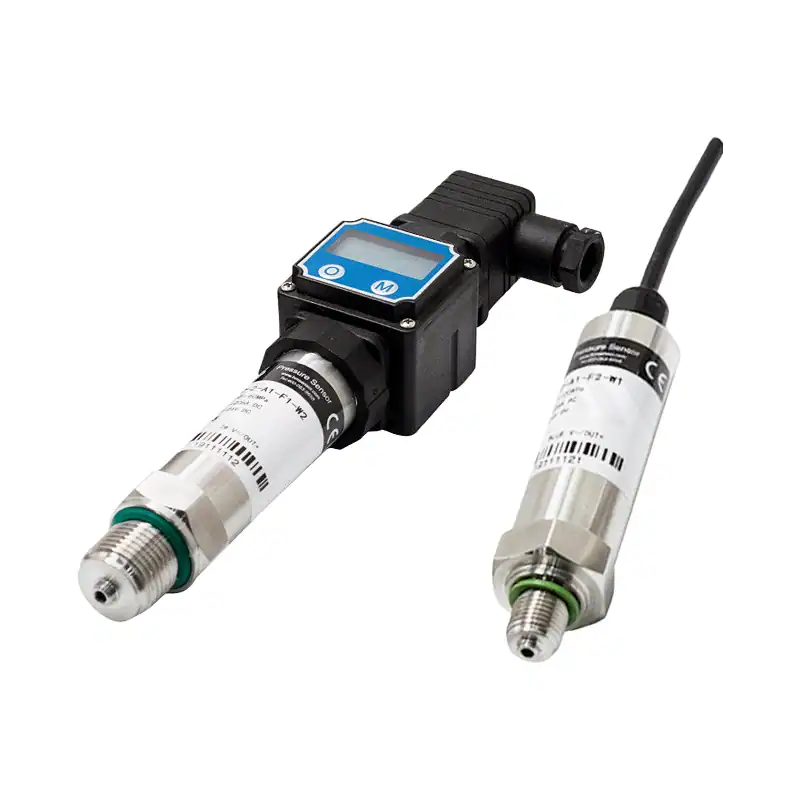
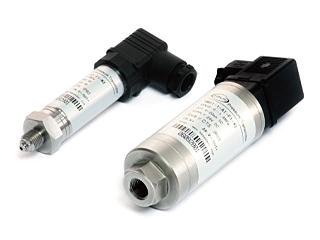
Since torr is absolute, its natural psi partner is psia, not psig. Absolute mode returns psia = torr × 0.0193368 and, alongside it, the gauge equivalent psig = psia − 14.69595, which stays negative for any real vacuum. A process at 100 torr is 1.9337 psia, roughly −12.76 psig of vacuum. What this decides on site is instrument class. A torr-level target needs an absolute or compound transmitter referenced to a sealed vacuum, not a gauge unit whose zero shifts with the barometer. The HMK HM27 measures vacuum and absolute directly (HM27A silicon absolute, HM27CA capacitive absolute, HM27G negative-gauge) from 0.02 Pa to 1 MPa. If you also need to move a reading between absolute, gauge and vacuum, the absolute, gauge and vacuum converter handles that step.
Vacuum-range table (torr to psia, kPa, mbar, Pa)
Common vacuum set-points, read across to the units a transmitter datasheet uses. It is the quickest way to match a torr requirement to a full-scale range.
| Torr (abs) | psia | kPa abs | mbar | Pa |
|---|---|---|---|---|
| 760 torr | 14.6959 psia | 101.325 kPa | 1013.25 mbar | 101325 Pa |
| 100 torr | 1.9337 psia | 13.332 kPa | 133.32 mbar | 13332 Pa |
| 50 torr | 0.9668 psia | 6.666 kPa | 66.66 mbar | 6666 Pa |
| 10 torr | 0.19337 psia | 1.3332 kPa | 13.33 mbar | 1333 Pa |
| 1 torr | 0.019337 psia | 0.13332 kPa | 1.333 mbar | 133.3 Pa |
| 0.1 torr | 0.001934 psia | 0.01333 kPa | 0.1333 mbar | 13.33 Pa |
Torr to psi worked examples
Absolute mode at the exact factor. The psig column is the vacuum depth below one atmosphere, which is what a compound gauge would show.
| Torr (abs) | psia | psig (vacuum) | kPa abs |
|---|---|---|---|
| 1 torr | 0.019337 psia | -14.6766 psig | 0.1333 kPa |
| 10 torr | 0.193368 psia | -14.5026 psig | 1.3332 kPa |
| 100 torr | 1.933677 psia | -12.7623 psig | 13.332 kPa |
| 500 torr | 9.668387 psia | -5.0276 psig | 66.661 kPa |
| 760 torr | 14.695949 psia | 0.0000 psig | 101.325 kPa |
The last row is the one to keep in your head: 760 torr = 14.69595 psia = one standard atmosphere = 0 psig. Everything under it is vacuum.
Torr to psi to mbar to kPa cross-table
For specs that cross unit systems, this reads torr into psi, mbar, kPa and Pa together.
| Torr | psi | mbar | kPa | Pa |
|---|---|---|---|---|
| 1 torr | 0.019337 psi | 1.3332 mbar | 0.13332 kPa | 133.32 Pa |
| 5 torr | 0.096684 psi | 6.6661 mbar | 0.66661 kPa | 666.61 Pa |
| 10 torr | 0.193368 psi | 13.3322 mbar | 1.33322 kPa | 1333.22 Pa |
| 50 torr | 0.966839 psi | 66.6612 mbar | 6.66612 kPa | 6666.12 Pa |
| 100 torr | 1.933677 psi | 133.322 mbar | 13.33224 kPa | 13332.2 Pa |
| 760 torr | 14.695949 psi | 1013.25 mbar | 101.325 kPa | 101325 Pa |
Frequently Asked Questions
What is 1 torr in psi?
One torr equals 0.0193367747 psi. Torr is an absolute unit, so that value is psia: 1 torr is 0.0193 psi of absolute pressure, almost full vacuum.
Is torr absolute or gauge?
Absolute. Torr is measured up from a perfect vacuum, and one standard atmosphere is exactly 760 torr. As a gauge value, any vacuum in torr is negative psig.
What is the difference between torr and microns of mercury (mTorr)?
A micron, or millitorr, is one thousandth of a torr. High-vacuum gauges often read in microns; divide by 1000 to get torr, then apply the 0.0193368 factor.
Which transmitter do I need below 1 torr?
Below about 1 torr (1.3 mbar / 133 Pa) you need an absolute or capacitance transmitter referenced to vacuum, such as the HM27A or HM27CA. A gauge unit cannot resolve pressures that far below atmosphere.
Need the vacuum or absolute transmitter behind the number?
Tell us the range in torr, psia or kPa-abs and whether it is absolute, vacuum or compound, and we will spec the right transmitter.