Saturated Steam Table Calculator (by Temperature)
Enter a target steam temperature and read the saturation pressure in bar, psi and kPa from IAPWS-IF97 — so you can set a jacket or steriliser pressure and size the pressure transmitter and relief valve for the temperature you actually need.
To reach a steam temperature, you first have to reach its pressure
Working a steam table backwards answers a question that comes up whenever heat is the goal rather than the by-product: I need my product at this temperature, so what steam pressure does that take? On the saturation line temperature and pressure are locked together, so a target temperature is really a pressure setpoint in disguise. Want 150 °C in a jacket? That is 4.76 bar absolute of saturated steam and nothing else will hold it there. The calculator above returns that pressure directly from IAPWS-IF97, in the absolute and gauge units your regulator and transmitter actually use.
The physical reason is that hotter steam is denser and needs more pressure to stay in equilibrium with its water. So every extra degree of process temperature has a pressure cost, and that cost climbs steeply: going from 120 to 150 °C roughly doubles the pressure, and reaching 180 °C doubles it again. Knowing the curve stops you from specifying a temperature the supply pressure can never deliver.
From a target temperature to a pressure setpoint and a transmitter range
The saturation pressure this page returns is the lowest pressure that will hold your target temperature, which makes it the anchor for three selection decisions at once. It is the pressure-control setpoint the steam regulator must reach. It is the bottom of the pressure-transmitter range you install to verify that setpoint — you would choose a span comfortably above it, with headroom for start-up and supply swings. And it is the reference for the relief-valve setting that protects the vessel. Convert once, and the control, the measurement and the protection all start from the same number.
Because the reading also comes in gauge units, you avoid the most common sizing error: quoting an absolute saturation pressure to a gauge-referenced transmitter. A 150 °C target is 4.76 bar absolute but only about 3.75 bar gauge; a transmitter ranged as if 4.76 were the gauge value would sit permanently high. Match the reference and the loop reads true. When you are ready to pick the device, the pressure transmitter range follows straight from this pressure.
Sterilisers and jacketed vessels
The clearest place this reverse lookup earns its keep is sterilisation, where the temperature is fixed by protocol and the pressure has to follow. Autoclave cycles are specified at 121 °C or 134 °C, which correspond to about 2.05 and 3.04 bar absolute of saturated steam — roughly 1.0 and 2.0 bar gauge. If the chamber pressure is right but the temperature is low, the tell-tale is trapped air rather than saturated steam, because air lowers the temperature at a given pressure. Jacketed reactors and heat exchangers work the same way: pick the process temperature the batch needs, read the saturation pressure, and set the steam supply and its transmitter to hold it.
A worked check at 150 °C
Enter 150 °C. The tool returns about 4.76 bar absolute, which it also expresses as roughly 3.75 bar gauge, 69.1 psia and 476 kPa, alongside a latent heat near 2114 kJ/kg. Read that as a specification: your steam supply must deliver at least 4.76 bar absolute, your pressure transmitter should span past it with margin, and every kilogram of steam gives up 2114 kJ as it condenses to do the heating. Switch the unit to Fahrenheit and enter 302 °F — the same 150 °C — and the pressure is unchanged, a quick way to confirm a converted setpoint.
Saturated steam reference table
Process temperatures and the saturation pressure each one requires, from IAPWS-IF97, including the 121 and 134 °C sterilisation points. Latent heat falls as temperature rises, so hotter steam does more heating by pressure but slightly less per kilogram.
| Temperature (°C) | Sat. pressure (bar abs) | Sat. pressure (psia) | Latent heat hfg (kJ/kg) | Steam density ρg (kg/m³) |
|---|---|---|---|---|
| 100 | 1.014 | 14.7 | 2256 | 0.598 |
| 121 (steriliser) | 2.050 | 29.7 | 2199 | 1.156 |
| 134 (steriliser) | 3.042 | 44.1 | 2162 | 1.672 |
| 150 | 4.761 | 69.1 | 2114 | 2.548 |
| 165 | 7.008 | 101.6 | 2065 | 3.670 |
| 180 | 10.03 | 145.4 | 2014 | 5.158 |
| 200 | 15.55 | 225.5 | 1940 | 7.860 |
Where the saturation pressure runs out
Above the critical point there is no saturation pressure. Beyond 374 °C water and steam merge into one phase, so a target temperature above that has no saturated-steam pressure to reach; the calculator flags it instead of returning a value.
Below 100 °C you are into vacuum steam. Saturated steam cooler than 100 °C exists only below atmospheric pressure — the domain of evaporators, vacuum drying and turbine condensers — and the reading comes back as a vacuum rather than a gauge pressure.
The pressure is a minimum, not a ceiling. The value is the pressure at which steam is exactly saturated at your temperature. Run higher pressure and, unless the steam is superheated, the temperature simply rises to the new saturation point. For a hotter gas at the same pressure you are into superheated steam, covered by the by-pressure calculator and the notes there.
Frequently Asked Questions
What pressure gives saturated steam at 150 °C?
About 4.76 bar absolute, which is roughly 3.75 bar gauge or 69 psia. That is the minimum pressure the steam supply must hold to keep a jacket or coil at 150 °C.
What steam pressure reaches 121 °C for sterilisation?
About 2.05 bar absolute, or close to 1.0 bar gauge. The 134 °C cycle needs about 3.04 bar absolute (near 2.0 bar gauge). If the pressure is right but the temperature is low, suspect trapped air.
Is this the minimum or the maximum pressure for that temperature?
It is the saturation pressure — the exact pressure at which steam is saturated at your temperature. Higher pressure raises the saturation temperature; lower pressure cannot hold it.
How do I size a pressure transmitter from a steam temperature?
Convert the target temperature to its saturation pressure here, then choose a transmitter span above that value with headroom for start-up and supply variation, matching the gauge or absolute reference of your instrument.
What about superheated steam?
Superheated steam is hotter than saturation at its pressure, so temperature and pressure are independent. Use the saturation pressure here as the baseline, then treat the superheat separately.
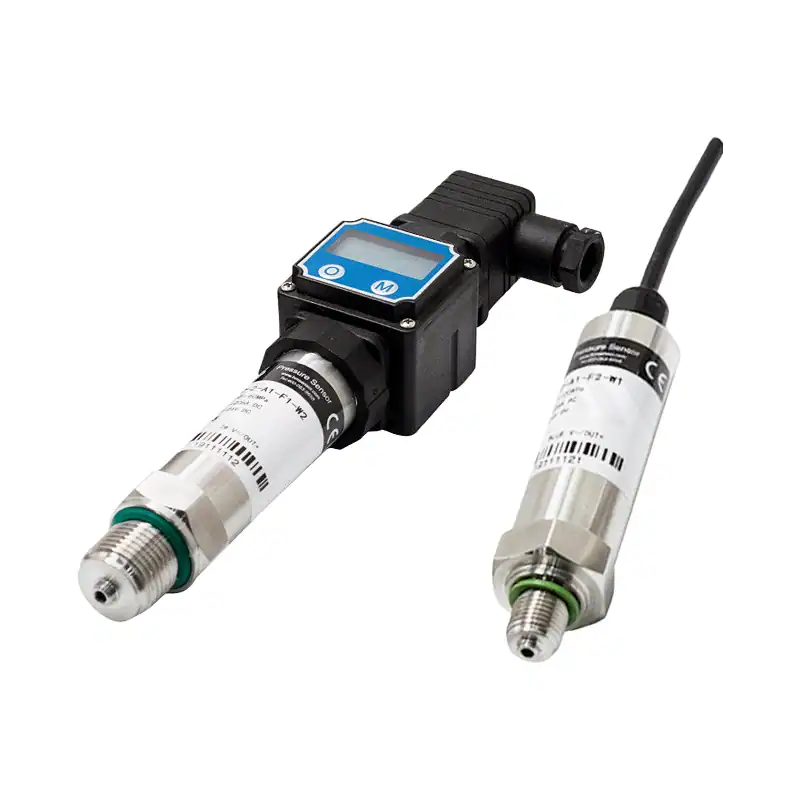
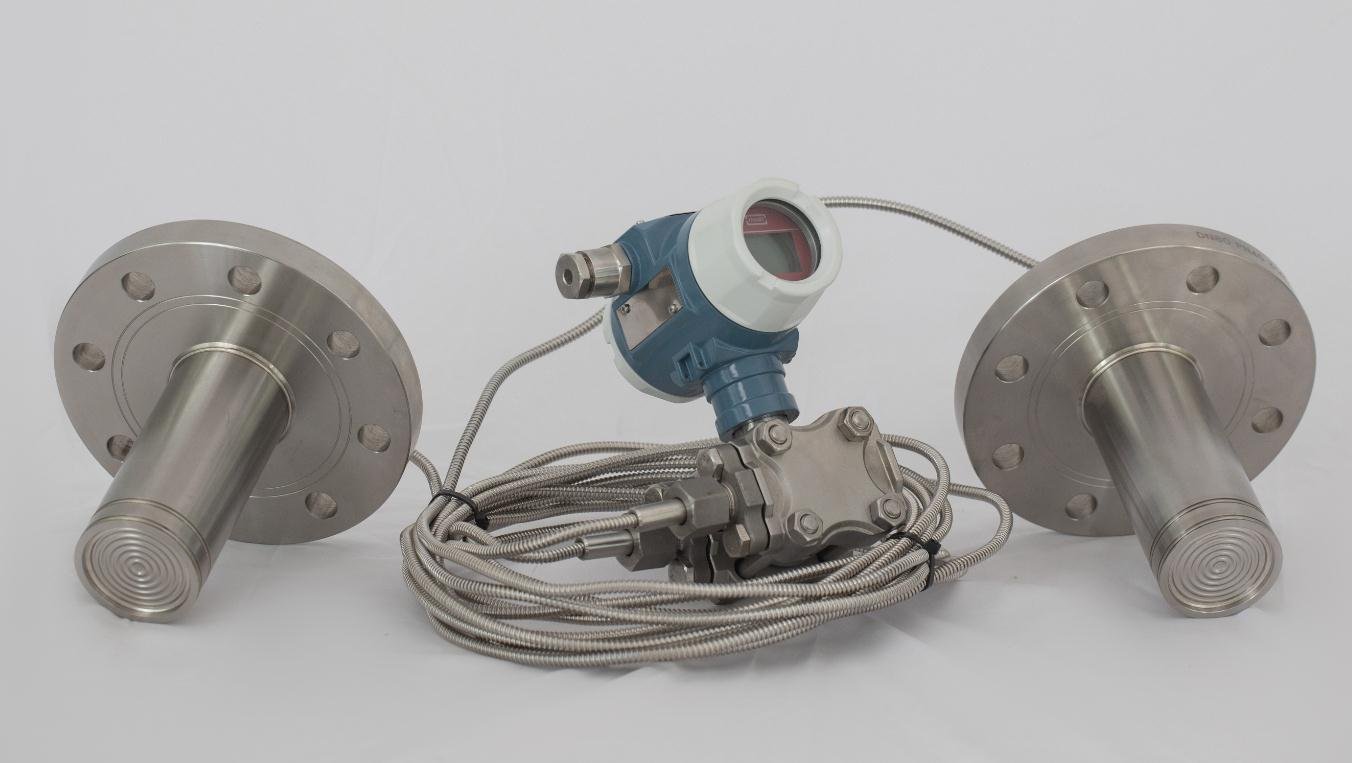
Setting a temperature with steam?
Tell us the process temperature and service and we will spec the pressure transmitter and range to hold it.