HMK Temperature Sensors
Explosion-Proof Thermal Resistance
NEPSI-certified explosion-proof RTD temperature sensors (Pt100/Cu50/Cu100) designed for hazardous areas in oil & gas, chemical, pharmaceutical, and mining industries. Flameproof (Ex d) and intrinsically safe (Ex ia) protection types available, covering -200°C to +500°C measurement range.
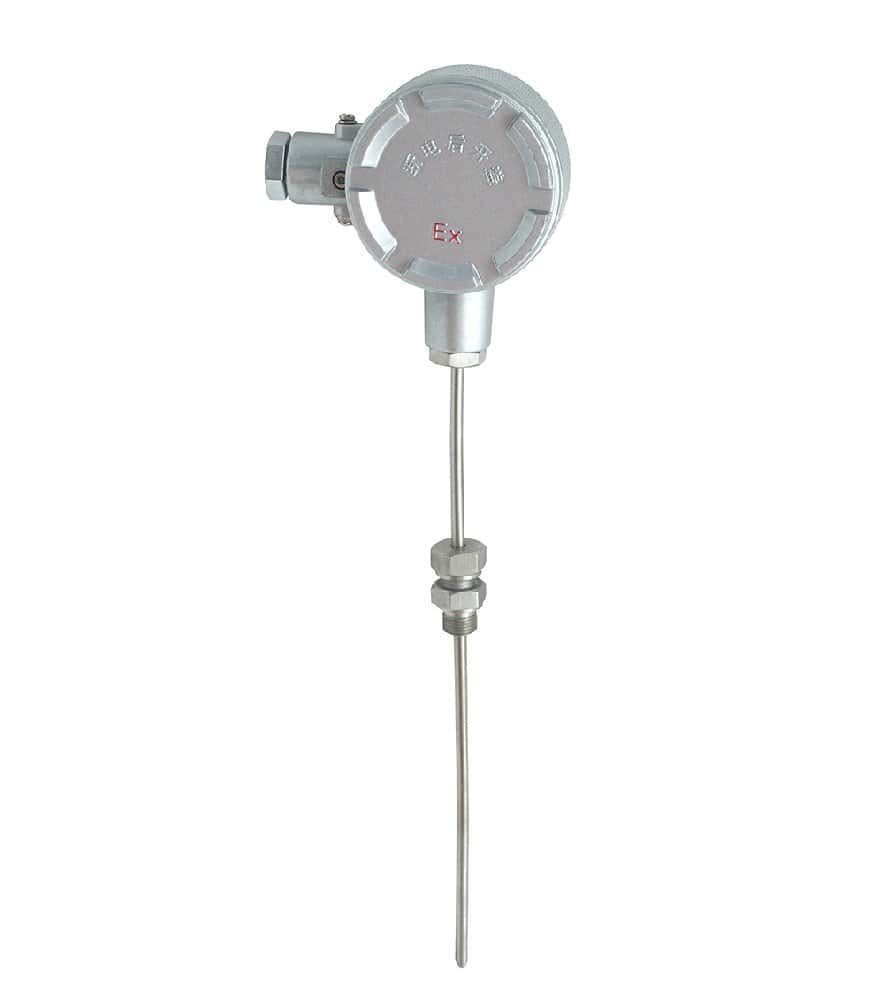
Explosion-Proof Thermal Resistance Overview
Explosion-proof thermal resistance sensors are precision temperature measurement instruments designed specifically for use in hazardous environments where flammable gases, vapors, or dust may be present. These sensors combine industrial-grade RTD (Resistance Temperature Detector) technology with certified explosion-proof enclosures to ensure safe and reliable operation in Zone 1 and Zone 2 classified areas.
The working principle is based on the relationship between electrical resistance and temperature: as temperature changes, the resistance of the platinum or copper sensing element changes proportionally. Pt100 sensors offer a standard resistance of 100Ω at 0°C with excellent long-term stability and repeatability, while Cu50 and Cu100 sensors provide cost-effective solutions for moderate temperature ranges. The explosion-proof construction prevents any internal sparks or thermal effects from igniting the surrounding hazardous atmosphere.
Manufactured in compliance with IEC 60751, GB/T 30121-2013, JB/T 8623-1997, and GB 26789-2011, these sensors carry NEPSI certification for multiple explosion-proof grades including flameproof (Ex d IIB T4, Ex d IIC T5) and intrinsically safe (Ex ia IIC T6) configurations. They feature spring-loaded sensing elements for vibration resistance, imported thin-film platinum resistors for high accuracy, and require no compensation wires — simplifying installation in demanding industrial environments.
Technical Specifications
| Parameter | Specification |
|---|---|
| Sensor Type | WZP (Pt100), WZC (Cu50 / Cu100) |
| Measurement Range | Pt100: -200°C to +500°C; Cu50/Cu100: -50°C to +100°C |
| Accuracy Class | Class A, Class B (per IEC 60751) |
| Nominal Resistance | Pt100: 100Ω at 0°C; Cu50: 50Ω at 0°C; Cu100: 100Ω at 0°C |
| Temperature Coefficient | Pt100 α = 0.003851 Ω/Ω/°C; Cu α = 0.00428 Ω/Ω/°C |
| Protection Type | Flameproof (Ex d), Intrinsically Safe (Ex ia / Ex ib) |
| NEPSI Certification | Ex d IIB T4 (GYB97152), Ex d IIC T5 (GYB02476), Ex ia IIC T6 (GYB05364X) |
| Insulation Resistance | ≥100 MΩ (at 10–100V DC, ambient temperature) |
| Wiring Method | 2-wire, 3-wire, or 4-wire connection |
| Probe Diameter | Φ3, Φ4, Φ5, Φ6, Φ8 mm |
| Insertion Length | 250 – 1150 mm (customizable) |
| Process Connection | M20×1.5, NPT 1/2″, G1/2″ (thread); Flange optional |
| Junction Box Material | Cast aluminum alloy (explosion-proof enclosure) |
| Protection Rating | IP65 / IP68 (depending on configuration) |
| Standards | IEC 60751, GB/T 30121-2013, JB/T 8623-1997, GB 26789-2011 |
Tolerance Table (per IEC 60751)
| Sensor | Class | Tolerance Formula | Example at 100°C |
|---|---|---|---|
| Pt100 | Class A | ±(0.15 + 0.002 × |t|) °C | ±0.35°C |
| Pt100 | Class B | ±(0.30 + 0.005 × |t|) °C | ±0.80°C |
| Cu50 / Cu100 | — | ±(0.30 + 0.006 × |t|) °C | ±0.90°C |
Explosion-Proof Classification
Explosion-proof electrical equipment is classified by equipment class, explosion-proof grade (based on Maximum Experimental Safe Gap), and temperature group. Understanding these classifications helps engineers select the correct sensor for their specific hazardous environment.
NEPSI Certification Details
| Protection Type | Marking | Certificate No. | Description |
|---|---|---|---|
| Flameproof | Ex d IIB T4 | GYB97152 | Suitable for Group IIB gases (e.g., ethylene), max surface temp 135°C |
| Flameproof | Ex d IIC T5 | GYB02476 | Suitable for Group IIC gases (e.g., hydrogen), max surface temp 100°C |
| Intrinsically Safe | Ex ia IIC T6 | GYB05364X | Highest safety level, max surface temp 85°C, suitable for all gas groups |
Explosion-Proof Grades (by MESG)
| Grade | MESG (mm) | Typical Gases |
|---|---|---|
| IIA | ≥ 0.9 | Propane, Methane, Acetone |
| IIB | 0.5 – 0.9 | Ethylene, Dimethyl Ether |
| IIC | < 0.5 | Hydrogen, Acetylene, Carbon Disulfide |
Temperature Groups
| Group | Max Surface Temp | Ignition Temp of Gas |
|---|---|---|
| T1 | 450°C | > 450°C |
| T2 | 300°C | > 300°C |
| T3 | 200°C | > 200°C |
| T4 | 135°C | > 135°C |
| T5 | 100°C | > 100°C |
| T6 | 85°C | > 85°C |
Key Features
NEPSI Certified Safety
Triple NEPSI certification covering flameproof (Ex d IIB T4, Ex d IIC T5) and intrinsically safe (Ex ia IIC T6) configurations for comprehensive hazardous area protection.
High Measurement Accuracy
Imported thin-film platinum resistor elements deliver Class A accuracy of ±(0.15 + 0.002|t|)°C, ensuring precise and repeatable temperature readings in critical processes.
Spring-Loaded Element
Internal spring mechanism keeps the sensing element firmly pressed against the sheath tip, maintaining thermal contact even under strong vibration and mechanical shock conditions.
No Compensation Wire Needed
Unlike thermocouples, RTD sensors do not require expensive compensation wires, reducing installation costs and eliminating a common source of measurement error in long cable runs.
Robust Cast Aluminum Enclosure
Heavy-duty cast aluminum alloy junction box provides IP65/IP68 protection and certified explosion containment, withstanding harsh weather and corrosive industrial atmospheres.
Flexible Configuration
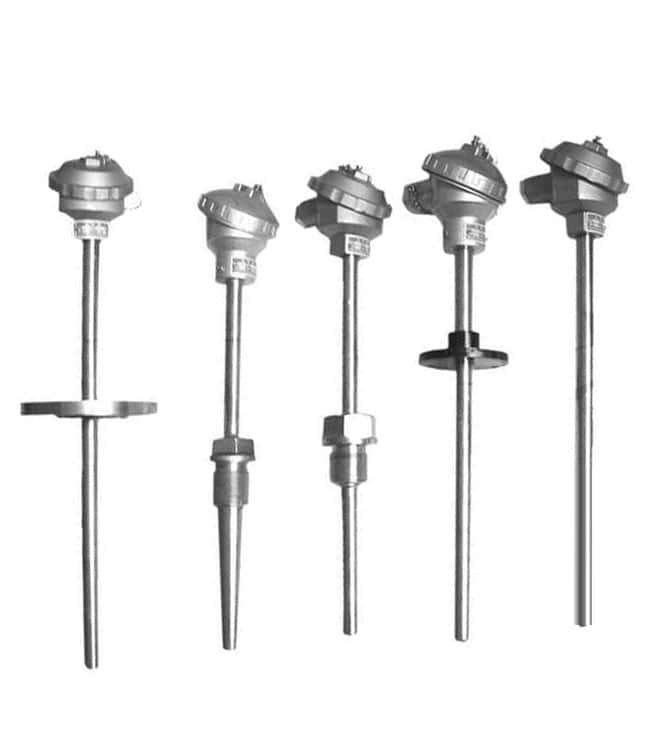
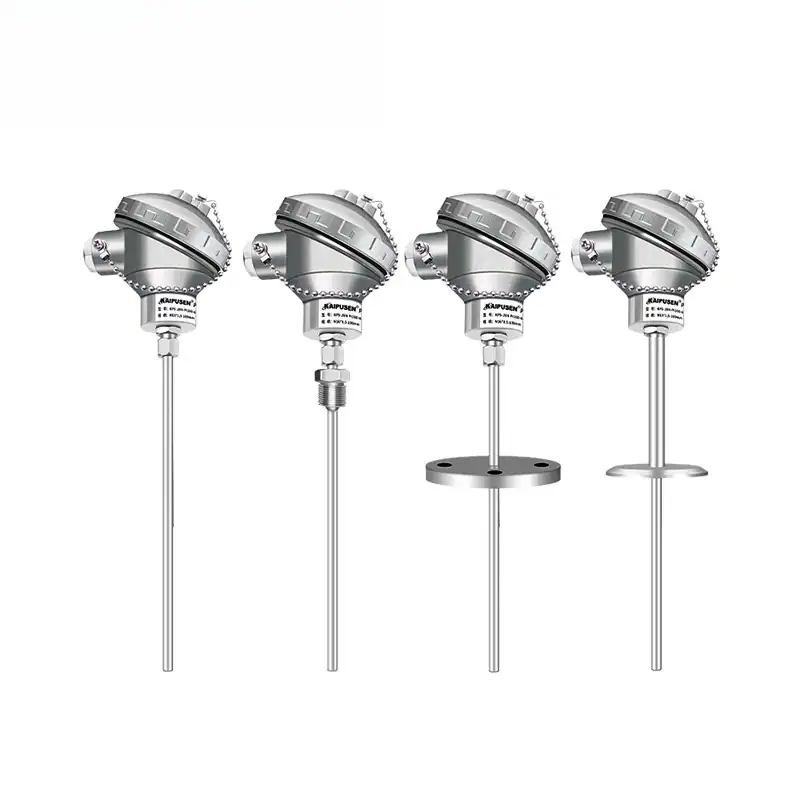
Available in multiple mounting styles (adjustable pipe, fixed screw, threaded), probe diameters (Φ3–Φ8mm), and insertion lengths (250–1150mm) to fit diverse process requirements.
Hazardous Area Applications
Oil & Gas Processing
Monitor temperatures in refineries, offshore platforms, storage tanks, and pipeline systems where flammable hydrocarbon vapors require Ex d IIB T4 or higher protection ratings.
Chemical & Petrochemical
Reliable temperature measurement in reactors, distillation columns, and heat exchangers handling volatile chemicals including ethylene, hydrogen, and acetylene environments.
Pharmaceutical Manufacturing
Precision temperature control in clean rooms, solvent recovery systems, and drug synthesis processes where flammable solvents require intrinsically safe (Ex ia) instrumentation.
Mining & Coal Processing
Underground mine temperature monitoring with Class I equipment protection, designed to withstand methane and coal dust atmospheres common in mining operations.
Grain & Food Storage
Temperature monitoring in grain silos and food processing facilities where combustible dust creates explosion risks, using T5 or T6 rated sensors for maximum safety margins.
Power Generation
Critical temperature measurement in gas turbine fuel systems, hydrogen-cooled generators, and coal-fired boiler areas where explosive gas mixtures may accumulate during operation.
Frequently Asked Questions
Need Explosion-Proof Temperature Sensors?
Our engineering team specializes in hazardous area temperature measurement solutions. Whether you need Ex d flameproof sensors for oil refineries or Ex ia intrinsically safe probes for chemical plants, we can help you select the right explosion-proof RTD configuration for your specific Zone classification and gas group requirements.
Our engineers typically respond within 12 business hours with detailed technical specifications and pricing.