Reynolds Number Calculator
The Reynolds number tells you whether pipe flow is laminar or turbulent — and, just as importantly, whether an orifice or DP flowmeter can be trusted at that operating point. Enter a velocity or a flow rate and check it against the ISO 5167 limits.
Reynolds number is the ratio of inertia to viscosity
The Reynolds number is a single dimensionless figure for how a fluid moves through a pipe. It weighs the inertia carrying the fluid forward against the viscosity holding it back: Re = ρvD/μ, where ρ is density, v is mean velocity, D is the inside diameter and μ is dynamic viscosity. A high value means inertia dominates and the flow churns; a low value means viscosity dominates and the flow slides along in orderly layers.
Everything a differential-pressure flowmeter assumes — a stable velocity profile, a predictable pressure drop — depends on which side of that balance you are on. That is why the Reynolds number is worth checking before you size an orifice or trust a reading.
The 2300 and 4000 thresholds mark laminar, transitional and turbulent flow
For flow inside a round pipe the accepted bands are these. The transitional zone is the one to avoid for metering: the flow flickers between orderly and chaotic and any device that depends on a fixed profile will wander.
| Regime | Reynolds number | What it means for metering |
|---|---|---|
| Laminar | below 2300 | Orderly layers; the DP square-root law breaks down |
| Transitional | 2300 to 4000 | Unstable; the least reliable place to meter |
| Turbulent | above 4000 | Well-mixed; where DP meters are designed to run |
When you only know the flow rate, Re = 4ρQ/(πDμ) — the velocity is just Q divided by the pipe area. The calculator’s flow-rate mode does this for you.
Reynolds number sets whether your DP meter can be trusted
This is the connection a general physics calculator will not make. The orifice standard, ISO 5167, does not cover pipe Reynolds numbers below about 5,000; beneath that floor the published discharge coefficient no longer applies and the meter reads a number you cannot defend. Even above it, as Reynolds falls toward the low tens of thousands the discharge-coefficient uncertainty climbs, so a reading that looks fine is quietly less certain than the datasheet implies.
In the laminar region the physics itself breaks: the pressure drop across an orifice stops rising with the square of velocity, so the square-root relationship the transmitter is built on no longer holds. The badge on the calculator flags this — high confidence above 100,000, valid but rising uncertainty in the ISO 5167 band, and unreliable once you drop below the 5,000 floor. The orifice plate sizing calculator and the primer on how DP flow measurement works pick up from here.
Viscous fluids and low flow are where DP metering runs out of road
Three things drive Reynolds down: high viscosity, low velocity and small diameter. Heavy oils, cold slurries, or any line that spends its life at a fraction of design flow will sit at low Reynolds and give DP metering trouble. The worked checks below show the swing — the same water line is fine at 2 m/s and stalled at a trickle.
| Input | Re | Regime / flowmeter |
|---|---|---|
| Water 20 °C, 2 m/s, 50 mm | 99,621 | Turbulent; valid, just below the 100,000 line |
| Water 20 °C, 0.03 m/s, 25 mm | 747 | Laminar; below the ISO 5167 floor, unreliable |
| Air 20 °C, 15 m/s, 100 mm | 99,231 | Turbulent; valid |
| Water 20 °C, 0.01 m³/s, 50 mm | 253,682 | Turbulent; high confidence |
When the number keeps landing in the laminar or transitional band no matter how you configure the restriction, that is the signal to change measurement principle — a Coriolis, thermal or positive-displacement meter does not care about the velocity profile the way a DP element does.
Frequently Asked Questions
What Reynolds number is laminar vs turbulent?
In a round pipe, roughly Re below 2300 is laminar, above 4000 is turbulent, and 2300 to 4000 is a transitional band where readings are least stable.
What is the minimum Reynolds number for an orifice plate?
ISO 5167 does not cover pipe Reynolds numbers below about 5,000; below that floor the published discharge coefficient no longer applies.
How do I calculate Reynolds number from flow rate?
Use Re = 4ρQ/(πDμ) with consistent SI units — the calculator’s flow-rate mode does it for you.
Why does a DP flowmeter fail at low Reynolds number?
In laminar flow the pressure drop stops varying with the square of velocity, so the square-root relationship a DP transmitter relies on breaks down.
What Reynolds number is good for pipe flow?
For DP metering you generally want to be comfortably turbulent — well above 4,000, ideally above 100,000 — not sitting in the transitional band.
Sizing an orifice or DP flowmeter for this line?
Send us the pipe size, fluid and flow range and we will check the Reynolds number and match a differential-pressure transmitter that stays inside its accurate band.
Differential-pressure transmitters for flow
The DP transmitters HMK builds for orifice, venturi and low-DP flow elements.
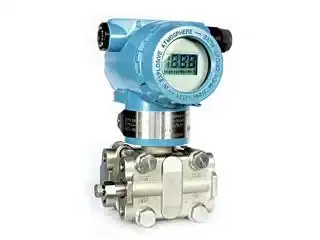 HM3051Smart DP transmitter for flowMultivariable-capable DP transmitter for orifice and DP flow, with digital output.
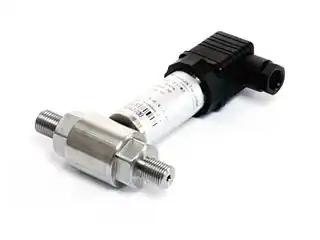 HM31Differential pressure transmitterWorkhorse DP transmitter for orifice, nozzle and venturi flow elements.
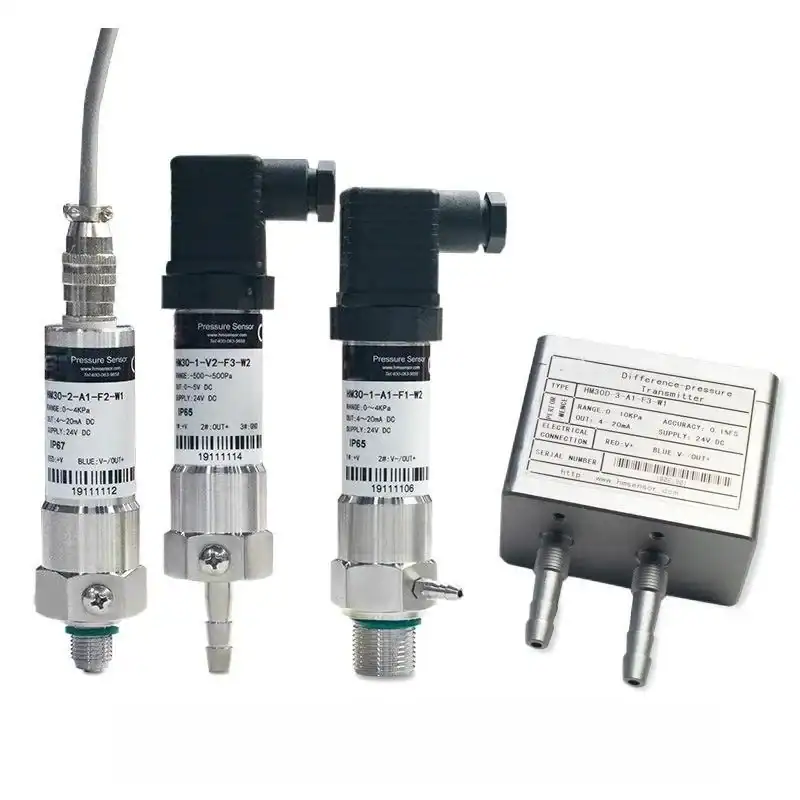 HM30500 Pa to 700 kPa micro-DPMicro-differential transmitter for low-DP flow and filter monitoring.
Written by Li Long · Application Engineer, HMK-TECH. Reynolds thresholds and the ISO 5167 limits are standard references; the worked examples are computed from the stated fluid properties.